
At the GM Meetings in Las Vegas this week, Derek Falvey insisted that his hope is to build around what he currently has, rather than further subtracting pieces, in an earnest effort at competitiveness in 2026. This is a semi-plausible notion in theory, with the team possessing enough rotation depth and intriguing hitters make themselves a threat.
The glaring flaw in this vision, of course, is the bullpen. You can’t compete without at least a decent one, as we’ve seen, and the Twins are starting nearly from scratch after selling off the entire unit in July. No reliever who auditioned in the latter part of the season looked very good, so the Twins are going to need to rapidly identify and activate arms to fill these roles.
External additions will be part of the picture, for sure. But from the moment they shipped off four future-controlled relievers at the trade deadline, Minnesota’s intention was clear: draw from the abundance of decent-to-great pitching prospects in their system — a pool that expanded from all their trades — to develop the next wave of outstanding homegrown relievers.
In some ways, this approach is hard to argue against. After all, it’s the same formula used to forge the relief corps that was in such high demand at the deadline. Falvey noted as much when speaking to reporters, including Twins Daily’s John Bonnes, in Las Vegas.
“When you look across the game at good bullpens that emerge from within, a lot of them are starters that transitioned,” Falvey said. “We ourselves had multiple of those, whether it’s Griffin Jax or Jhoan Duran or others that came through our system as starters. I wouldn’t expect that to be any different.”
This is valid. But one factor that must be considered with this approach is the player’s preference and receptiveness. Generally speaking, professional pitchers want to pursue a path to starting first, and exhaust the possibility before they submit to a bullpen role. There is, quite simply, a lot more money to be made and more stability to be had in a rotation spot.
Duran and Jax are interesting examples to cite. In each case, you could see why the team would envision a well-suited relief role. But in each case, you could also why the player would be amenable to the plan when it was implemented. Duran had long struggled with arm injuries, and missed nearly the entire 2021 season with a forearm issue before stepping into the Twins bullpen in 2022 and immediately thriving. Jax had been bashed into submission with a 6.37 ERA as a 26-year-old rookie in 2021 before making his own successful role pivot in 2022.
Ultimately, the team and coaches make calls about player usage, but forcing players down paths they aren’t necessarily aligned to can create friction. In this sense, it’s worth noting the two prospective candidates that Falvey specifically called out in his answer:
“I am kind of excited about some of the arms we have at Triple-A and Double-A over the last couple of years that while they haven’t always hit their stride as starters, they might have an ability to impact us in different ways. I’d hate to put too much pressure on any of them, but you see Connor Prielipp throw the way he can at times, you see Marco Raya throw the way he has.”
Similar to Jax and Duran, one can see the appeal on both sides for reliever transitions in these cases. Prielipp has been besieged by injuries since he was in college, and has thrown barely 100 innings in three years since being drafted. The idea of building up a starter workload is all but impractical at this point. Raya is coming off a brutal season at Triple-A that now has him questioning if he’ll reach the majors rather than when.
Both these guys are probably open to immediate bullpen transitions, with the promise of an MLB fast-track, and I’m guessing it’s already been broached with them if Falvey is discussing it openly. But at best, that leaves several other vacancies needing to be filled, and while there are certainly a number of pitchers in Minnesota’s mix with the makings of quality relievers, they make for tougher decisions and conversations.
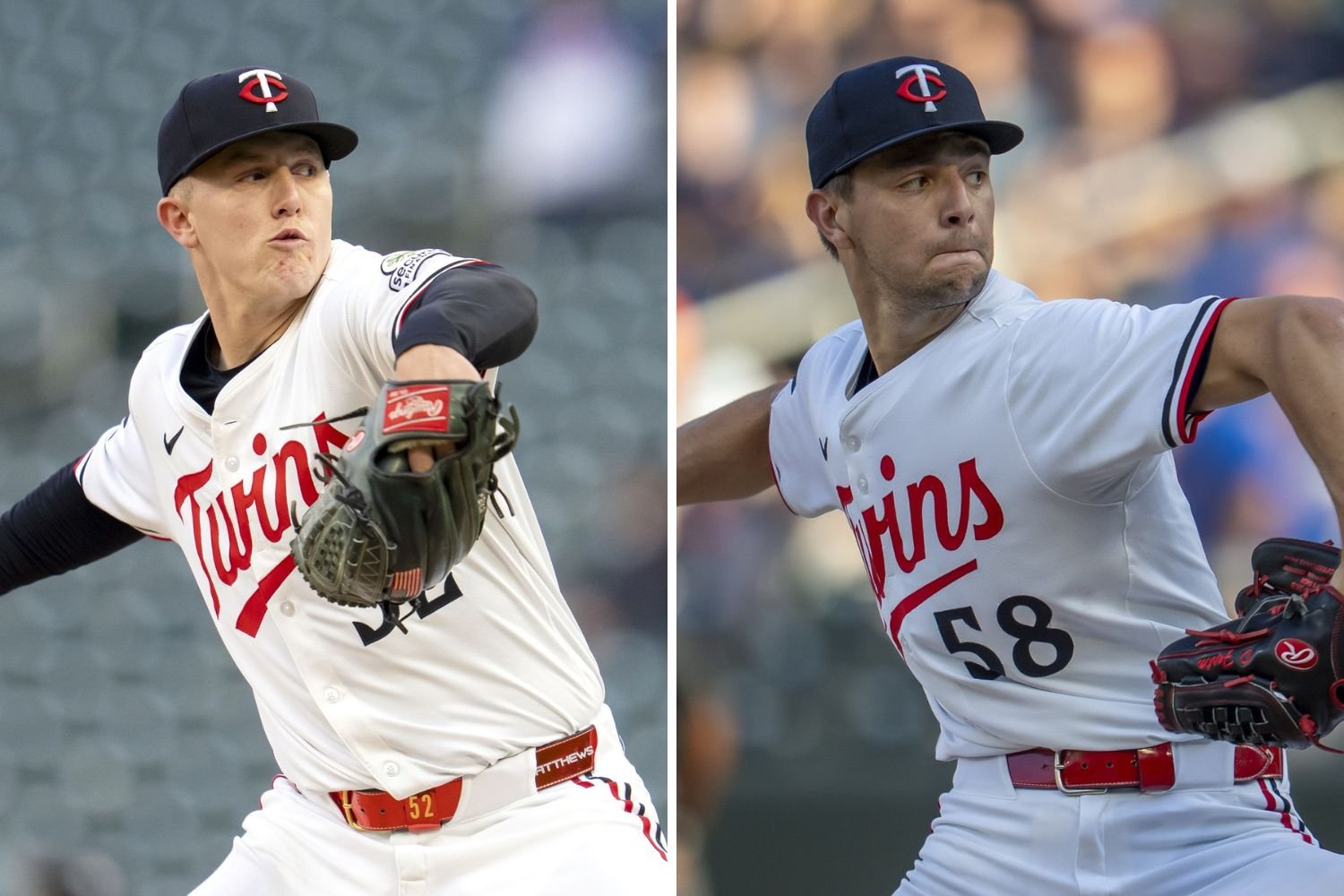
David Festa, Zebby Matthews, Taj Bradley, Mick Abel, Simeon Woods Richardson, Kendry Rojas, Andrew Morris. Some of these pitchers are going to end up in the bullpen. But who? And how do you get them on board with it when, by circumstantial necessity, it’s got to happen now? The Twins don’t have the luxury of waiting around for some of their higher-upside relief candidates to fully fizzle out as starters if the team has any hopes of shocking the world with a good bullpen in 2026.
I find myself wondering if this was a big part of the motivation for hiring LaTroy Hawkins as bullpen coach, while keeping Pete Maki in place to lead the staff. There’s value in familiarity and trust when navigating these kinds of tricky situations. Hawkins, specifically, can be a voice of experience and validation in this journey. He’s the perfect real-world example: a promising young pitcher who came up, didn’t take as a starter, transitioned into bullpen role in his mid-20s, and then enjoyed a tremendously long and fruitful career.
Can he sell some of the current young Twins pitchers on a similar path, and a relief transition before they’ve really had their fair shake at starting? That’s one of the biggest questions facing the team as they look ahead to a high-stakes bullpen experiment in 2026.