
Though the Rule 5 draft doesn’t take place until Dec. 10 at the Winter Meetings, teams must set their reserve lists/40-man rosters by 6 p.m. ET on Tuesday, Nov. 18. A wide range of factors go into whether a player is protected, as well as the likelihood an unprotected player is then selected in the draft.
There have been four Rule 5 drafts since 2021 (one was canceled due to the lockout) and 58 total selections. Those players don’t always stick on an active roster, but examining trends can offer insights into how teams approach 40-man roster decisions.
Below, you’ll find an in-depth look at what types of players—and characteristics—teams often target in the Rule 5 draft.
Pitchers
Since 2020, 81% of Rule 5 selections have been pitchers. The list skews predominantly toward righthanders, as only six picks (13%) were lefties. That’s an even starker distribution than the major league average, which was 76% righthanders to 24% lefthanders in 2025.
Teams Target Injured Pitchers
The number of injured pitchers selected this decade is striking. In total, 21% of the pitchers selected were coming off a season in which they didn’t pitch or saw their season cut short by injury.
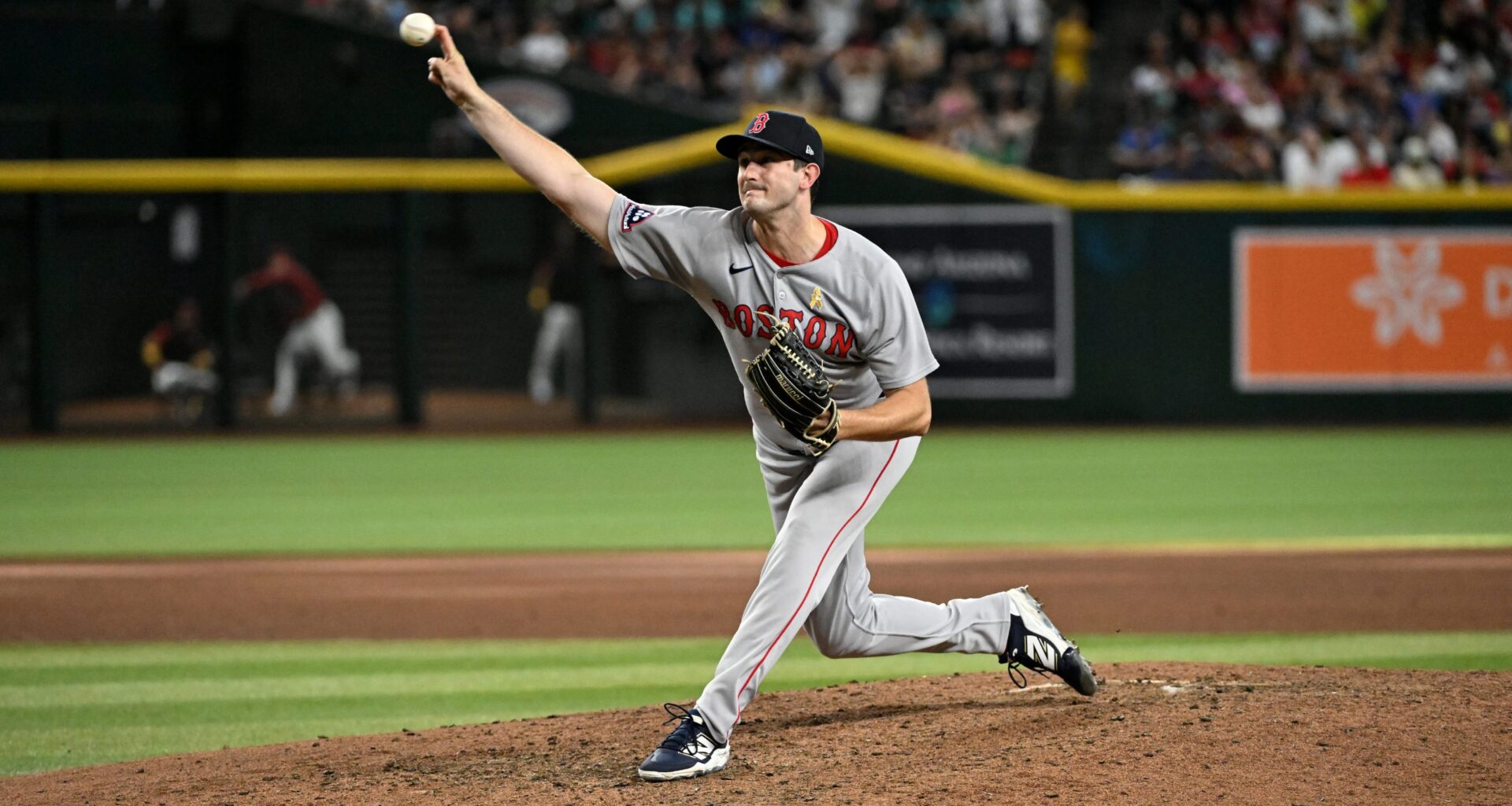
Three of the most successful Rule 5 pitchers of the decade fit this group, though only two stuck with the team that drafted them. Garrett Whitlock and Tyler Wells were both coming off Tommy John surgery when they were selected in 2020 and have returned the two highest career WAR of pitchers selected this decade. Whitlock’s 2.9 WAR in 2020 was the highest initial-season mark by a Rule 5 pitcher this decade before Mike Vasil tied it this season.
Angels starter Jose Soriano is the third standout from this group. The Pirates selected him in 2020 while he was rehabbing from Tommy John, but he never pitched for Pittsburgh because a 2021 setback required a second surgery. The Pirates returned him after the 2021 season.
Targeting injured pitchers makes sense. They’re often unprotected due to injury, not talent. It also allows clubs to manage their Rule 5 requirements by stashing these pitchers on the 60-day injured list in the spring. While Rule 5 picks cannot be optioned to the minors, injured players can still fulfill the Rule 5 eligibility requirements by spending 90 days on the active MLB roster. So, a player who isn’t ready to pitch on Opening Day can start the season on the IL, go off for a rehab assignment in the minors and then be activated to spend a shorter amount of time on the MLB active roster. If they spent 90 days on the active roster, they go into the following season with no such roster restrictions.
This year’s class includes several injured or rehabbing arms who fit this mold. In the AL East alone, the Yankees’ Chase Hampton (who we highlighted here), Red Sox righthander Yordanny Monegro, and Blue Jays lefthander Ricky Tiedemann and righthander Connor Cooke all fall into this category.
Given the propensity of this type of player to be selected, it might make more sense to protect them if a team is on the fence.
Upper Minors Experience Required
Excluding the 2020 class, only one of the 37 Rule 5 pitchers selected this decade had no experience pitching in either Double-A or Triple-A: righthander Juan Nunez in 2024. Nunez was off to a strong start the previous season in High-A before a shoulder injury ended his season in May. He likely would’ve reached Double-A if he’d stayed healthy. The Padres took him in the Rule 5 draft anyway before ultimately returning him to the Orioles.
Outside of Nunez, the fewest Double-A innings of any draftees were 3.0 by Garrett McDaniels (2024) and 15.1 by Mason Englert (2022).
One relevant outlier to watch this year is Twins righthander Jose Olivares. The 22-year-old has premium stuff with a fastball that averages just over 95 mph and tops out at 98.5. The pitch averages 20 inches of induced vertical break and grades out well in models. He complements it with three bat-missing secondaries, including a cutter that had whiff rate over 40% in 2025.
Olivares has yet to pitch above High-A. On the surface, he’s the type of arm who could intrigue teams. However, the history of pitchers drafted this decade would indicate the odds might be lower than expected.
Statistical Benchmarks To Watch
While it’s a sample size of just 29 pitchers who appeared in minor league games the season prior to getting picked in the Rule 5 draft, three key statistical trends emerged: strikeout rate, walk rate and groundball rate.
Strikeouts
79% posted a strikeout rate above 26.2% (MLB average: 22.7%).
40% struck out 30% or more, placing them in the 89% percentile or higher if it carried over to the majors.
Only five fell below a 22.7% strikeout rate, and four of those pitchers posted walk rates below 7.5% (MLB average is just under 8%). The one outlier was Vasil (18% K, 8.6% BB), who had a 2.9-WAR season with the White Sox after being claimed off waivers from the Rays.
Walks
66% logged walk rates below 10%.
All but one pitcher with a walk rate above 10% had a strikeout rate of at least 26.2%. If a pitcher had control issues, they could miss bats. Lefty Shane Drohan is the outlier. His walk rate spiked after a Triple-A promotion in 2023 during automated ball-strike testing.
Groundballs
76% of pitchers had groundball rates above 40% (MLB average: 41.9%).
Only one pitcher had a groundball rate below 35%: Nic Enright (27.6%) in 2022.
Of the pitchers with groundball rates below major league average, all but one (Anthony Molina in 2023) had strikeout rates above 23.4%.
Hitters
Teams have only taken 11 hitters in the Rule 5 draft this decade, so it’s a much smaller group. Because of that small sample, proximity and positional versatility seem more predictive than any shared statistical benchmarks.
Age & Experience Matter
Just like pitchers, upper minors experience was a key benchmark for position players.
All eight position players who played in games during their Rule 5 draft year began the season in Double-A. Interestingly, the average age of hitters was still lower (23.7 years) than pitchers (24.3 years) even though some pitchers started in the low minors. This was skewed by 20-year-old Deyvison De Los Santos (the youngest draftee at any position), 21-year-old Akil Baddoo and 22-year-old Nasim Nunez.
This is something to watch Tuesday, as there are several interesting position players who started in High-A.
Blue Jays outfielder Victor Arias will likely rank just outside the team’s Top 10 Prospects for 2026. Arias wasn’t promoted to Double-A until mid July. Even though he is a plus runner and potential above-average defender in center field, he isn’t a lock to be protected.
Another is 21-year-old Rays infielder Jadher Areinamo, who started in High-A with the Brewers and wasn’t promoted until after the Rays acquired him in late July. Areinamo is dominating in the Venezuelan Winter League right now, hitting .337/.390/.685 with eight home runs. But the historical track record of position players would indicate the Blue Jays and Rays might take the risk that they can sneak them through the draft and use that 40-man spot on someone else.
Defensive Value & Versatility
Every position player selected was capable of playing multiple positions—even the catchers. Just look at these four selections from last year:
Given that Rule 5 picks typically compete for part-time roles, positional versatility is essential.
Furthermore, only two drafted position players had no experience playing up the middle (Ryan Noda and De Los Santos). The vast majority also projected to add some combination of speed and/or defensive value at their position.
Baddoo (2020) was a plus runner and seen as capable of playing center field, Noda (2022) was a solid first baseman and Nunez (2023), Cairo (2024) and Kyle Holder (2020) were all glove-first players with lighter offensive profiles. The outliers? Blake Sabol, who profiled as more of a third catcher, and De Los Santos, who was a corner infielder and added no value with his speed.
This trend might work against two trendy Rule 5 candidates in Pirates outfielder Esmerlyn Valdez and Twins outfielder Hendry Mendez. Both have offensive potential but lack defensive value and speed. Valdez is more likely to be protected after dominating the Arizona Fall League, but if either remains exposed, history suggests they’re lower-probability Rule 5 targets.
Final Takeaways
While most 40-man decisions are relatively straightforward, every team faces a few difficult calls each year. Looking at Rule 5 trends from recent years can help explain how front offices assess those decisions.
When it comes to pitchers, leaving a talented but injured arm unprotected is a risk, especially if the alternative is a pitcher without any upper-minors experience. Statistically, players with a combination of higher groundball and strikeout rates are more likely to be selected than a player with premium stuff but major control issues.
As for it hitters, if a player started the year in the low minors, they’re unlikely to be protected. Teams recognize that players without upper-minors experience will likely have a difficult time sticking on a roster, and that spot might be better served for a minor league free agent with past major league experience. It becomes even less feasible to roster players who lack positional versatility or cannot add speed/defensive value.