
Just nine months ago, Major League Baseball found itself in a situation that looked borderline dire.
ESPN had just opted out of its Sunday Night Baseball package, meaning MLB was out more than half a billion dollars annually, and no one was knocking down the door to scoop up what ESPN had left on the table.
It turns out, ESPN was justified in its decision. Its old package — which included Sunday Night Baseball, the entire Wild Card round, Opening Night, and the Home Run Derby — was sold for less than half of the annual fee it had initially been paying, according to various reports about MLB’s new set of short-term media rights deals announced on Wednesday.
NBC and Netflix, the two companies taking over ESPN’s old package, will pay a combined $250 million: a maximum of $200 million from NBC (whose fee will fluctuate based on viewership) and $50 million from Netflix. NBC secured Sunday Night Baseball, the Wild Card games, and a Sunday morning package for Peacock that previously aired on Roku. Netflix will take Opening Night and the Home Run Derby, along with some other special event games on the calendar.
Ironically, the price MLB is getting for what is essentially the old Sunday Night Baseball package is similar to what ESPN had offered the league before opting out of its agreement in February. Some will recall that during that time, reports emerged that ESPN told MLB it’d hold onto its deal if the league were willing to lower its annual fee from an average of $550 million to around $200 million.
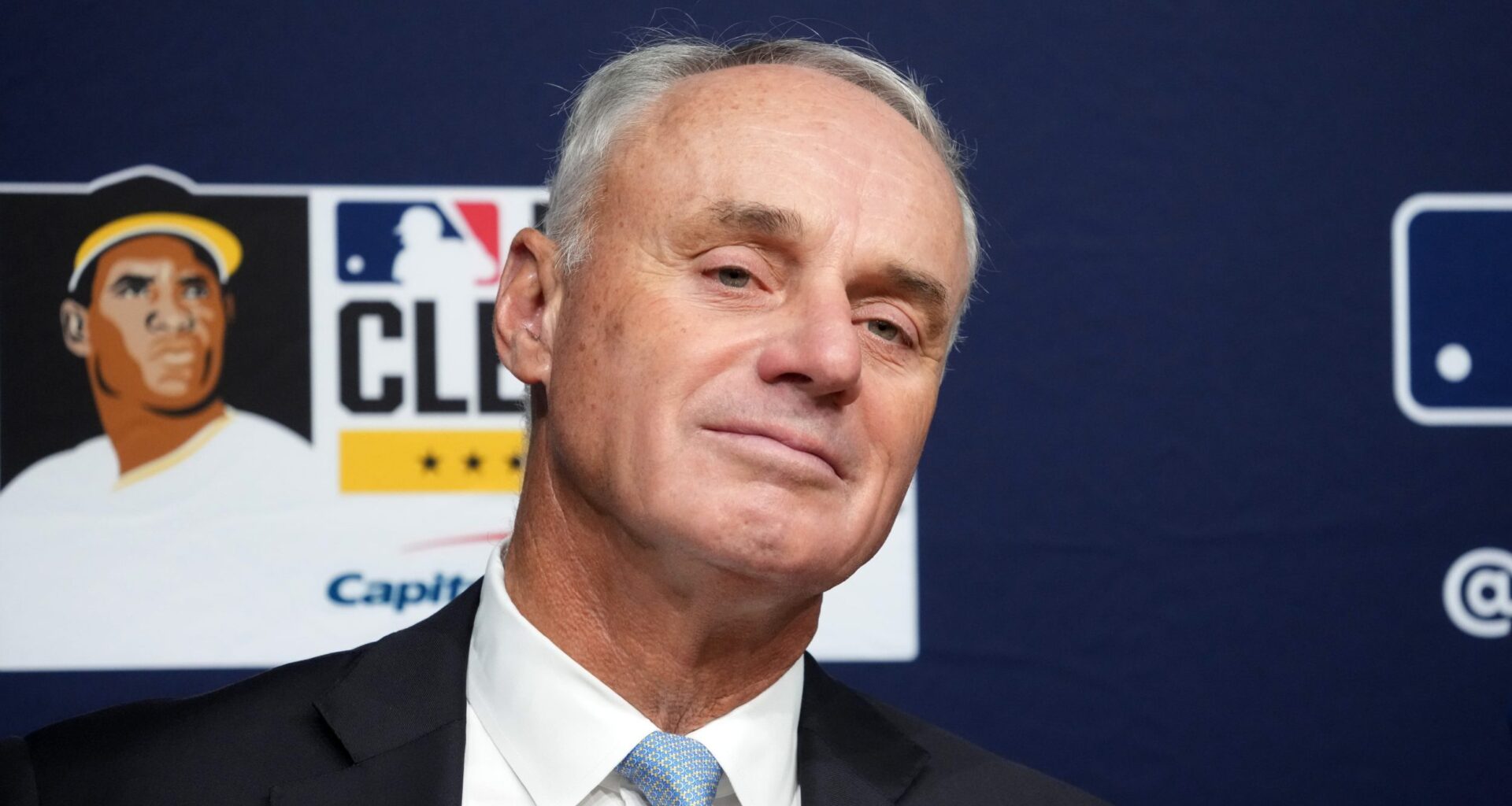
At the time, the league found the offer laughably low. Commissioner Rob Manfred went on to call ESPN a “shrinking platform” after they opted out, and assured owners that the league’s inventory would command even more money on the open market than ESPN had previously paid. Surely, Manfred quickly realized it was his comments that were, in fact, laugh-out-loud funny.
Not only is MLB getting less than half of its original rights fee for the old ESPN package, but the league actually had to give NBC and Netflix additional inventory on top of the old package to do so. And that, in a nutshell, was the theme of all three deals MLB announced on Wednesday, including a brand new agreement with ESPN.
Yes, ESPN will continue its relationship with MLB after all. But the Worldwide Leader’s place in the sport will look much different. Instead of focusing on national rights, ESPN went local, acquiring MLB’s out-of-market package, MLB.tv, for use within its new direct-to-consumer app. ESPN also secured the in-market rights for six MLB clubs whose local broadcasts are currently produced and distributed by the league, and will gain in-market rights for any future clubs that decide to ditch their current broadcast agreements in favor of MLB distribution. A 30-game package of weekday regular-season games is the only slice of national inventory left on ESPN’s airwaves.
Interestingly enough, ESPN will pay MLB the same amount under its newfangled, local-focused deal as it was scheduled to pay under the terms of its old Sunday Night Baseball contract—$ 550 million per year.
So Manfred was technically correct. MLB will end up with more media rights revenue in 2026 than it did in 2025. But the league had to part ways with one of its most valuable assets to do so.
According to a report by Andrew Marchand in The Athletic, MLB.tv generated “hundreds of millions” of dollars for the league. Now, whenever someone decides to pay $150 for a subscription to the out-of-market package, that money goes directly into ESPN’s pocket.
One could see this as a cash advance of sorts. Instead of riding the wave of subscriber growth, which can fluctuate year to year, MLB is charging a flat fee for the service and mitigating some downside risk. But the league’s decision complicates its long-term plans.
Manfred has made clear the league intends to nationalize its local rights strategy come 2028, when the league’s major media rights deals with Fox and TNT Sports — both of whom hold the vast majority of postseason inventory — expire, along with the trio of short-term agreements announced on Wednesday. That’s when the chickens may come home to roost.
Right now, selling MLB.tv to ESPN is a quick way to supplement what would’ve been a significant loss in media rights revenue the next three years. But when Manfred tries to retool how MLB sells local rights in 2028, and purportedly attempts to eliminate archaic local blackout rules, the MLB.tv product as we know it will cease to exist. To take Manfred at his word would suggest that MLB is looking to sell an all-in-one (or at least “most-in-one,” should select popular teams refuse to join MLB’s effort) product for local broadcasts, where fans can access any game from any team they want, regardless of location.
In other words, that means including in-market broadcasts within an MLB.tv-like product. While undoubtedly fan-friendly, such a move would all but certainly crater the market for local rights among traditional regional sports networks, who would then pay substantially reduced rates to reflect the lack of exclusivity.
Remember, MLB needs to maximize revenue from both local and national media rights, not just one or the other.
So in three years, MLB.tv will become a vastly different product. Yes, one that is more valuable than its current out-of-market format, but one that also takes away from MLB’s existing revenue streams. It’s not yet clear whether such a move would work out for MLB in the aggregate. Setting a price on MLB.tv in its current form can handcuff the league’s ability to sell the platform at a much higher price three years from now, even if it’s a much better product.
So to add the $550 million in media rights revenue ESPN is now paying for its local-focused package to the $250 million NBC and Netflix are paying, thereby getting a sizeable increase over last year’s total, is some misguided accounting.
If anything, MLB’s new deals should serve as a warning for the league. We already knew MLB’s local rights were valuable. Baseball is an inherently regional sport, so it’s no surprise ESPN would pay a substantial amount for its package. But it’s alarming that, after two consecutive World Series that gripped American sports fans, MLB saw its premier national regular-season inventory drop in value by over half. And now, by selling MLB.tv, the league risks not maximizing the value of that platform down the line.
MLB needs to find a way to make its national inventory relevant again. Otherwise, the pressure will be on to squeeze as much value out of its local rights as possible, knowing that nationally broadcast games are declining in value, at least in the eyes of its media partners.