
NEED TO KNOW
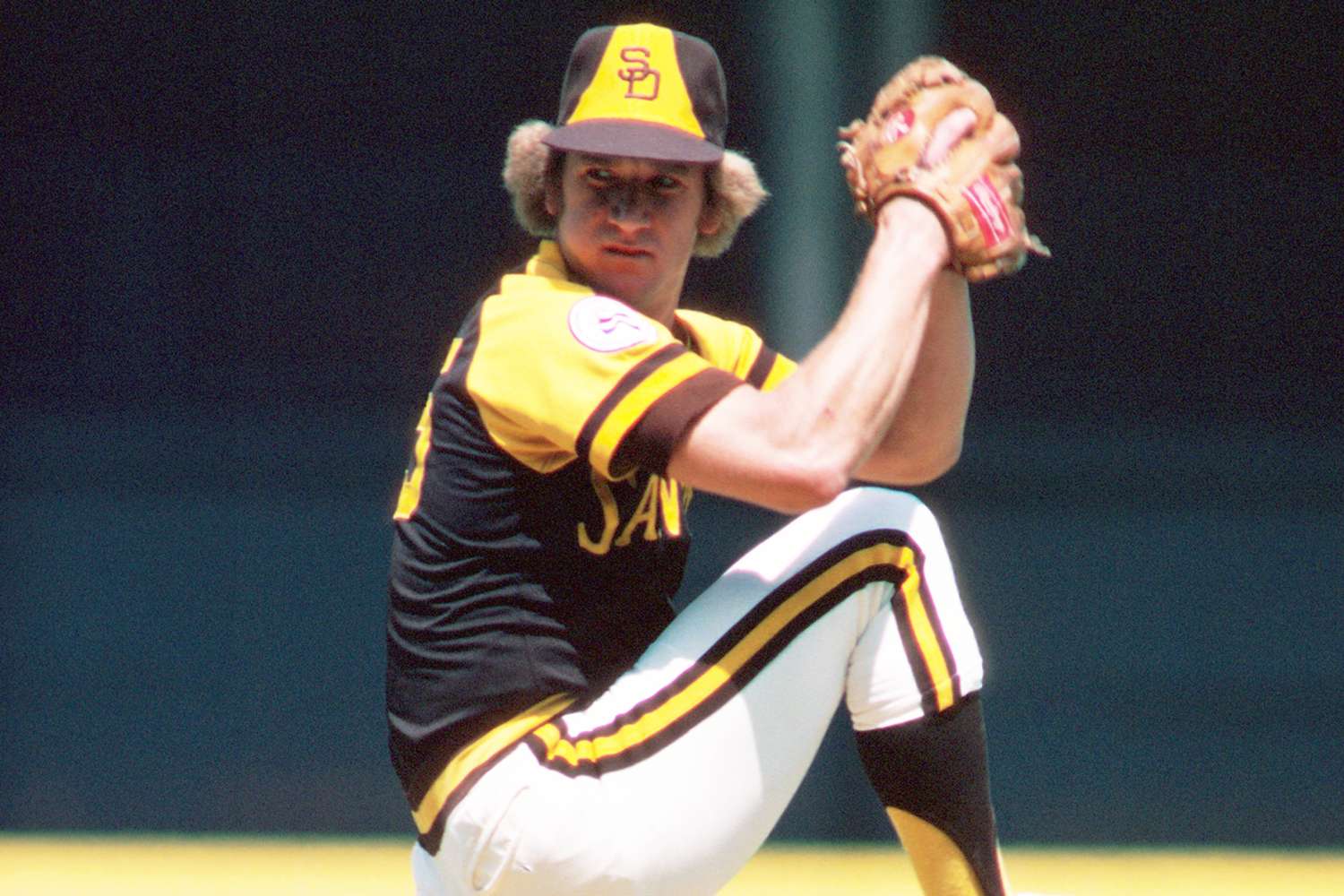
Randy Jones, a Padres legend and 1976 Cy Young winner, died at age 75, the team announced
Jones became a fan favorite and Padres ambassador post-retirement
The Padres retired his No. 35 in 1997, and he was inducted into the team’s Hall of Fame in 1999
Randy Jones, the San Diego Padres legend whose crafty left arm and everyman charm made him one of the franchise’s earliest stars, has died. He was 75.
The Padres announced Jones’ death on Wednesday, Nov. 19, releasing a statement honoring the 1976 National League Cy Young Award winner. A cause of death was not provided.
“With deep sorrow and heavy hearts, the Padres mourn the passing of our beloved left-hander, Randy Jones,” the team said. “Randy was a cornerstone of our franchise for over five decades, highlighted by becoming the first Padres pitcher to win the Cy Young Award. Inducted into the Padres Hall of Fame in 1999, his impact and popularity only grew in his post-playing career, becoming a tremendous ambassador for the team and a true fan favorite.”
“Crossing paths with RJ and talking baseball or life was a joy for everyone fortunate enough to spend time with him, they added. “Randy was committed to San Diego, the Padres, and his family. He was a giant in our lives and our franchise history.”
Jones is survived by his wife Marie and their family. “We extend our heartfelt sympathy to his wife Marie and the entire Jones family during this difficult time,” the Padres concluded in their statement. “RJ will be greatly missed.”
Born Jan. 12, 1950, in Fullerton, Calif., Jones was drafted out of Chapman College in 1972 and reached the Majors the following year.
The athlete spent 10 seasons in the Majors from 1973 to 1982, but it was his remarkable two-year stretch in 1975 and 1976 that cemented his place in Padres lore.
He went a combined 42-26 with a 2.50 ERA and 43 complete games while pitching for teams that struggled to win. He was an All-Star both years, earning the save in 1975 and the win as the National League’s starting pitcher the following summer.
After finishing second in the Cy Young race in 1975 behind Tom Seaver, Jones won the award in 1976 when he led the Majors in wins (22), starts (40), innings (315 1/3) and complete games (25). He even landed on the cover of Sports Illustrated at the All-Star break with a 16-3 record, his sinkerball baffling hitters despite a fastball that rarely cracked 80 mph.
Even Pete Rose — baseball’s all-time hits leader — once abandoned switch-hitting to face him from the left side, only to strike out looking on three sliders.
Randy Jones in March 2013.
Andy Hayt/San Diego Padres/Getty
Fans connected not just with Jones’ success but with his unpretentious style. His signature 1970s perm and soft-tossing repertoire made him a relatable figure on a team still trying to establish its identity.
During his 1976 starts at San Diego Stadium, attendance nearly doubled compared to other games, and his pregame walk to the bullpen routinely drew fans to their feet.
“There was an everyman quality about him,” longtime broadcaster Hal Clement said in a 1996 interview, according to MLB.com. “He wasn’t 6-foot-6, cut and lean. He was an average-sized guy who didn’t throw especially hard. He got by on guile and intelligence.”
Former broadcaster Bob Chandler added that Jones’ outings felt “like David against Goliath,” noting that the Padres “expected to win” whenever he took the mound.
Randy Jones with the New York Mets in 1981.
Diamond Images/Getty
Never miss a story — sign up for PEOPLE’s free daily newsletter to stay up-to-date on the best of what PEOPLE has to offer, from celebrity news to compelling human interest stories.
Jones’ heavy workload eventually caught up with him. He tore a nerve near his left biceps tendon during his final start of the 1976 season, an injury that required surgery and cost him the dominance of his peak.
After being traded to the Mets following the 1980 campaign, he played two seasons in New York before retiring in 1983.
Still, Jones remained one of San Diego’s most beloved sports figures. He settled in North County and became a familiar face at Petco Park as a team ambassador, often chatting with fans and appearing on pregame and postgame broadcasts. His popular Randy Jones BBQ stands became staples at both Qualcomm Stadium and Petco Park.
In 2017, Jones revealed he had been diagnosed with throat cancer. He underwent treatment, announcing he was cancer-free the following year.
Prior to his death, Jones spoke often about the bond he shared with Padres fans, calling their connection “magical.”
The Padres retired Jones’ No. 35 in 1997. He was part of the inaugural class of the Padres Hall of Fame in 1999.