
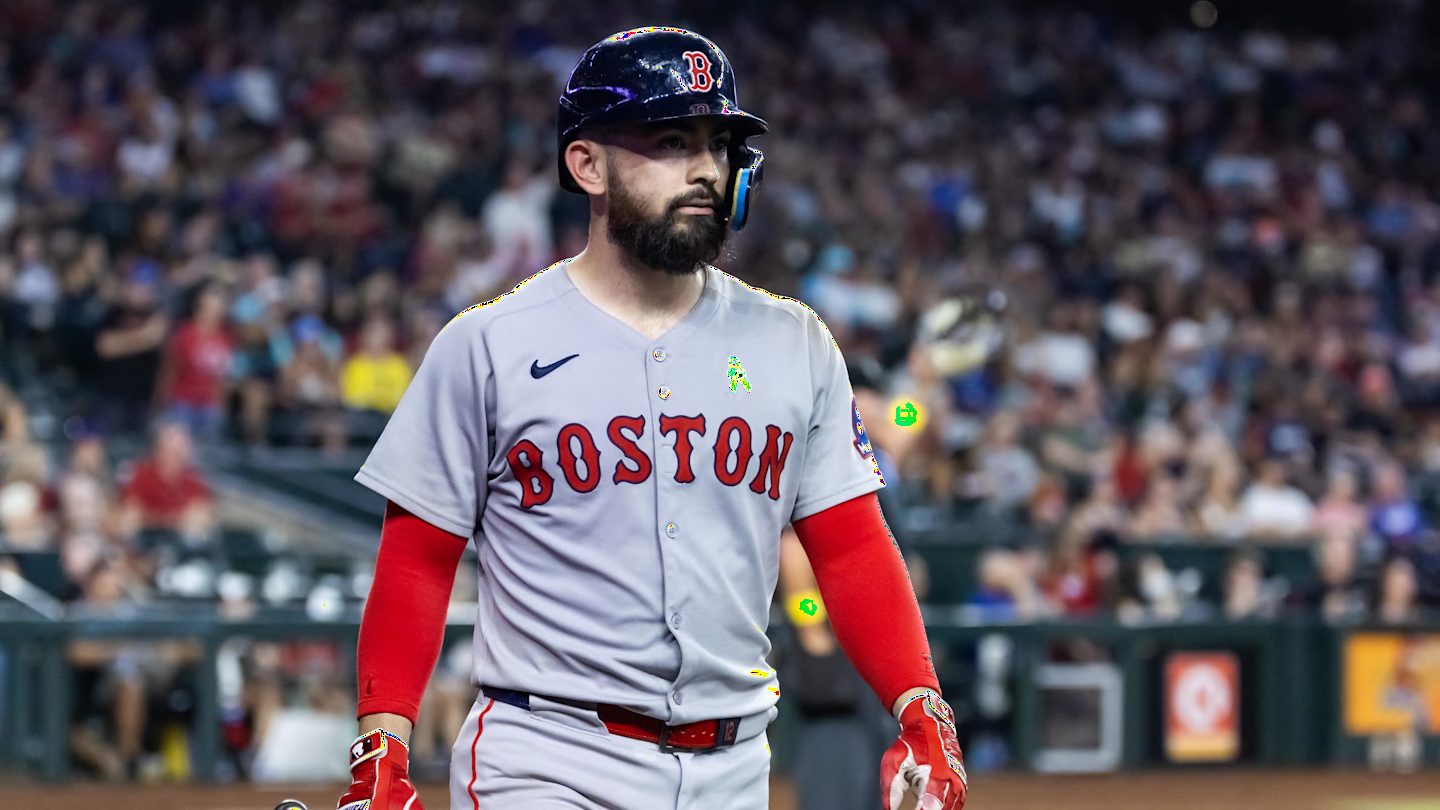
Contracts can get confusing at this time of year, but the bottom line was that the Red Sox had to make a decision on Connor Wong.
After a brutal season in which he lost the starting catcher job, had no home runs, and put up a .500 OPS, Wong could have been on the chopping block headed into his first year of arbitration. But the reality is that the first year is also the cheapest, and as bad as Wong was at the plate this year, he’s shown enough in the past to warrant a mulligan.
Still, with Friday’s non-tender deadline looming, it wouldn’t have been the world’s biggest shock to see the Red Sox cut bait with Wong, which made it newsworthy that they erased any and all doubts about his contract status ahead of the deadline.
Red Sox, Connor Wong avoid arbitration
As the team announced on X/Twitter, Wong and the Red Sox agreed to a one-year contract on Friday to avoid arbitration. Ari Alexander of 7 News in Boston reported that the deal is for $1.375 million, plus incentives.
Wong, the last standing piece from the Mookie Betts trade with the Los Angeles Dodgers, remains under team control through the end of the 2028 season. The term “one-year contract” just means he and the team have agreed on this year’s salary ahead of schedule.
Last week, at the general managers’ meetings in Las Vegas, chief baseball officer Craig Breslow delivered an endorsement of Wong that would have made things awfully awkward had he been non-tendered just a few days later.
“We felt like he was kind of on the cusp of breaking out (after 2024),” Breslow said on Nov. 11, per Christopher Smith of MassLive. “And I think there’s a number of things that we could point to in ’25 that could explain why the performance wasn’t what we had anticipated. But still believe in the player that he is.”
The Red Sox traded for two catchers, 21-year-old Ronny Hernandez and 22-year-old Luke Heyman, on Tuesday. But neither of them will be threats to Wong in the near future.
With Carlos Narváez entrenched as the starter, the Red Sox don’t need the 2024 version of Wong to show up, and if anything, it’s as important to preserve and expand the improvements he made on defense as it is to get his offense back up to speed.
But year two of arbitration often represents a sizable salary dump, so with all that said, don’t be surprised if this conversation takes a different tone in a year’s time.
More MLB: Red Sox Insider Reveals Underrated Reason Boston Is Set Up For Huge Additions