
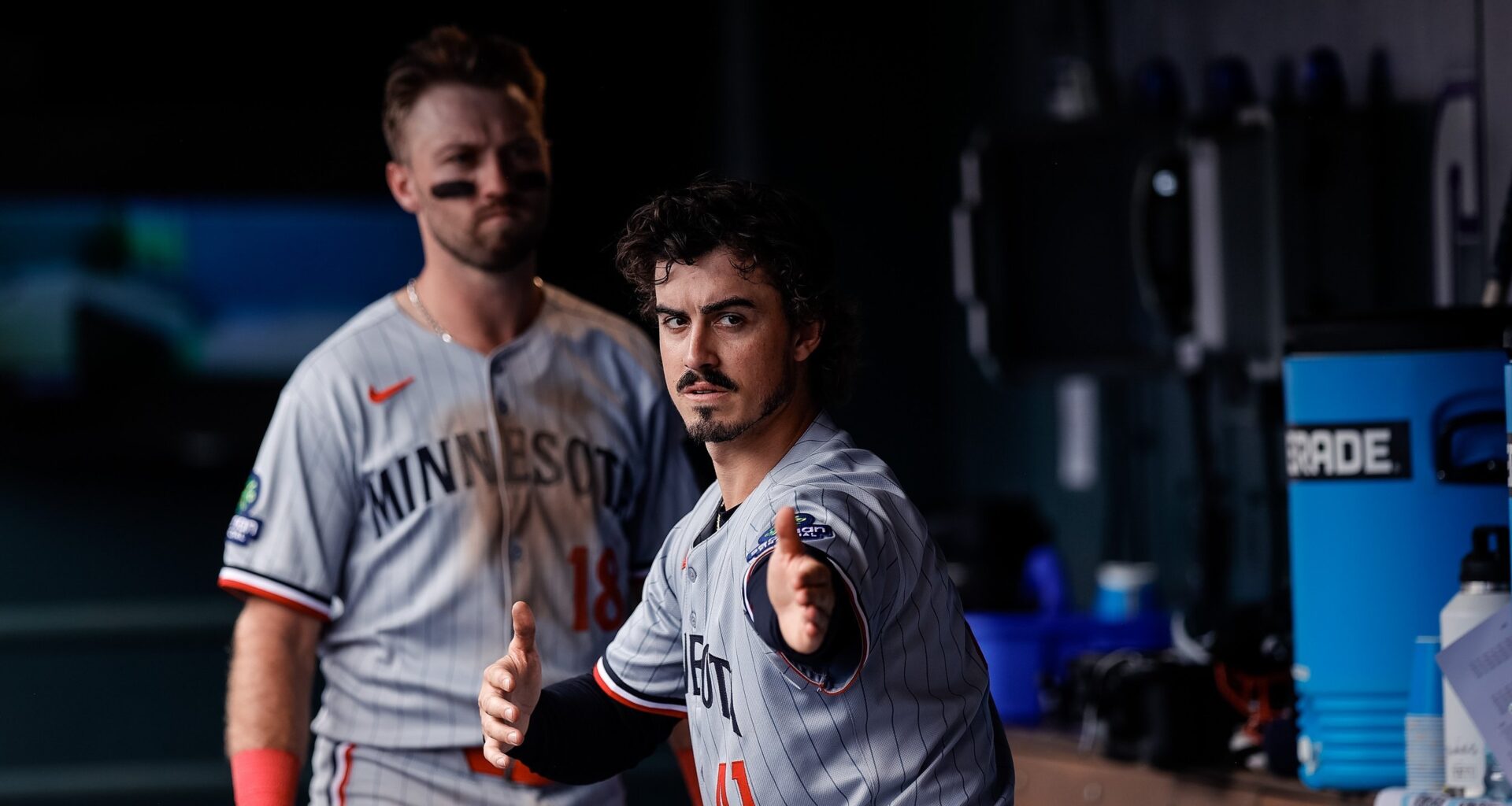
Some of the names at the top of this list are returnees from last year, but the core of the team took on a very different feel after last season’s trade deadline. On paper, the Twins can roll out the same group and be somewhat competitive in the AL Central. However, there are no guarantees that every piece of the core will still be on the roster when the team reconvenes in Fort Myers.
As the Minnesota Twins gear up for the 2026 season, the focus shifts to the core group of players who form the backbone of the roster. Some players have cemented their place as long-term building blocks, while others could be valuable trade assets. In this article, we rank the Twins’ most important pieces at the big-league level, considering their impact and the likelihood of them being traded before the 2026 season.
5. C Ryan Jeffers
Pros: Jeffers emerged as one of the best offensive catchers in the American League over the last three seasons, with his 115 wRC+ ranking behind only Cal Raleigh and Yainer Diaz. His blend of power, improved contact ability, and comfort handling the pitching staff made him a vital part of Minnesota’s lineup. His leadership behind the plate and familiarity with the pitching core add intangible value that is difficult to replace. He has continued to show growth in game-calling and preparation.
Cons: His defensive metrics remain inconsistent, which could lead to questions about his long-term fit as the everyday catcher. He’s a below-average framer and blocker of pitches in the dirt. With only one season of team control remaining, his future in Minnesota becomes more complicated. The Twins have to weigh the risk of losing him for nothing against extracting value at a position where strong offensive performers are rare.
Trade Likelihood: High
He is only under team control for the 2026 season. The Twins will probably trade him this winter, or before July’s trade deadline.
4. 2B Luke Keaschall
Pros: Keaschall’s stock soared in 2025 as he showcased a well-rounded offensive profile and MLB Pipeline named him to their 2025 All-Rookie Team. His bat-to-ball skills; aggressive but controlled approach; and knack for squaring the ball up (to get the most out of his below-average bat speed) quickly made him one of the most productive young hitters on the roster. His versatility gives Minnesota flexibility as they attempt to build a lineup with fewer weak spots. As he gets further away from Tommy John surgery, he can likely start playing the outfield again, too.
Cons: His breakout season is based on a relatively small sample at the major-league level. Teams will want to see whether he can maintain his approach once the league adjusts. His ability to stick at one position is still in question, and while versatility is valuable, it can also create uncertainty about where he fits into future lineup plans. If another team sees him as an everyday player at a premium spot, Minnesota could be tempted.
Trade Likelihood: Low
Keaschall has too much upside and too many years of control for the Twins to seriously consider moving him—unless an overwhelming offer comes along.
3. OF Byron Buxton
Pros: Buxton reminded the organization how valuable he can be when healthy. His defense in center field stabilizes the entire outfield, and his power-speed combination remains one of the most electric blends in the league. He won his first Silver Slugger and finished in the top 12 for the AL MVP. His leadership and presence in the clubhouse continue to matter, especially as the roster transitions to a younger core. When he is on the field, Buxton completely changes what the Twins are capable of doing.
Cons: Health uncertainty remains the defining issue. Even though he made strides in staying on the field last season, Minnesota cannot ignore the years of injuries that have altered his long-term outlook. His defense took a step back in 2025, and he may need to move to a corner outfield spot with top prospects on the horizon. With a no-trade clause in place, any deal would require his approval, and his future becomes complicated if the club continues its shift toward youth.
Trade Likelihood: Medium
He has a no-trade clause, but rumors began swirling that he would be open to a trade if the Twins continue trading veteran players.
2. SP Pablo López
Pros: When López is locked in, he remains one of the most reliable starting pitchers in the American League. He ranked in the top sextile of the league in limiting hard contact and inducing batters to chase pitches outside the zone. His strike-throwing, his ability to pitch deep into games, and the swing-and-miss sweeper (30.1% whiff rate) that has become his signature make him a legitimate top-of-the-rotation arm. He brings consistency and leadership to a staff that needs both during the transition to a younger core.
Cons: He was limited to under 80 innings last season, after averaging over 186 per season from 2022-24. He returned at the end of the year and performed well, but Minnesota must determine whether the ace version of López will return. His contract, while reasonable for a frontline starter, represents a significant portion of the Twins’ payroll. With multiple young arms nearing the majors, the front office may view this as the right time to reallocate resources.
Trade Likelihood: High
The Twins are on a limited budget and will need his $21 million for other parts of the roster.
1. SP Joe Ryan
Pros: Ryan has developed into one of the most dependable and efficient starters in the rotation. His elite command, deceptive fastball, and growing secondary mix give him the tools to pitch near the top of a competitive staff. He was an All-Star for the first time in 2025, after multiple years in which he performed at an All-Star level. With two years of team control remaining, he remains one of the most valuable assets in the organization.
Cons: As Ryan moves through his arbitration years, his salary will steadily rise, and Minnesota must decide whether they are willing to invest long-term in his profile. While effective, he does not possess overwhelming velocity (93.6 MPH on the fastball), and teams may question how his style will age. His value is substantial, and the Twins could maximize their return if they believe his ceiling has already been reached.
Trade Likelihood: Medium-High
Ryan remains a core piece, but his combination of performance, affordability, and projection makes him one of the most valuable trade chips in the organization.
As Minnesota enters a pivotal offseason, decisions regarding these core players will shape not just the 2026 roster but also the franchise’s trajectory for years to come. The front office must balance financial limitations, timelines for emerging prospects, and the desire to remain competitive in an ever-changing division.
Some of these players figure to anchor the next contending Twins team, while others may ultimately bring back the pieces needed to build it. Whether Minnesota chooses stability or a bold reset, this winter will reveal precisely how the organization views its core and how committed it is to reshaping the roster for a more sustainable future.
Will any of the players above be traded this winter? Which player is the most critical building block? Leave a comment and start the discussion.