
We know the Boston Red Sox like to make trades. Garrett Crochet came over in one, and Rafael Devers was sent to the opposite side of the country in another.
In this two-part series, we’ll examine the 10 players on the roster than most often find themselves ensnared in trade rumors. Let’s discuss the pros and cons of trading each, as well as the likelihood that Craig Breslow actually decides to send them packing.
10. Ceddanne Rafaela, OF
Pros:
Rafaela has developed into the best defensive center fielder in baseball. He ranked in the 99th percentile in Fielding Run Value, 99th percentile in Outs Above Average, and 97th percentile in Arm Strength. Considering the Red Sox were one of the worst defensive teams in the league, his presence is essential to building the identity the organization has been pursuing, as evidenced by the signing of Alex Bregman and the acquisition of Carlos Narvaez last offseason. Rafaela also lowered his strikeout rate from 26.4 percent to 19.9 percent and improved his AVG, OBP, SLG, and fWAR, finishing with a 3.8 mark in the latter.
Cons:
While his highs are extremely high (e.g., the walk-off against the Rays), his lows are just as extreme. He hit .218 in the second half compared to .277 in the first and struck out 22 times in both August and September. He also ranked fourth in MLB in out-of-zone swing rate (42.2 percent) and ninth in zone swing rate (75.3 percent). His free-swinging approach is unlikely to change, and his streakiness appears to be part of the package.
Trade Likelihood: Low
Rafaela is highly likely to be protected, especially with rumors surrounding Wilyer Abreu and Jarren Duran as the offseason begins. Despite his offensive inconsistencies, his defense is an invaluable asset for what the Red Sox need. If a team insists on acquiring Rafaela over Abreu, a blockbuster scenario could exist, but given his team-friendly contract and the fact that he is coming off a career year, the Red Sox would be foolish to move him.
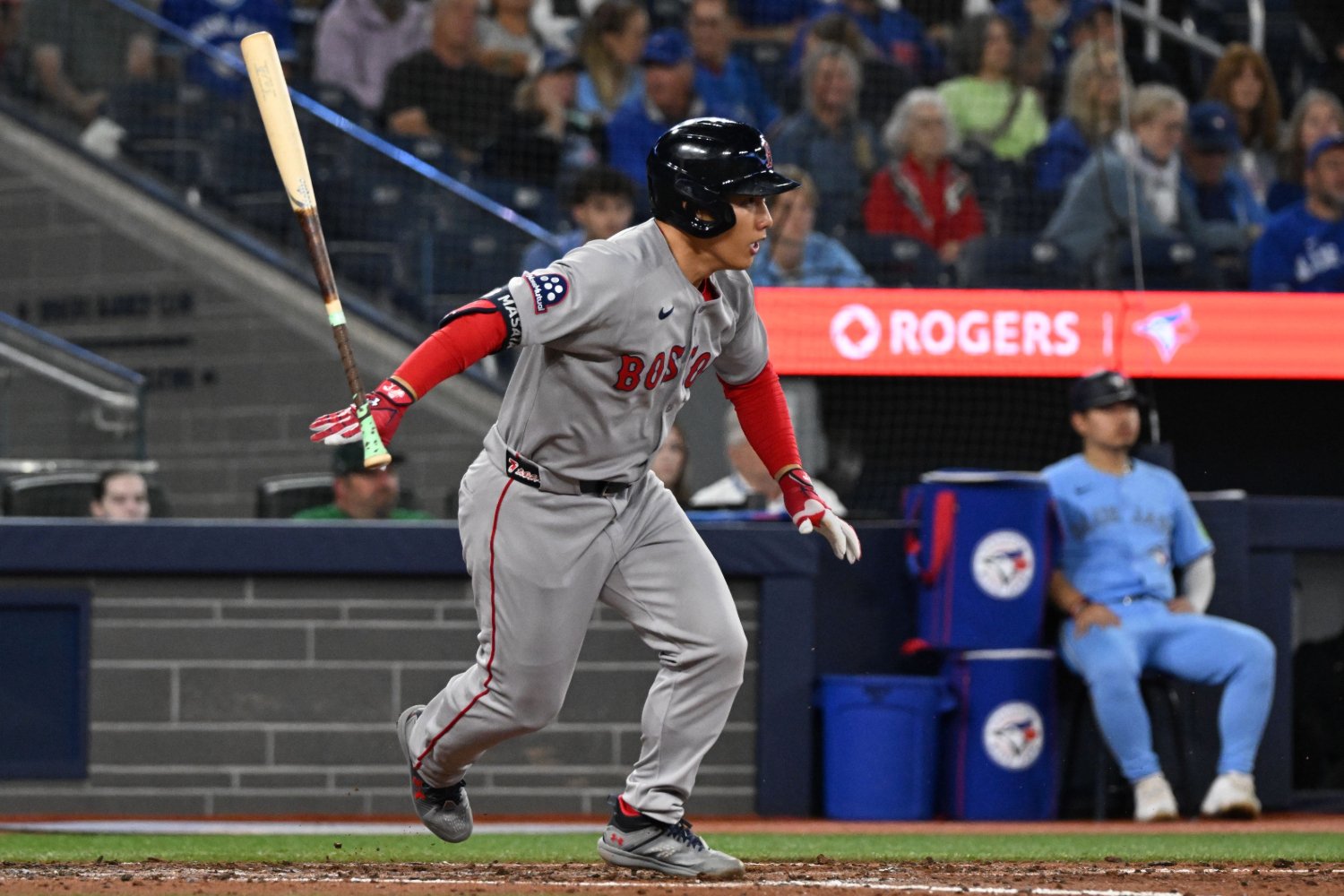
9. Masataka Yoshida, OF/DH
Pros:
Yoshida is a career .282 MLB hitter with an elite strikeout rate, providing stability in the lower half of the lineup. Before his injury-plagued 2025 season, he posted wRC+ marks of 111 and 116. He rarely swings and misses, and when he does swing, he consistently squares up the baseball.
Cons:
The drawbacks are significant. He is one of the weakest outfield defenders in the league, which is why the Red Sox have used him almost exclusively at DH for two seasons. Before the Devers deal, they had nowhere to play him and essentially stashed him on the IL and at AAA until a roster spot opened. At age 32 (33 in July), he is making $18.6 million annually, the third-highest AAV on the team. With limited power, he does not provide the offensive output expected from a DH and may be more of a roster clog than a core contributor.
Trade Likelihood: Medium/Low
A Yoshida trade would likely be a salary dump to create CBT space rather than a move to acquire impact talent for 2026. Boston does not have emotional investment in him, as he was signed under Chaim Bloom. Craig Breslow has already shown a willingness to move contracts he considers inefficient, especially ones he did not issue. A trade feels more “low” than “medium”; it will be difficult to find a team willing to take on his contract. To his credit, though, he is still an excellent contact hitter. Unfortunately, a 54.8 percent ground-ball rate from a DH is simply not tenable.
8.Payton Tolle, SP
Pros:
Tolle rocketed through the system last season, rising from High-A to MLB in a single year. His fastball is one of the best in baseball by underlying metrics, and he posted a 36.5 percent strikeout rate in the minors and a 25.7 percent rate in the majors—impressive for just 16 1/3 MLB innings. As the top prospect in the Red Sox’s system on Talk Sox’s rankings, his ceiling is extremely high. His elevated ERA should not deter evaluators.
Cons:
Tolle struggled with command in the majors, posting a 10.8 percent walk rate—three percent higher than his highest minor-league mark. It is normal to see regression in K%, ERA, or WHIP moving from the minors to the majors, but command tends to be a more stable skill. That must rebound for him to slot in as a reliable No. 3 or No. 4 starter.
Trade Likelihood: Medium
If the Red Sox pursue a major trade this offseason, opposing teams will undoubtedly ask for Tolle, a controllable lefty with premium velocity. Boston likely does not want to move him, but he could be a required piece in a deal for a pitcher of Joe Ryan’s caliber.
Pros:
Like Tolle, Campbell is a high-ceiling, tools-heavy prospect with significant upside. He climbed from High-A to AAA by the end of 2024 and debuted on Opening Day this past season. Fans saw his potential immediately, as he posted a .902 OPS and a .301 average in April, earning a Rookie of the Month distinction. His 89.5 mph average exit velocity that month would have ranked 17th among all rookies this season.
Cons:
His strikeout numbers were unacceptable for a prospect with his profile, contributing to his .134 average in May. His defense at second base was also poor, ranking fourth-worst in MLB according to Outs Above Average. Additionally, Campbell struggled to keep weight on throughout the season, which contributed to his performance decline.
Trade Likelihood: Low
The Red Sox have gotten Campbell back into his routine and believe this offseason has been a valuable mental and physical reset. Breslow has also committed to starting Campbell in the outfield. That statement suggests he either believes Campbell can handle the position or sees him as a possible trade piece—but given that Boston already has four other outfielders, Breslow seems more likely to move one of them instead. Considering the eight-year, $60 million extension Campbell signed in April, the odds of a trade are low.
6. Garrett Whitlock, RP
Pros:
Whitlock dominated opposing hitters this season with a 2.25 ERA. Across 72 innings, he increased his strikeout rate by eight percent, and opponents hit just .205 against him. He also increased his sinker velocity by 2.2 mph, contributing to his highest ground-ball rate since his 2021 debut.
Cons:
Reliever performance can be volatile, as shown by Whitlock’s 2023 season, when he posted a 5.15 ERA in 71 2/3 innings. After that season, he threw only 18 1/3 innings in 2024 because of an oblique injury, raising questions about durability. He also appeared to wear down during the postseason, particularly in Game 3 of the ALDS against the Yankees.
Trade Likelihood: Low
Championship-caliber teams do not trade elite bullpen arms—they acquire them. Boston’s current trajectory does not align with dealing a setup man like Whitlock. He offers immense value, and he could close for multiple teams, making him even more essential to keep. Any time the Red Sox entered the eighth inning with a lead and both Aroldis Chapman and Whitlock available, it felt almost automatic.
The Red Sox should be focused on acquiring talent, not trading away up-and-coming or established contributors, unless doing so improves another area of the major-league roster. Breslow made four trades in one day already this offseason. It would not be surprising if he executes another substantial move in the near future.