

HOUSTON — In the first inning of his first minor-league game, Dan Hennigan dove for a ground ball destined for center field. The undersized shortstop secured the baseball, spun for a throw to first base and recorded the out.
“We went to throw it around the horn, and I couldn’t pull my arm back,” Hennigan said. “Flung it to the third baseman. Tore my labrum. Sat in a sling for a while and started going down this hitting rabbit hole.”
Hennigan never played another game in affiliated ball, but still became fascinated with the finer points of hitting. He parlayed it into a two-year stint as a hitting analyst for the Minnesota Twins, founding a Pennsylvania-based hitting center he still operates and, last year, the title of the Houston Astros’ minor-league hitting coordinator.
Hennigan’s work earned the attention of other major-league teams seeking hitting coaches this winter. Houston, in turn, promoted the 35-year-old biomechanics guru to director of hitting and offensive coordinator as part of manager Joe Espada’s overhauled offensive staff.
Hennigan will not be in uniform as a coach but will assist new hitting coach Victor Rodriguez and assistant Anthony Iopace with game planning. Hennigan’s title of “offensive coordinator” is new within the Astros’ organization, part of Espada and general manager Dana Brown’s vision to have defined roles and duties within Houston’s offensive infrastructure.
Hennigan joined the Crush City Territory podcast, co-hosted by The Athletic’s Chandler Rome, on Thursday evening to discuss his career trajectory and his role this season. Below are a few excerpts from the 45-minute interview, which have been edited for brevity and clarity. To download the full podcast, click here.
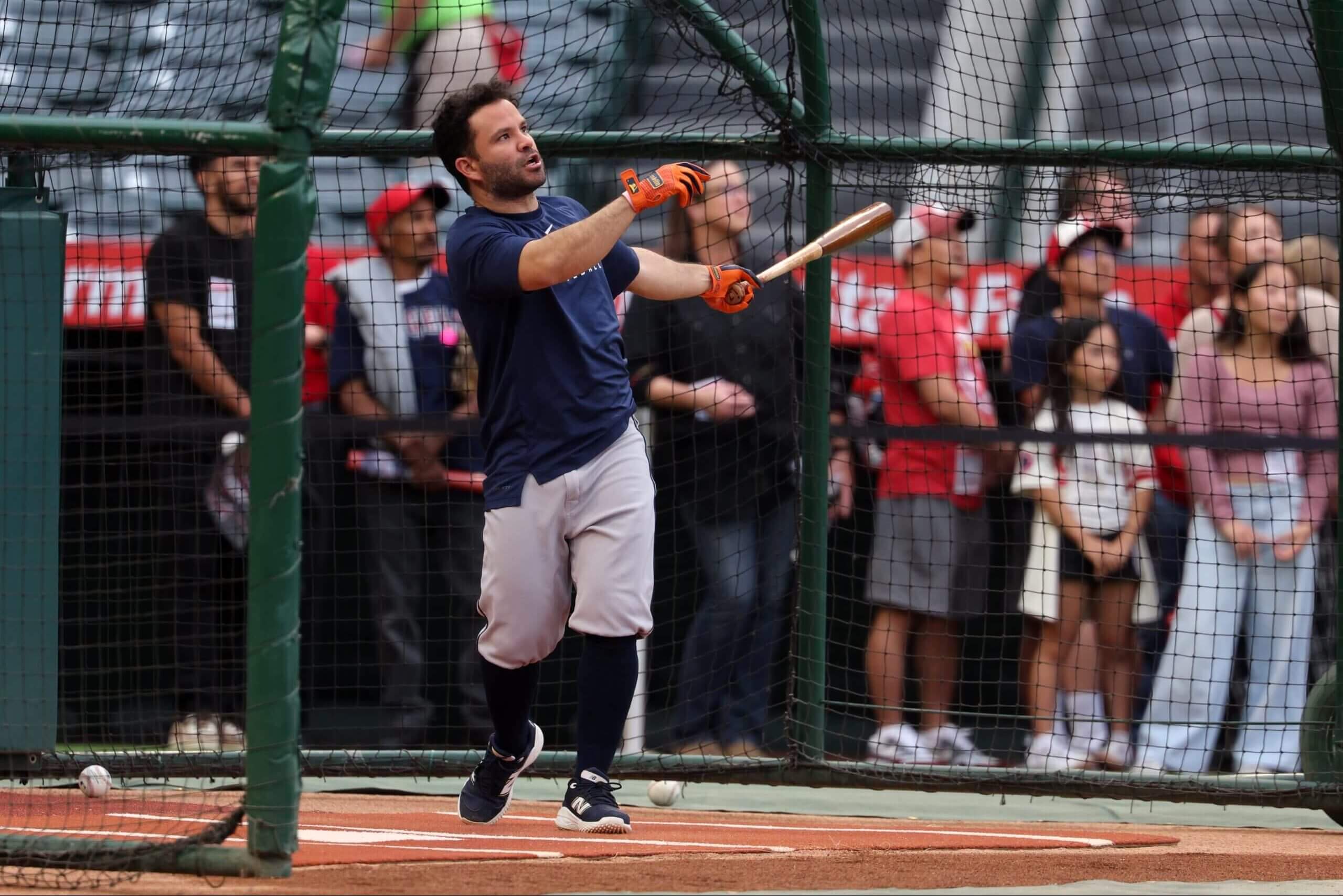
“I would like there to be true conviction and purpose in every at-bat,” offensive coordinator Dan Hennigan said. (Kevork Djansezian / Getty Images)
What will your day look like to best prepare for a game this season? What does it mean to be the offensive coordinator?
During the game, I’m going to be in the booth. I’m going to have a headset. I’m going to try to run a spread offense.
Hennigan will not be in uniform as a member of the major-league coaching staff, and it stands to reason he also will not be calling pass plays with runners in scoring position.
Part of my role is the same as last year, as the director of hitting. Essentially, that is to build a repeatable, scalable process for how we prepare, how we can integrate the different departments and make sure we’re moving the needle with the young guys.
That part isn’t going away. I’m still going to try to move the needle on the processes and how we can integrate everything. On more of what probably fans care about, it would just be the game-planning side. Hopefully, I’m taking the heavy lifting off the coaches where they can focus on being in the cage and working with those guys. My role is to provide options, essentially. Clean, actionable game plans based on what the opposing pitcher and who we think the relief pitchers are going to be that day or that series (and) how we, as a unit, can hopefully put together something that isn’t just about ambushing or taking all the pitches, but finding the right strategy for that specific team to put runs on the board and not just have a really good batting average and get a lot of hits, but truly win 90 feet at a time.
I think we were 21st last year in runs scored per game, and I would love to be back in the top-10. Ultimately, the coaches and hitters, they can pick what fits them, but I’m basically going to collaborate with them and build out, “Here’s the options based on the shapes and patterns of those pitch shapes and our swing shapes.”
We’ll have a unified thing that the team is trying to do and also personalize things for each of our hitters, so we lean into our strengths. Hopefully, we get these little microadvantages. We’re still going to have games where we get shut out, and everybody’s going to say we need to get fired. And maybe they’re right. But we’re also going to have games where that second or third time through the lineup, it starts to wear on them a little bit.
How did your time as hitting coordinator last season prepare you for this role, and what can you carry over from that experience to this one?
Put simply, we have this unbelievable pitching bible, for lack of a better term. It’s so deep and has years and years of information baked into it and built upon it. And on the hitting side, while there was unbelievable minds that went through that process and minor-league coordinators, there wasn’t a true system. It was like, that coordinator did really well, and another team poached him. It was just open.
We had to build something out that was scalable to get 75 prospects to improve and also make it customizable and personalized in its own way. The only way to pull that off and make it autonomous in any capacity was to be able to integrate with all the different departments. All of those different departments have people that are way smarter than me. Learning from them, picking their brain (while) never really losing my North Star on what I know I needed and what I know is going to move the needle for us. Getting their input and how their brain operates has allowed me to really take in all these lenses of the same thing we’re going to tackle.
That has allowed me to become a little more versatile. On the other side of it, in my separate life (with Hennigan’s hitting company Brains and Barrels), this is something that I’ve already been doing for a couple years. Proud of the results we have, and we have a good ROI with our clients. This isn’t new, in many ways, it’s just new in this public eye.
What have your early discussions been like with new hitting coaches Victor Rodriguez and Anthony Iapoce? And how do you envision the three of you working in concert during the season?
The talks have been great. We’re still getting to know each other, and I’m excited to learn from them. They’re both very impressive and have a good resume. In terms of with the players and in the cages, Vic is the big dog. He’s No. 1.
I will handle the future, essentially. I will prep for everything that’s going to happen. I’ll lay out how I think we can win. That’s not just, “This is what this pitcher has and this is what he throws.” More so, “This is how we really think we can have an advantage in this series or in this game.” I’ll lay out multiple options. We will talk with the players about what they feel comfortable with, what they don’t feel comfortable with. I will then present that to (manager Joe Espada) and Vic. They’ll look at what they like about it, and they make the final call. From there, that information gets disseminated to the players. At certain times, I’ll run the meetings and the presentation and some of the educational stuff — especially early on — but ultimately Vic will look at it, dissect it, see what feels best, and then we’ll go into a game with a unified message we all feel good about.
In general, if you have a group of personnel that does things one way — be it swinging a lot or chasing a lot — is it easy to get guys to sway more toward the middle, or is that more of a gradual process?
Everybody likes to hear about themselves. And if you can present and educate information about that player in a way that resonates with them and show them sort of a light at the end of the tunnel, of, “This is not only a thing we think you can do better, but it’s also something that would be very rewarding for you.”
If you can provide that in a way that resonates with that player and properly educate and get them to see and potentially feel that it was their decision — and in many ways it is — I think that’s where you start to see players be willing to make the adjustments.
In your discussions with Rodriguez and Iapoce, is there one thing you guys want this lineup to improve upon, or is there one thing you guys want this lineup to be known for that maybe has gone away in the past couple of years?
I would like there to be true conviction and purpose in every at-bat. In certain games, that may be (by) being aggressive. That’s not going to be super often, but that may be the case. The Blue Jays just showed you can be extremely aggressive and ambush things and win a lot of playoff games. The Rangers did it in (2023), they jumped on teams and just ambushed. However, there’s also teams like the Dodgers that just wear you down.
What I would like our team to be known for is that every single game, we are versatile … I want to be able to be versatile enough where our three-hole hitter can handle a certain pitch in the 0-0 count, but is also willing to take multiple strikes if it’s not in a certain part of the zone, get to that 3-2 count and still feel convicted that they can win that at-bat and move the chain. And for us to be willing and able to dramatically alter our identity game to game if it gives us an advantage against that specific starter and that specific group of relief pitchers we think we’re going to face. I’d like to be known for the fact that teams can’t really do one thing against us.