
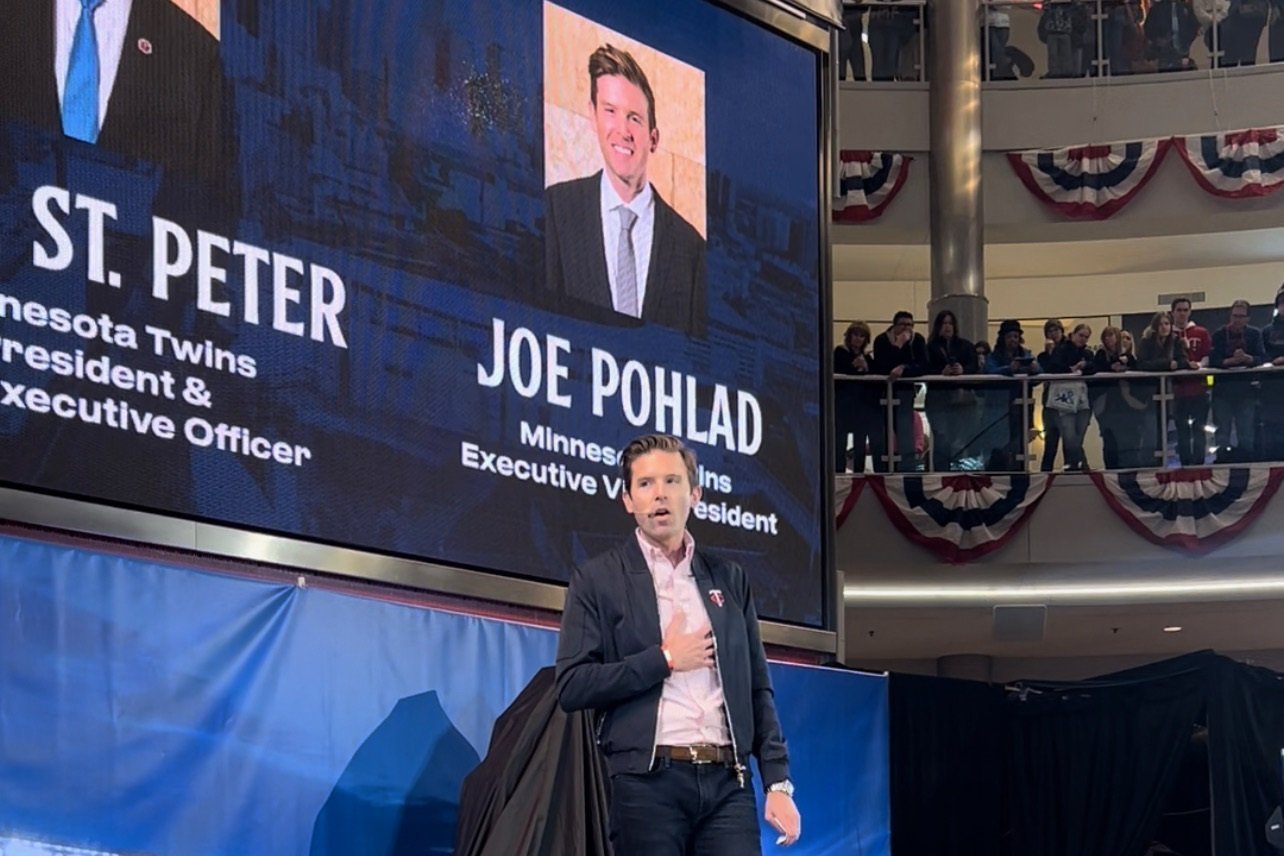
The Minnesota Twins have spent the last three seasons in a whirlwind, from playoff team to multiple collapses. Yet as another winter begins, the most significant questions once again have little to do with roster construction or player development. Instead, all eyes are on the owners’ suite, and the future of a franchise is still stuck in the limbo of a half-completed ownership restructure.
Commissioner Rob Manfred recently offered the first public update in months, confirming that the Pohlad family’s push to sell minority stakes is still underway.
“Those non-control interest sales are in process—on track and in process,” Manfred said, sharing no further details.
His comment was brief but telling, a reminder that nothing has been finalized and that the process is dragging into its second offseason. For a front office already asked to navigate shrinking margins, the uncertainty does not help.
The Slow Burn of a Sale That Wasn’t
In mid-August, the Pohlads abruptly pulled the Twins off the market after nearly a year of shopping the entire franchise. Instead of a complete sale, the club announced the addition of two minority investment groups. Details were scarce then, and they remain scarce now. Fans still do not know who is involved in either group, and the deal is not complete, though indications are that the incoming investors will hold roughly 20 percent of the team once approved.
The intended purpose of the sale was equally significant. After failing to find a buyer at their targeted valuation (around $1.7 billion), the Pohlads elected to take on minority partners to pay down over $400 million in existing debt. Redirecting even a portion of that financial relief into baseball operations would signal commitment not only to the president of baseball operations, Derek Falvey, but also to a fan base weary of mixed messages. So far, that reinvestment remains a hope, rather than a reality.
A Front Office Waiting for a Number
While the ownership transition drags on, the baseball operations department is left working without a clear payroll budget for 2026. That uncertainty creates an impossible task for a front office trying to balance the possibility of adding with the reality that they may be told to subtract, instead. According to multiple reports, ownership has not communicated a target number for next season, leaving the baseball side to prepare for every scenario. The difference between an $85 million payroll and a $115 million payroll is substantial, and both figures appear to be in play as potential ceilings.
This is why recent comments from Falvey carry a different tone. He emphasized three separate times that his focus is on adding to the roster, not breaking it down. He then noted that achieving that outcome depends on what “we” are allowed to do. In a vacuum, this might seem like standard front office language. Given the situation, however, it feels like Falvey is subtly drawing a line between his own intentions and whatever ownership ultimately decides.
Players Notice What Is Happening
Fans are not the only ones paying attention. Byron Buxton made it clear that he appreciates the stability of playing under the Pohlad family, noting that their presence makes future conversations easier. But even that loyalty has limits. Reporting from The Athletic suggests that Buxton wants to play for a winner and may reconsider his stance if the roster teardown continues—especially if pitchers like Joe Ryan or Pablo López are moved.
Players watch the franchise’s direction as closely as fans do. They know when a team is pushing forward, and they know when ownership is forcing a retreat. If uncertainty persists deep into this winter, it is not unreasonable to expect more players to ask questions about where the organization is heading.
A Story Bigger Than a Single Offseason
The latest frustration stems from a familiar theme. When ownership hesitates or defers major decisions, the baseball operations department is left to absorb the fallout. The Pohlads have earned a reputation for slow decision-making in financial matters, and this prolonged minority sale only reinforces that perception. The team cannot fully rebuild or fully compete until ownership clarifies its plan. For now, the Twins are stuck straddling two potential tracks, neither of which leads to sustained success.
So, where do things go from here? As fans wait for action, the truth is that the next move belongs to ownership. Once the minority sale is complete, the Pohlads must communicate a payroll direction and allow the baseball operations group to act accordingly. Until then, every rumor—whether involving López, Ryan, or any other player—will continue to feel like guesswork.
What do you think the Twins should do once the minority sale is finalized? Do you trust the Pohlads to provide a clear direction? And how much patience do you have left for an ownership group that continues to leave the front office and the fan base in limbo? Leave a comment and start the discussion.