
With the amount of pitching talent on the free-agent and trade market this winter, a number of big moves are expected to be made by teams looking to add depth to their starting rotations between now and Opening Day. The first domino recently fell as veteran ace Sonny Gray was traded by the St. Louis Cardinals over to the Boston Red Sox, setting the starting pitching trade market for the offseason.
Although Gray is entering his age-36 season, he’s still a well-above-average pitcher in today’s game, and was going to be sought after by contending teams considering it was probably time for the Cardinals to let go of their aging stars and cut some payroll.
With only one more year of control in which Gray is owed $31 million in 2026 before a $30 million mutual option in 2027, the return was not going to be massive. In fact, the Cardinals sent $20 million to the Red Sox to help offset the cost. The return for Gray yielded Brandon Clarke, one of the top pitching prospects in Boston’s system, along with Richard Fitts, a young starter with 65 innings of big league experience under his belt and some promise.
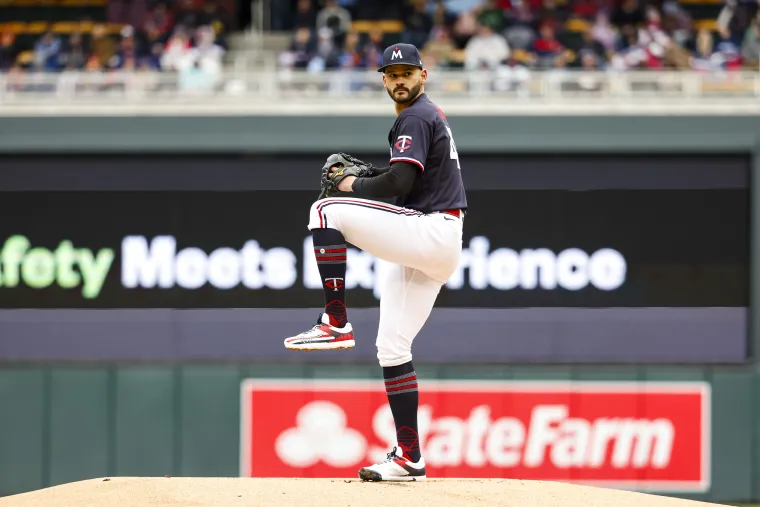
A few pitchers on the trade market along with their organizations find themselves in a similar situation to Sonny Gray and the Cardinals. One in particular sticks out as a potential front office paying close attention to this trade and what it means for one of their trade chips. That happens to be the Minnesota Twins and Pablo Lopez.
Pablo Lopez’s similarities to Sonny Gray make his case as a trade chip more interesting
Although he’s six-and-a-half years younger than Sonny Gray, the two pitchers draw a lot of similarities on the mound. Both throw a lot of innings, possess wide arsenals, strikeout a lot of batters while limiting walks, and would be at least the number two starter on a majority of MLB teams. With that being said, Sonny Gray’s thirties – which have been very good – might help project what a potential suitor may be able to get out of the next couple of years from Pablo Lopez.
Compared to the potential $61 million left on Sonny Gray’s final two years of his deal, Lopez is due just $43.5 million. Lopez is younger, cheaper, and the Twins might have some more leverage than the Cardinals had—the Twins are not tied up in any high-dollar contracts like the Cardinals and face little pressure to cut payroll further after their trade deadline fire sale.
If they were to hold on to him until the 2026 trade deadline, it’s likely they could still yield the same type of return considering teams’ willingness to overpay for starting pitching at the deadline. Although there is no pressure for them to move Lopez, Minnesota is in the beginning stages of a rebuild. Acquiring all the prospect talent they can get their hands on should be the prime directive.
Regardless of Gray’s age and cost, the Cardinals still managed to land two pitchers that could have a future home in their major-league rotation. A Pablo Lopez trade should command a bigger haul, so there’s no reason the Twins shouldn’t be listening to offers on him throughout the winter.