
There was a pathway for the Houston Astros to open up some breathing room against the luxury tax threshold this offseason. It would have taken making some tough decisions and making some hard cuts at the non-tender deadline. However, aside from designating Ramon Urias for assignment and trading Mauricio Dubón, they didn’t take it.
Instead, in the aftermath of those two moves, the club decided to tender contracts to all 11 arbitration-eligible players on the roster. In some cases, like ace Hunter Brown, that was a no-brainer. But in other instances, it certainly feels as if this was taking the easy way out, and keeping the ceiling low for 2026.
The Astros’ arbitration decisions already seem like the fallback plan has become Plan A
With the $244 million luxury tax threshold set as the arbitrary line in the sand, the Astros find themselves without much wiggle room to operate this winter. The best estimates have them with only about $26 million to work with when it comes to filling holes.
That’s not a ton of money in the grand scheme of things, and it all isn’t truly available. That number could change slightly based on the actual arbitration results, but, more importantly, the Astros will need to reserve some of that for in-season moves.
With a few million needed as that in-season cushion to avoid going over the line due to a waiver claim, minor league promotion, or in-season trade, it’s going to be hard to fill very many holes.
The top need, of course, is a running-mate for Hunter Brown atop the rotation. The best free-agent options will command at least as much as the Astros have available, if not more. That means the club is likely looking at second-tier options. It also means that the three through five spots will be handled by incumbents who bring a lot of uncertainty, rather than a steady free-agent veteran.
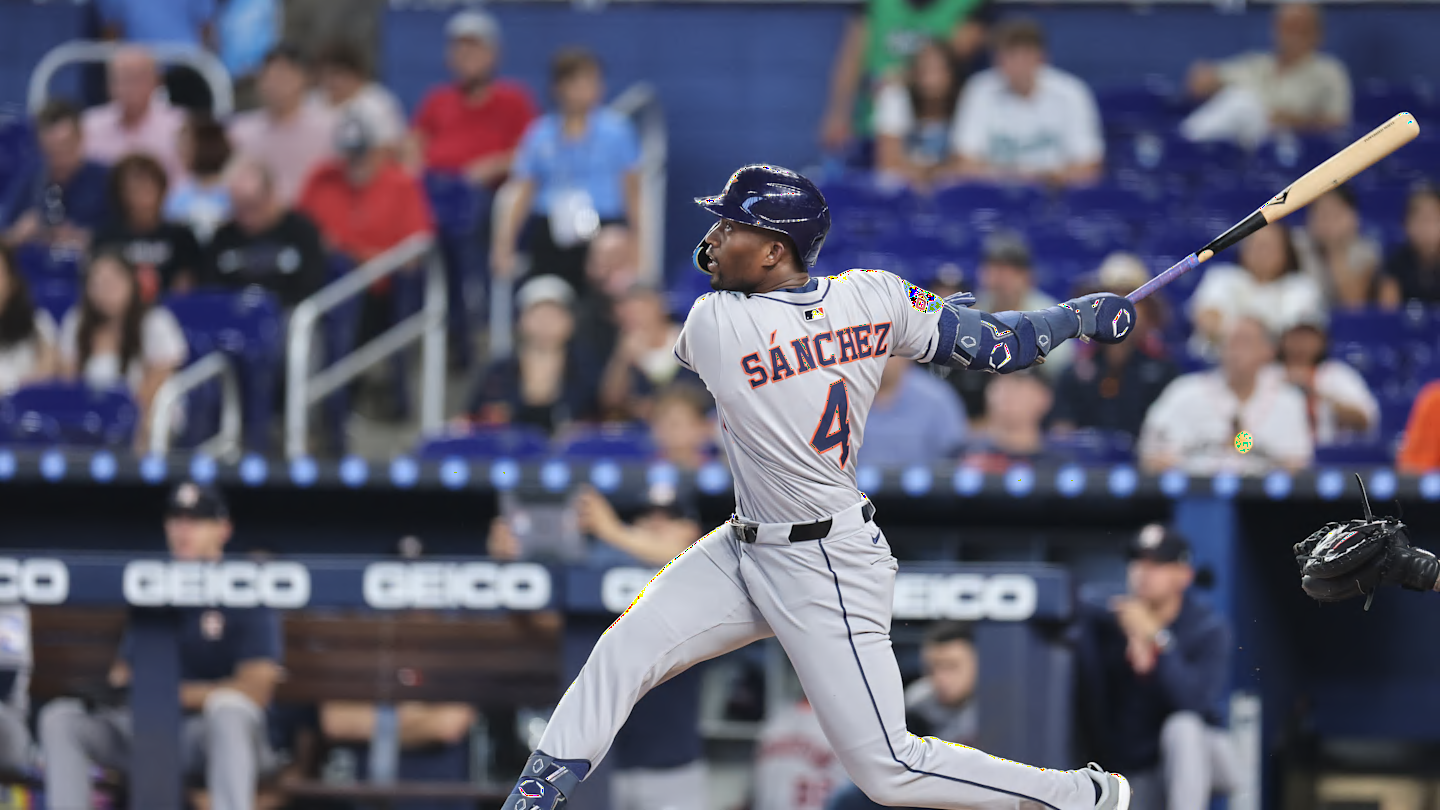
The next biggest need is a potent left-handed bat. That was supposed to be Jesús Sánchez at the trade deadline, but his .611 OPS since landing in Houston had fans dreaming for more. Sánchez was one of the players Houston could have non-tendered to free up a decent chunk of change, but now, barring a trade, it looks as if the club his hoping for improvement on his part rather than a true upgrade.
A competent second baseman to at least split time at the keystone while Jose Altuve also roams left field would have been nice, but the decisions made here pretty much put that out of the question.
All in all, the club had the chance to free up more space, and while there are still moves that they can make, such as trading Sánchez and Christian Walker, it will be exponentially more difficult to maneuver and free up cash.
Therefore, the non-tender deadline was the hedge. Houston didn’t want to be left out in the cold if potential upgrades saw their markets heat up beyond what they were willing to pay, so they chose to stick with what they had rather than risk opening a new hole. It’s the conservative route, and a choice that very well may come back to bite them.