
[Heungbujeon-131] [Ori Journal-37] LA Clippers
[Ori Journal]\n The “Ori Journal” series is a combination of the exclamation “oh” that comes out when you hear a story you didn’t know and “regional,” which means region and region, and is an interesting original content that originated in many cities and regions around the world. If you ‘+subscribe’ to the press page below, you’ll find a more informative and interesting story\n.
The wanderer of the ever-tenant team
The San Diego Padres, where Kim Ha-sung once played, are a representative major league club based in San Diego. In fact, San Diego was once a city of professional sports representing California, which even had an NFL and NBA franchise. However, the only big league team left in San Diego is the Padres. The NFL’s San Diego Chargers left for Los Angeles. The NBA also had a team representing the city twice, but they couldn’t protect it. One of them is the San Diego Rockets, which continues to be the current Houston Rockets, and the other is the LA Clippers to be introduced today. Once on the court under San Diego’s name, the team headed north in search of a bigger market and a certain box office hit. Coincidentally, both teams chose LA, the largest city in California. How did San Diego become a city that failed to protect its home team.
 사진 확대 L.A. Clippers logo
Buffalo threw a game-winner in the doldrums
The starting point was Buffalo, New York, in 1970. Buffalo was already in decline at the time, but Paul Snyder, the founder of the local real estate company Snyder Corporation, has not yet given up hope for the city’s future. He led the creation of new teams in line with the expansion trend of the U.S. professional basketball league to revitalize the local economy and expand his business influence. Thus, the Buffalo Braves, led by local capital, was born. This team was not just a sports club foundation, but a real estate agent’s urban development project and a symbolic attempt to change the constitution of a manufacturing city called Buffalo into a service and cultural industry.
 사진 확대 Buffalo Braves logo
At the time, the NBA was making a big expansion by accepting three new teams along with Portland and Cleveland, and Buffalo planned to join that trend. The first coach was legendary Syracuse Nationals center Dolph Shades, and the coach was Johnny McCarthy. Nate Bowman, Emmet Bryant, Freddie Crawford, and Bob Kauffman were recruited, but the performance was disastrous, as was the case with the new team. In the three years from the 1972–73 season, the team won only 65 games in total.
a collapsing city, a sloping boat
But the bigger problem was the declining city. The structural problems in Buffalo during this period were too great. The industrial base was rapidly weakening, the population was withdrawn, and both businesses and households could not afford it. Above all, the profit structure of the professional basketball club at the time was heavily dependent on on-site ticket sales rather than broadcast rights or global sponsors as it is now, so the size of the city itself determined the upper limit of profits. No matter how hard Paul Snyder worked to build the team, there was a clear limit to the cash flow that the city of Buffalo could make. Management-wise, Snyder locked assets that needed a long-term strategy in short-term market limits. It overlooks the basic principle that market growth potential is more important than asset growth potential.
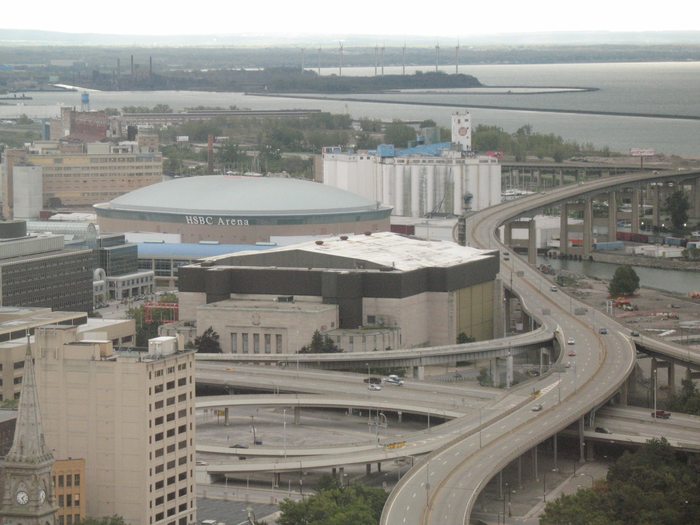 사진 확대 Buffalo Memorial Auditorium, home of the Buffalo Braves
Eventually, in 1976, Snyder sold the Braves to Kentucky politician and former professional basketball team owner John Brown. What’s noticeable is that the sale price was relatively very low. This was a result of Brown’s extreme propensity to reduce costs. During the acquisition process, he said, “We will take over cheaply now, but we will share some of the income generated by the team with the former owner.” On the surface, it seemed to be a win-win for each other, but this structure was a device that made the team an “account out of cash” rather than an “asset growing in the long term” from the beginning. For Brown, the team was not an object of growth, but a financial tool to minimize costs and prevent deficits by selling players’ assets if necessary.
A team that broke apart from the fans
This style of his is immediately evident by decision-making. He fires Jack Ramsay, the master who led the team to consecutive playoffs, and puts a good listener as the manager. The key was cost, not performance. Brown then started selling key players one by one, citing financial difficulties. Prospects and star players were moving to teams with bigger markets and more money, and the Braves were losing their balance internally. If the company begins to sell its core assets that support its long-term competitiveness, the company will gradually enter a phase of dissolution. The Braves also followed that path.
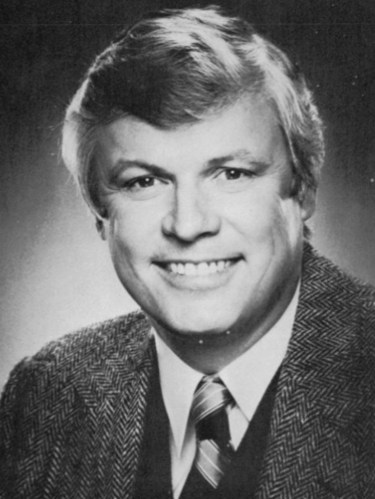 사진 확대 John Brown
Fans weren’t watching it either. Buffalo citizens began to give up their affection for the team as they watched the club undermine the team’s competitiveness one by one based on the numbers in front of them. He turned to the ice hockey team and the American football team that shared the same stadium, and the basketball team’s seats became empty. Eventually, the brand value of the entire team collapsed. It was the worst situation where the players were thinning out and fans were leaving.
Eastern Team to Leave for Western San Diego
In this situation, Brown eventually loses interest in the team itself. When Irv Levin, the owner of the Boston Celtics, proposed a way to trade the franchise, he gladly accepts it. After taking over the team, Levin leaves Buffalo and moves to San Diego. The new name chosen at this time was ‘Clippers’.
 사진 확대 San Diego Clippers
This was taken from a speedboat that traveled quickly to and from the western coast of the United States in the 19th century, and was a choice reflecting the identity of the port city of San Diego. The team’s name contains the symbol of “fast ship, new route, adventure and movement” in conjunction with the city’s natural environment, naval base, and maritime trade history. The shift from Buffalo to San Diego reflects the shift of the times from a declining industrial city to a growing coastal city. The club declared that it would change completely by riding the flow and changing its name.
Failed Rebranding, Tenant’s Sadness
But San Diego was not a universal answer either. Levin tried to rebrand by changing the team name and bringing in masters and unique players to solve the financial problems left by the previous owner. In the first few years, the chemistry between the city and the team was right, but structural problems soon resurfaced. The basketball team’s position was ambiguous because baseball and American football teams were already in the market. On top of that, star players who have not been able to perform due to injuries and conflict factors that harm the team’s atmosphere will lead to financial difficulties for the club and it will be difficult to pay players’ wages on time. Once again, it has been confirmed that the success or failure of a sports organization is not just a matter of performance, but is directly related to the urban economy, market structure, and owner’s strategy.
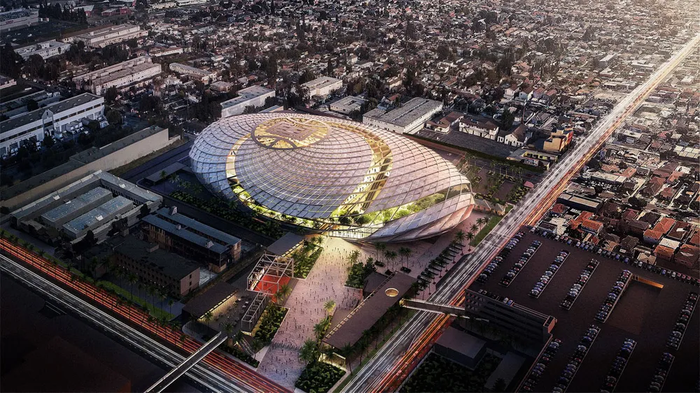 사진 확대 Intuit Dome, the new home of the Los Angeles Clippers
In the end, Levin sells the San Diego Clippers to Los Angeles real estate tycoon Donald Sterling in 1981. Sterling was a typical urban capitalist who built huge assets out of real estate, and the basketball team was more of a symbolic asset to show off his name and influence than a straightaway business in his eyes.
Wandering Sailboat to L.A
He has had the idea of moving the team to Los Angeles, not San Diego, right after the acquisition, and actually drags the team up to LA without the league’s explicit permission. Clashes, controversies and lawsuits with the league followed, but Sterling did not back down until the end, eventually becoming a fait accompli over time.
 사진 확대 L.A. Clippers Past Logos
The destination is Los Angeles, California’s largest city. It was a huge screen-like city that had already appeared in countless movies, songs, and sports legends. But there was already a team of colors on the screen. Purple and gold, the name Lakers. When the Clippers arrived here, they started from the beginning, not just another team in the same city, but rather like a folding chair at one end of someone’s fancy living room.
They share the same gym, the same court, the same locker room hallway, but the angle of illumination was completely different. Some nights the Lakers won legendary games in the same stadium, and the Clippers quietly recorded losses the next day around the same time. The positions of the two teams were clear in the sentences of the press, the jokes of the fans, and the memories of the city. One is an old owner, the other is a tenant who is likely to pack up and leave at any time when the contract is over.
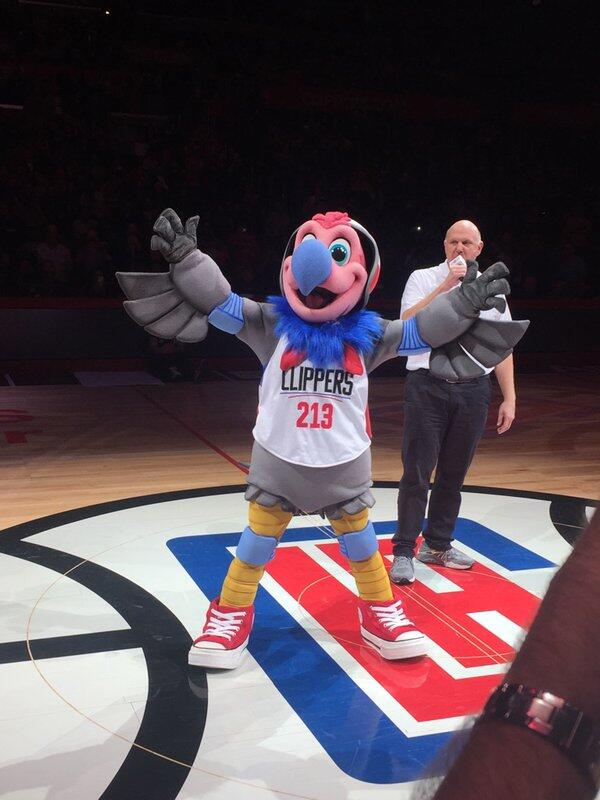 사진 확대 Clippers mascot, Chuck the Condor
Nevertheless, time begins to create a new floor for this tenant as well. Instead of empty seats, fans chose seats closer to cheap tickets and seats with better views of the players’ sweat and breathing. It’s not because it’s not the Lakers, but because it’s the Clippers, the number of people looking for it has increased little by little. The team often collapsed, disappointed and ridiculed, but the affection of the fans who passed through such a time had a unique texture. Instead of a fancy winning ring, I began to like the narrative created by long waits and countless nights of defeat.
Clippers Becomes Landlord, Long-Time Twist of Sadness
In particular, instead of Donald Sterling, who was kicked out of the league for racist remarks, the Clippers are in a transition period with basketball-loving executives Steve Ballmer taking over the team. After that, the team left the Staples Center (now CryptoCom Arena), which was shared with the Lakers, built the Intuit Dome, a dedicated home stadium in Inglewood, and declared full independence from the 2024-25 season. After years like tenants wandering around Buffalo, San Diego and LA, the team is now slowly cleaning up its long-running history of inferiority and wealth by building its home stadium in the middle of the city.
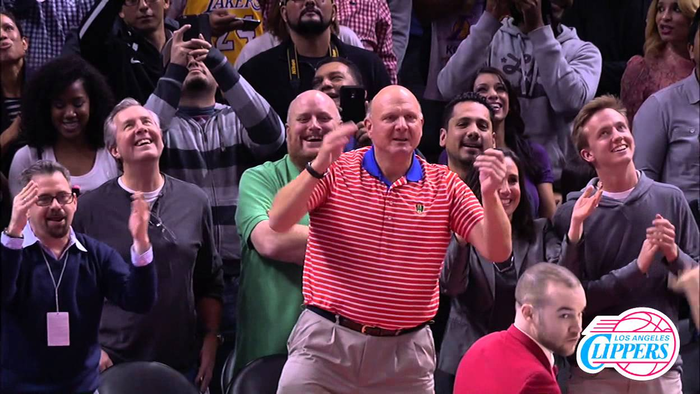 사진 확대 Steve Ballmer, owner of the Los Angeles Clippers
So the history of this team is not very visible with the record table of wins and losses. Instead, it’s more of a long nautical record of how an organization shakes, hurts, and still redraws its course between cities and capital, people and stories, and repeats the question, “Are we allowed to stay here?” The journey from Buffalo to San Diego and from San Diego to Los Angeles shows that a team’s name and identity is, after all, written slowly not on the owner or market, but on the memory of those who left, those who left, and many nights.
[Excited] [Excited] – Interesting “Boo” – Land “Jeon” (傳). Heungbujeon is a corner that deals with the rise and fall of famous companies and brands around the world and the back of the night. The founders who remain as brands are serializing the Ori Journal series. If you ‘+subscribe’ to the press page below, you will be able to see more informative and interesting stories.
This article has been translated by GripLabs Mingo AI.