
The Chicago Cubs are making the cardinal sin of roster construction — and they’re doing it at the worst possible time.
Whether you’re a rebuilding team trying to take the next step toward contention or a playoff-ready club searching for the final pieces to finish the puzzle, one truth always holds: it’s better to be aggressive than passive.
Advertisement
Do long-term, big-money free-agent contracts often age terribly? Absolutely. But championship windows don’t stay open forever. If you’re close enough to imagine a parade, no expense should be spared in the pursuit of a World Series.
Can those same contracts occasionally create positional logjams and delay young prospects’ opportunities? Also yes. But contenders don’t get cute. You accumulate proven talent, add depth, and cover all your bases — even if it means a top prospect stays in a complementary role for a season or two.
Because banners fly forever.
Too often in Major League Baseball, the fear of a contract’s downside prevents a front office from reaching its actual ceiling. Teams talk themselves out of clear upgrades. They protect development timelines instead of maximizing a present-day playoff window.
Advertisement
And it appears the Chicago Cubs are sliding straight into this trap.
The Cubs won 92 games in 2025 and were a playoff-caliber team wire to wire. But they spent the entire second half chasing the Milwaukee Brewers, who ultimately won the NL Central by five games. Chicago then beat San Diego in the Wild Card Series — only to be thwarted by Milwaukee again, losing 3–2 in the NLDS in the rivals’ first-ever postseason meeting.
That should’ve been the wake-up call. Milwaukee proved to be the better team, and then they were quickly outclassed by the Dodgers, who remain the gold standard. If the Cubs plan to contend for a World Series in 2026, the path ahead is steep.
It didn’t help that Kyle Tucker, the team’s third-most valuable player by fWAR in 2025, hit free agency with the Cubs showing very little interest in paying the massive contract he’d command. The most likely outcome? Tucker signs with a National League powerhouse — maybe even the Dodgers — further widening the gap between Chicago and contention.
Advertisement
Most analysts, writers, and fans reached the same conclusion: The Cubs didn’t necessarily need to re-sign Tucker — but they needed to reallocate that money toward multiple impact additions.
The combined cost of adding a frontline starter like Dylan Cease (who just got seven years, $210 million) and a middle-of-the-order bat like Kyle Schwarber would roughly equal, or even fall below, what Tucker will receive from his new club. That path would’ve strengthened the roster on two fronts.
But that’s not the path the Cubs appear to be taking.
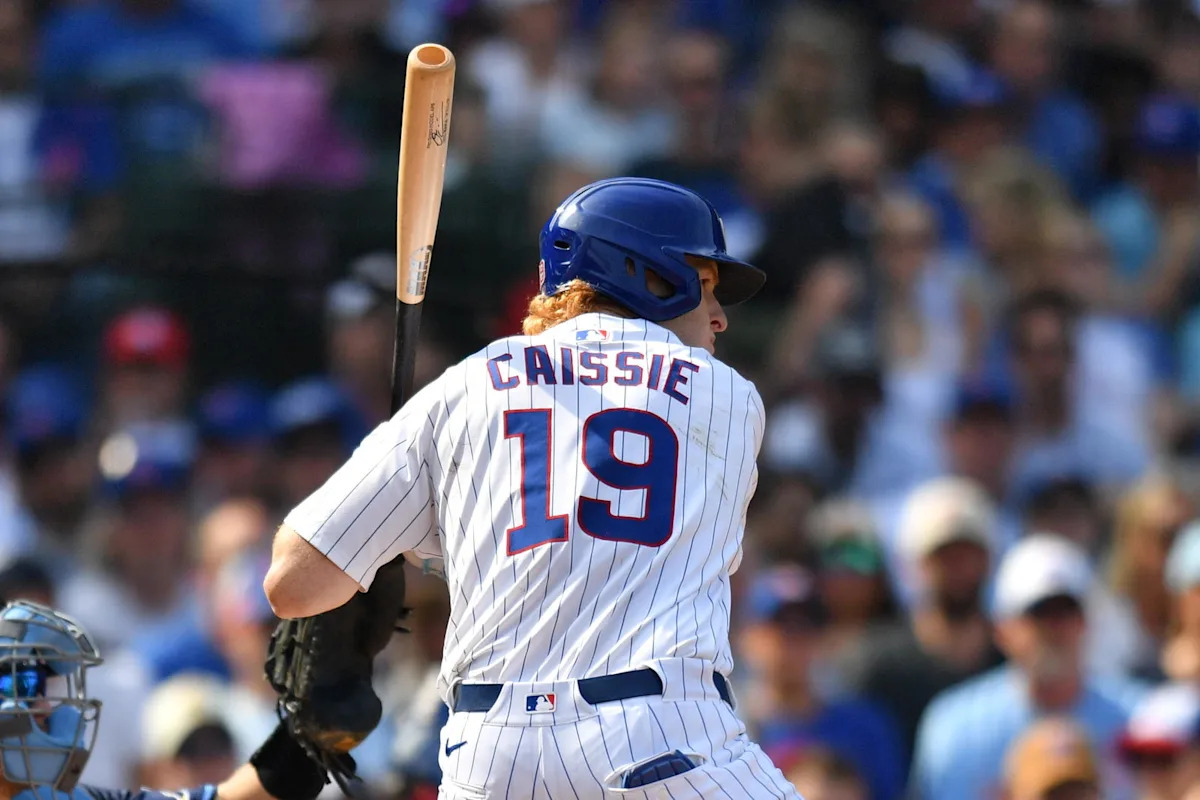
According to recent reporting, the Cubs plan to give top prospects Owen Caissie and Moisés Ballesteros “runway to develop” at the big-league level in 2026. That means starting jobs. Regular at-bats. Patience during down stretches. And the acceptance that growing pains may cost them games.
Advertisement
Not exactly what you want to hear from a team that should be all-in on a championship push.
“Cubs officials will continue working on their plans to replace Tucker, reallocating resources to different parts of the roster, utilizing Seiya Suzuki more in right field, and creating the runway for young hitters Owen Caissie and Moisés Ballesteros to develop and improve at the major-league level,” Patrick Mooney wrote in The Athletic on Tuesday.
“During this period before next week’s Winter Meetings, Jed Hoyer’s front office remains focused on adding to the pitching staff in quantity and quality.”
The Cubs are emphasizing pitching additions — and that’s smart. But the offense already had red flags, and it’s going to take a step backward with Tucker, who was by all means the club’s best hitter, gone. This roster is not better today than it was at the end of 2025, and pretending otherwise is naive.
Advertisement
I can appreciate the desire to build a World Series roster through development. But the Cubs have already developed the foundation of this core. Justin Steele, Cade Horton, Matt Shaw, Pete Crow-Armstrong — all (relatively) homegrown. They’ve also found undervalued gems like Michael Busch through savvy pro scouting.
That phase is over. Now is the time to win — not to wait.
The Cubs have chosen to zig when the rest of the baseball world understands their need to zag. If I had to guess, Jed Hoyer is operating under tighter financial constraints than publicly acknowledged. He’s trying to maximize limited dollars by throwing everything at pitching.
But that’s not an excuse.
Advertisement
Ownership is responsible for supplying the final investment needed to push a 92-win club into World Series territory. Instead, fans are being sold on development at the exact moment the window demands aggressiveness.
I wouldn’t bet on this current approach succeeding in 2026. The Cubs aren’t on the doorstep of a title — and unless something major changes, they’re drifting further from one.