
Early in 2024, the Red Sox went with a breaking ball-heavy approach, giving the team a reputation for being anti-fastball. Now, when the Red Sox acquire a new pitcher, seemingly every analyst’s first move is to look at the new pitcher’s four-seam fastball. If the pitch has a high batting average against or low swinging strike numbers, the immediate reaction is to say, “Well, they’ll cut that usage for something else”. I’m guilty of it, but it isn’t necessarily the case.
Last season, the Red Sox were 21st in four-seam fastball percentage. That’s, in part, buoyed by Garrett Crochet — telling him to stop throwing his fastball would be malpractice. At the same time, Brayan Bello brought back his four-seam. Lucas Giolito used his as well, despite average velocity and an average shape. Hunter Dobbins and Richard Fitts used fastballs without ever seeing significant whiff numbers from them. The point is, the reputation the Red Sox have for hating fastballs is overblown, and leads to some lazy analysis.
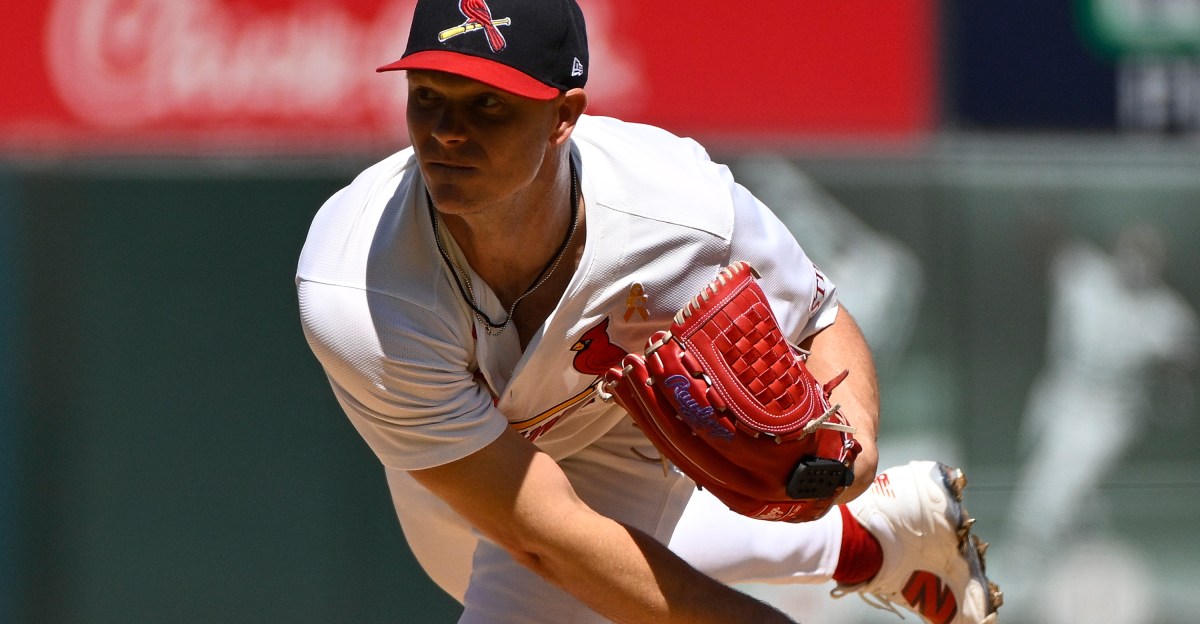
When the Red Sox acquired Sonny Gray, people (myself included) jumped at his fastball. In 2025, opponents hit .370 against it with a swinging strike rate just below 9%. At 22.3% usage, those numbers scream “throw something else”. For Gray, that doesn’t have to be the case.
Righties hit .400 against Gray’s fastball, but that doesn’t mean it was a bad pitch. Here’s how he threw the pitch against righties last season.

Gray isn’t throwing his four-seam at the top of the zone, where four-seams traditionally play best, because his four-seam shape isn’t traditional. The pitch cuts without much vertical movement. As a general rule, pitches tend to play best by throwing them in the direction they move — a slider plays best glove side and down, while a four-seam works best at the top of the zone. Gray throws his four-seam, which moves like a cutter, away from righties. The swinging strike rate is low at 7.1%, but the called strike rate is huge at 28.8%. These pitches appear to be in hittable locations, but hitters take them for strikes regularly. Why, you might ask? Because hitting is really hard.

Everything Gray throws is away from righties. He throws backdoor sinkers, cutters down and away, and sweepers off the plate for whiffs. Because of his ability to locate several pitch types on the outer half, hitters can’t just hunt four-seam fastballs. If they do, they’ll be out in front of sweepers, and sinkers that start off the plate will come back for called strikes. Righties had 96 hits against Gray in 2025; just 18 of them came against his four-seam. Of the 18, 11 were singles. His “mistake rate”, a metric developed by PitcherList, was just 1.6%. He uses the pitch 15% of the time, hits his spots, and gets 74% strikes with it. Sure, the results don’t look great, but eliminating the pitch from his repertoire isn’t the solution.
Lefties are a different story. The pitch is featured more often against lefties — about 30% of his offerings. It returns huge strike numbers — a 66% strike rate — but was hit hard with a 43.5% ideal contact rate and .356 batting average against. With lefties seeing fastballs at a high rate, the results against the pitch are more of a concern. The fix isn’t obvious, though. He used a cutter about 6% of the time to opposite handed hitters last season and was able to get strikes, but it was hit hard in a small sample. He featured the pitch more often in 2023 with solid results, but the shape of the pitch came with more vertical drop. He also uses his sinker for strikes, but it was also hit hard. His curveball was excellent, but throwing the pitch more than his 2025 mark of 25% risks diminishing returns as hitters become more familiar with it. His sweeper was great as well, but it’s almost exclusively a two-strike offering and shouldn’t be used in the zone early in counts.
All in all, there isn’t an obvious “fix.” He could try throwing four-seams and cutters to the arm side for called strikes. It would set up his changeup well. All that being said, Gray struck out 29.2% of lefties while walking just 5.1%. He limited them to a .668 OPS, about 100 points better than his mark against righties. K%-BB% is a simple, reliable way to predict future performance. Gray ranked seventh among qualifiers in that metric. Five of the pitchers who finished ahead of him received Cy Young Votes, and the other was Joe Ryan. Gray doesn’t need fixing, but if the Red Sox did want to alter his mix, it isn’t as simple as “just throw fewer fastballs”.