
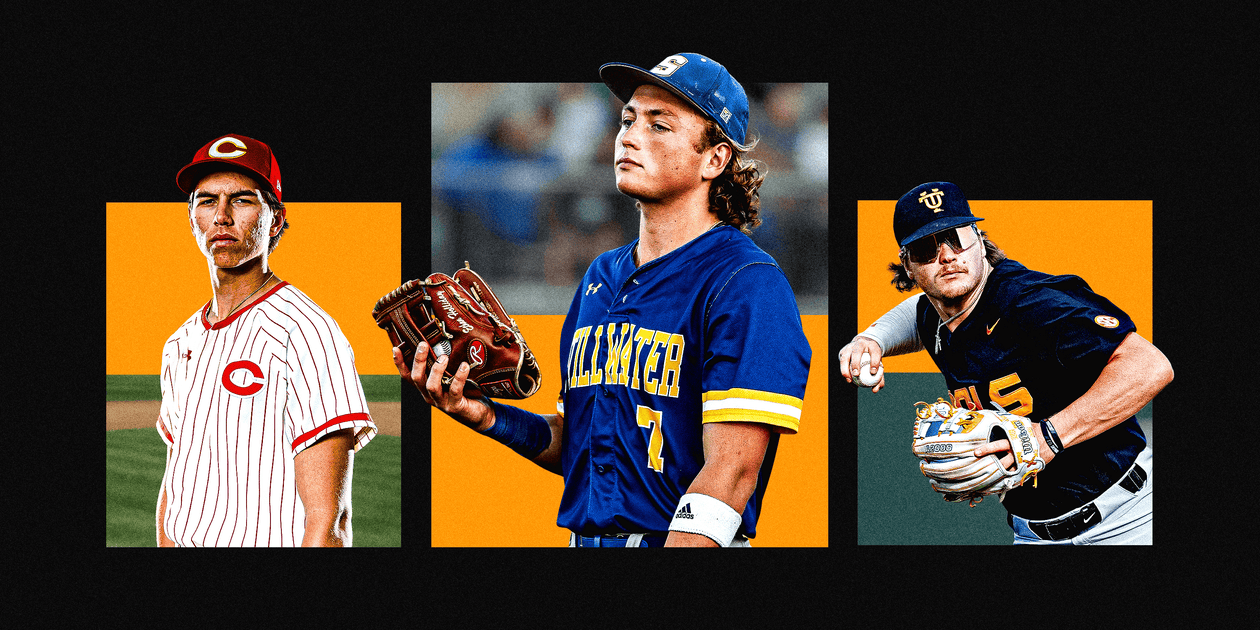
Here’s my Big Board for 2025, ranking the top 100 prospects in this year’s MLB Draft class. This is how I would rank the players if I were working for a team, ignoring any questions about signability/bonus demands, and of course acknowledging that there may be medical or other information about players that I don’t have.
I have seen 59 of these players in person this spring, and I use my own scouting looks as one input, along with opinions from actual scouts and analysts, video and data. I will update the list between now and the draft to reflect any new information, with some players still playing, some likely to pull their names out of the draft, and, although I hope not, any injuries that occur between now and draft day.
It’s a weak class at the very top; I don’t think anyone on this list would have cracked the top five in 2023, or have been in consideration at 1-1 last year, for example. There is quite a bit of depth further down the list, however, especially in high school shortstops, college outfielders, and left-handed pitching at both levels. It’s a good year to go under slot with your first pick and spread some money around, and a good year to have an extra pick or two. I expect a lot of rumors of deals up top before we get to the draft, and then for most teams to flee to the safety of college players when they actually have to put something on the table. Call it cynical if you wish; I call it the wisdom of experience.
(Note: Player tools are graded on the traditional 20-80 scouting scale; the shadow of the strike zone refers to pitches just off the edges of the strike zone.)
Player Type Pitcher Position Player
School Type 4-Year College High School
Position 1B 2B 3B C LHP OF RHP SS

Loading
Try changing or resetting your filters to see more.
Scouting Report
Bats: L, Throws: R
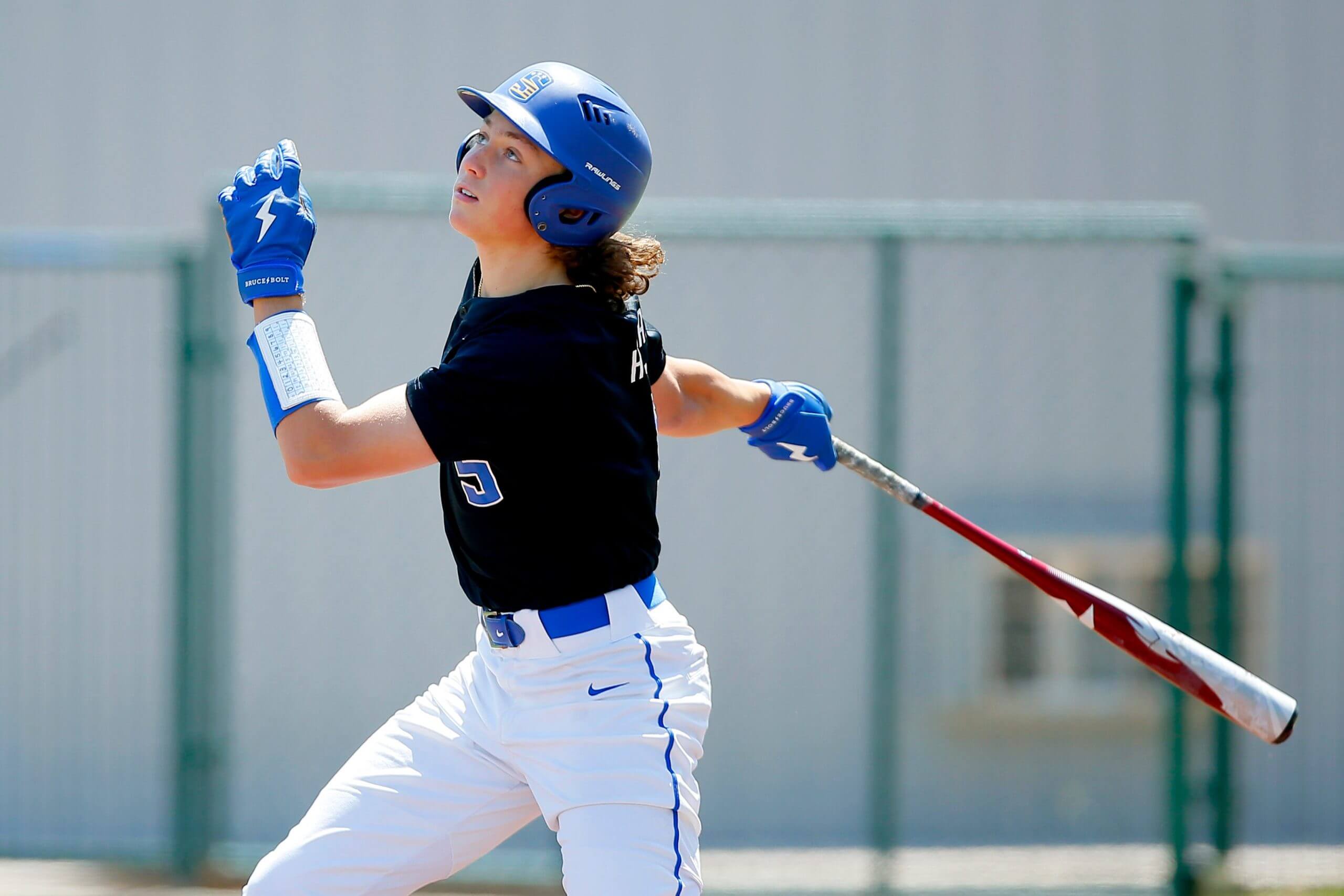
Holliday is probably the best-known player in the class, thanks to his famous father, Matt, and increasingly famous brother, Jackson, but also because there have been plenty of points in the last year-plus when Ethan has looked like the best prospect in the class. He’s got easy plus power already and projects to be more similar to his father in that regard than his brother, while he’s not as advanced a hitter as Jackson was at the same age. Ethan has been inconsistent this spring at the plate, with his front side flying open as he tries too hard to get to that power, leaving him vulnerable to stuff on the outer third, although that’s a fixable problem. He does know the strike zone, and rarely chased stuff out of the zone last summer and fall. He’s big for shortstop but has great hands and a plus arm, showing better range this spring and more consistency on routine plays; if he moves to third base, it’ll be because he outgrows short, not because of a lack of ability. He’s not a sure thing, given some of his swing-and-miss issues (such as on velocity up in the zone) and the mechanical adjustments he’ll have to make, but he offers the best combination of upside and probability in the class.
Position Player
High School
SS
3B

Scouting Report
Bats: R, Throws: L
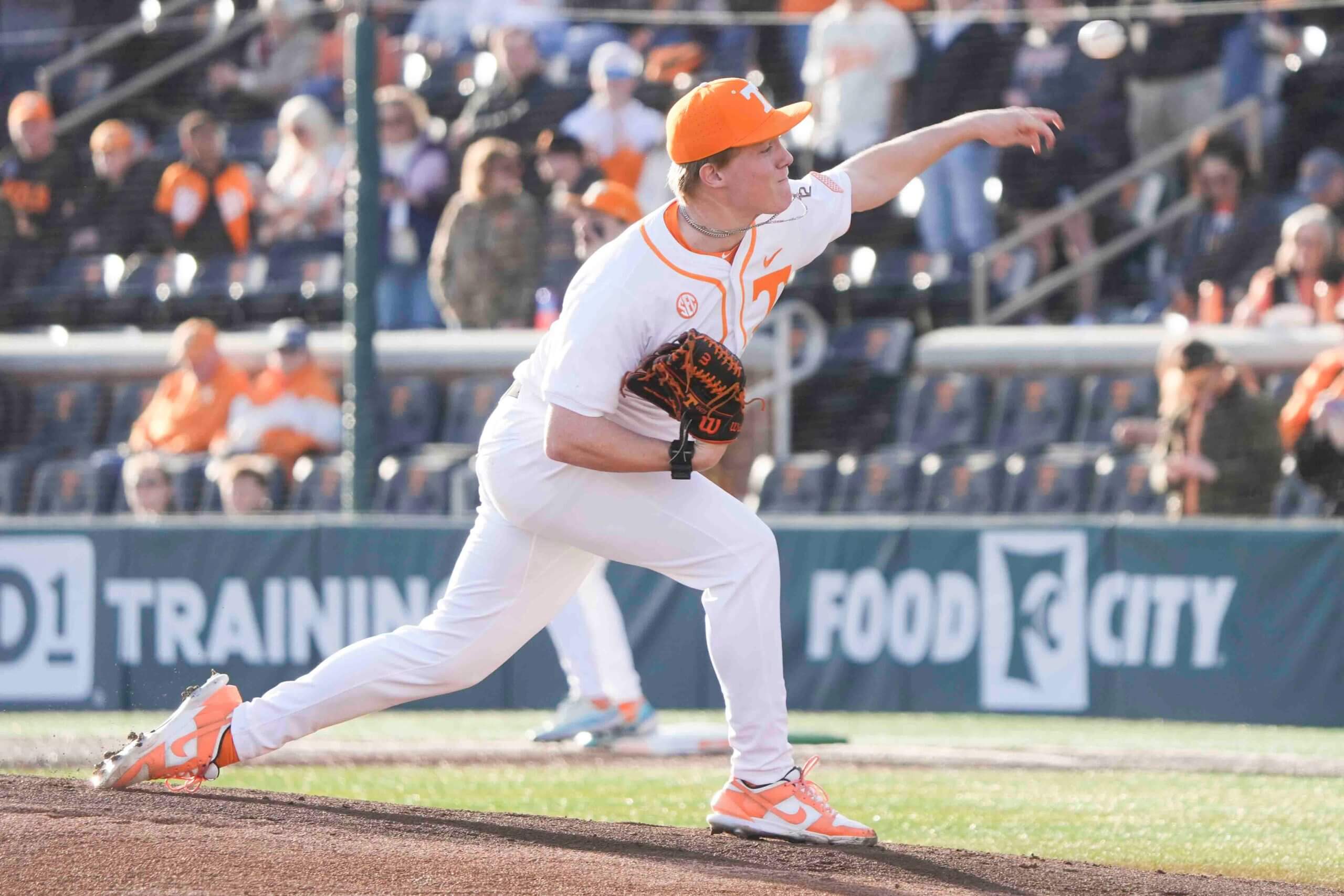
Doyle transferred for the second time in as many years, moving from Mississippi to Tennessee (after starting his career at Coastal Carolina), and picking up some serious velocity along the way. He spent the spring of 2025 dominating hitters with his 96-99 fastball, striking out 44 percent of batters he’d faced through his May 9 start. He throws the heater about two-thirds of the time, and hitters just don’t hit it — they whiff over 40 percent of the time they swing at it, even though he’s throwing it so often they can often just guess fastball and be correct. He backs it up with a plus splitter up to 89 mph and an above-average slider in the low to mid 80s, both of which miss plenty of bats, with the splitter a weapon he’ll use against hitters on both sides of the plate. He works in the zone a ton, walking 8 percent of batters he’s faced, and isn’t afraid to attack hitters on the inner third. The only knocks on Doyle seem to be the lack of track record prior to this year and the fact that the delivery is unorthodox, although he repeats the heck out of it and I don’t see a big red flag beyond the fact that he throws really hard. If his command and control holds up against better competition, he could be a No. 2 starter, and I wouldn’t hesitate to start him at least in Double A.
Scouting Report
Bats: L, Throws: L
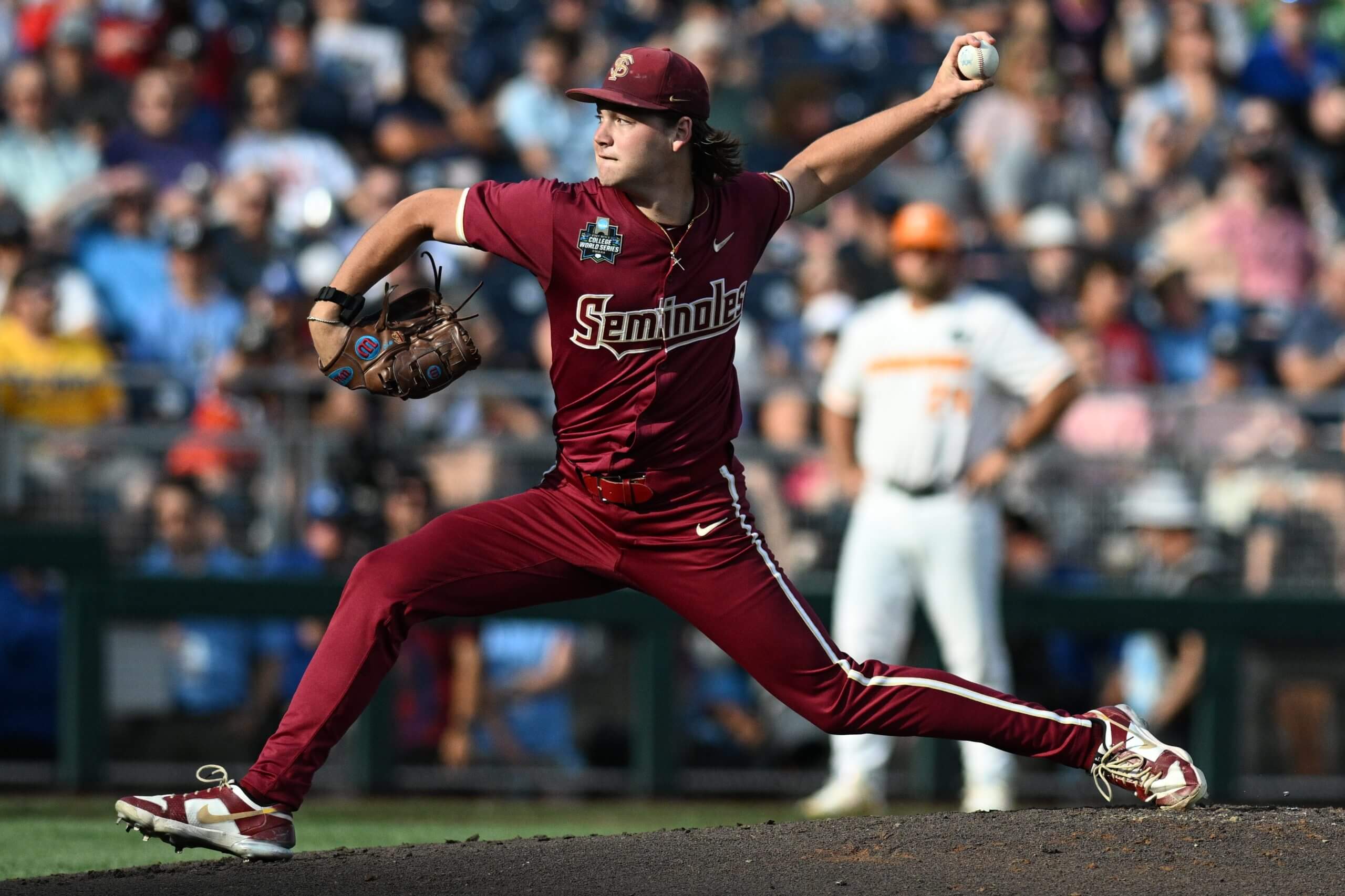
Arnold came into the year as the likely top college pitcher on the board after a dominant sophomore season in 2024 that saw him finish third in Division 1 in strikeouts, behind only 2024 top-six picks Chase Burns and Hagen Smith. He’s taken a tiny step back in stuff this year, although he’s still topping out at 97-98, just sitting about a half a mile an hour less, so now he’s 91-95 but with a ton of ride, coming from such a low slot — nearly sidearm — that hitters can’t square it up. He works with a plus slider that gets huge horizontal break and he can throw a true changeup that’s at least a 55, with great arm speed and late, sudden tumble to it. It’s a surprisingly easy delivery for its type; a lot of guys coming from down there with this velocity have high-effort or otherwise troublesome deliveries, but other than some cutoff in his landing Arnold’s is about as easy as it gets. There’s definitely some reliever risk here with the low slot, but in this class he’s pretty clearly one of the top-five talents, and at least a mid-rotation guy if he starts.
Scouting Report
Bats: R, Throws: R
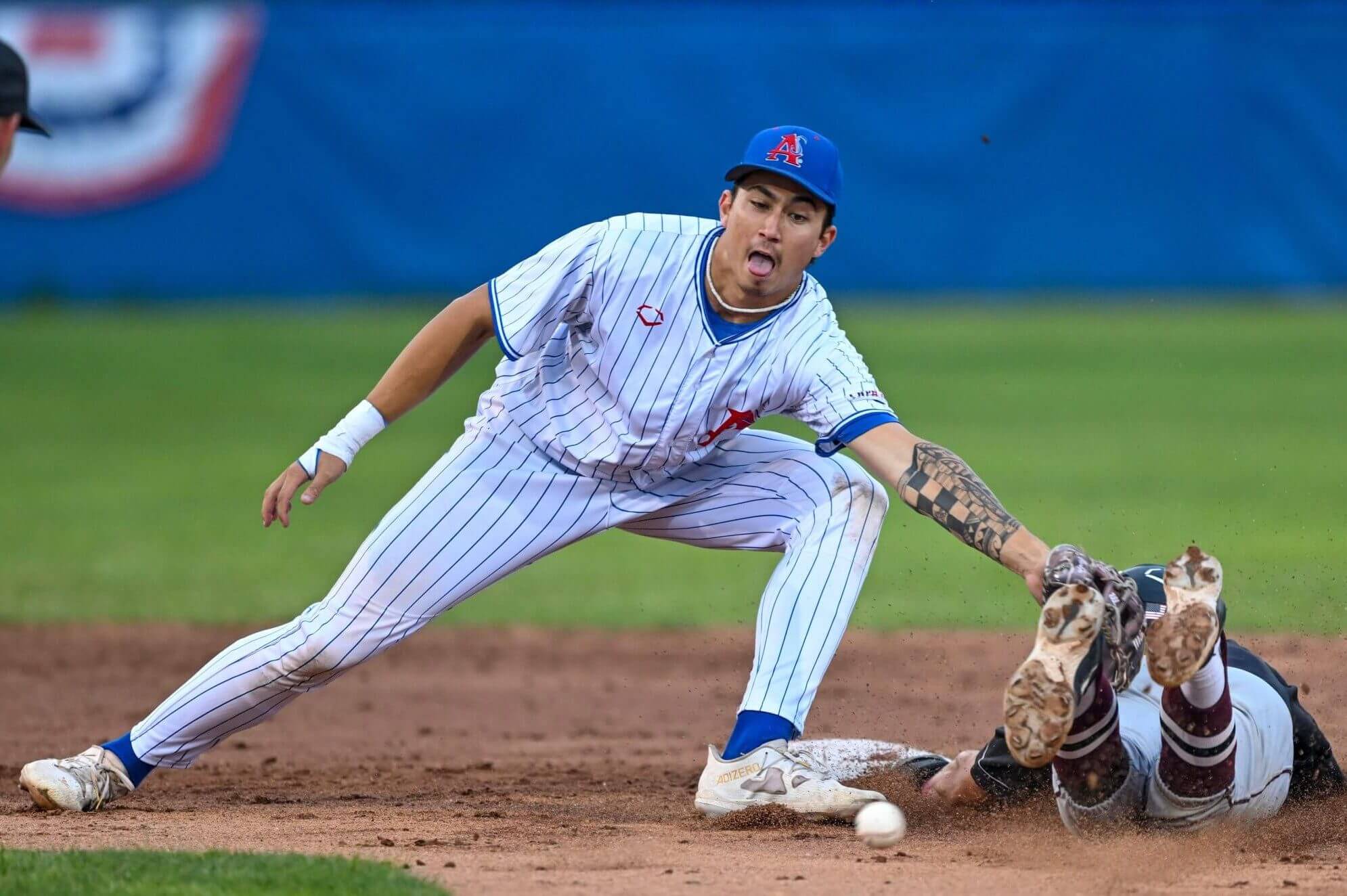
Arquette might be the top college position player in the class … but you’ll find people who say he’s a back-of-the-first-round talent, too. The Hawaiian standout transferred to Oregon State from Washington State this year, and he’s hit .346/.470/.692 as the Beavers have played an independent (non-conference) schedule, leading the team in homers through May 13. He has excellent hand-eye coordination, rarely swinging and missing, especially at pitches in the zone, and he doesn’t chase much, although he’s started expanding the zone a little more with two strikes as the spring has progressed. He’s an agile shortstop with excellent hands and a plus arm, but at 6-foot-5 and I’d guess about 230, he’d already be one of the biggest shortstops in MLB history, and I’d bet heavily that he goes to third base. Aside from that positional question, Arquette just hasn’t faced much good pitching this year; he’s seen enough velocity to say he can hit it, but he hasn’t seen much quality secondary stuff, and when he has faced harder sliders or changeups with some tumble, he hasn’t fared as well. There’s 25-homer upside with a strong eye and what could be really good defense at third, a Troy Glaus-ish profile, if Arquette reaches his potential.
Position Player
4-Year College
SS
Scouting Report
Bats: R, Throws: R
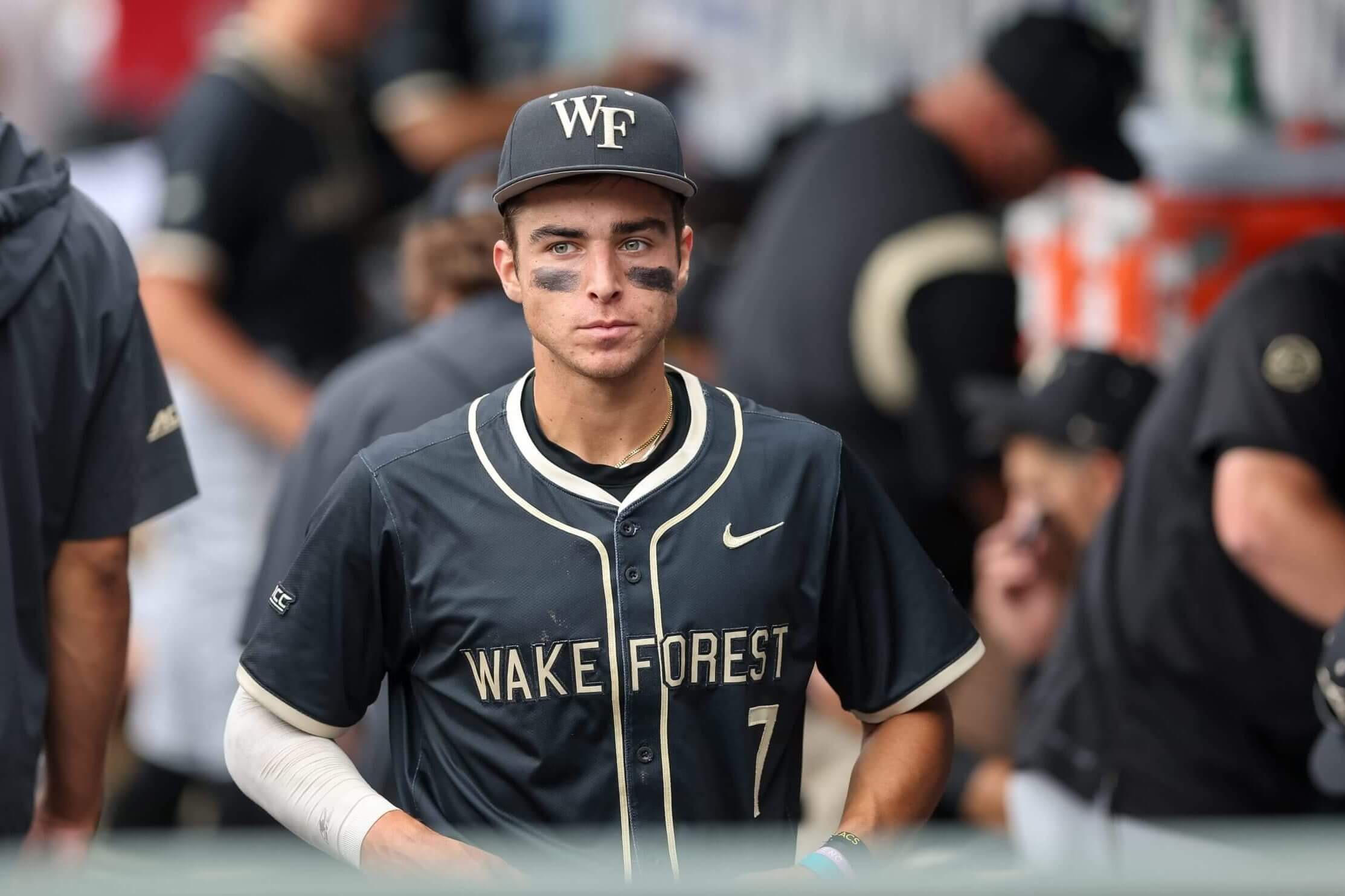
Houston is a no-doubt shortstop who’s boosted his performance and some of his batted-ball characteristics just enough to give him a chance to get into the top 10 in a draft class that’s weak up top. He’s set career bests in homers and steals this year, and may do the same in doubles before the season ends (he needs four more as of May 13), and is playing plus defense once again. The power is kind of an illusion, as Wake Forest plays in a shoebox, and nine of Houston’s 11 homers through May 13 have come at home, mostly wall-scrapers that would be doubles or outs in a typical ballpark. He does have very strong hand-eye coordination and almost never whiffs on pitches in the zone, with a short swing that had him over a 50 percent groundball rate as a sophomore but down around 44 percent this year. He’s a high-floor, lower-ceiling prospect, unless someone foresees more power in his future than I do, a definite shortstop who hits the ball hard enough to keep his average up against good pitching, but probably doesn’t get above 10-12 homers a year.
Position Player
4-Year College
SS
Scouting Report
Bats: L, Throws: R
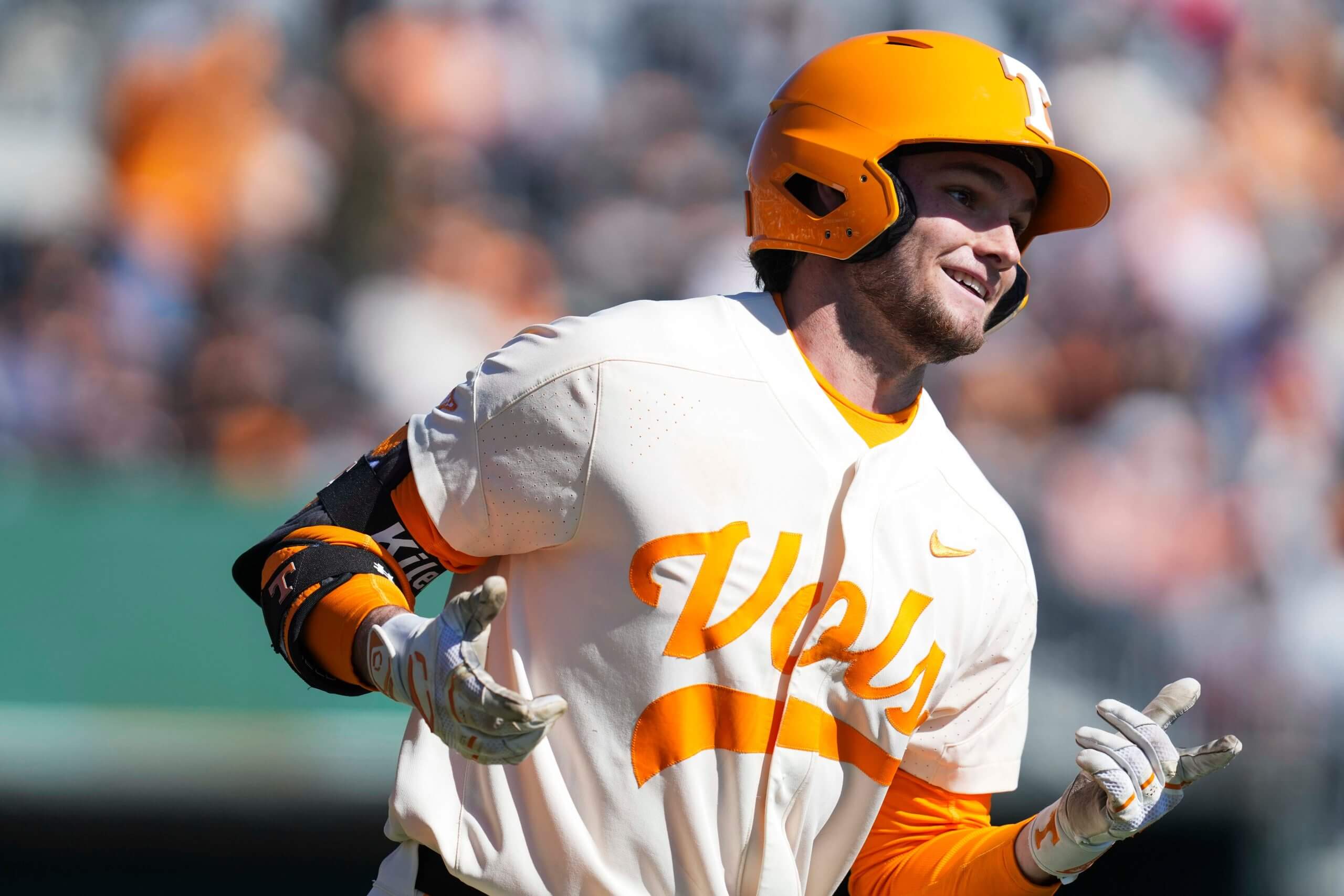
Kilen transferred from Louisville to Tennessee this year and started the season on fire, going 9-for-15 with four homers at the Minute Maid* Tournament against Oklahoma State, Rice and Arizona. (*It has another name now, but I’ll call it Minute Maid forever.) The only thing that stopped him all spring was a hamstring injury that took him out for close to a month; other than that, he’s hitting for contact and power, walking more than he’s struck out, playing capable defense at short and above-average defense at second. Kilen has punched out in less than 10 percent of his PA this year, and his whiff rate on pitches in the zone is just 10 percent (through May 13), yet he still hits for significant power, topping out over 110 mph and boosting his average exit velocity about 2 mph over his sophomore year. He’s going to end up at second base in pro ball, maybe starting out there, with a chance to hit .300+ with at least solid-average power.
Position Player
4-Year College
2B
SS
Scouting Report
Bats: B, Throws: R
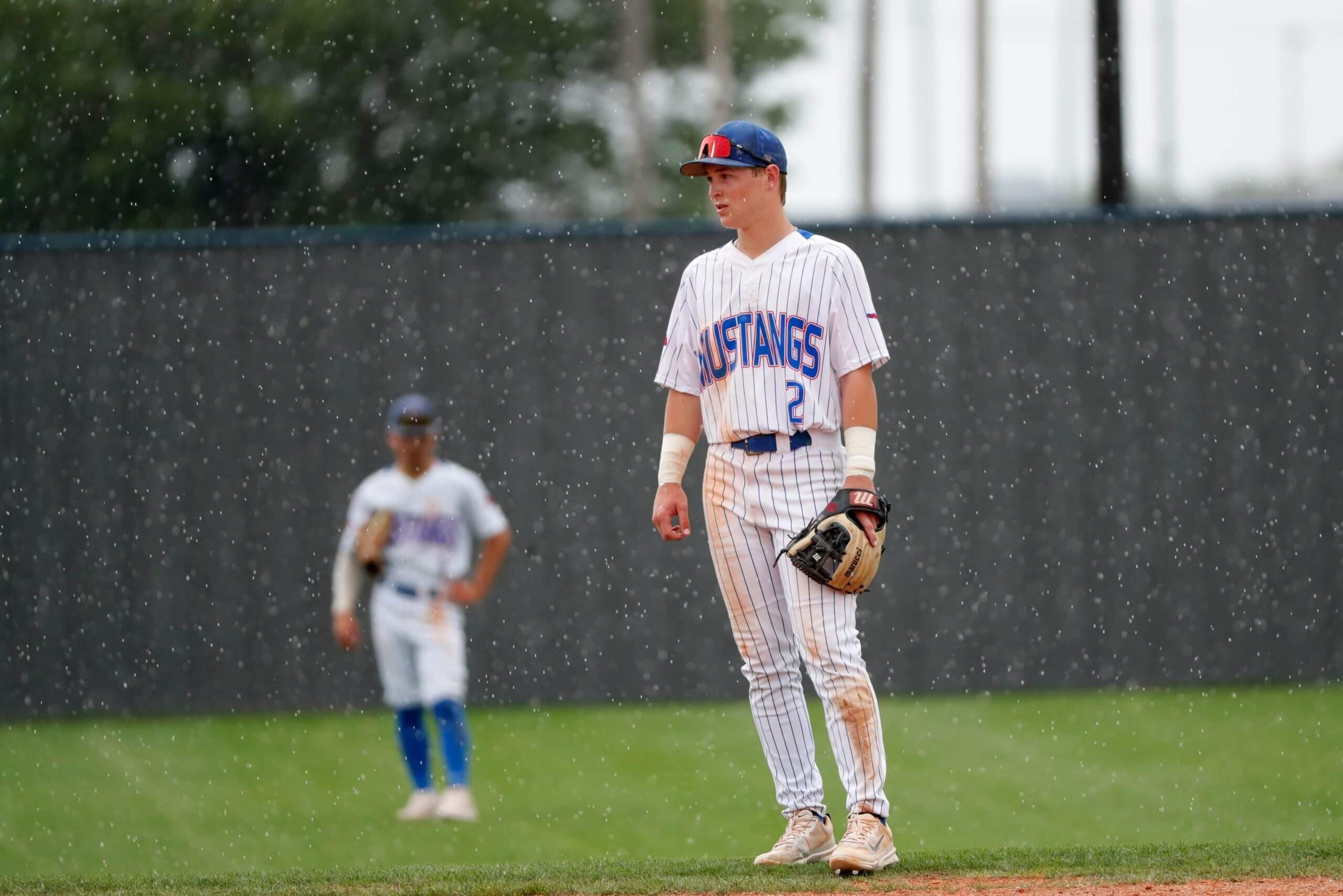
Willits, the son of former Angels outfielder Reggie Willits, is one of the leaders of the deep group of high school shortstops in this draft class, and one of the most likely to stay at the position for the long term. He reclassified into the 2025 class, and now he’s one of its youngest prospects, turning 18 five months after the draft. His swing is compact and geared towards contact, without a lot of lift or length to the ball to create more power. He does have room to fill out, especially in his lower half, and his contact quality should improve to the point that it can support higher batting averages, although I think he’ll top out at 45 (below-average) power. He’s a definite shortstop with soft, easy hands, a plus arm, and plus running speed, with the upside of 70 defense. His floor is pretty high because he can defend and make contact, which would at least make him a utility infielder, with above-average upside if he gets strong enough to get to some doubles power and hit .300 or so.
Position Player
High School
SS
Scouting Report
Bats: L, Throws: L
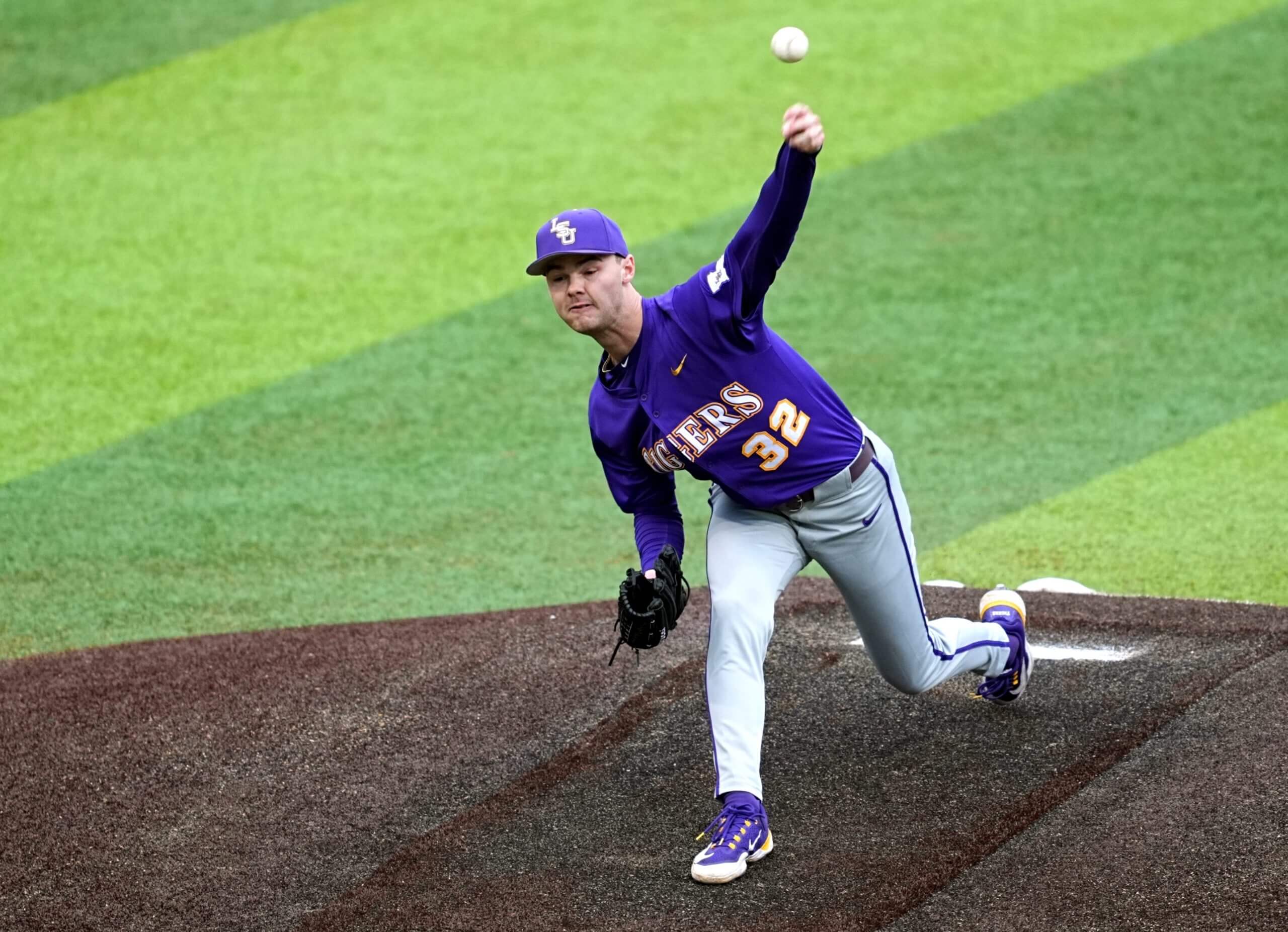
Anderson is a very polished, competitive lefty who works with a true four-pitch mix, or five if you distinguish between the two fastballs, and he throws a ton of strikes with the whole arsenal. He’s 91-95, using four- and two-seamers, and leads with a plus changeup that has excellent deception and hard fading action, helping him get hitters on both sides of the plate. His slider is the better breaking pitch of his two, as the curveball looks pretty but doesn’t generate as many whiffs and may be more of a show-me offering to keep hitters guessing. He repeats his delivery well and it looks like real command, not just control, especially of the fastball. Anderson threw 135 pitches on a cold night in Norman, Okla., in early April, which was followed by two of his worst starts of the year (11 runs allowed in 10 innings), which I’m sure is just a coincidence and not at all related to the irresponsible usage — although to Anderson’s credit, he competed all the way to the end of that shutout against the Sooners, even as his stuff continued to fall off in the last two innings. As long as he’s at full strength, he’s a mid-rotation starter, and looks like the kind of college pitcher who could get to the majors inside of 18 months.
Scouting Report
Bats: L, Throws: R
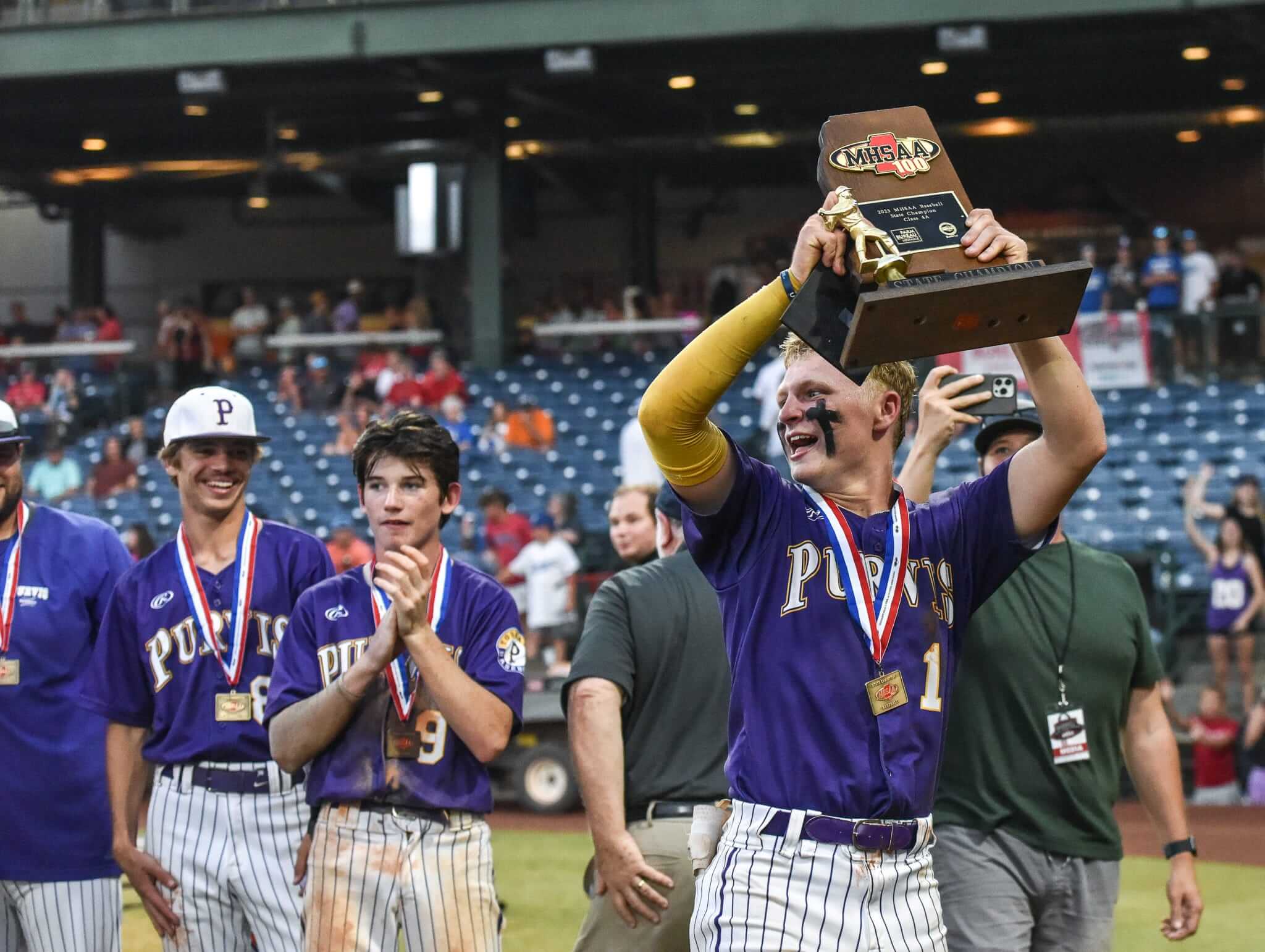
Parker is one of the best pure hitters among the high school crop this year, with a very high-contact approach that held up against better pitching last summer and fall. He has incredible hand-eye coordination and a reasonably compact path to the ball, only whiffing twice in 86 pitches in the zone, according to 2024 data from Synergy. He doesn’t expand the zone easily and has shown he can catch up to good velocity. He does have a habit of drifting over his front side on some pitches, and that is at least one reason why his evident strength hasn’t translated into much in-game power. He’s a shortstop for now with good hands and a plus arm, way more likely to end up at third base as his range is average at best. He’s a bet on the hit tool, and if you’re going to bet on a high schooler’s hit tool, his is the one to bet on.
Position Player
High School
SS
Scouting Report
Bats: R, Throws: R
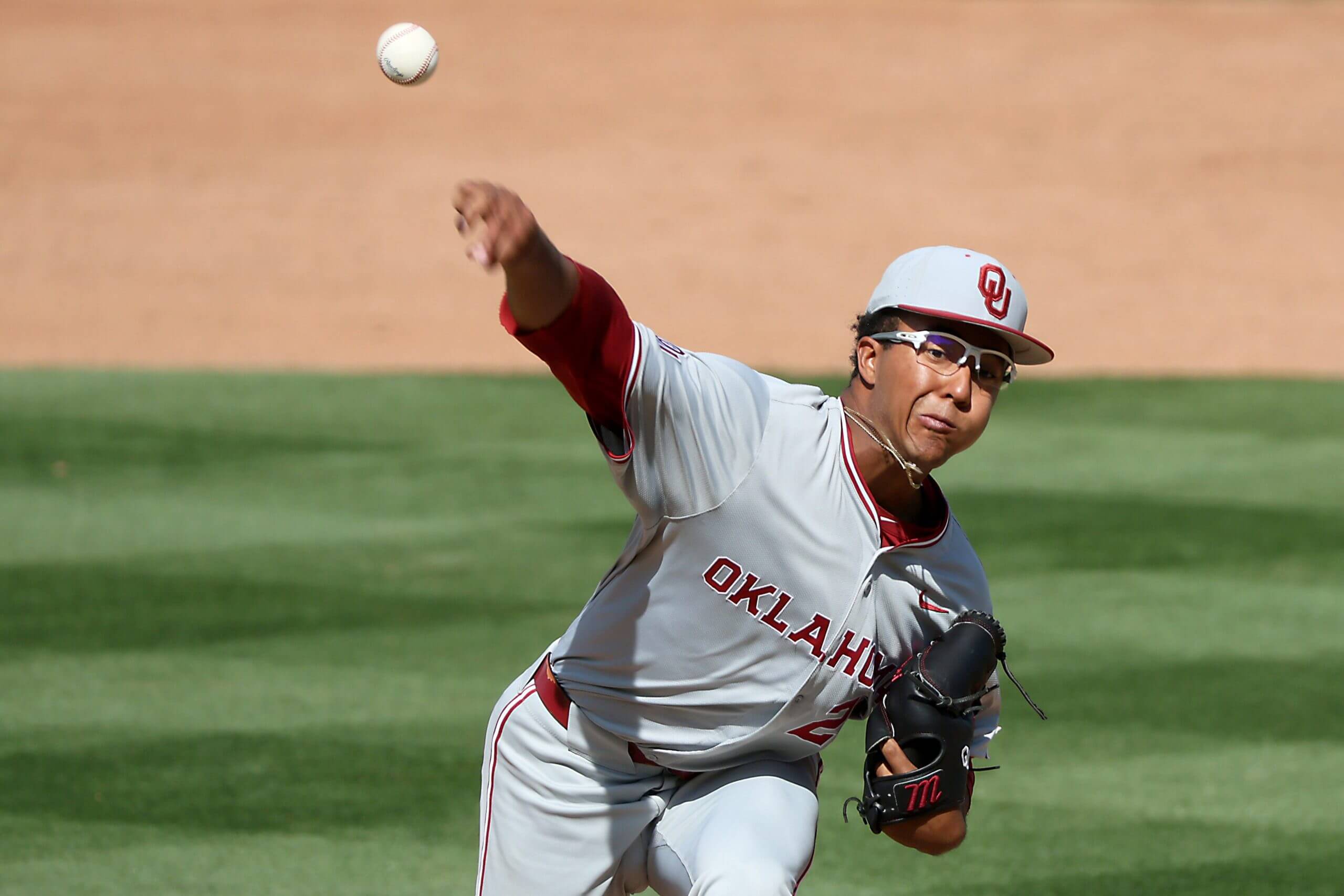
Witherspoon has been dominant in his second year with the Sooners after he spent a year in junior college, cutting his walk rate almost in half even though he’s gained about a full mph on his heater since last year. Witherspoon will hold 95-97 deep into games, topping out at 99, with a five-pitch mix that includes a slider and cutter that run into each other, along with a 55 changeup that he needs to use more often. He has such good arm speed on that last pitch that it looks like it should be a real weapon for him, especially against lefties, but he prefers to go to the cutter against them despite worse results. His arm action is very short — after separation, he barely brings his pitching hand down, tapping an imaginary button behind him with the ball before he begins moving forward — which is the trend right now but in his case has produced plus control. He looks very athletic and should be able to make adjustments to the delivery to get him to a more consistent release point out front, which should boost the command, especially on those two breaking pitches, which he can leave up in the zone. There’s so much to work with here, and a strong foundation of arm strength and strikes, with No. 2 starter upside if he gets the right development help. He won’t turn 21 until a month after the draft, just like his twin brother Malachi (what a strange coincidence), who has similar velocity and a 55 slider, but doesn’t throw enough strikes to start because he doesn’t repeat his longer arm stroke.
Scouting Report
Bats: R, Throws: R
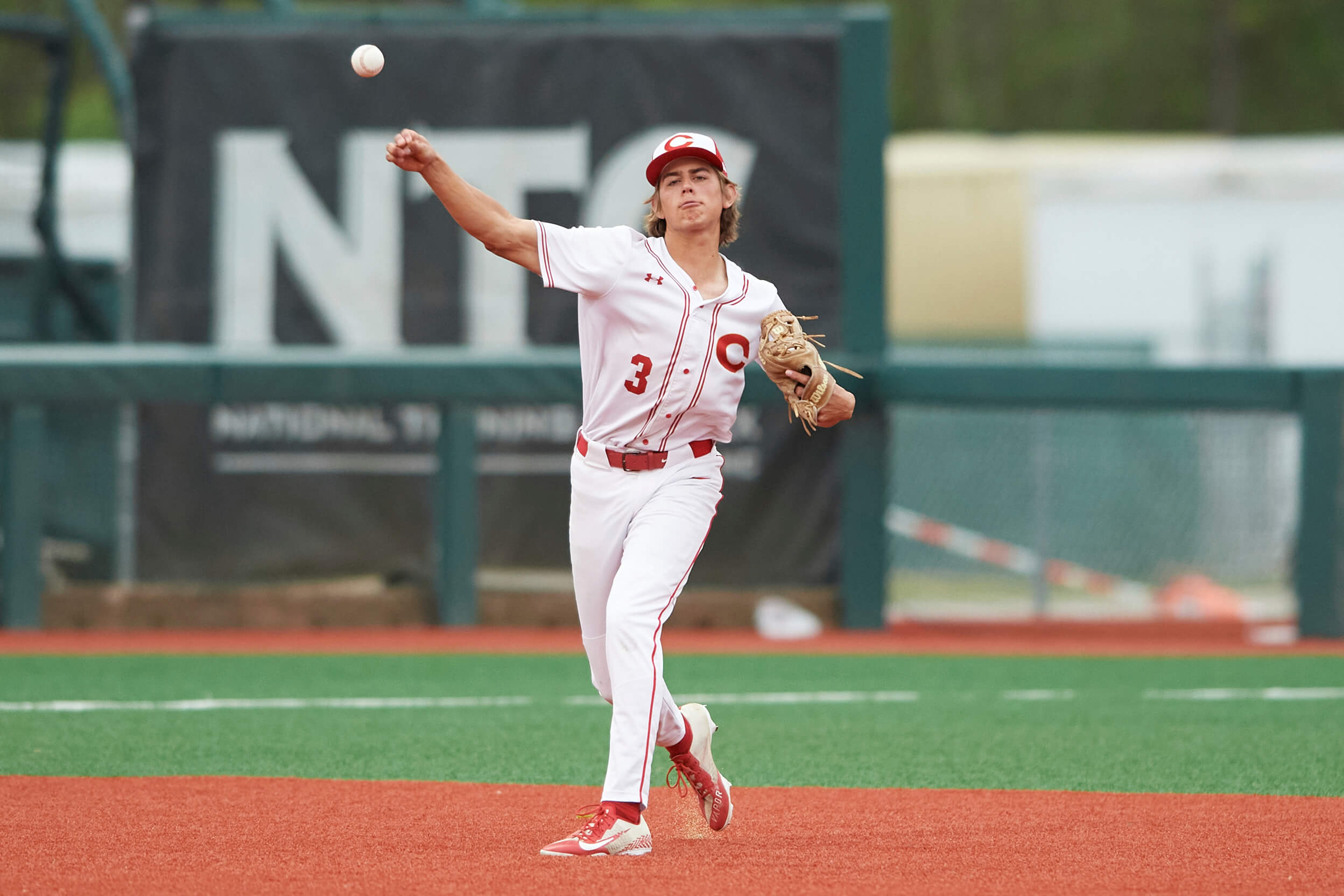
Carlson is a plus defender at short with a cannon of an arm, and he projects to enough power to get to 20+ homers if he can shorten up his swing enough to make consistent contact. He bars his lead arm and his hands are so far back that he has trouble getting the bat head to the ball on time, so the power doesn’t always play in games and he’s very vulnerable to pitchers who can change speeds on him within at-bats. He’s a wizard on defense, though, with great instincts, range in both directions, and excellent hands, along with at least a 70 arm — he’s been up to 97 off the mound, although apparently he doesn’t want to pitch, and given his defensive prowess that’s the right call. He should have a high floor because of the defense, but there’s some risk in the hit tool here that he never gets to enough contact to stick in the majors; someone’s going to have to reduce the arm bar to untap his All-Star upside.
Pitcher
Position Player
High School
SS
RHP
Scouting Report
Bats: L, Throws: R
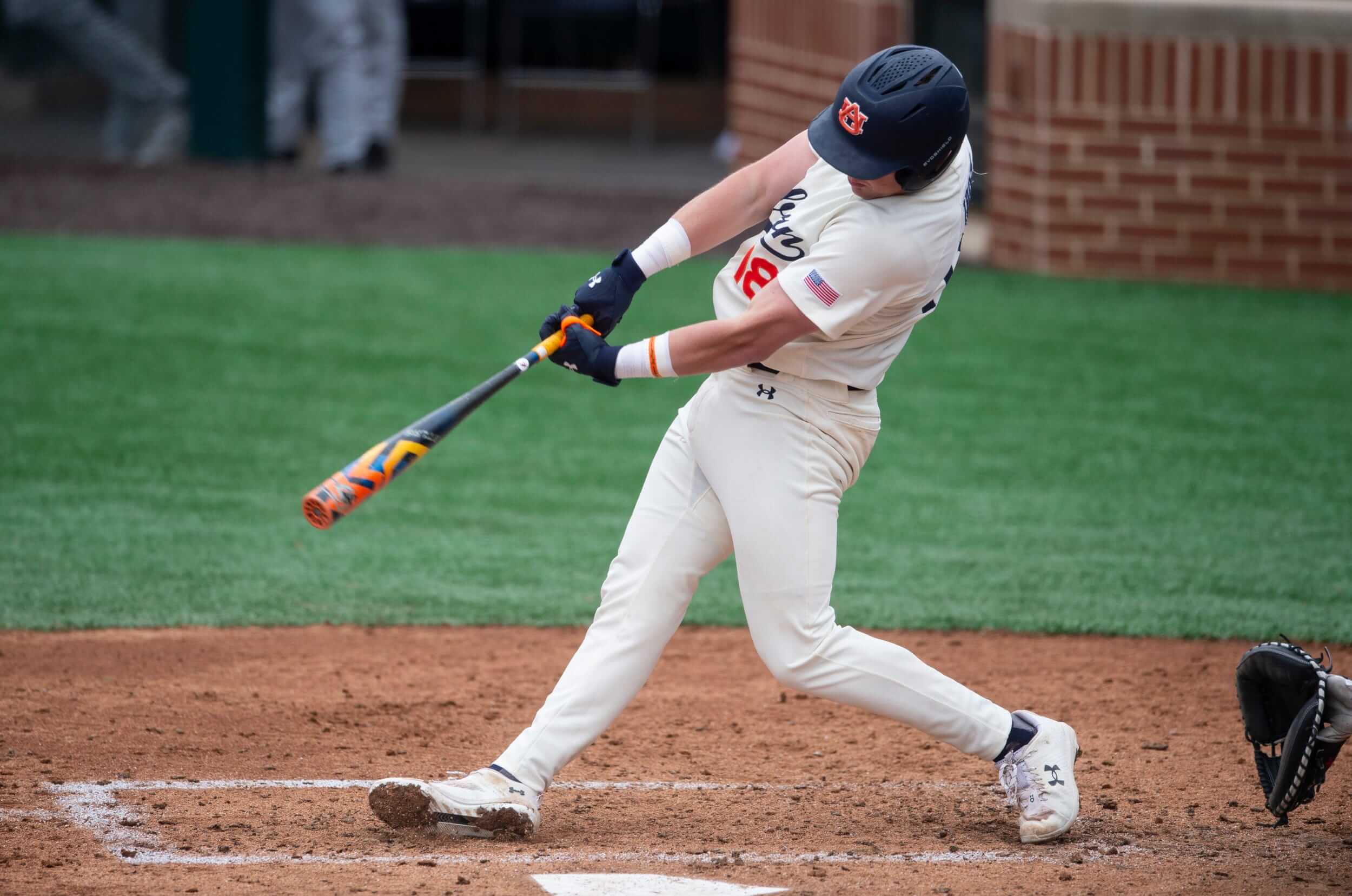
Irish started the year as Auburn’s catcher but was hit in the back by a pitch, fracturing his scapula, and since his return he’s played the outfield, which is only going to underscore questions about whether he’s a catcher at the next level. He can really hit, though, with an old-school approach that uses the whole field; he’s hit twice as many balls to left field as he has to right this spring, a big increase over 2024 when he was closer to 50/50. He hits the ball extremely hard regardless of where it’s going, though. Pitchers have worked him away, and he’s just taken those pitches to left, with enough success that you’d think teams would try to come back in on him. He’s about a 45 receiver now, needing some work across the board behind the plate other than his throwing, where he nailed six of eight would-be basestealers before his injury. His ability to hit, and to handle stuff on the outer third so well, gives him a different sort of floor than the typical catching prospect — maybe he ends up at another position, but hits enough to profile as a regular even if it’s an outfield corner. However, if he can stick at catcher he might be a star who hits for a high average with a ton of doubles the other way, and 12-15 homers with the current approach.
Position Player
4-Year College
C
Scouting Report
Bats: R, Throws: R
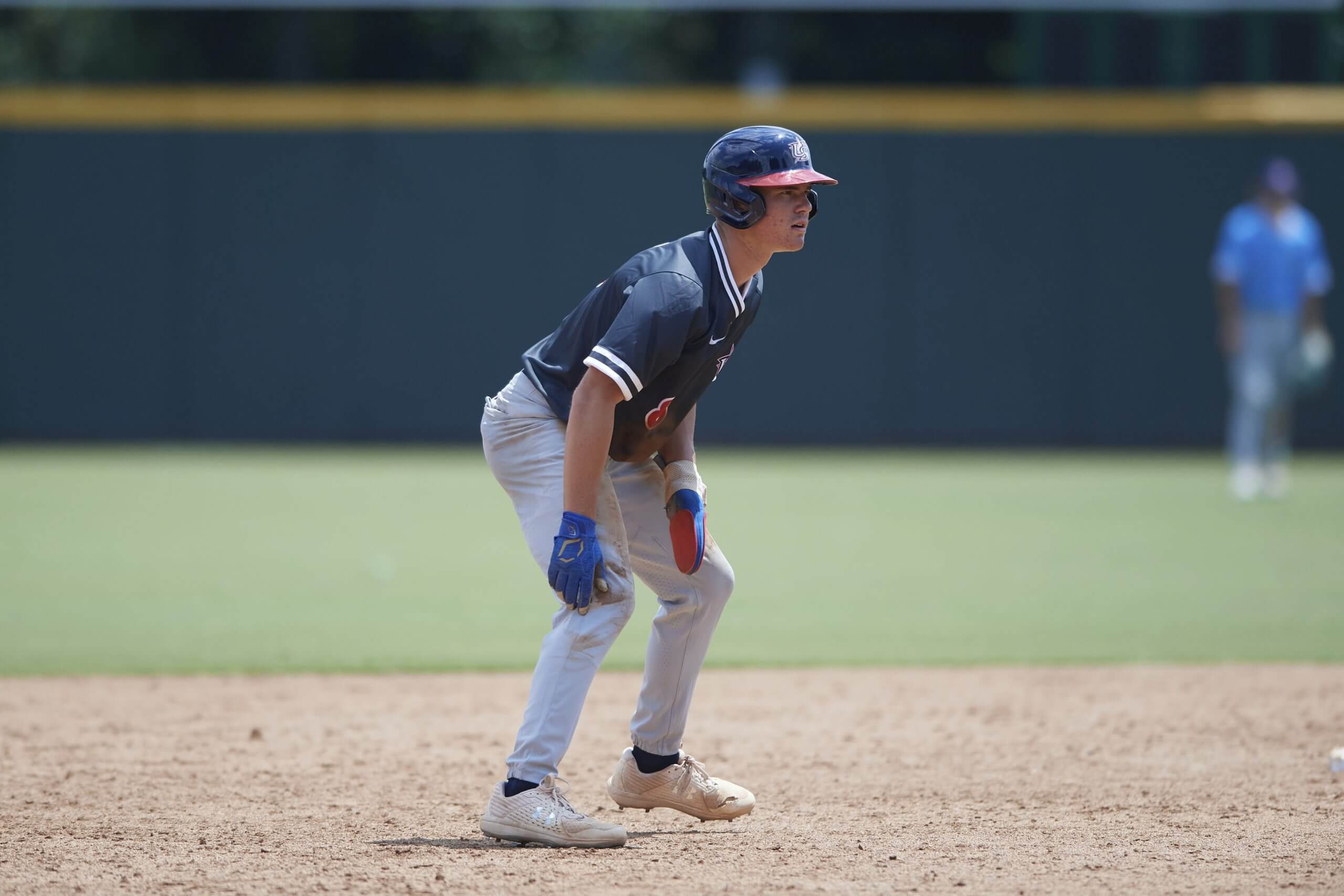
Fien is one of the bigger enigmas in the draft class, as he was clearly the best hitter on the showcase circuit last year, making a ton of hard contact against all manner of pitching, but hasn’t had the same success this spring against lesser competition while playing for his regular high school team. At his best, Fien has excellent bat speed and plate discipline to match, rarely whiffing or chasing; in a modest sample last year, he swung at pitches beyond the shadow of the zone just 11 percent of the time. He showed at least 55 power and projected to plus, with such great feel to hit that he seemed like he’d be one of the first high school players selected. This year, he’s still making a lot of contact, but not the kind of hard line-drive contact that he made last summer. He still has great hand speed and loft in his finish to get the ball in the air, but he’s less fluid, top and bottom, and a little longer to the ball. The result is his timing has been off — but he’s had it before, and that’s something that you can fix, a lot more easily than overhauling a swing or trying to teach someone to stop chasing sliders down and away. He’s got a 70 arm and while he’s almost certainly moving from shortstop to third base in pro ball, he’s a good enough athlete that he could be a plus defender at the hot corner. There’s some risk here given the performance this spring, but that looks like a buy-low opportunity for some team that probably thought in January they’d have no shot to draft a player of his talent. He’s committed to Texas.
Position Player
High School
SS
3B
Scouting Report
Bats: R, Throws: R
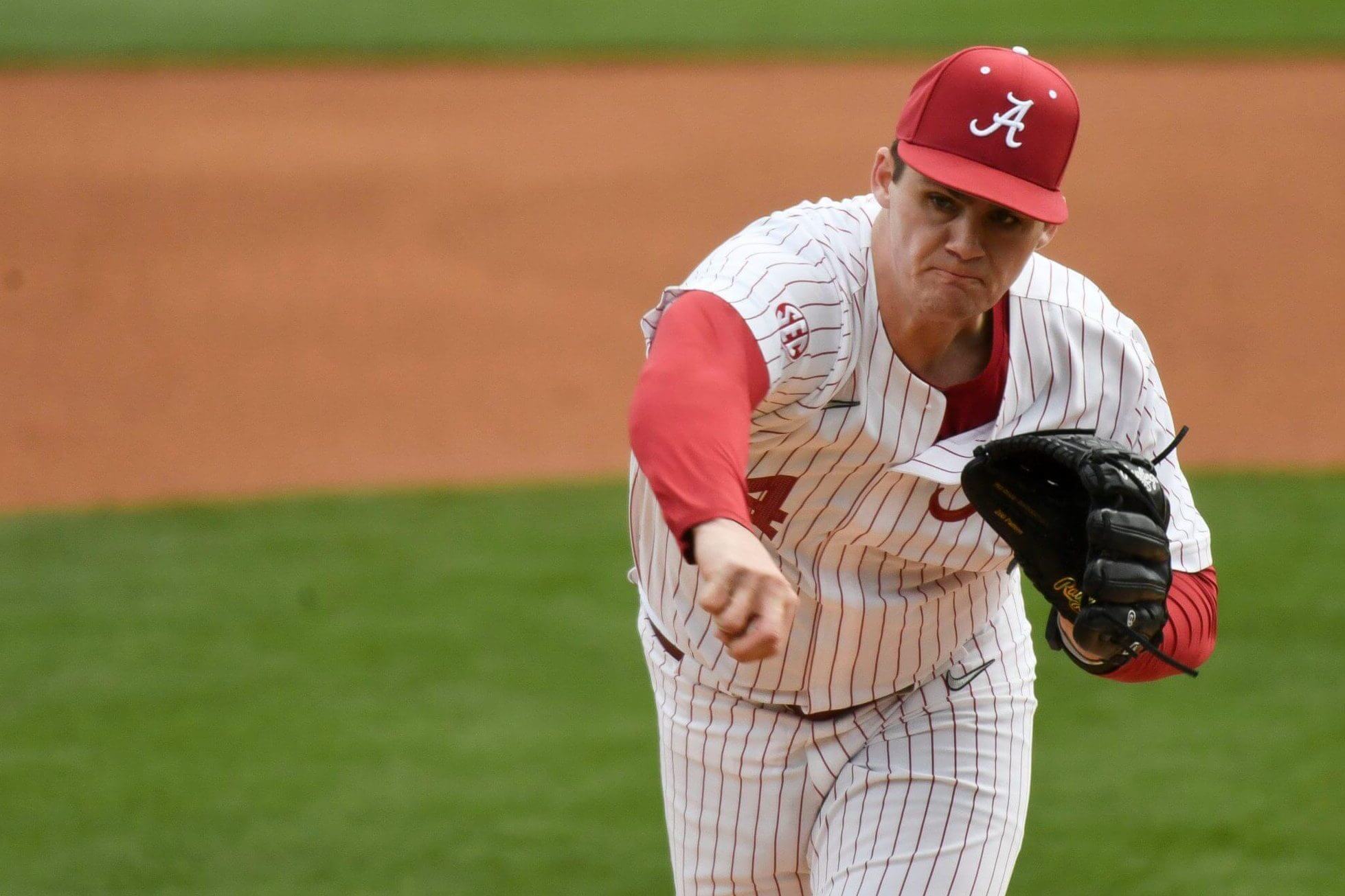
Quick made one start in 2024 before undergoing Tommy John surgery, then returned this spring like nothing had ever happened, working 95-99 on a cautious program that has had him top 90 pitches just once all season. He throws four- and two-seamers, although the latter doesn’t have a ton of sink, with a 55 changeup that is very deceptive out of his hand and has some late fading action to it. He also throws a slider that has big break from high spin rates, but changes his arm slot enough — by about 8 inches of release height — for hitters to pick it up, and has begun working in a cutter at 91-93. His arm is often late, which may be contributing to the issues with the slider, and he comes back across his body with some head-snap at release. It all points to some reliever risk even before you consider the injury, but he’s also someone who has such a great foundation of arm strength, ability to spin the ball, and a present offspeed weapon in the changeup that he could be a No. 2 starter or better with some mechanical fine-tuning.
Scouting Report
Bats: R, Throws: R
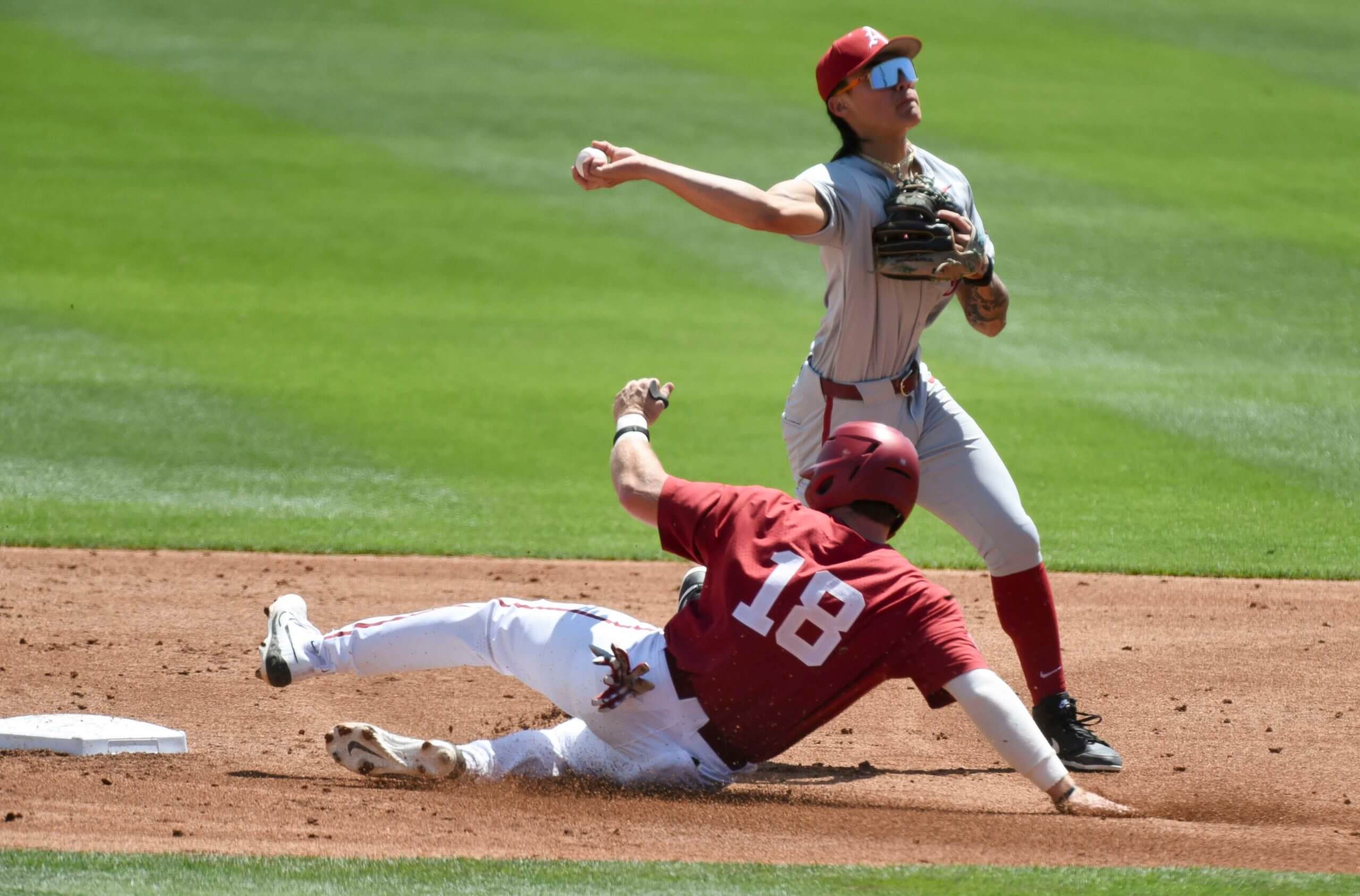
Aloy is a true shortstop with power and is an excellent athlete, hitting 17 homers so far this year for the Razorbacks but striking out 52 times, as he’s struggled against better breaking stuff.
Position Player
4-Year College
SS
Scouting Report
Bats: L, Throws: R
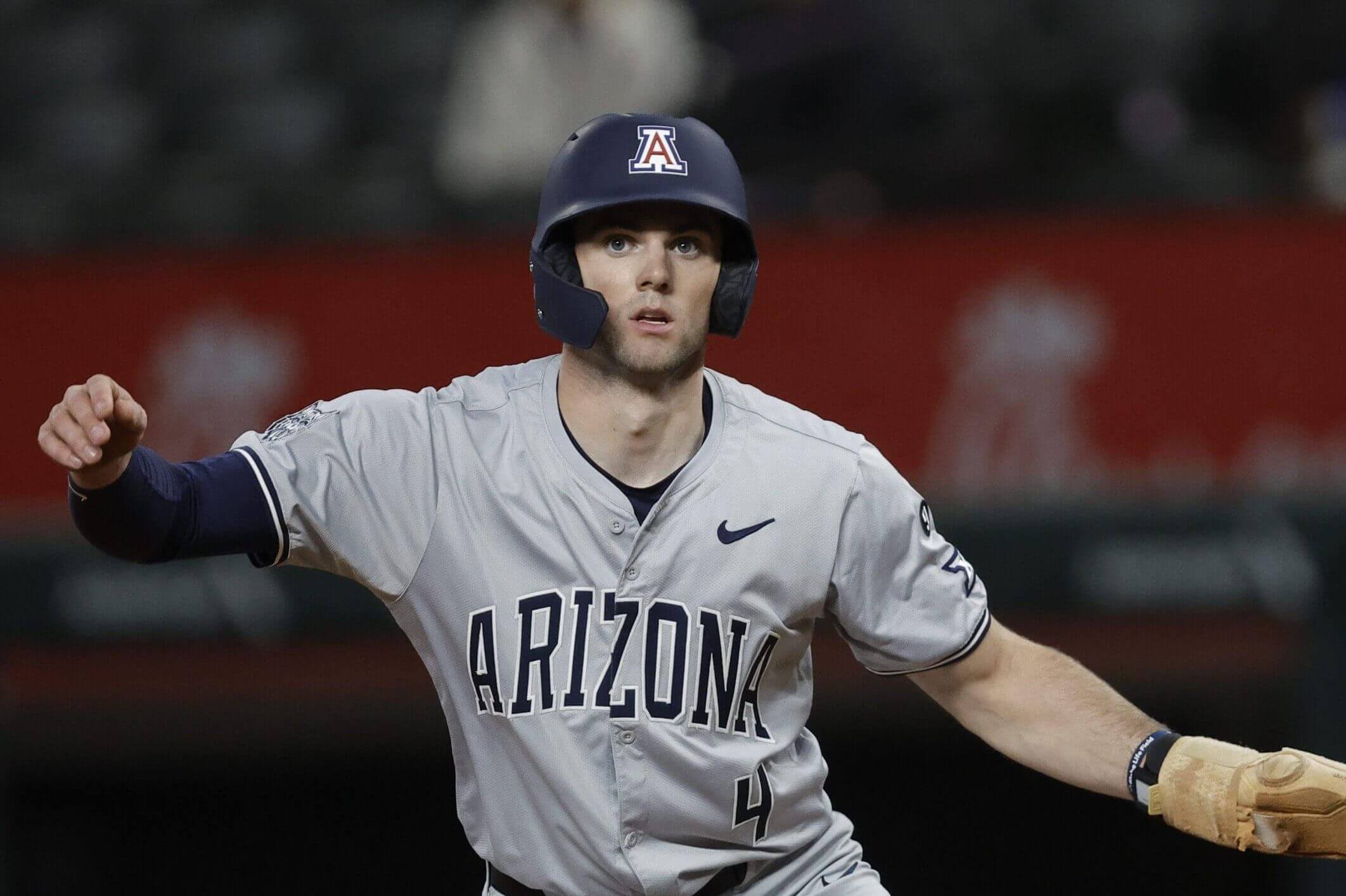
Summerhill has one of the best hit tools in the college class this year, with the potential for a little more power with some swing help. He’d be a top-10 pick if he could play center field, but the Wildcats moved him to right this spring and he wasn’t great in center in the Cape Cod league last summer.
Position Player
4-Year College
OF
Scouting Report
Bats: L, Throws: L
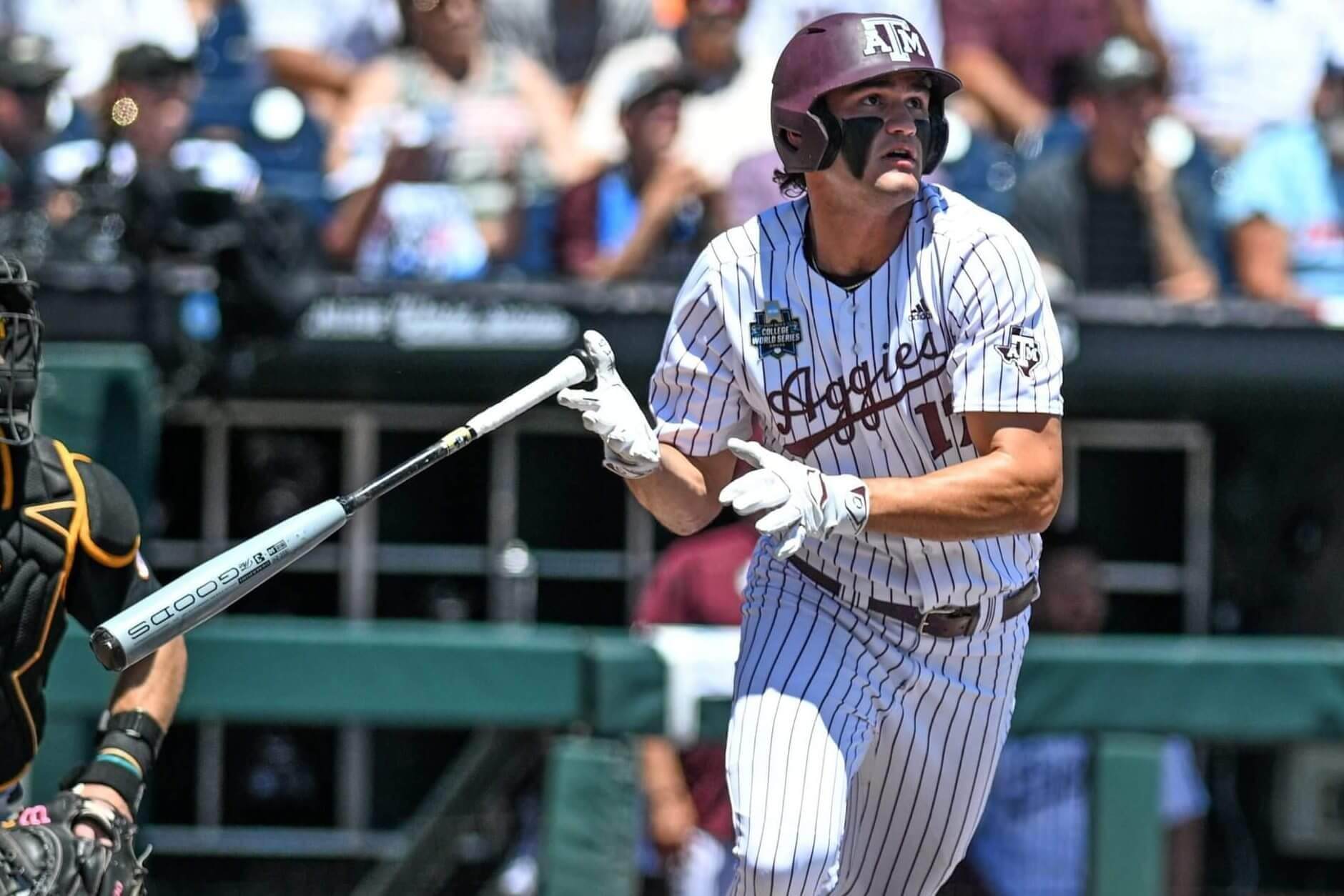
LaViolette was overhyped coming into the year, but in this draft class he offers enough upside to go in the back of the first round, with easy plus power, some patience, and what will probably end up above-average defense in right field. He still swings and misses too often, and whoever takes him will probably have to work with him on his swing mechanics to cut that down.
Position Player
4-Year College
OF
Scouting Report
Bats: L, Throws: L
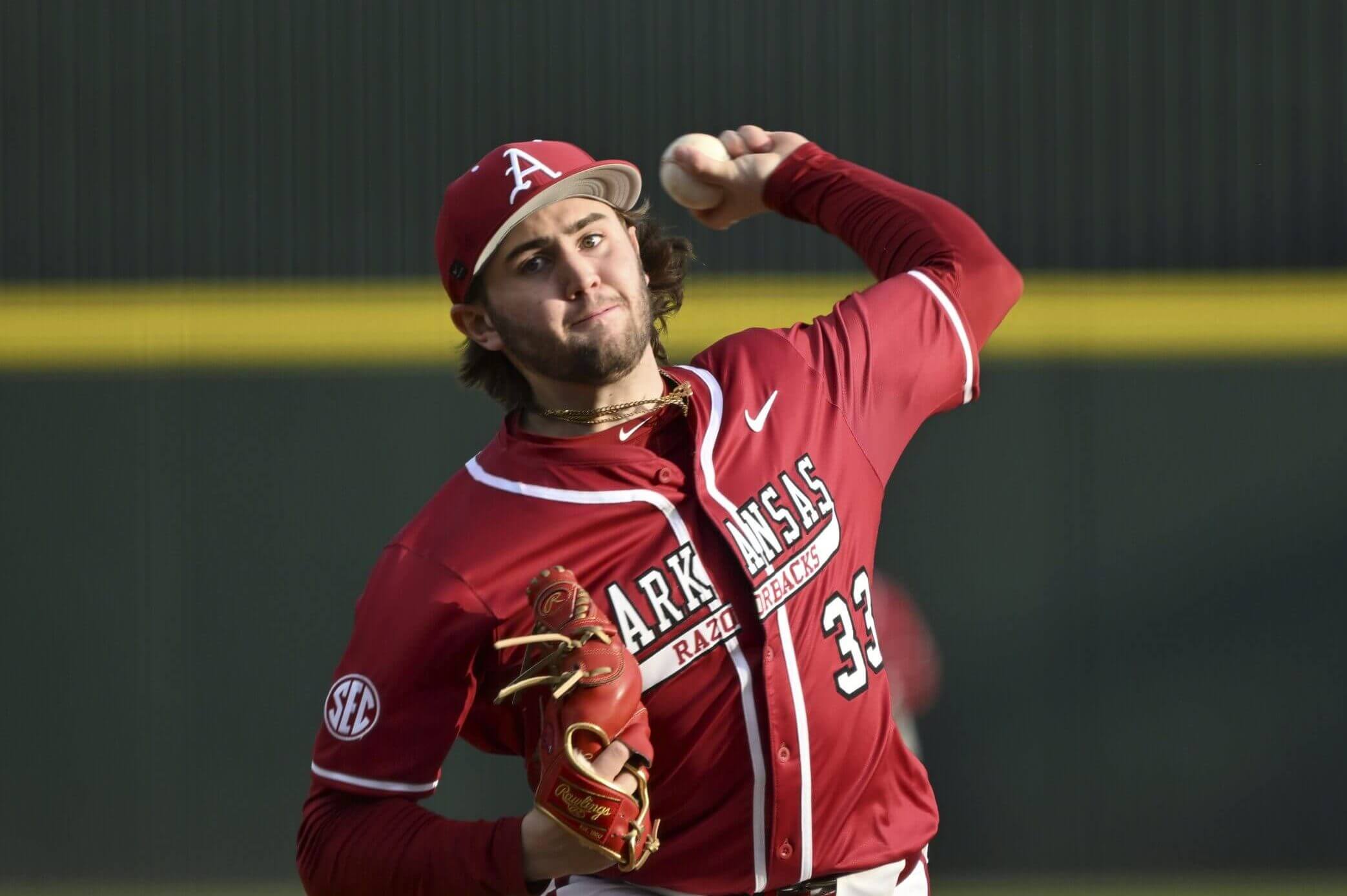
Root has a plus curveball and plus changeup, with an athletic, repeatable delivery, helping him to a 31.6 percent strikeout rate this year, but his fastball plays well below its velocity and he’s gotten just a 10 percent whiff rate on the pitch.
Scouting Report
Bats: L, Throws: R
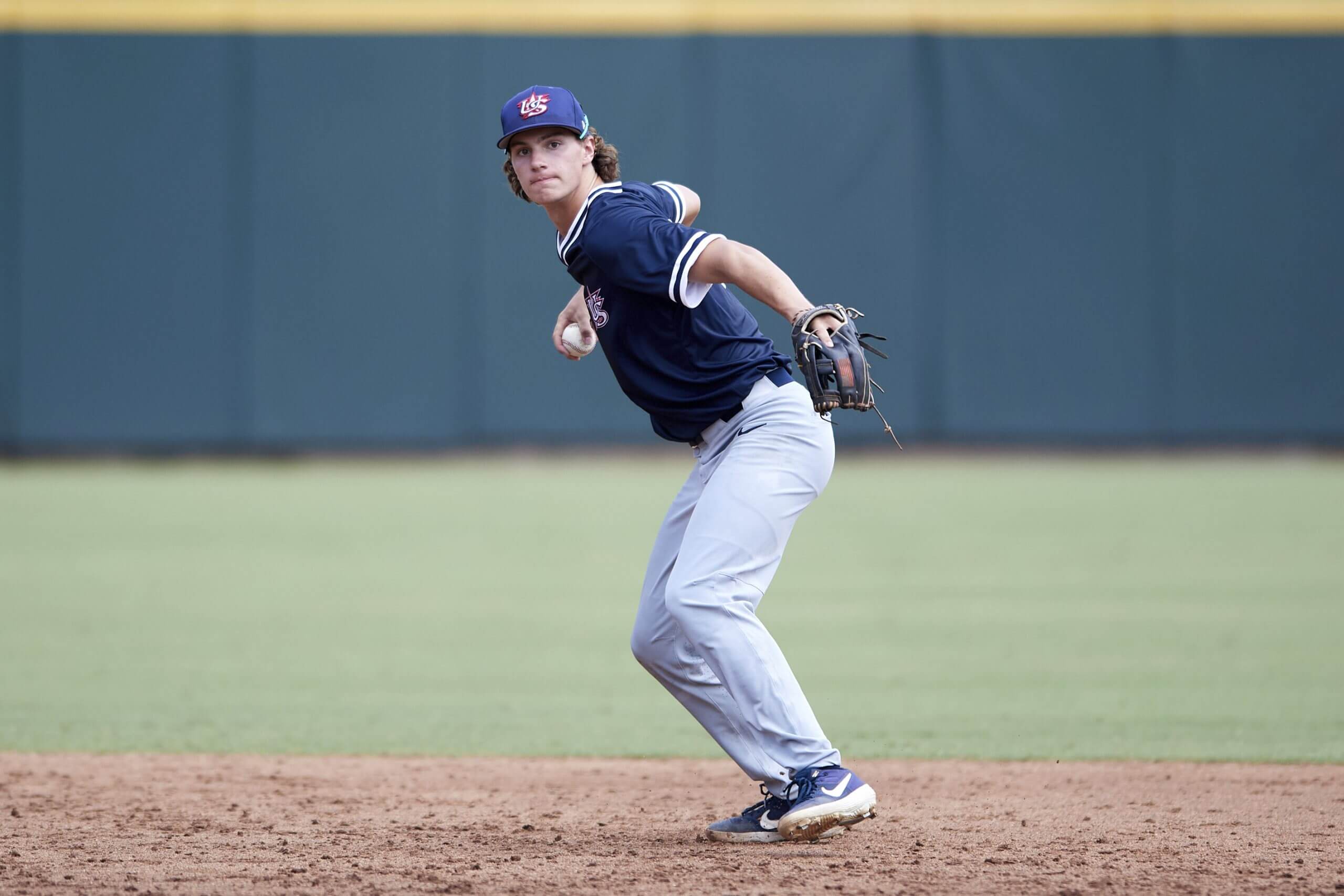
Neyens has big power and should stay on the dirt at third base. He’s demolished high school pitching this spring, but he struggled with contact last summer despite a low chase rate of 11 percent. He’s committed to Oregon State.
Position Player
High School
3B
Scouting Report
Bats: L, Throws: R
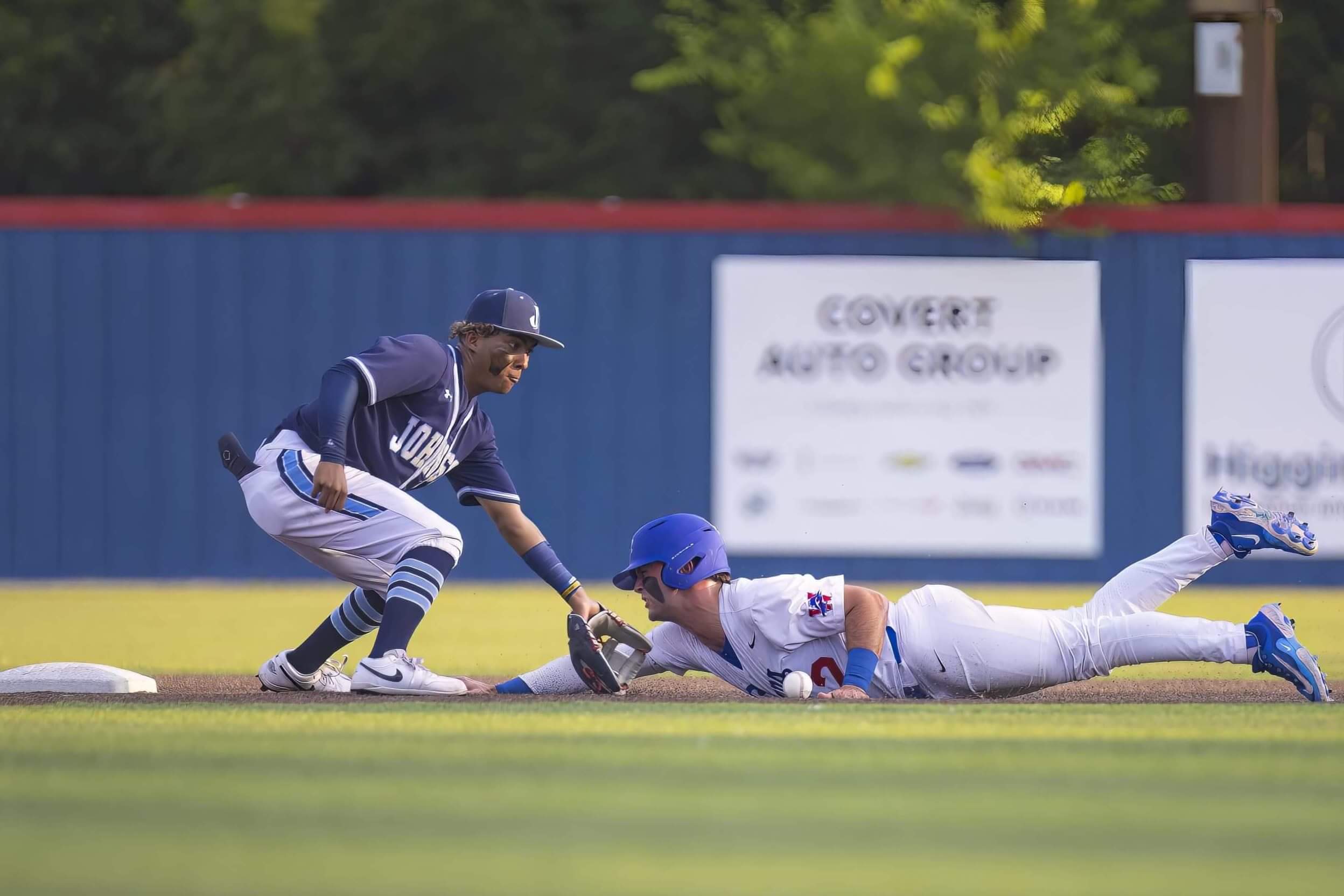
Cunningham is one of the better pure hitters in the draft class this year, on par with Gavin Fien and JoJo Parker, although he doesn’t offer the possible physical projection that those guys do as he’s already filled out. He has elite hand speed and rarely swings and misses, with a whiff rate of just 9 percent at tracked events in 2024 according to data from Synergy Sports. The swing is a little flat through contact, so the power potential here is limited unless someone can get him to loft the ball more. He has a 55 or 60 arm at shortstop and his hands are excellent; I’ve heard very mixed reviews on whether he’ll stay there, as he’s at least not the prototypical shortstop and it’s not clear if he has the lateral range to stick. Cunningham is listed at 5-10 but he’s shorter than that, maybe 5-8, which is also going to take a lot of teams out of the running (except Arizona), as will the fact that he’ll be 19 on draft day. If you believe in the defense, he’s an easy first rounder; if you think he’s a second/third baseman without enough power, he’s still a top 40-50 pick, at worst, because he has such good feel to put the bat on the ball. He’s committed to Texas.
Position Player
High School
SS
Scouting Report
Bats: R, Throws: R
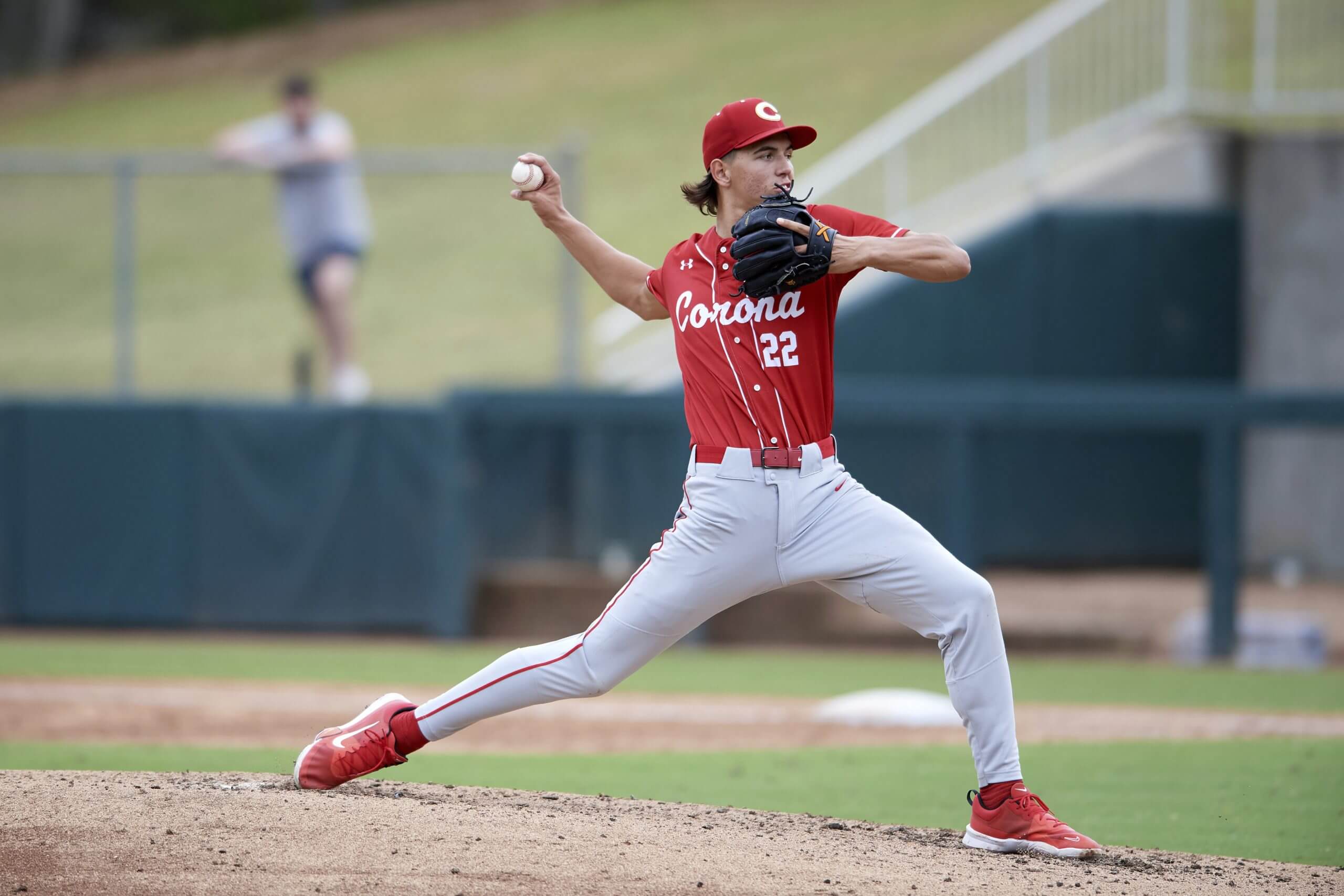
Hernandez is the consensus top high school pitcher in the 2025 draft class, anointed as such as a junior and only seeing his stock increase with his velocity this year. He’s been up to 100 mph on his four-seamer, although the velocity, which is more typically 94-97, isn’t the main attraction. He’s got at least a 60 changeup and an above-average curveball as well, along with a slider that’s extremely inconsistent right now but that I think will improve significantly once he gets to a team with a good pitching lab — he can spin the ball and he has plenty of arm speed, so it’s hard to imagine him not getting to a plus slider. The changeup has continuous tumbling action to it and it’s very deceptive right out of his hand, while the curve is a classic two-planer with a high spin rate as well. The four-seamer is dead straight and hitters who can catch up to the velocity can square it up, even at the high school level. He takes a huge stride towards the plate to generate all of that velocity, with a head-snap at release, and his arm can struggle to catch up, which may be why the breaking stuff isn’t consistent yet. The history of high school pitchers taken in the first round is dismal, however, given their high attrition rates, and as talented as Hernandez is, he’s still in that same category. There’s at least No. 2 starter upside here, but the risk of any high school arm is that they get hurt or don’t have the command and control to get to the majors.
Scouting Report
Bats: L, Throws: R
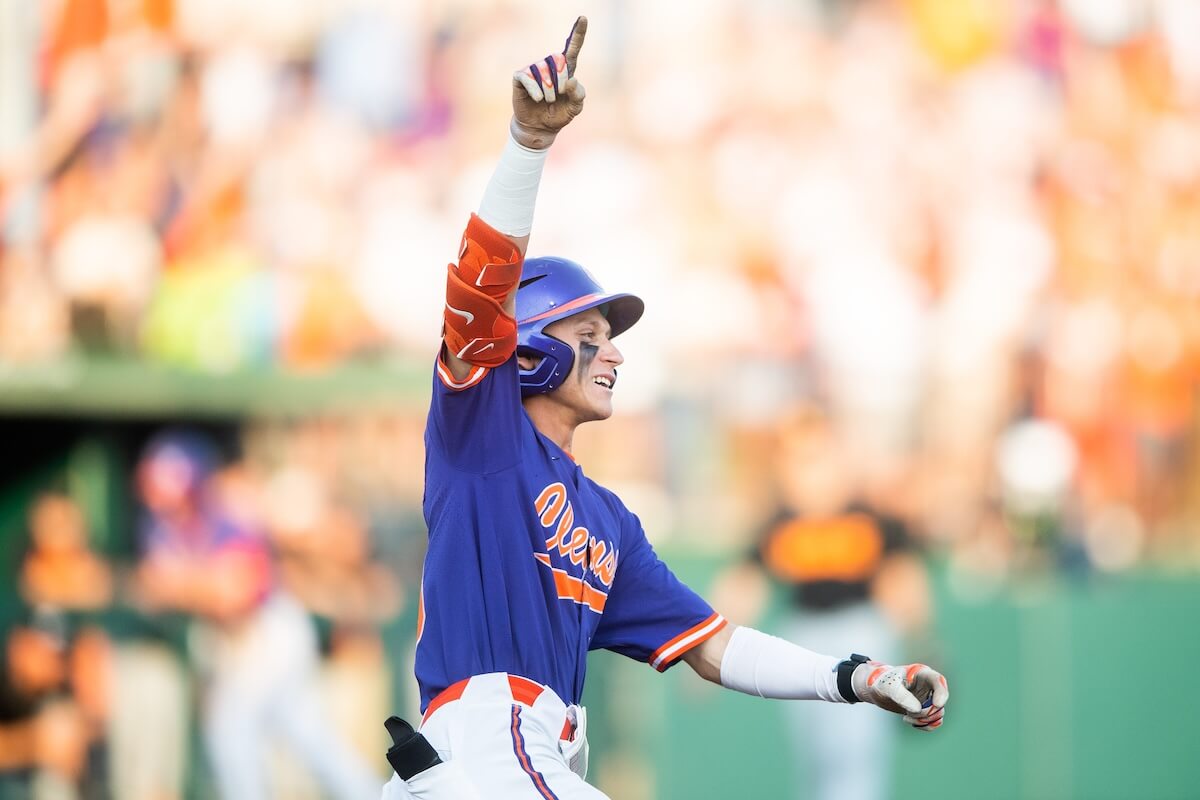
Cannarella came into 2025 with a chance to go in the top five, maybe even ending up in consideration at No. 1 if he took a step forward in power, but after undergoing labrum surgery last July he hasn’t thrown or hit well at all this spring, losing 100 points of slugging percentage from 2024. He’s an upside play for a team willing to rehab him and see if he can get back to full strength in 2026.
Position Player
4-Year College
OF
Scouting Report
Bats: L, Throws: R
Mitchell’s an extreme contact hitter with some power now and enough projection to get to average. He’s a shortstop now but his arm is going to push him to second base or probably the outfield. He’s committed to Georgia Tech.

Position Player
High School
SS
Scouting Report
Bats: R, Throws: R
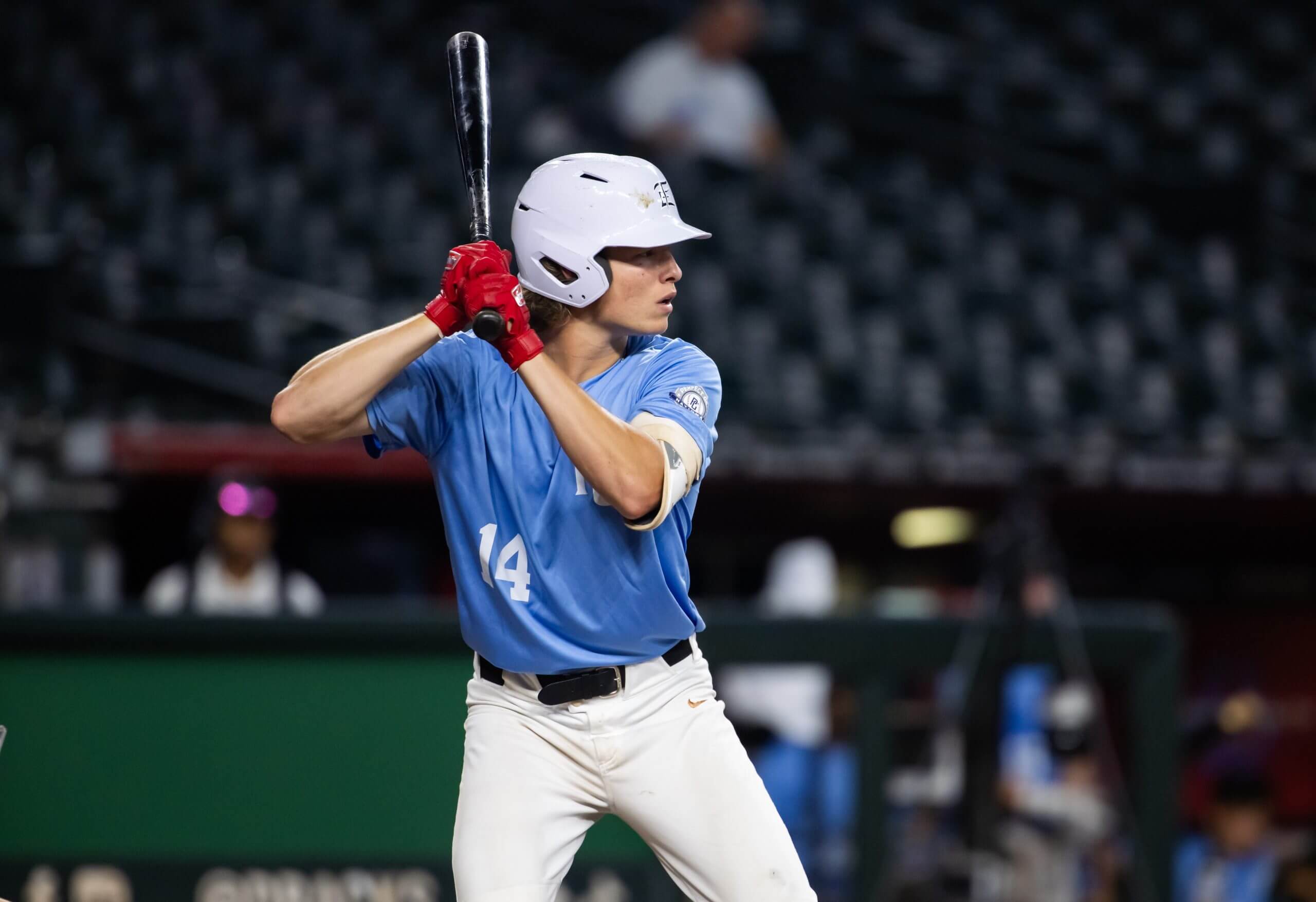
Pierce is a no-doubt shortstop who might be a 70 defender there at his peak, with good feel to hit but no physical projection and possibly just 40 power even when he’s filled out. He’s committed to Georgia.
Position Player
High School
SS
Scouting Report
Bats: L, Throws: R
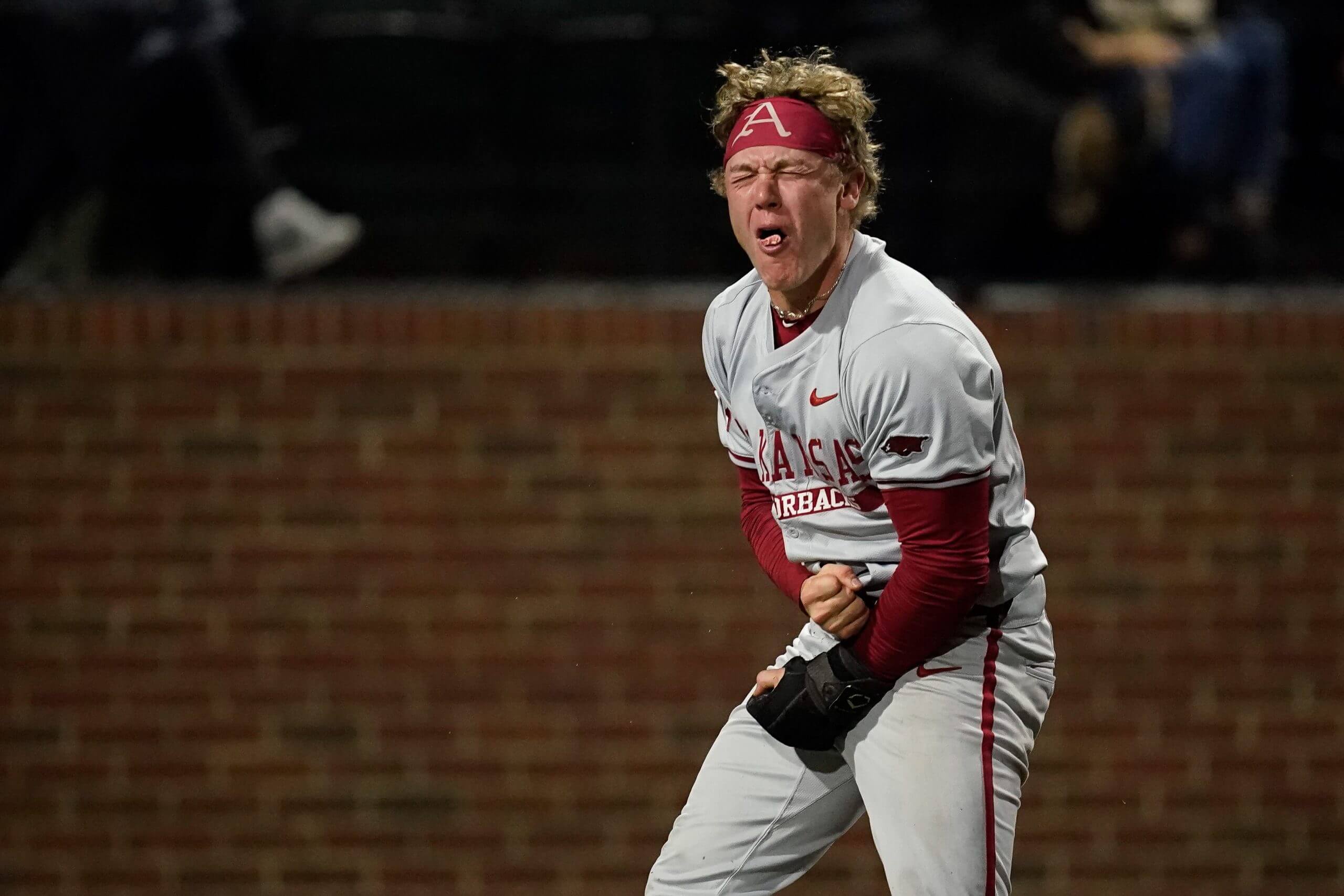
Davalan is a draft-eligible sophomore by age from Waterloo, Ontario, in Canada, who has emerged as the best overall hitter in Arkansas’ lineup in his first year there, with more walks than strikeouts and at least average power. He can definitely play an above-average left field, with a handful of games in center this year and on the Cape last summer; if someone thinks he can stay in center he could go even higher than this ranking.
Position Player
4-Year College
OF
Scouting Report
Bats: L, Throws: L
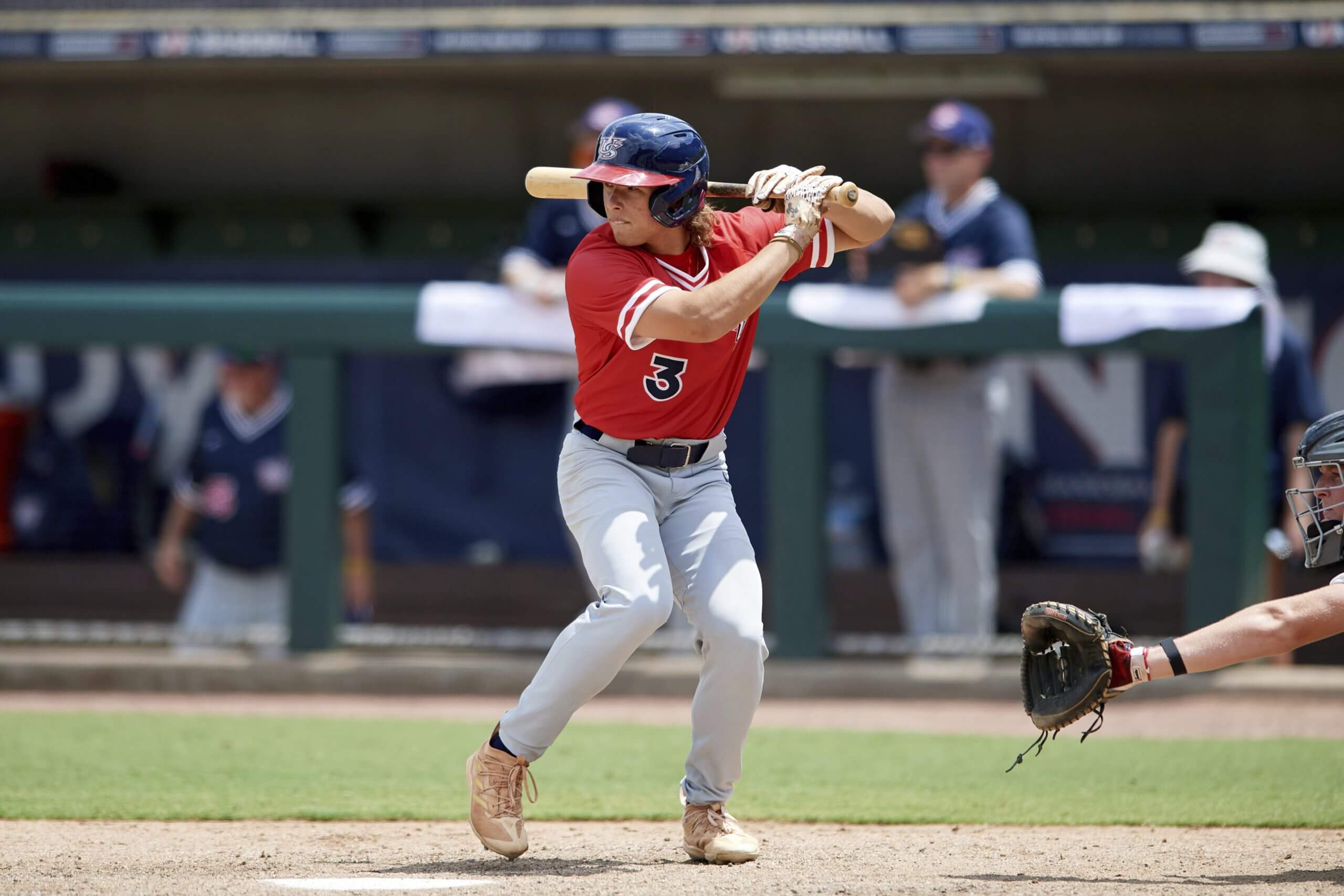
De Brun is a diminutive outfielder from the Pacific Northwest, like Corbin Carroll was. De Brun is listed at 5-10 but may be shorter than that, and like last year’s fun-sized first-rounder Slade Caldwell, he has excellent feel to hit and projects to stay in center. He faces the same questions about his ultimate power level that all guys his size do. I’ve had scouts say he’s somewhere in between those two Diamondbacks players in power potential. He’s committed to Vanderbilt.
Position Player
High School
OF
Scouting Report
Bats: B, Throws: R
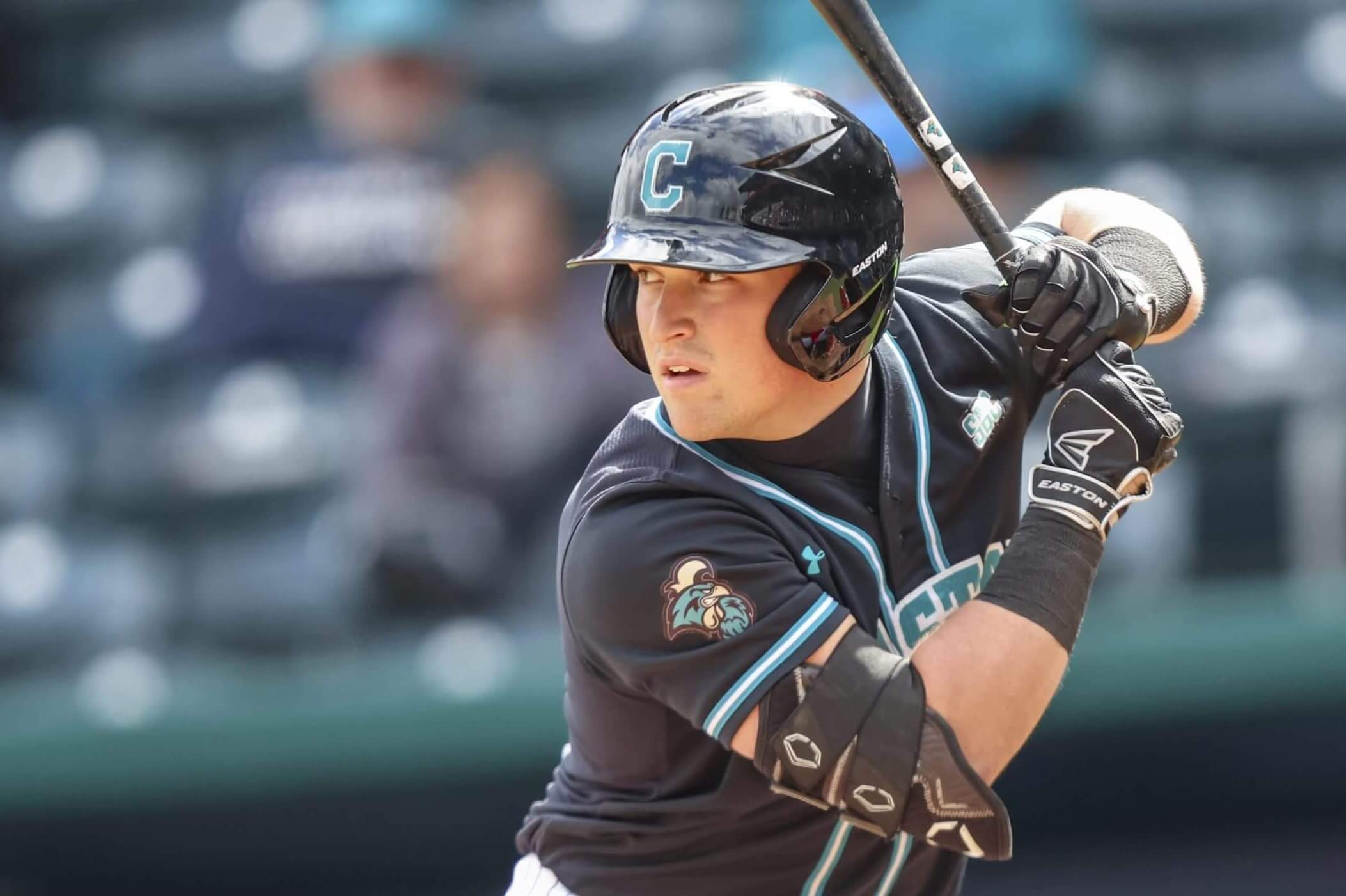
Bodine can catch and he never strikes out, just 6.5 percent so far in 2025, with a walk rate over twice that, so while he doesn’t have power and probably won’t ever have more than 45 pop, this is enough of a foundation to see him as a future regular.
Position Player
4-Year College
C
Scouting Report
Bats: R, Throws: R
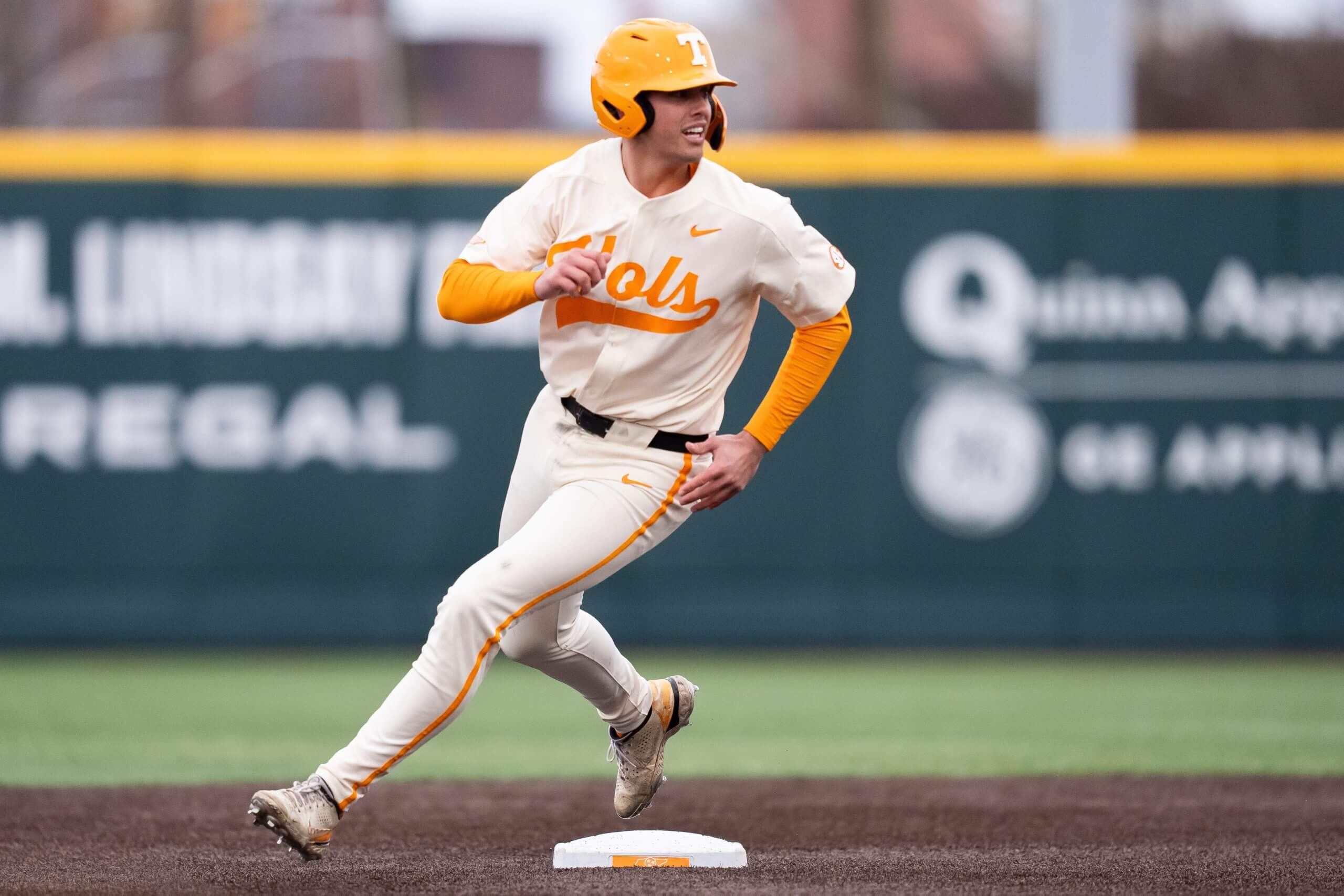
Curley has a great swing and shows enough present power for an infielder, but has no two-strike approach at all, and he’s struggled enough on routine plays at second and third that it’s unclear what his ultimate position will be. He’s age-eligible for the draft as a sophomore.
Position Player
4-Year College
SS
3B
Scouting Report
Bats: R, Throws: R
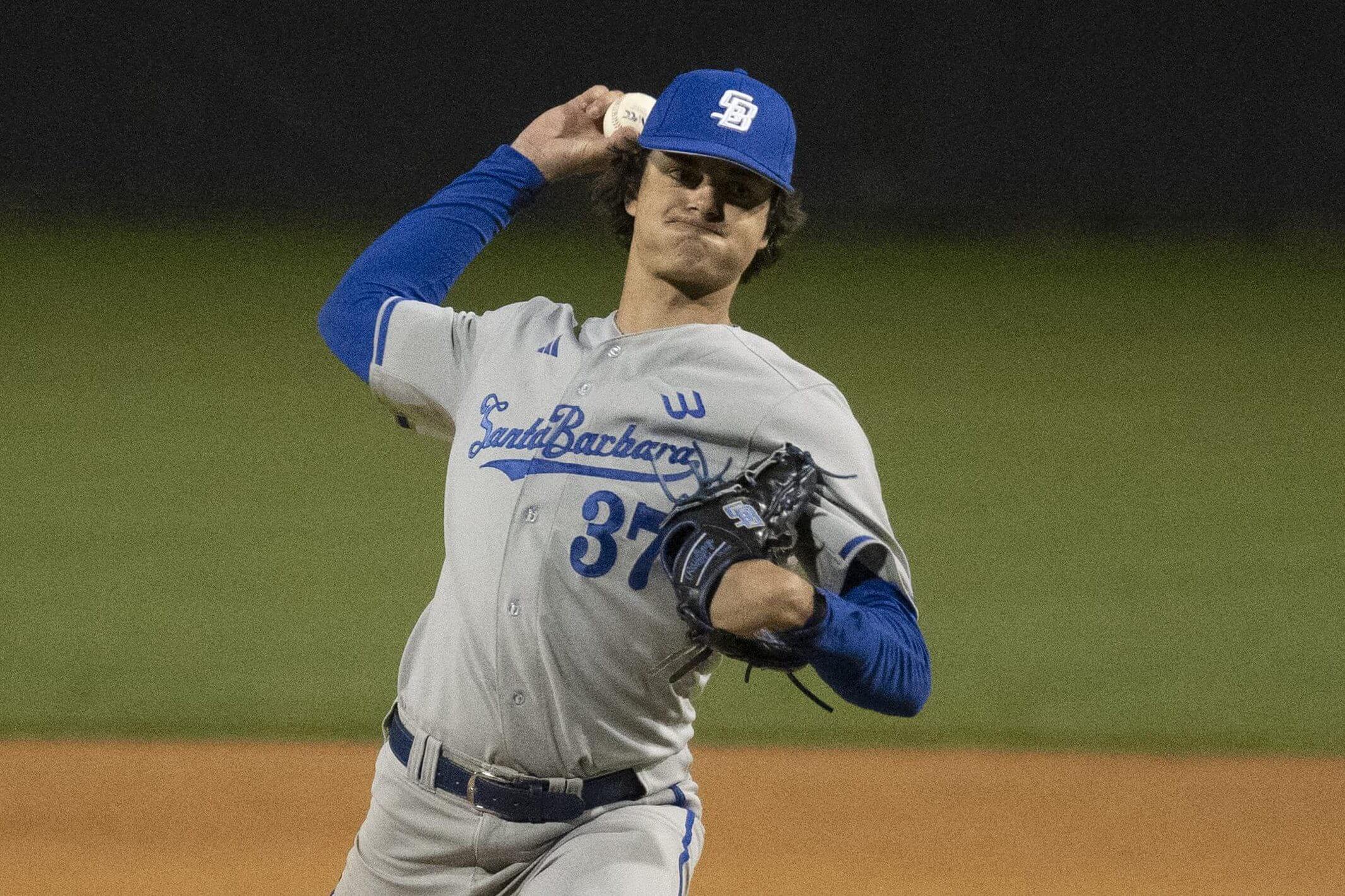
Bremner started out slowly this year and hasn’t been as consistently dominant as he was in 2024, but he’s actually struck out a higher percentage of batters this year than he did as a sophomore. He has a plus changeup that might be a 70 and he gets good spin rates on the slider, but his fastball can be flat and the slider plays down because of how he cuts himself off in his delivery.
Scouting Report
Bats: L, Throws: L
Neville was a top 100 draft prospect out of high school in 2022, but had a strong commitment to Arkansas and ended up going in the 18th round to the Reds. He went to Fayetteville for one year, barely playing, and transferred to Oregon, where he’s put together a huge breakout season in 2025 as the Ducks moved from the Pac 12 (RIP) to the Big Ten, leading Division 1 in homers through mid-May. Neville is a 55 runner who projects to stay in center field, probably an above-average defender there as his reads on balls give him a little extra range beyond his pure foot speed. He has at least 60 power, as he’s produced contact over 110 mph several times, and the swing is both geared to pull the ball in the air but also allows him to drive the ball the other way if the pitch is further away from him. There are concerns about the bat even with his performance this year — the change in conferences means Neville has faced worse pitching this year than he did in 2024, which has likely contributed to the declines in his whiff and strikeout rates, and in a brief stint in the Cape Cod League, he struck out in nearly half of his trips to the plate (19 K in 39 PA), even whiffing on a lot of average fastballs. He might not hit for a high average, making up for it with all of his secondary skills, including strong walk rates, power, and defense, enough to see an average to above-average regular ceiling and good chance for an extra outfielder as a reasonable floor.

Position Player
4-Year College
OF
Scouting Report
Bats: L, Throws: R
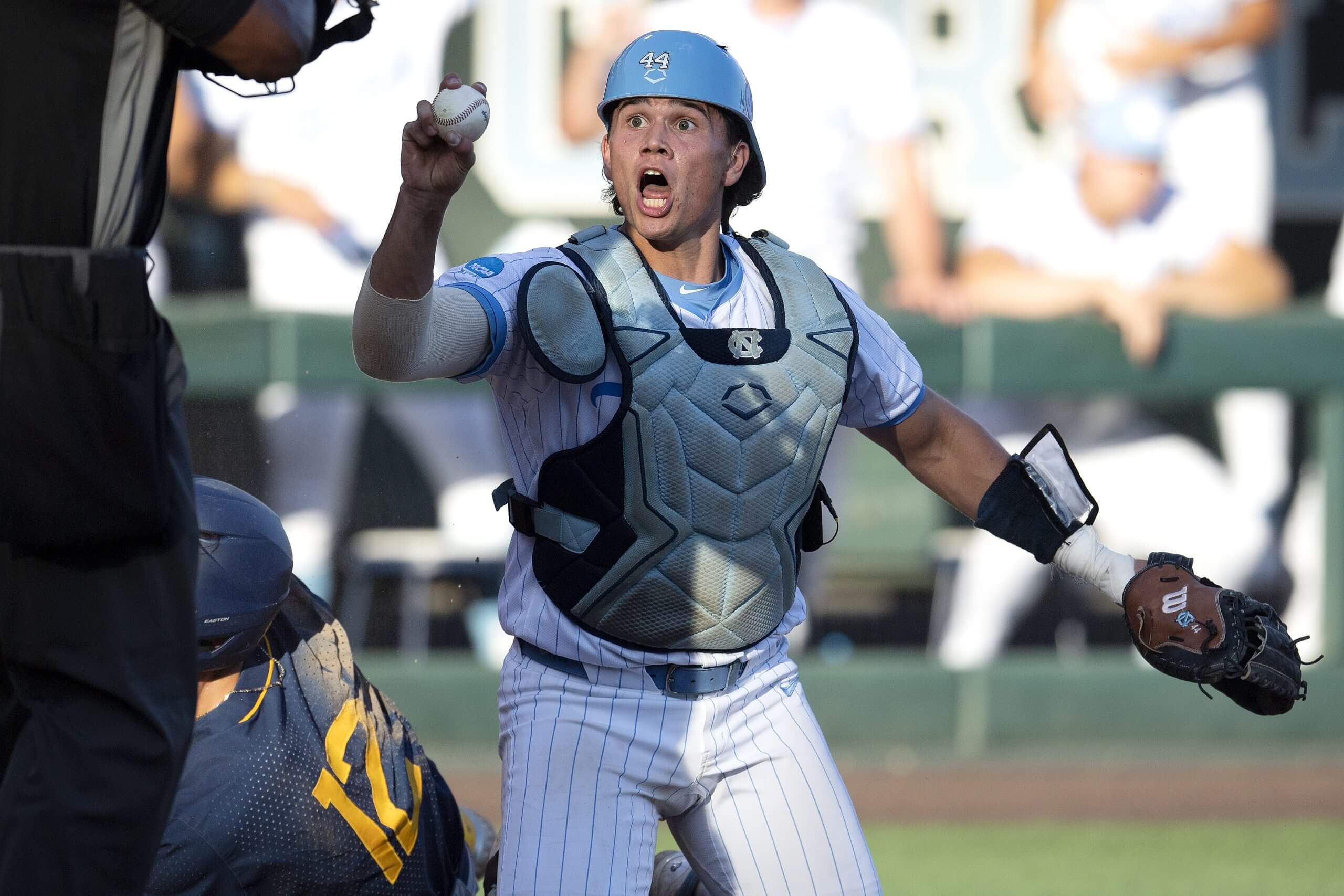
Stevenson seemed like a lock to go in the first round coming into the year, as a catcher with plus power, but a disappointing showing at the plate that has him hitting .270 with a 24 percent strikeout rate may put that in jeopardy. The power is still there, and he can catch and definitely throw, enough that he’s still among the top three college catchers in the draft class.
Position Player
4-Year College
C
Scouting Report
Bats: R, Throws: R
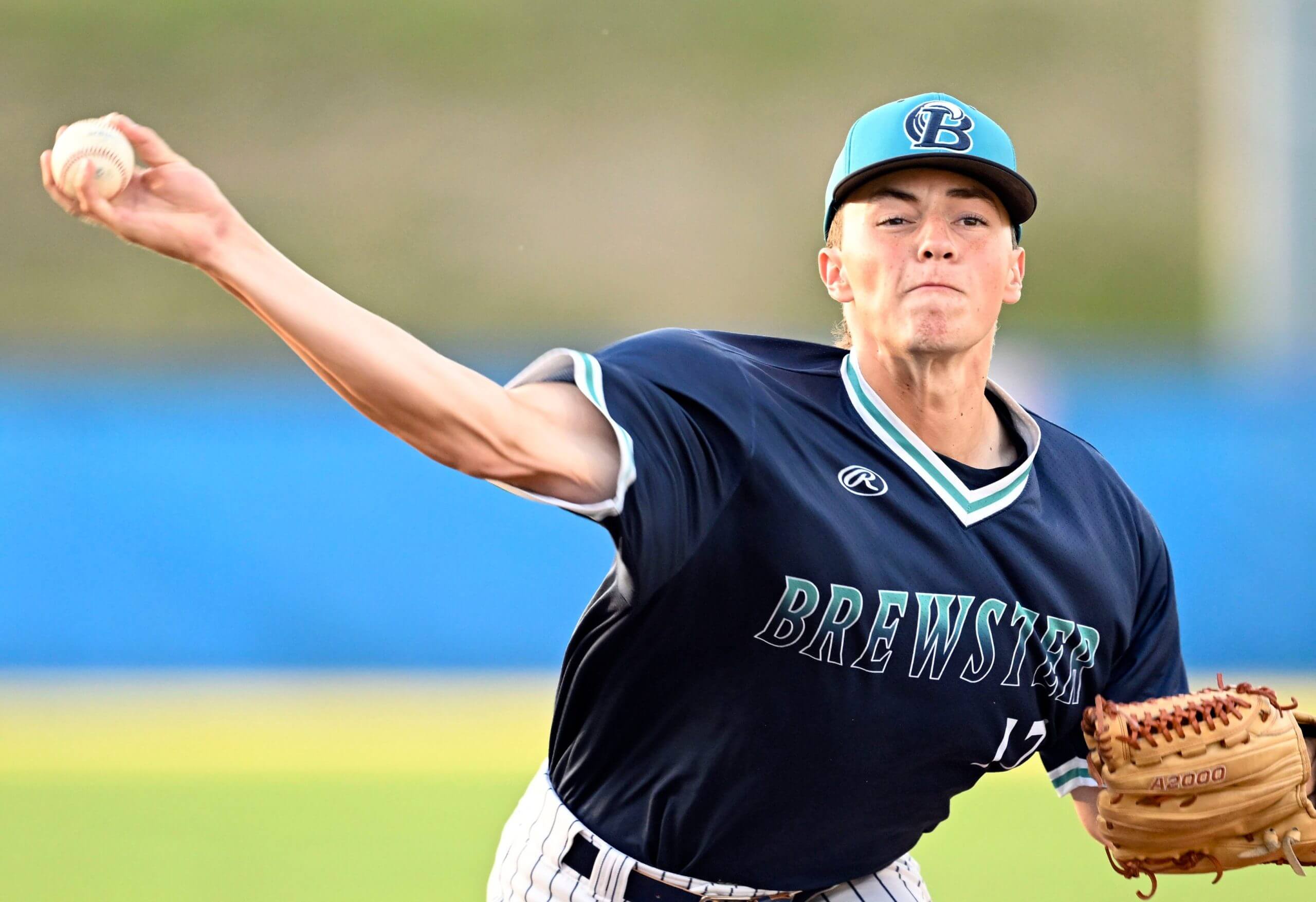
Forbes has first-round stuff and has a 35 percent strikeout rate on the year, already setting a career high with 49 innings, although he’s walked just over 10 percent of batters he’s faced and has a 4.74 ERA, as he’s allowed more hard contact than he should with a fastball up to 97 and a plus slider.
Scouting Report
Bats: R, Throws: R
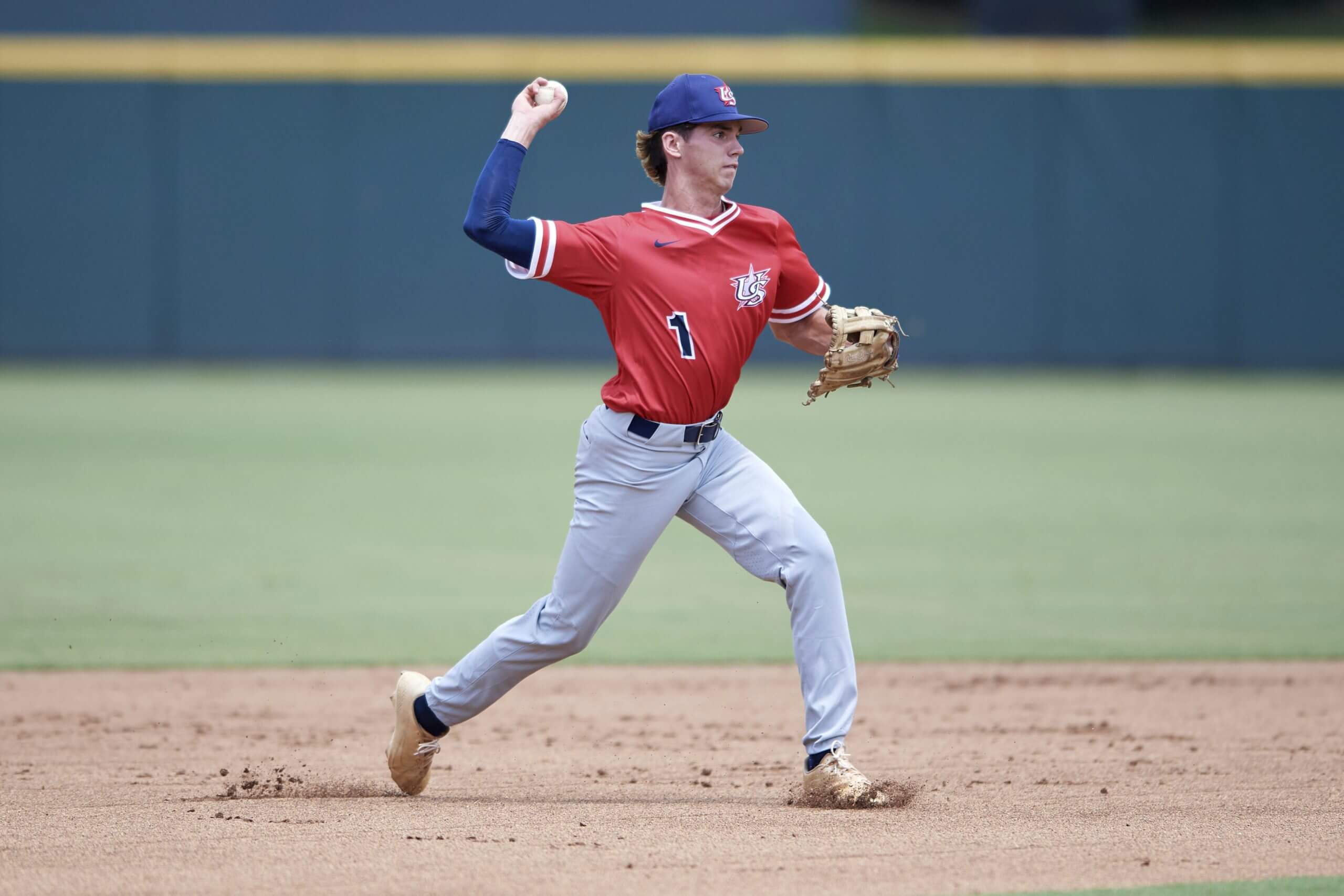
Hall is a definite shortstop and an 80 runner with a strong arm, showing the ability to hit fastballs and make hard contact. He struggled badly against breaking stuff last summer in limited showcase time before he reclassified to get into the 2025 draft class. He’s committed to Tennessee.
Position Player
High School
SS
Scouting Report
Bats: L, Throws: R
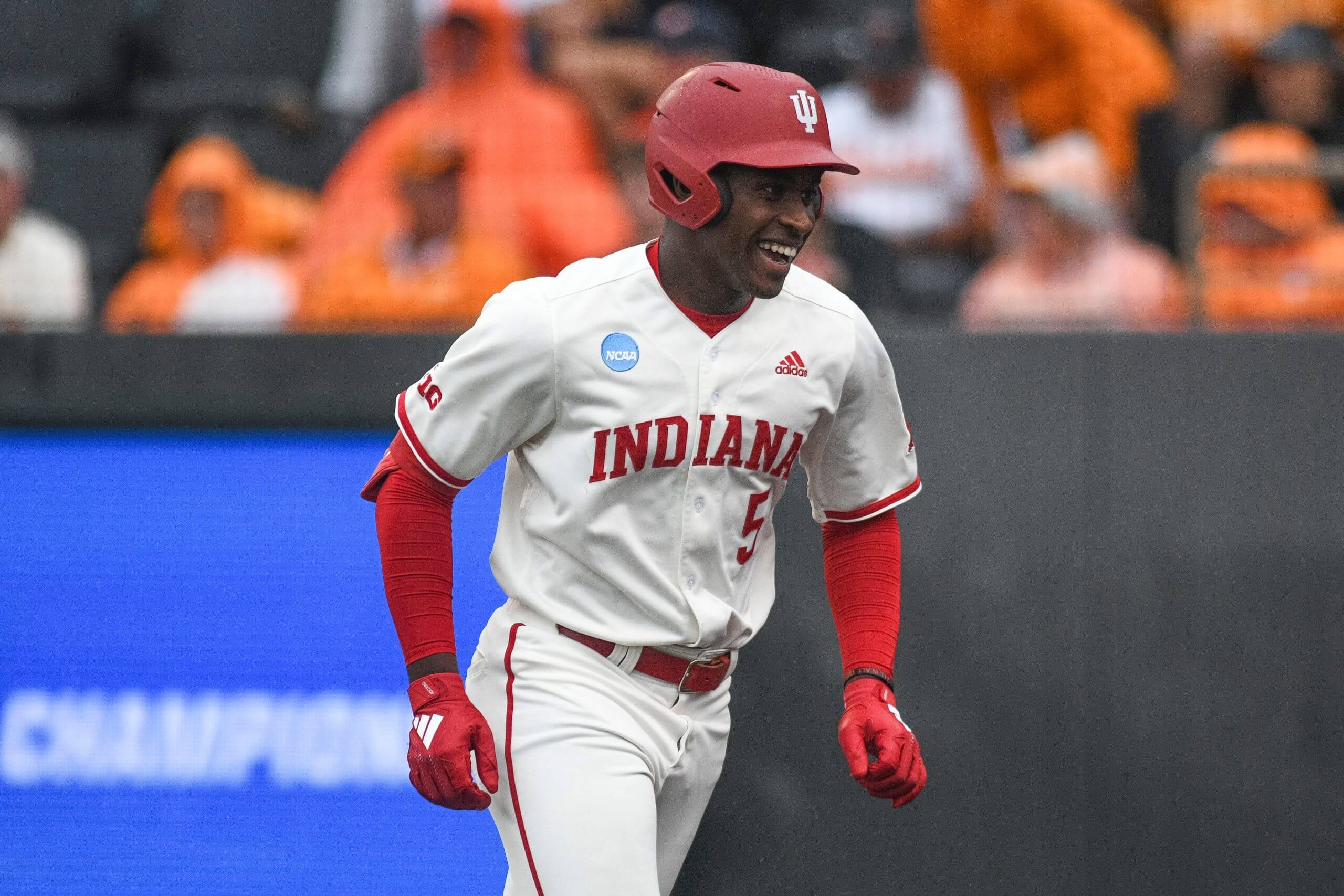
Taylor has been one of the best hitters in the Big Ten this year, walking nearly twice as often as he’s struck out and ranking in the top 10 in the conference in average and OBP, although he’s hit for less power in conference play. He’s limited to left field, so he’s going to have to mash.
Position Player
4-Year College
OF
Scouting Report
Bats: L, Throws: R
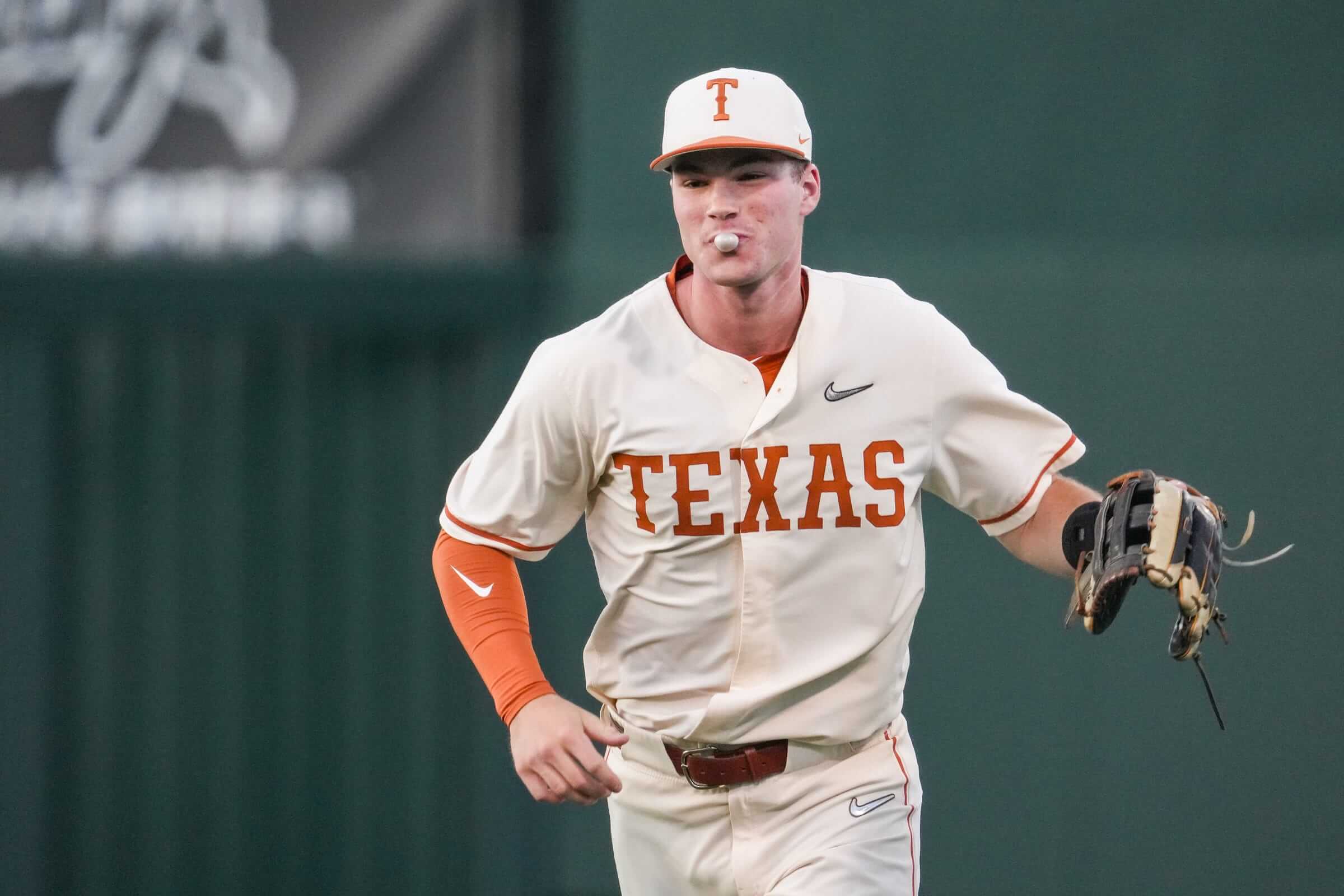
Belyeu broke his thumb in late March and just returned to the Longhorns’ lineup this past weekend against Oklahoma, going 2-for-13 with a homer. He’s got some power and excellent bat speed, with quick hands and an easy swing, but tends to expand the zone too much and is limited to an outfield corner.
Position Player
4-Year College
OF
Scouting Report
Bats: L, Throws: R
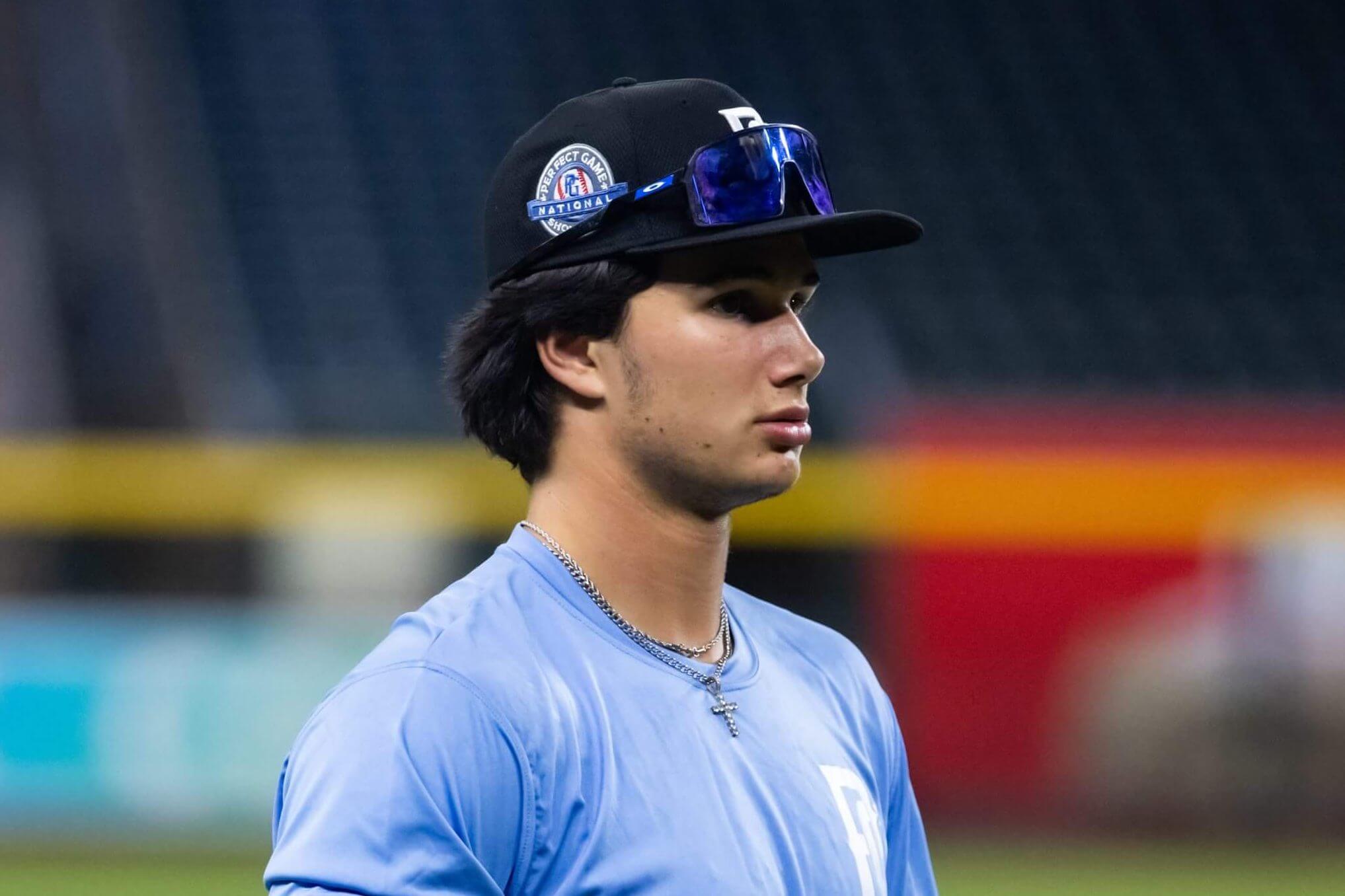
Fauske’s got a great swing and has 55 or 60 raw power, while in games he tends to shorten up and put the ball in play without showing the same power he shows in BP. He’s caught and played center field, with the latter his ultimate home in pro ball. He’s committed to LSU.
Position Player
High School
C
OF
Scouting Report
Bats: R, Throws: R
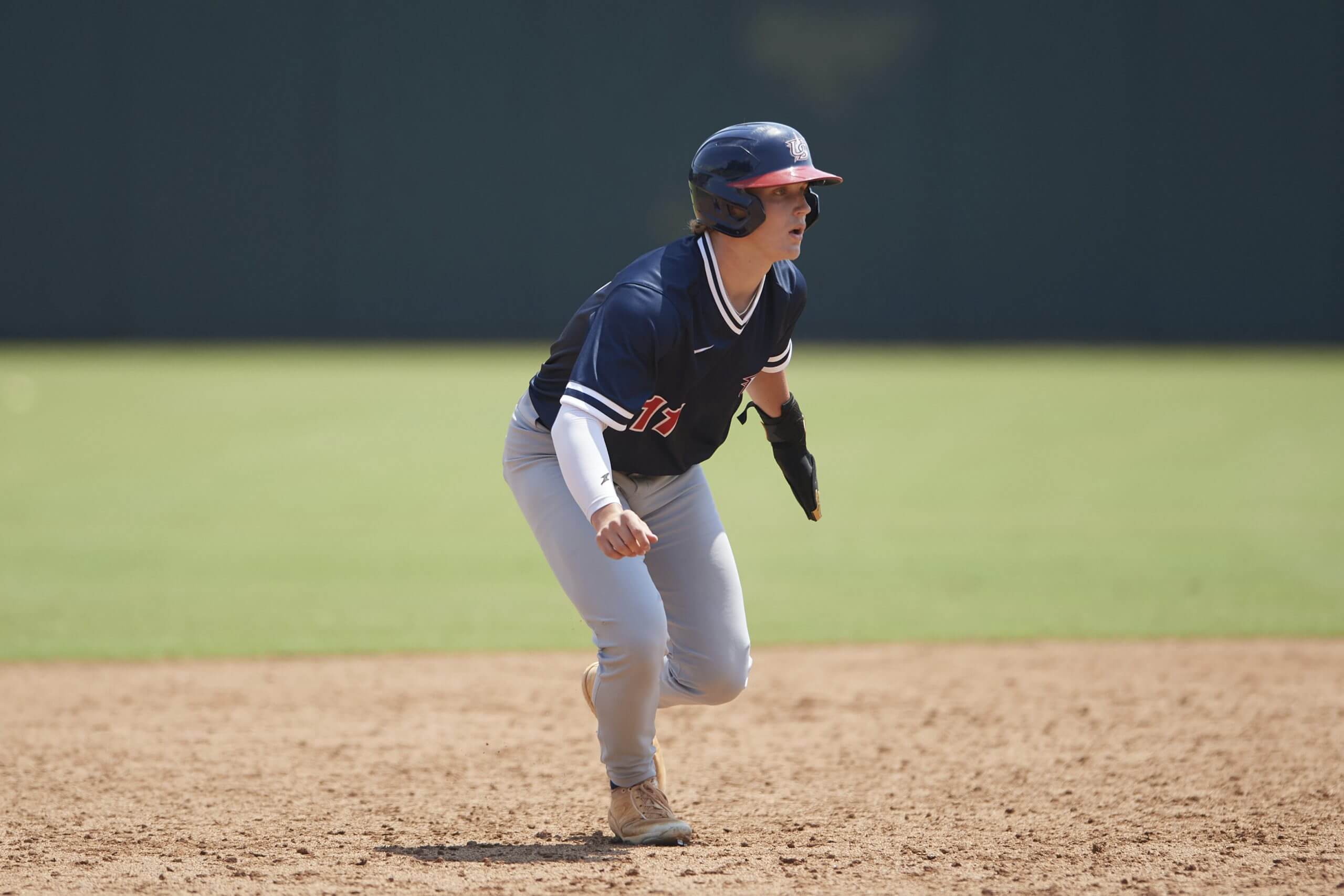
Hammond is a two-way player who’ll go out as a shortstop in pro ball, showing athleticism, a 70 arm, and impressive power. His approach is just fair, with a decent eye but maybe not great bat control just yet, and he may end up at third base. He’s committed to Wake Forest.
Position Player
Pitcher
High School
3B
RHP
Scouting Report
Bats: R, Throws: R
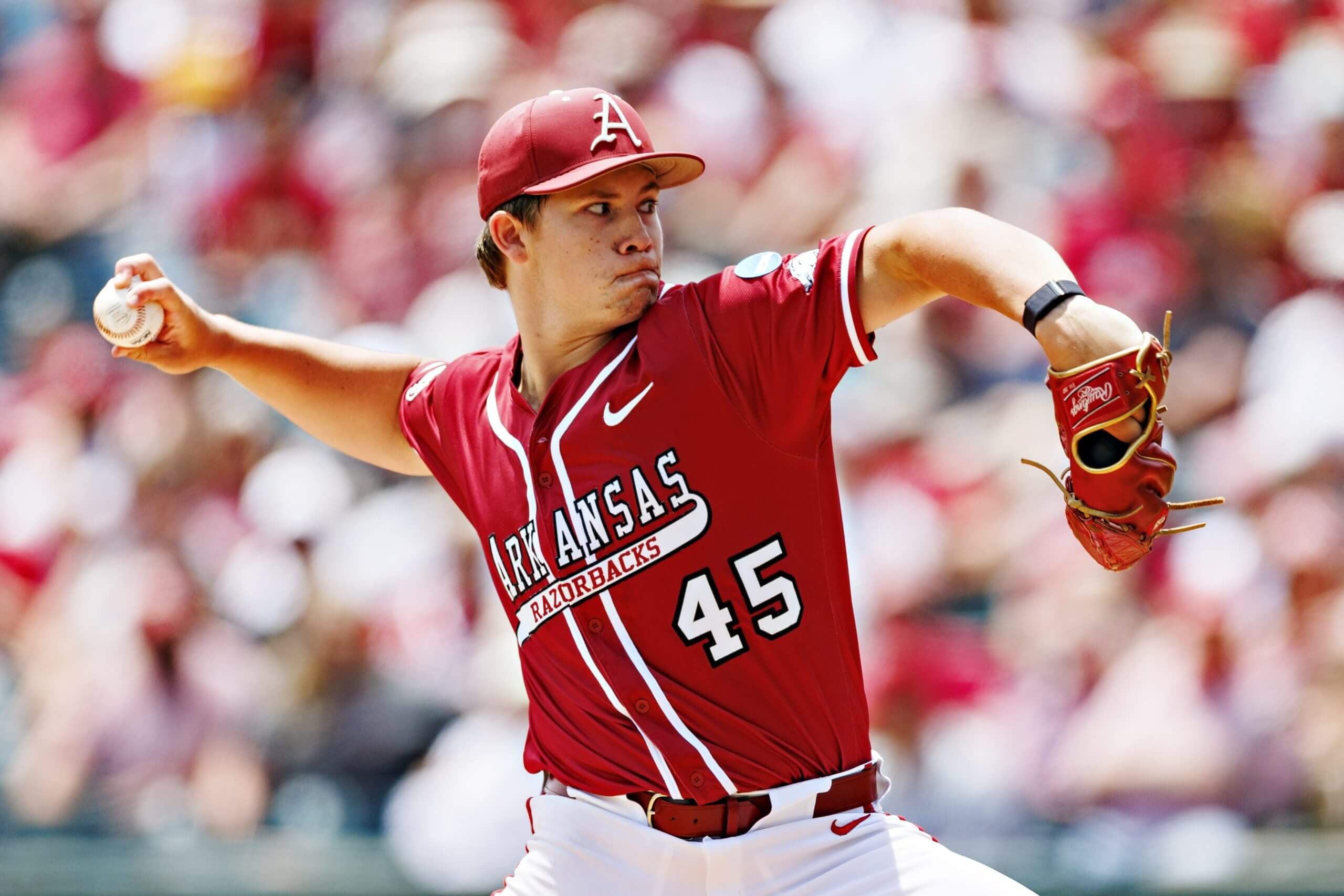
Wood returned from a shoulder impingement to show easy first-round stuff, striking out 30 of 69 batters (43.5 percent) through six pitch-limited starts. He’s 95-98 with ride, has a hammer 12/6 curveball, and a sharp downward-breaking slider as well. He doesn’t pitch down in the zone, though, and as a result he’s given up way more hard contact than he should.
Scouting Report
Bats: R, Throws: R
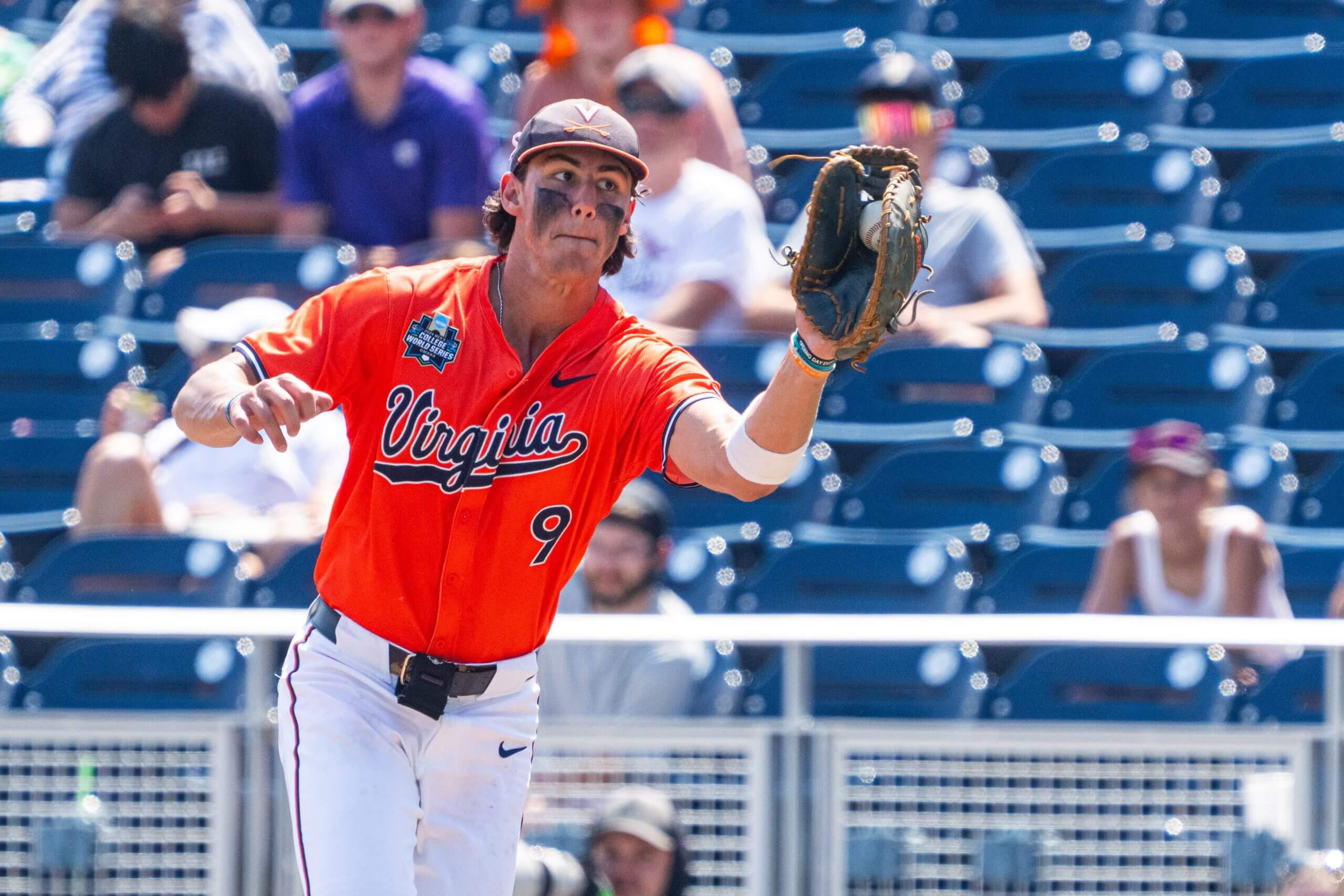
Ford is a very athletic outfielder who’s a plus defender at first and has plenty of bat speed to end up hitting for power, but this year he’s hit just 10 homers, down from 17 last year, and he doesn’t make good use of his legs to drive the ball. He turns 21 after the draft, so he’ll fit some teams’ draft models to a T.
Position Player
4-Year College
1B
OF
Scouting Report
Bats: L, Throws: L
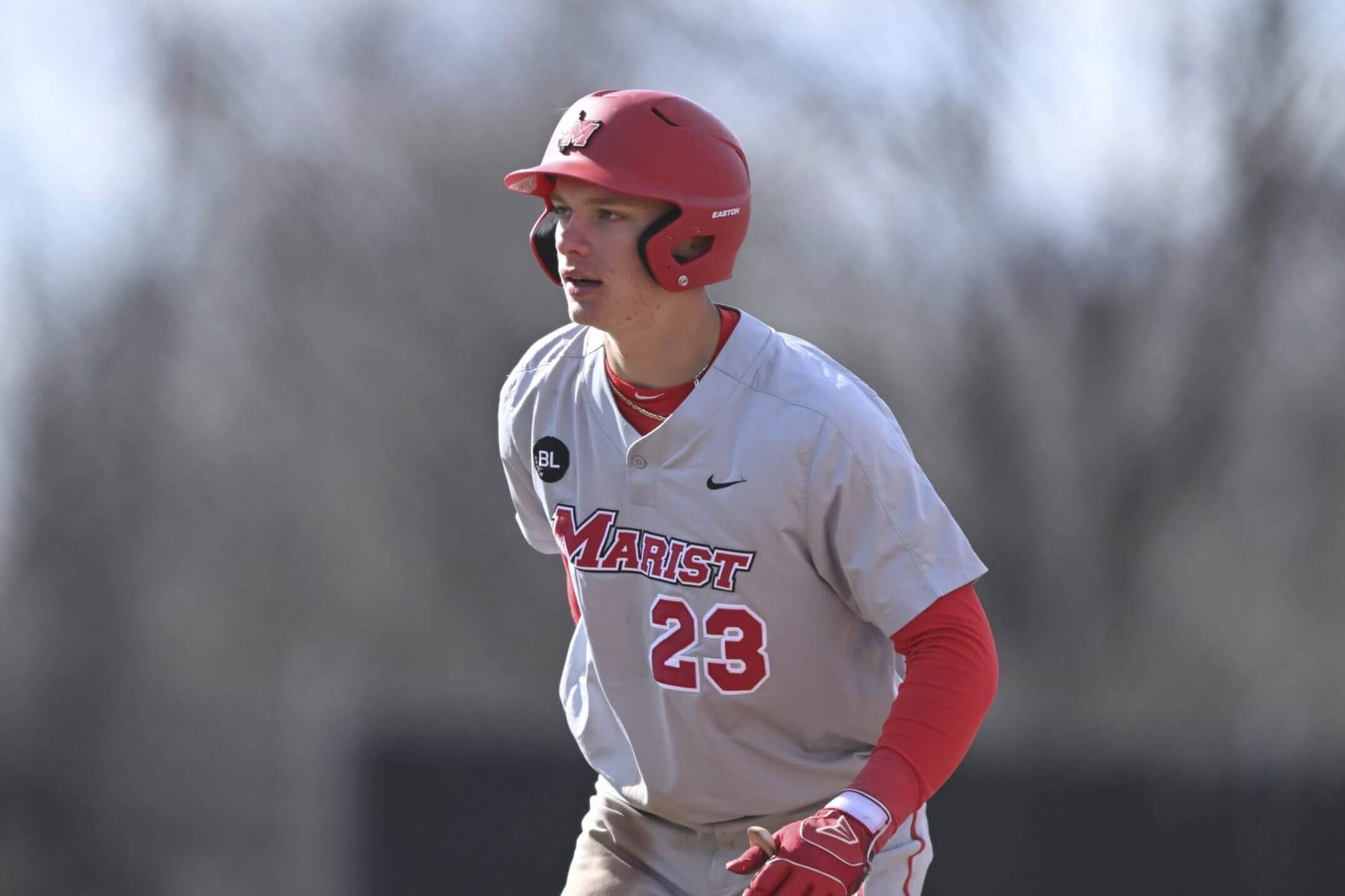
Conrad was storming towards being a first-round pick when he hurt his shoulder, undergoing season-ending surgery in early April. He transferred to Wake this year from Marist, and unfortunately the injury meant scouts didn’t get to see him face better stuff in the ACC — he played just two series in the conference, neither against a strong opponent.
Position Player
4-Year College
OF
1B
Scouting Report
Bats: R, Throws: R
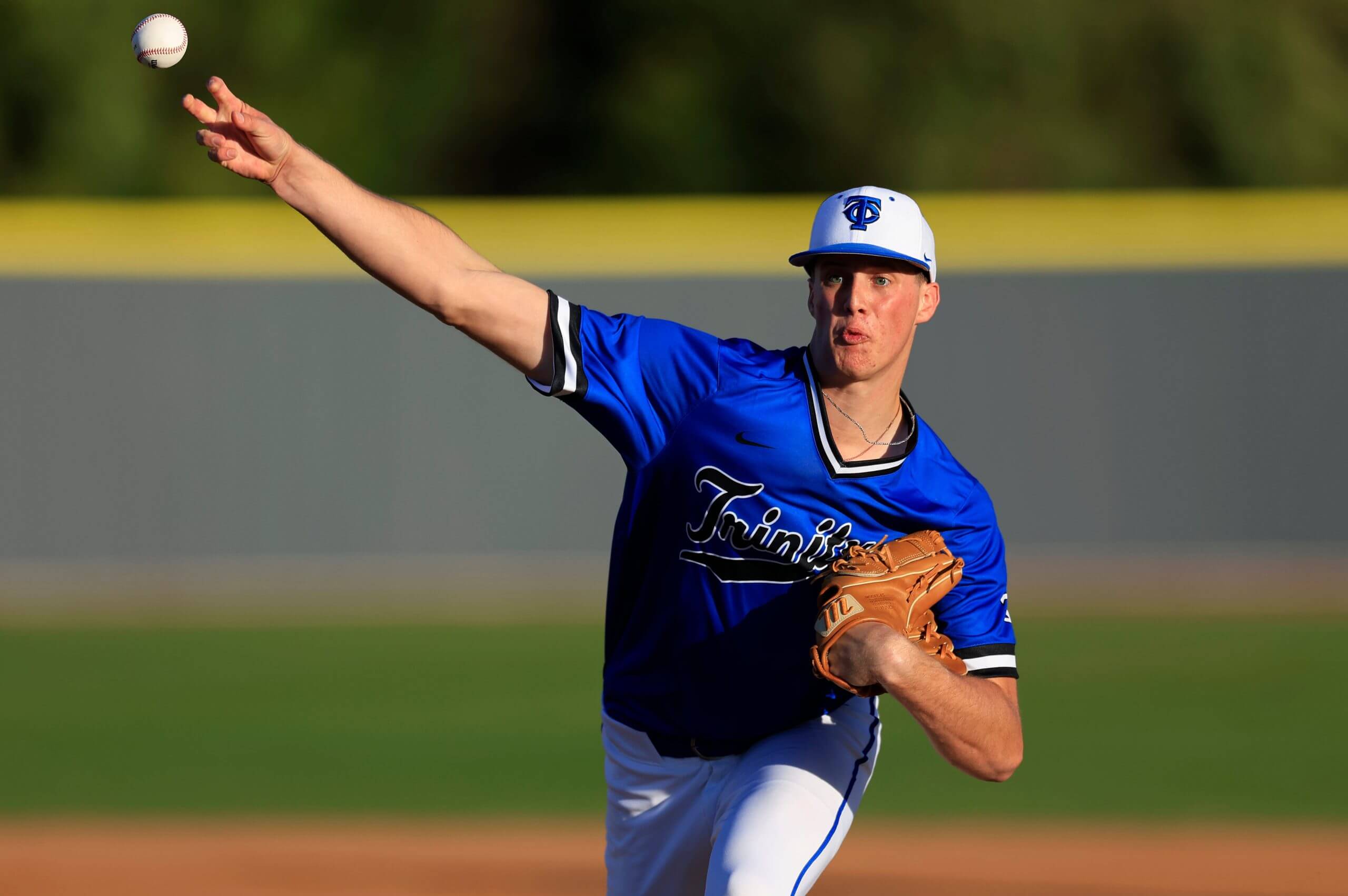
Watson impressed at NHSI this year, with a strong performance where he showed unusual command for a high schooler. He’s 91-96 with good ride on the four-seamer. He also has a two-seamer, hard slider and split-change. It’s a higher slot and he doesn’t have a ton of deception; otherwise he has a clear starter profile. He’s committed to Virginia.
Scouting Report
Bats: R, Throws: R
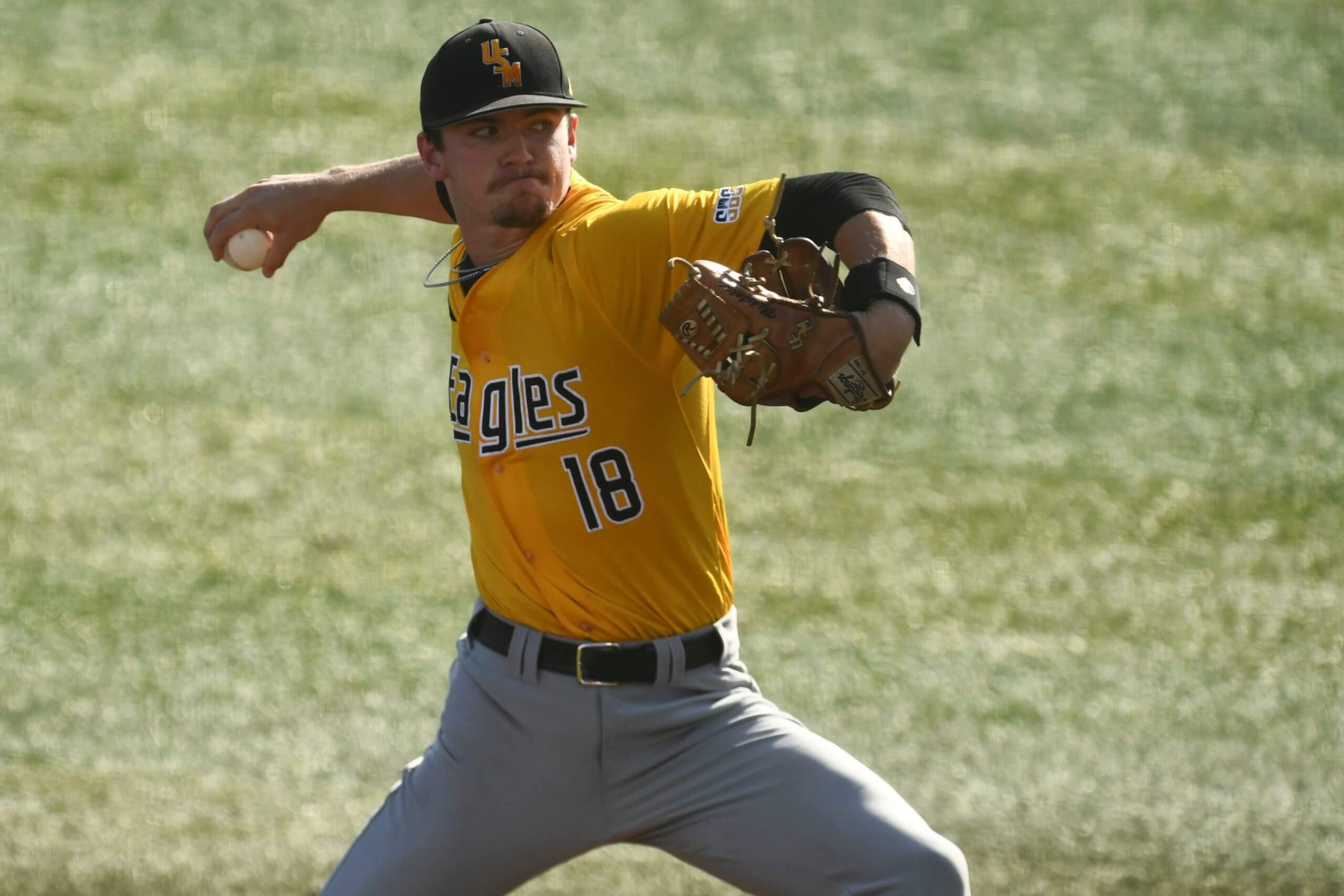
Middleton is a three-pitch starter who’s been up to 97, sitting more 93-95, with an above-average to plus slider and a hard, straight changeup that has actually missed more bats than the slider this year. His arm is very quick and he throws everything hard, and even with that he’s shown average control, with a 6.4 percent walk rate this season and 66 percent of his pitches going for strikes. The fastball plays fine, about what you’d expect from the velocity, but it’s not going to be a carrying pitch for him. He’s a sure starter who has the weapons to be effective against hitters on both sides of the plate.
Scouting Report
Bats: R, Throws: R
Fisher is a tremendous athlete and former quarterback who’s been sitting in the low-to-mid 90s this spring with a hammer curveball and good attributes to both pitches. He’s committed to Indiana.

Scouting Report
Bats: L, Throws: R
Yost is an extreme contact-hitting shortstop who doesn’t whiff or chase, hitting for no power in the process. His swing is short and he doesn’t stride or even lift his lead foot at all, just flinching it quickly before swinging, with a whiff rate on the circuit last year of just 7 percent (in a smaller sample of pitches than most players of his caliber had). He’s a true shortstop and a plus runner who could probably also go to center if need be.
Position Player
High School
SS
Scouting Report
Bats: L, Throws: R
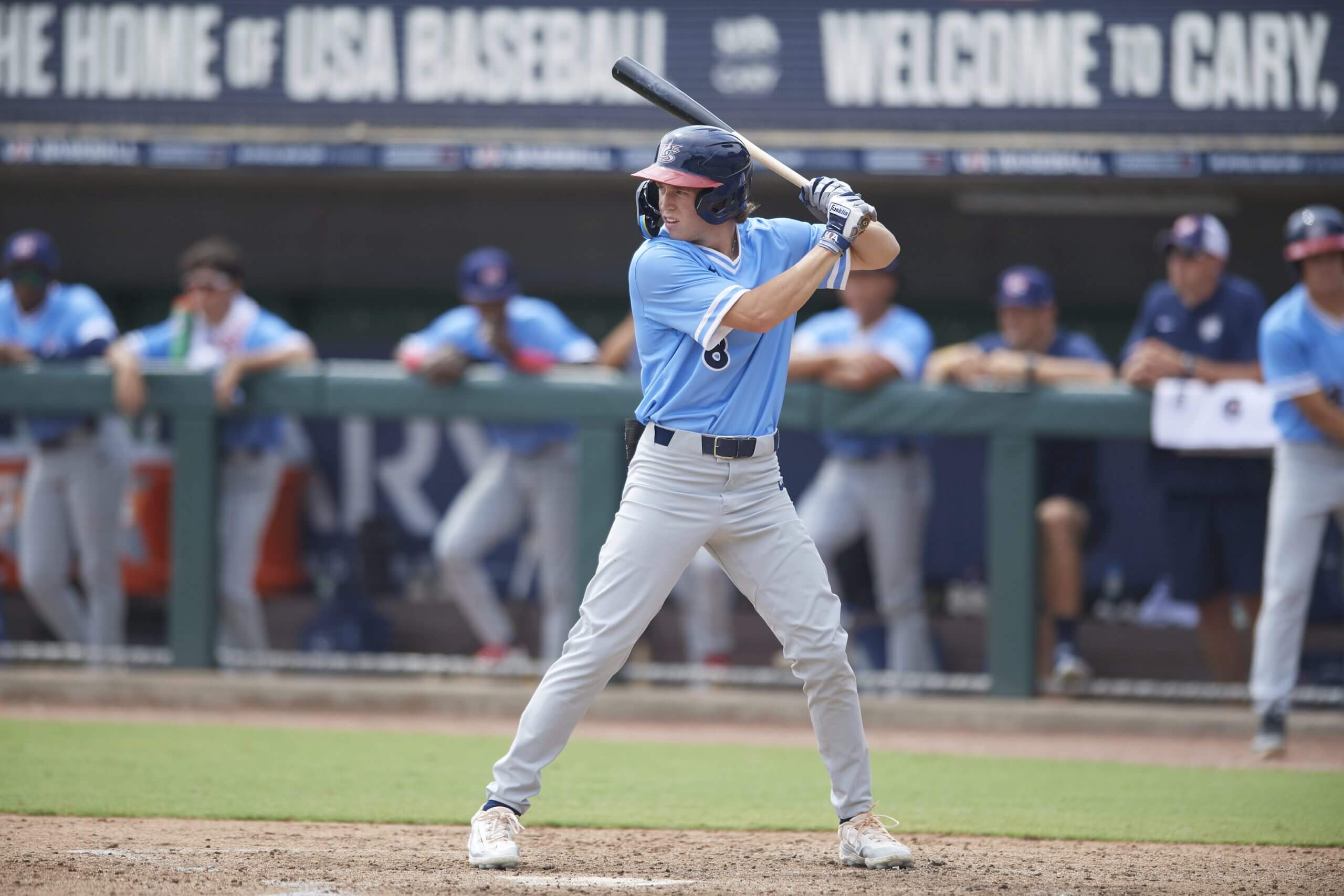
Gamble is a 70 runner with above-average bat speed, probably needing to move to center in pro ball. He will likely need some swing help to tap into more power. He’s more athlete than hitter right now, with a flatter swing that doesn’t loft the ball a ton, and he tends to open his front hip early so he doesn’t always square the ball up like he should. I could easily see a 20/20 upside here — or 20/40 — in the right organization, but as a guy who takes longer to reach the majors than the very top high school position players do. He’s committed to Vanderbilt, where he’d be age-eligible for the draft as a sophomore in 2027.
Position Player
High School
SS
Scouting Report
Bats: L, Throws: L
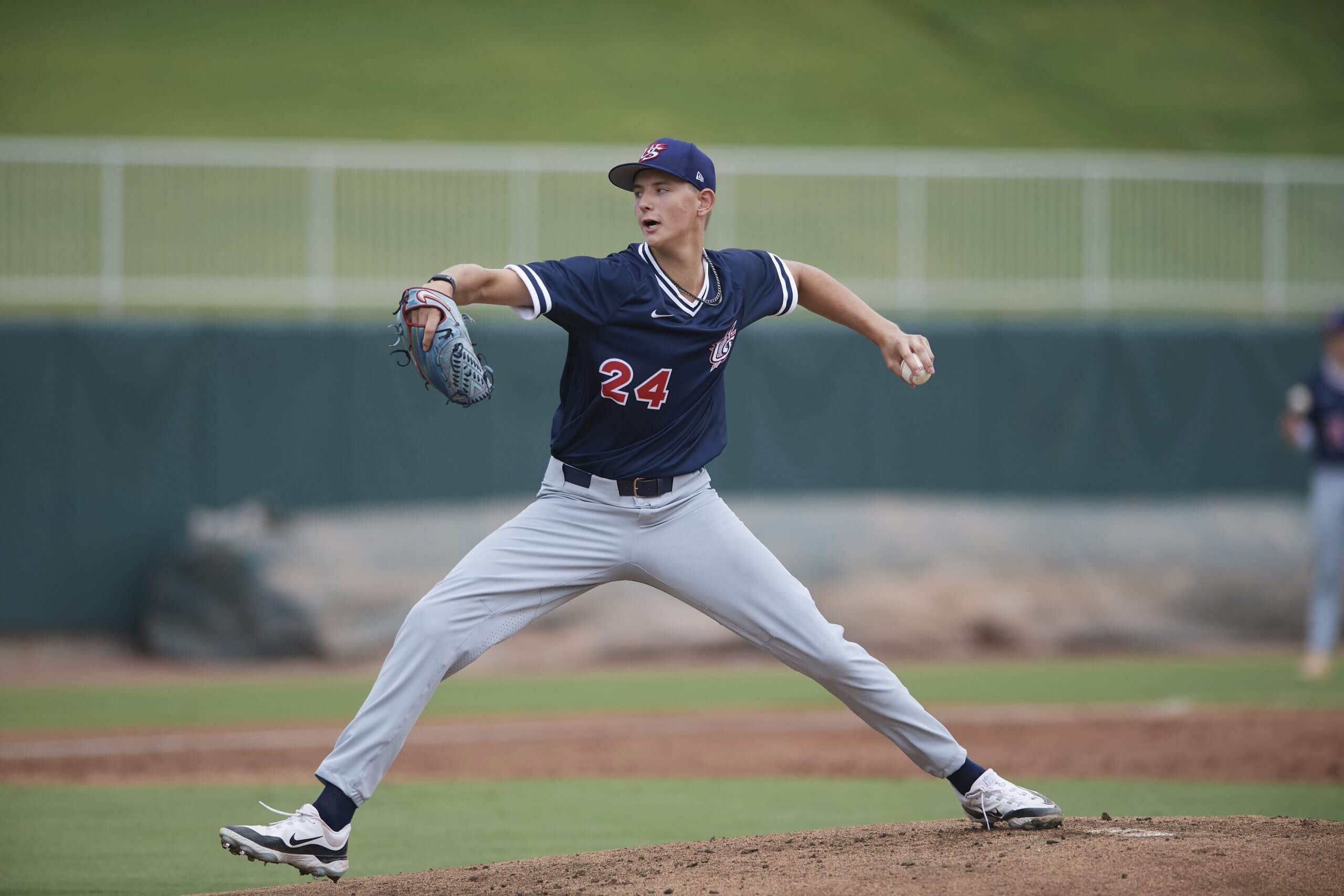
Schoolcraft is 6-8 and imposing on the mound, coming from a low three-quarters slot and getting out over his front side at release to take advantage of his height. He’s been up to 98, but the velocity is inconsistent and he’s had outings where he’s been in the low 90s, and the slider comes and goes, ranging from plus when he lands it to a 45 when he doesn’t. His arm is frequently late, which can often lead to problems with breaking stuff. It’s a tantalizing foundation for a starter, though, between the size, arm strength and ability to create spin.
Scouting Report
Bats: R, Throws: L
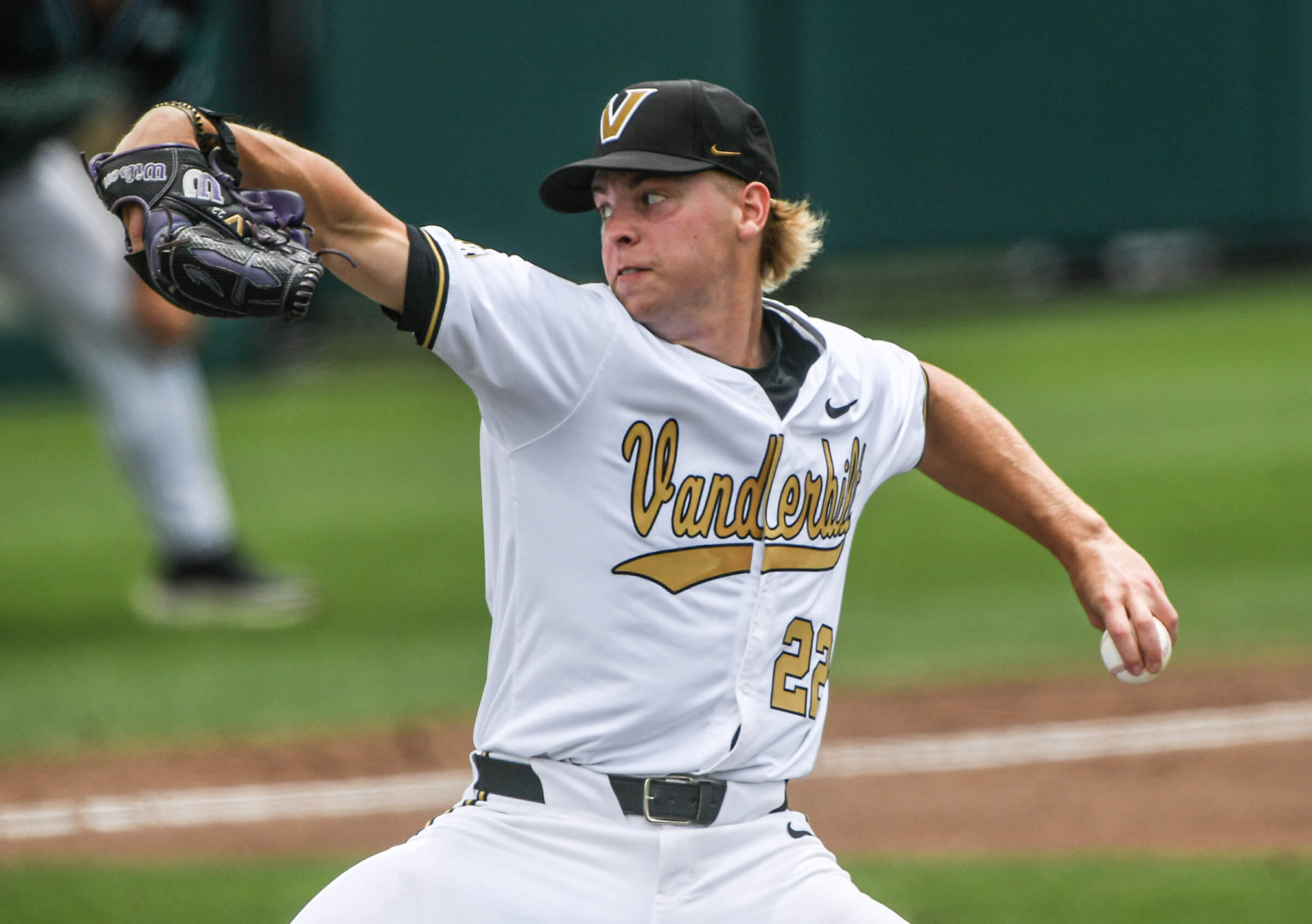
Thompson has a low-90s fastball that’s hard to hit when he lets it ride up in the zone, and when he pairs that with a 70 changeup, he’s extremely effective against hitters on both sides of the plate. He’s also got an above-average curveball and an average slider, and he throws strikes, with an 8 percent walk rate on the year, although it’s control over command.
Scouting Report
Bats: R, Throws: R
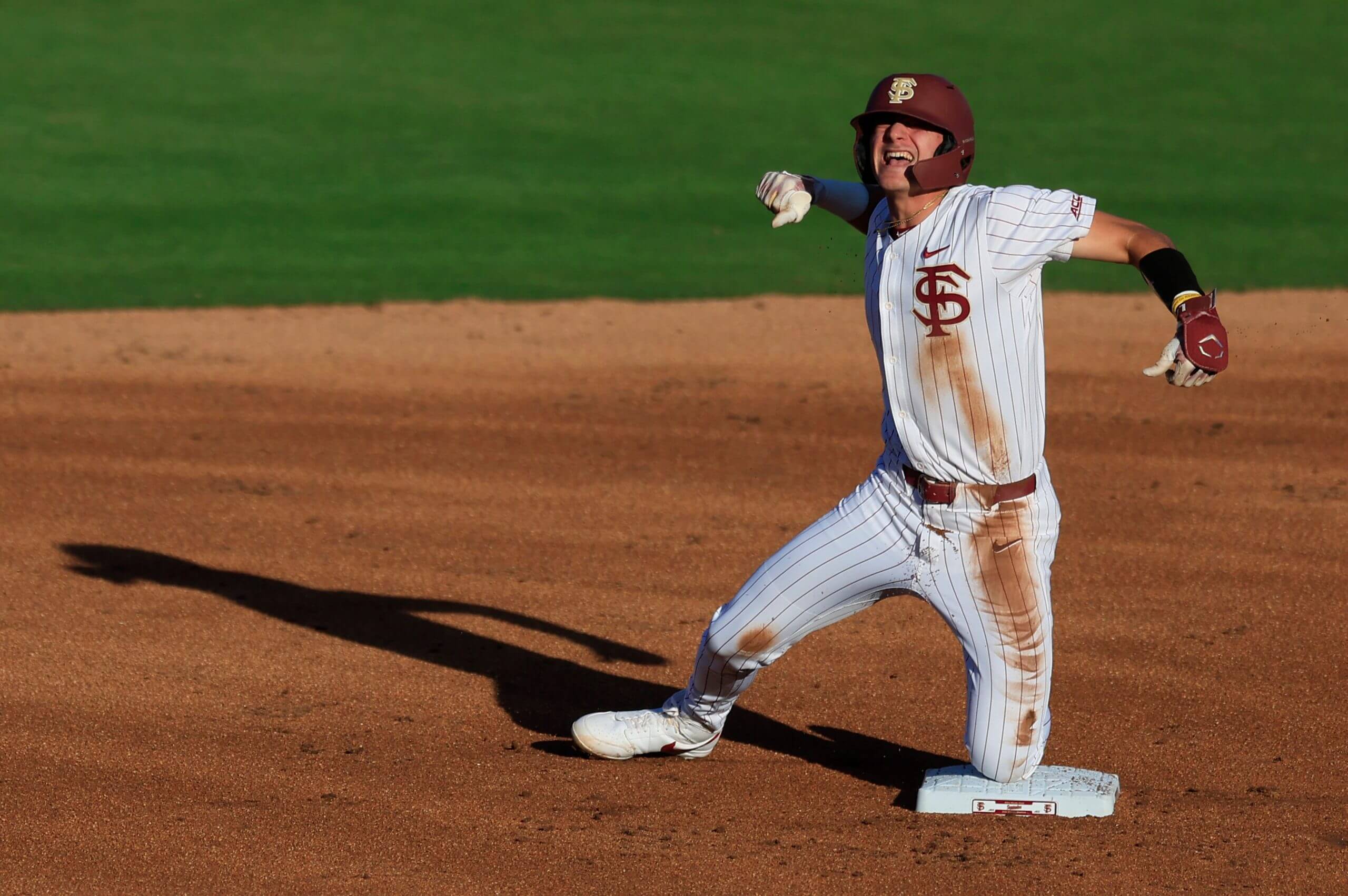
Lodise dialed up the power this year, going from nine homers as a sophomore to 16 (through May 13), and with excellent bat speed, he offers the potential of a 20-homer second baseman if he hits enough to get to it. He makes contact in the zone, but has too much of a tendency to chase pitches out of the zone, especially sliders down and away, and he can expand the zone a little too much on heaters. He swings hard, often, and that’s what produces the big power, but it means his misses can be huge as well, and he doesn’t have the pure ball/strike recognition to keep his OBP up. He’s a steady defender at short with an average arm, good on the routine play but possibly lacking the range to play the position in the majors. If someone gets him to tighten up his swing decisions even a little bit, he could become an everyday player.
Position Player
4-Year College
SS
Scouting Report
Bats: R, Throws: R
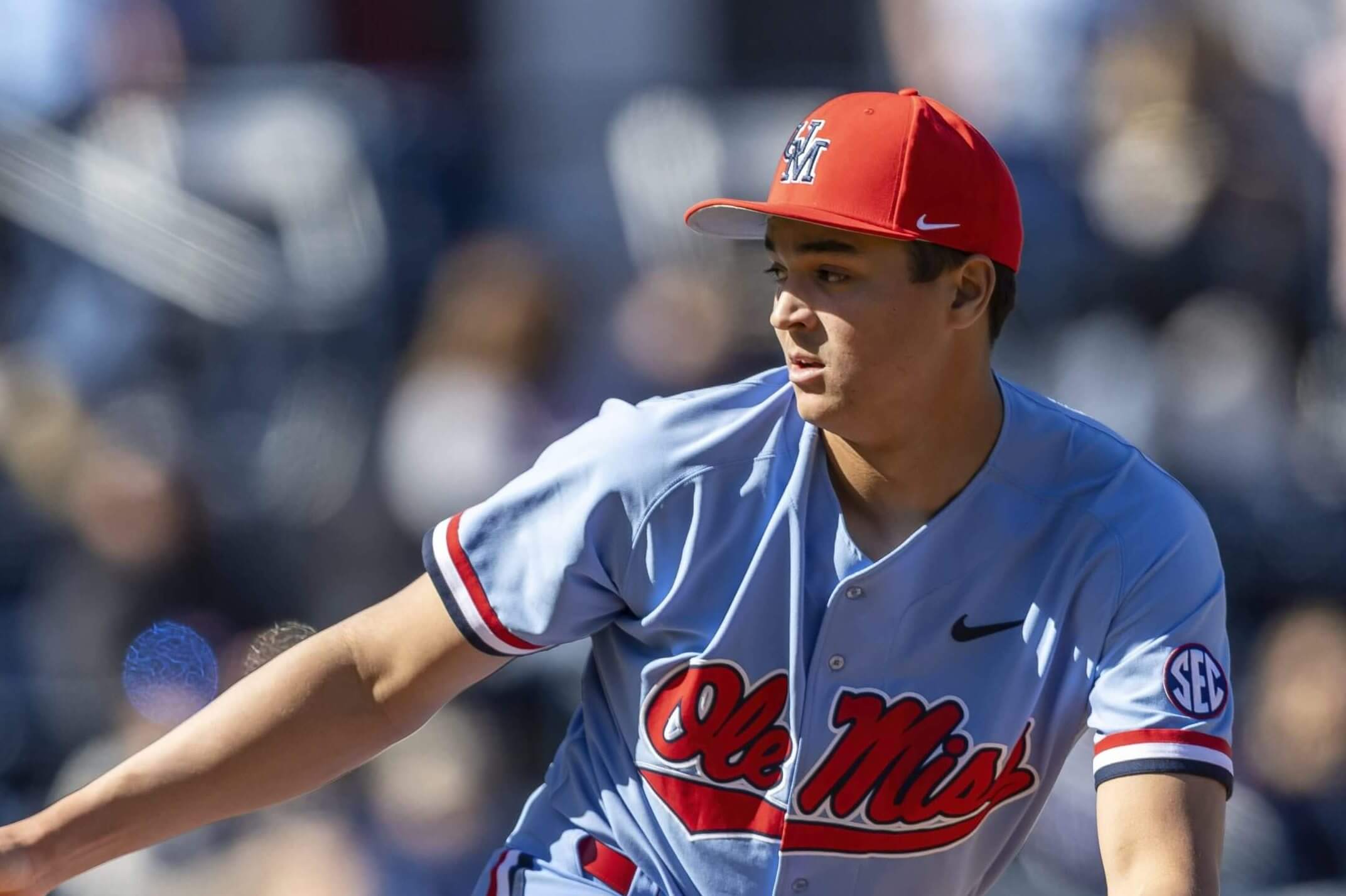
Morris has spent the year in Mississippi’s bullpen, even though he’s clearly one of their best candidates to start. He’ll sit 95-97 in long relief, with a plus slider and cutter that have allowed him to get lefties out even without a changeup. Someone’s going to take him high and put him right into a minor-league rotation.
Scouting Report
Bats: L, Throws: R
Flemming is a solid athlete with some projection left to his 6-3 frame. He has a short, simple swing that produces a ton of contact. He’s a left-handed hitter who uses the whole field well, potentially getting to average power when he fills out. He’s not going to stick at shortstop and will have to at least move to third base. He’s committed to Vanderbilt.
Position Player
High School
SS
Scouting Report
Bats: R, Throws: R
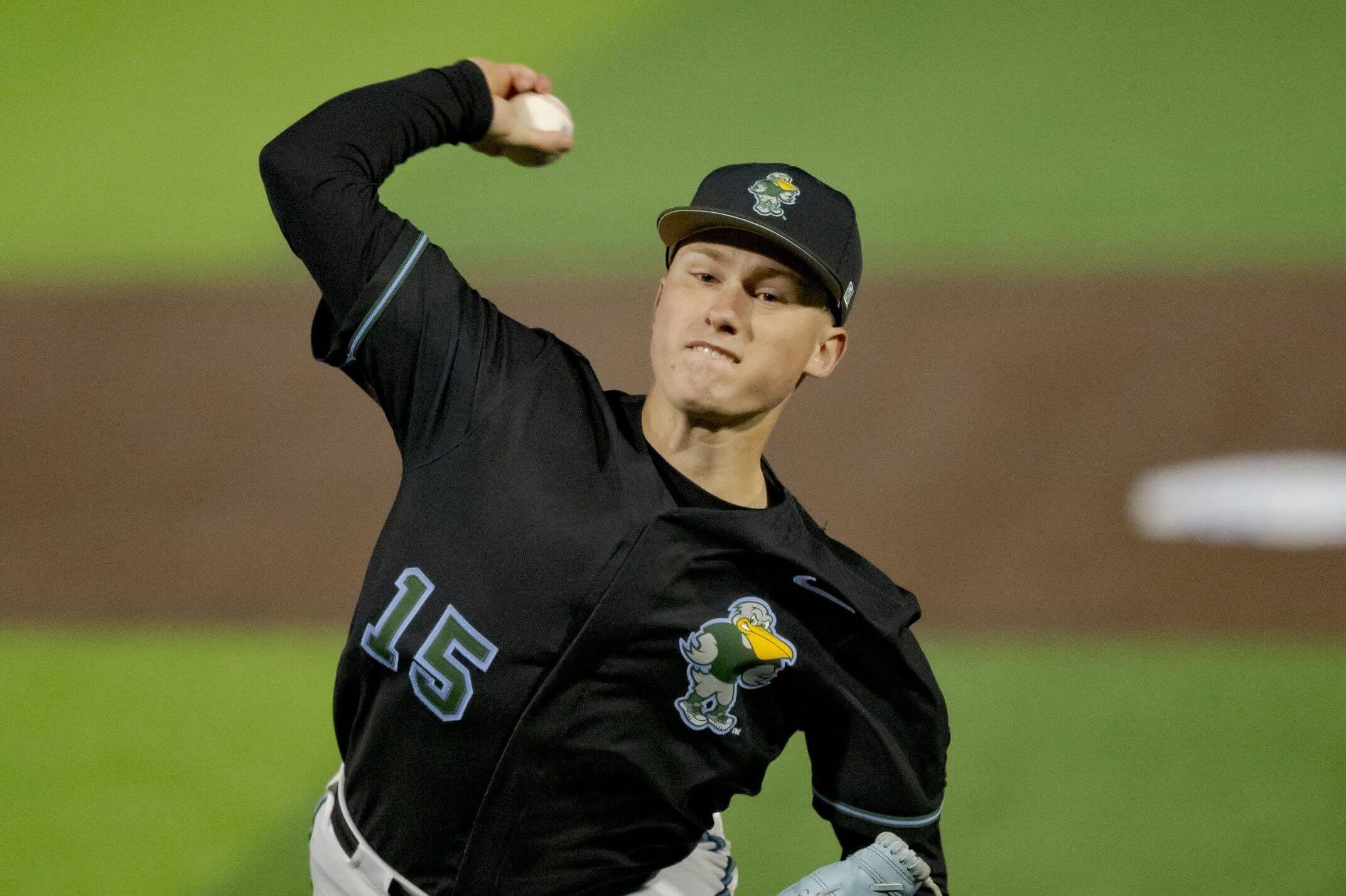
Lombardi is a two-way player for Tulane who threw 31 innings in the entire regular season, then threw seven innings with two walks and 11 strikeouts in the first game of the American Athletic Conference tournament in front of a lot of scouts. He’s up to 97 with tremendous carry and pairs it with a power curveball with sharp downward break, showing enough feel for a changeup to see a future starter. He’s walked 13.2 percent of batters faced this year after that start this week, still too high, although he’s been moved back and forth from the rotation to the bullpen and is also still hitting and playing a lot of center field. It’s a big upside play on a mid-rotation or better arm where you hope getting him into a single, consistent role unlocks more control and command.
Pitcher
Position Player
4-Year College
RHP
OF
Scouting Report
Bats: R, Throws: R
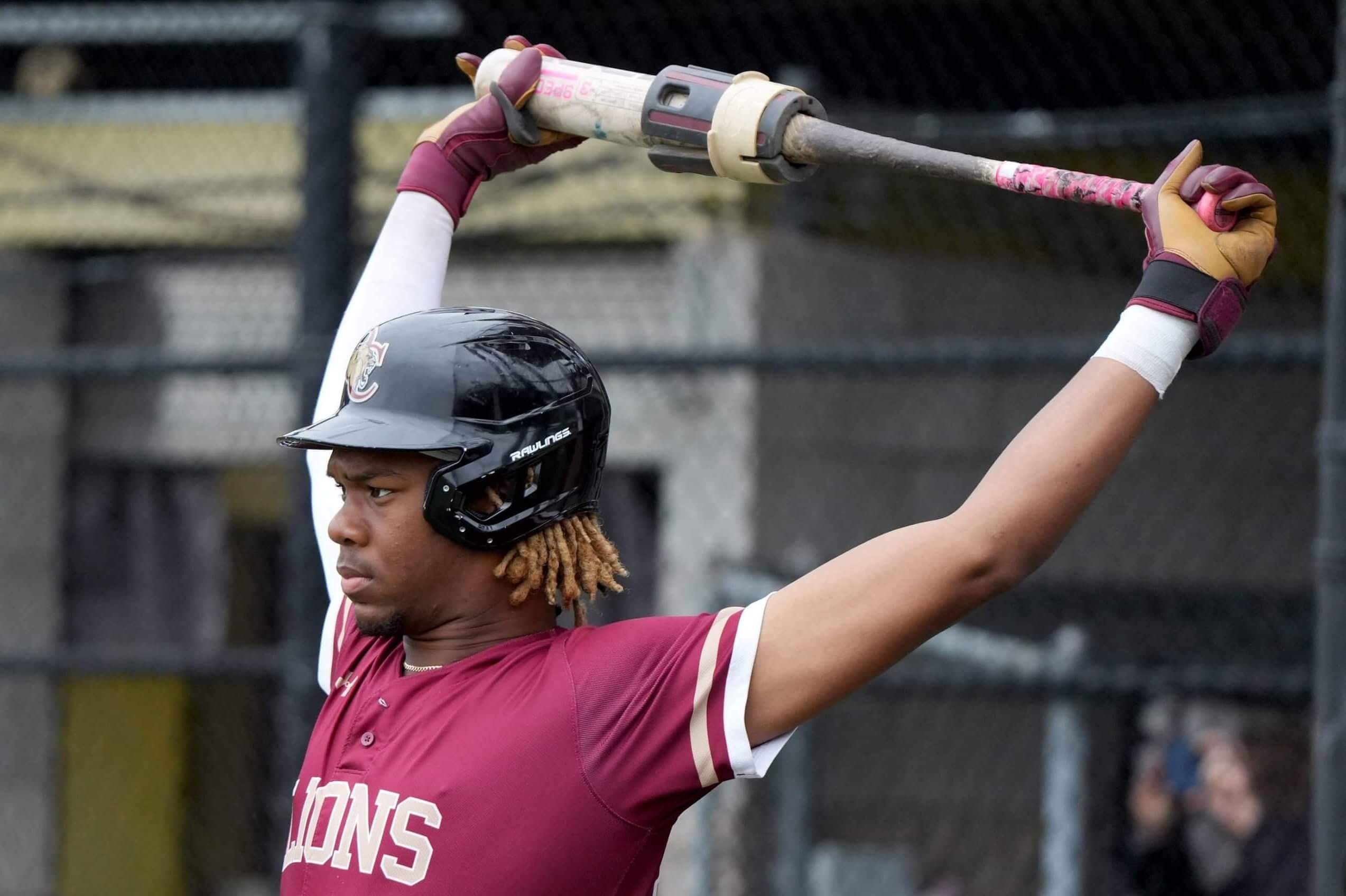
Young is the nephew of Dmitri and Delmon Young and Quentin made himself into a much better prospect this offseason by reworking his own swing, getting to more and better contact this spring while also making better swing decisions. He’s a shortstop now with a 70 arm, probably ending up in right field given the arm strength and the direction his body is going. He probably wouldn’t have gone on Day 1 had the draft been held in October, but he has a chance to get into the comp round after his overhaul and a strong spring. He’s committed to LSU.
Position Player
High School
SS
Scouting Report
Bats: L, Throws: R
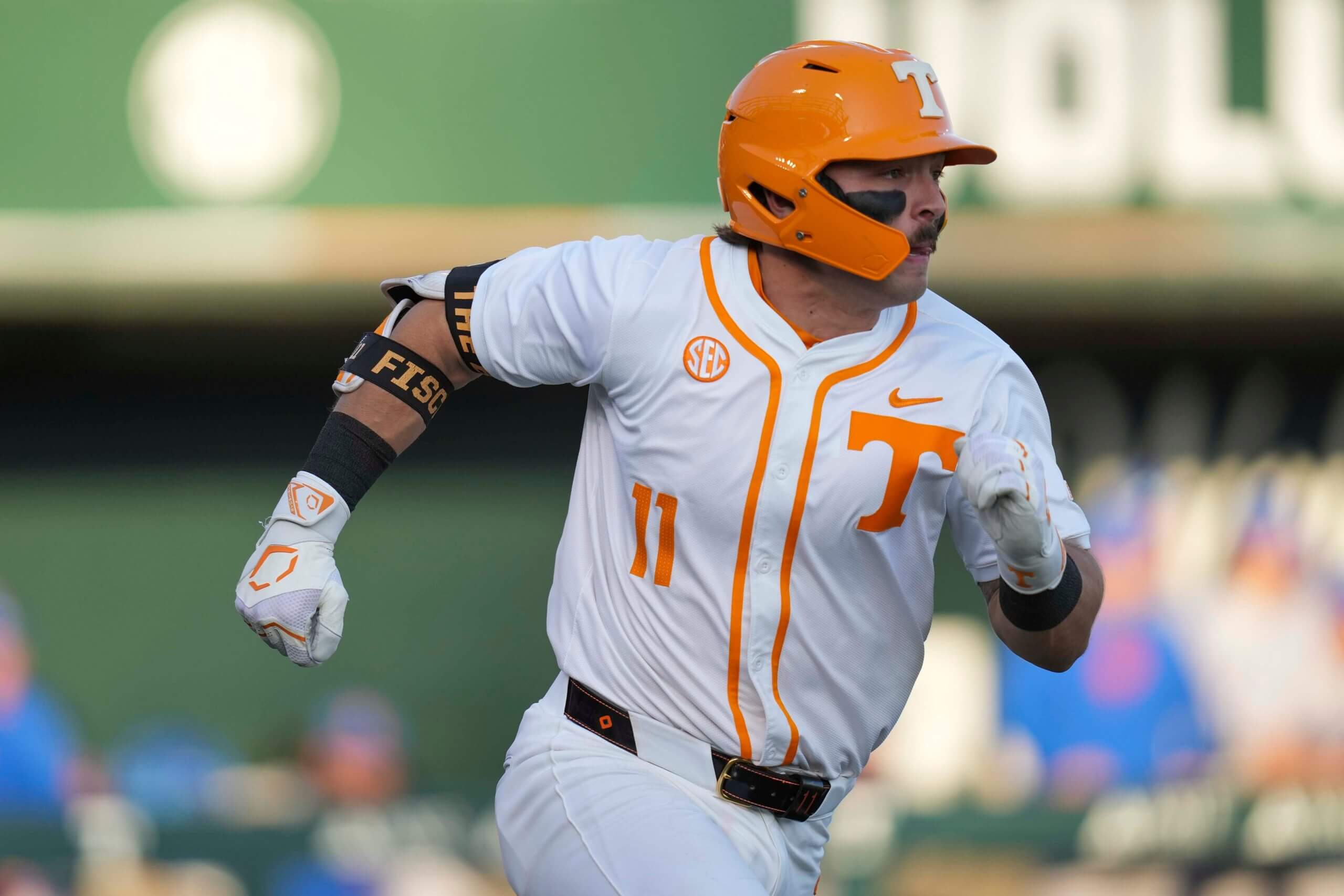
Fischer is on his third school in three years, like teammate Liam Doyle, and like Doyle he’s taken a big step forward in performance this year, gaining over 100 points in OBP and in SLG, beating his 2024 home run total before the SEC tournament, and cutting his strikeout rate from 21 percent to 13.6 percent. He’s cut way down on his chase rate, even on pitches well out of the zone, and has held the improved approach against better competition in SEC play. It’s at least 60 power, probably closer to 70, and even as a first base-only player he should end up at least a soft regular.
Position Player
4-Year College
1B
Scouting Report
Bats: R, Throws: R
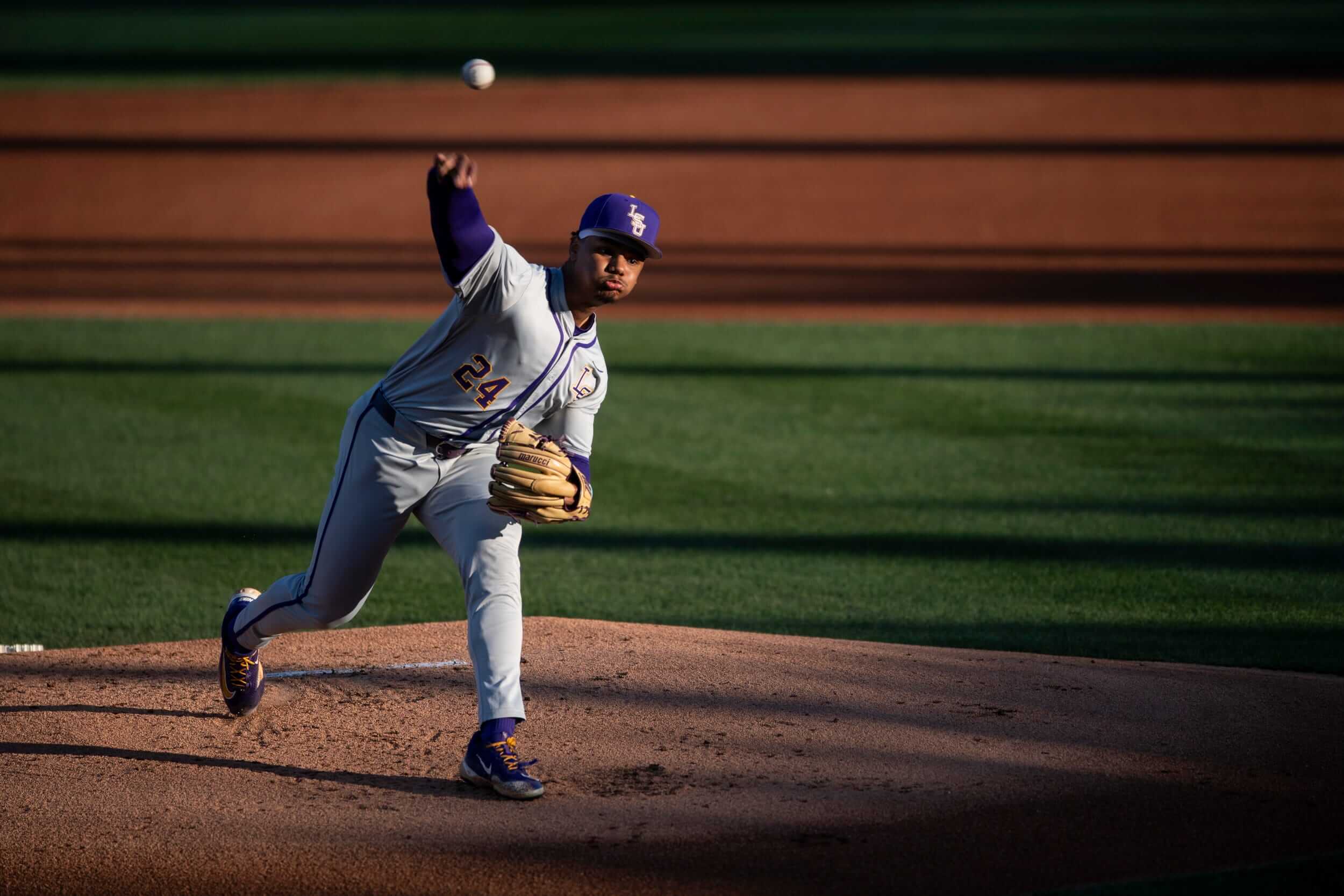
Eyanson’s been a bit overshadowed by teammate Kade Anderson but the transfer from UC San Diego is going to go off the board quickly, maybe even near the end of the first round. He has an easy, athletic delivery, and he works with a plus slider that hitters have missed more than half the time they’ve swung at it. He has a straight changeup that’s effective but that he doesn’t use that often. The fastball’s a little light but otherwise he’s a definite back-end starter with a fair amount of upside.
Scouting Report
Bats: R, Throws: R
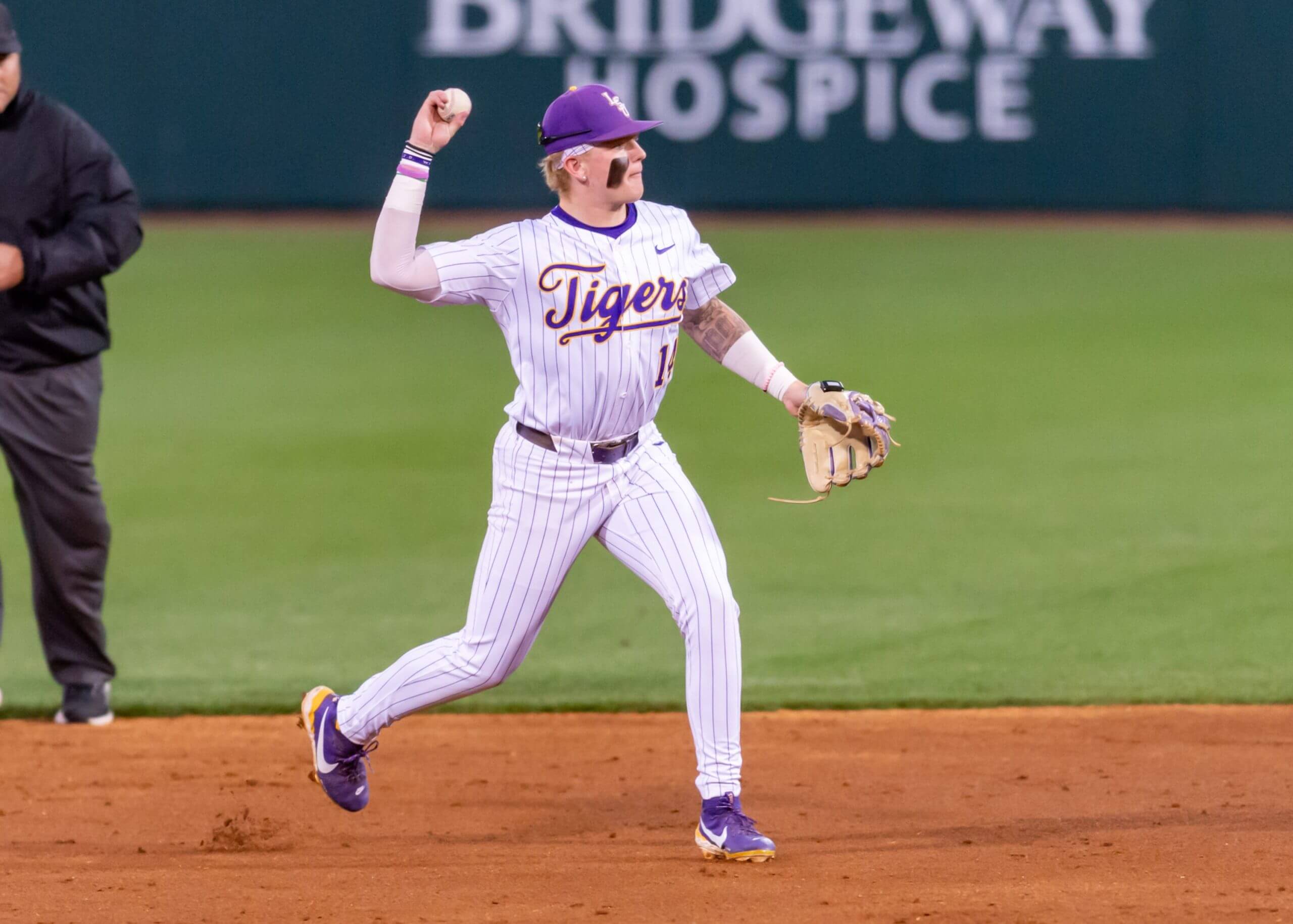
Dickinson transferred to LSU from Utah Valley State this year and started out on fire, but cooled off when SEC play began, shifting him from the fringes of the first-round discussion to more of a second-round ranking. He’s a high-contact hitter with a decent approach but maybe 45 power, and he’s best suited to second base, playing exclusively there for LSU after moving all over the field for Harwich last summer in the Cape Cod League.
Position Player
4-Year College
2B
Scouting Report
Bats: L, Throws: R
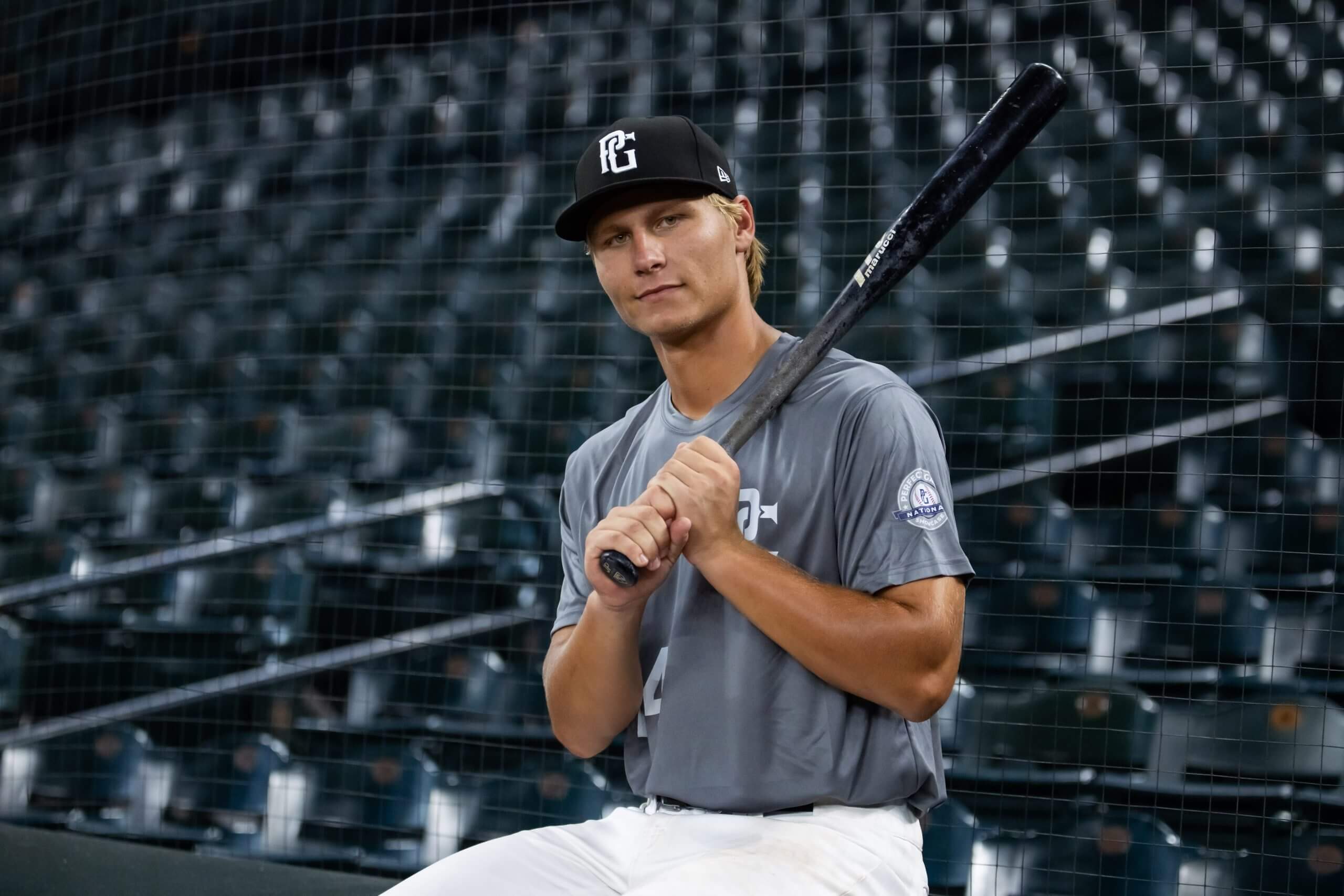
Parker’s twin brother, JoJo, is a first-rounder, but I wouldn’t sleep on Jacob, who is bigger and stronger, with much more present power, but more swing and miss to his game. He’s a center fielder and a strong athlete but I’d bet he ends up in right field in the long term. His BP is very impressive, with at least 60 raw power now, and he is about as sculpted as Michelangelo’s David.
Position Player
High School
OF
Scouting Report
Bats: R, Throws: R
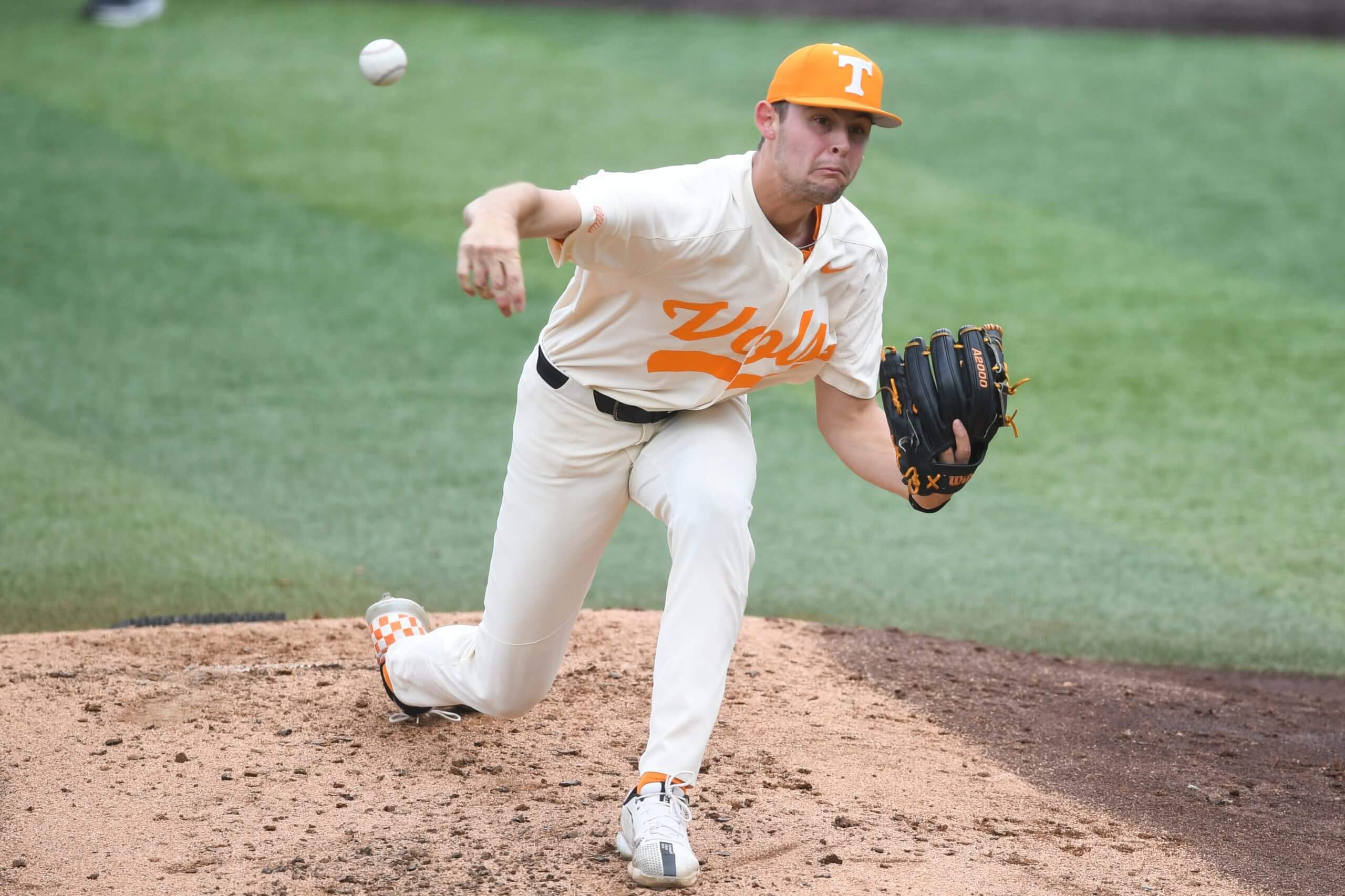
Russell had Tommy John surgery on June 11, 2024, and pitched in a game this year for the Volunteers on Feb. 25, which is less than nine months from knife to mound. He hit 97 that day, sitting 94-95, and he’s largely held that, more 92-95, with an above-average slider this year as Tennessee has used him very cautiously, giving him just 15 innings so far this year. He’s barely pitched in college, but he’s got stuff and a good enough delivery to try him as a starter.
Scouting Report
Bats: B, Throws: R
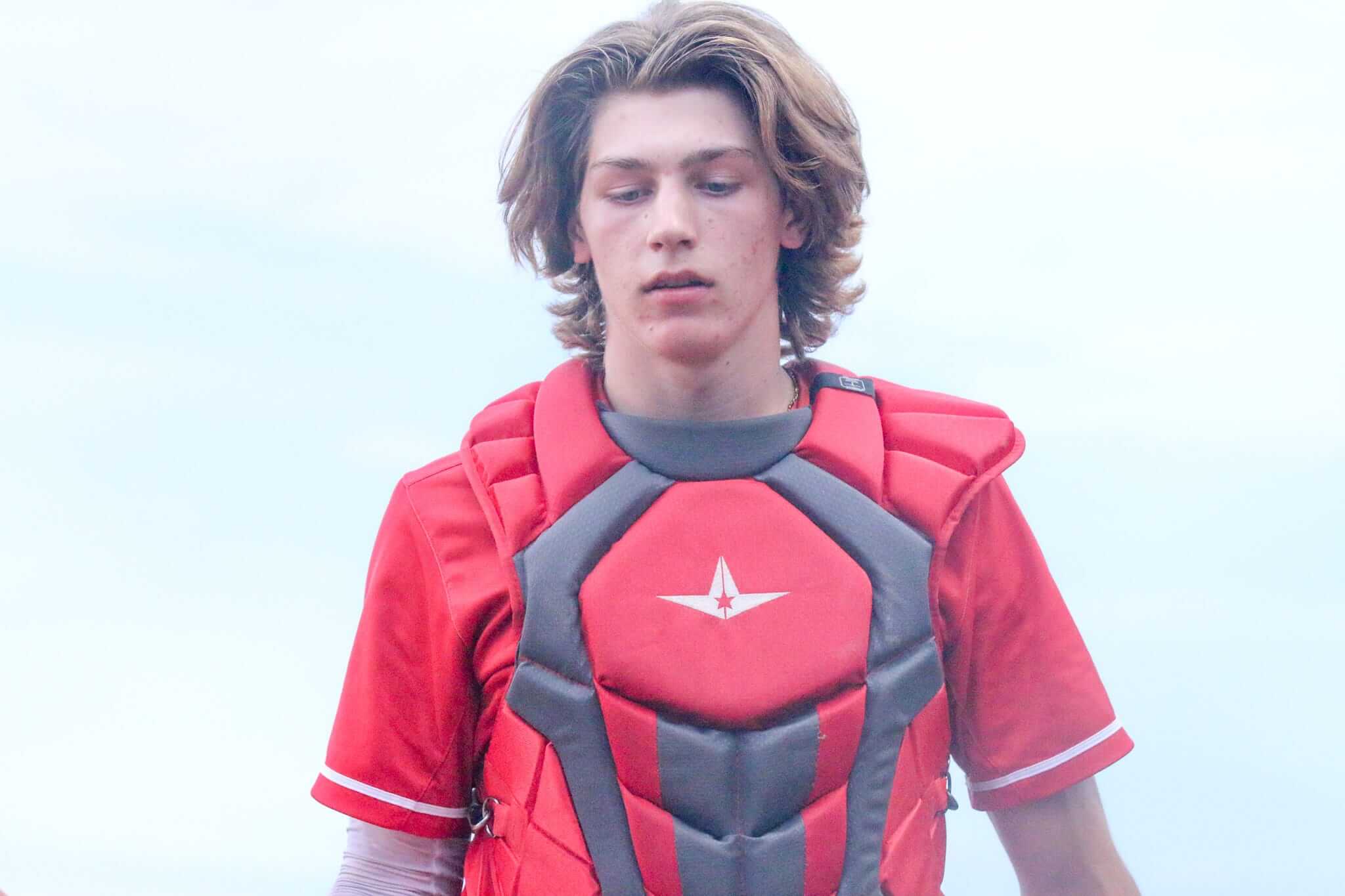
Gray’s season is just getting underway in Iowa, so he has more opportunity to improve his stock than anyone else on this list. He’s a switch hitter who makes a ton of hard contact and shows plus power now, and he runs well for a catcher — which is good because he’s probably not a catcher. The bat looks like it will profile in right field, and he might end up in the top two rounds with a strong spring/summer.
Position Player
High School
C
Scouting Report
Bats: R, Throws: R
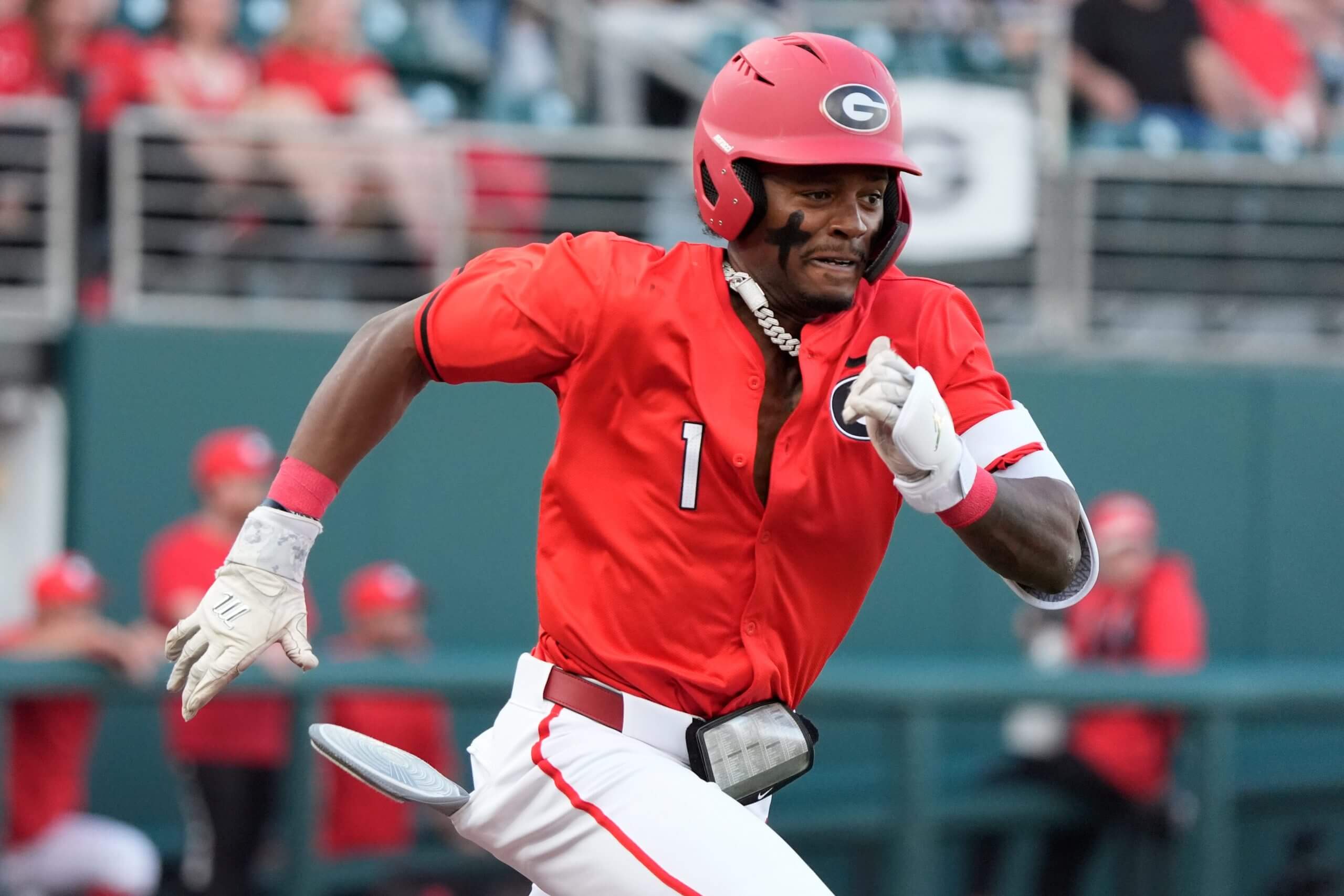
Phelps is a draft-eligible sophomore who had a tremendous freshman year for the Dawgs in 2024 but fell off across the board this year, with his strikeout rate doubling and his power dropping dramatically as he’s faced better competition with more playing time. It’s power over hit, with a little too much of a tendency to chase pitches out of the zone, although it’s in the range where he might be able to cut it down to a manageable level. He’s a corner outfielder so he’ll have to hit and get on base more to profile as a regular.
Position Player
4-Year College
OF
Scouting Report
Bats: L, Throws: R
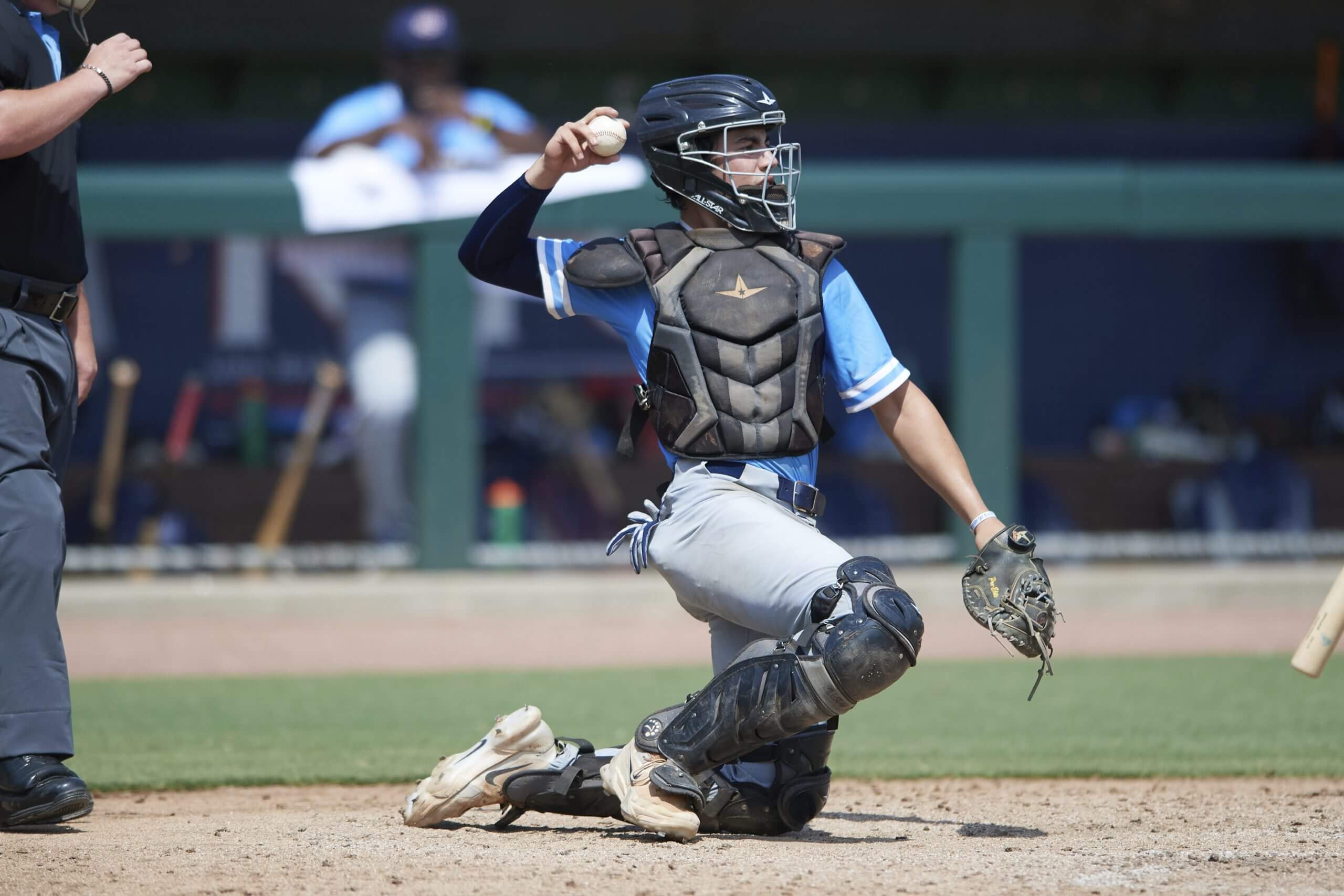
Hodge is an athletic catcher with a 65 arm, and has good bat speed with some feel to hit despite getting too much over his front side. There’s some more potential power here if he stays back on the ball more, which might also help his contact rate; he doesn’t expand the zone much but has had issues with contact when pitchers change speeds on him. He’s committed to LSU.
Position Player
High School
C
Scouting Report
Bats: R, Throws: R
Jaksa is a catcher — no, he’s not, he’s 6-5 or 6-6, and technically he catches now, but he is not going to stay back there and belongs in center field. He’s a very good athlete, not a plus runner but someone who moves well enough to at least start out up the middle, and has big power potential if he gets to enough contact. He doesn’t chase excessively but he has such long levers that he has holes around the zone, and sometimes he shortens up with no real explanation. He’s committed to Oregon.
Position Player
High School
C
Scouting Report
Bats: L, Throws: L
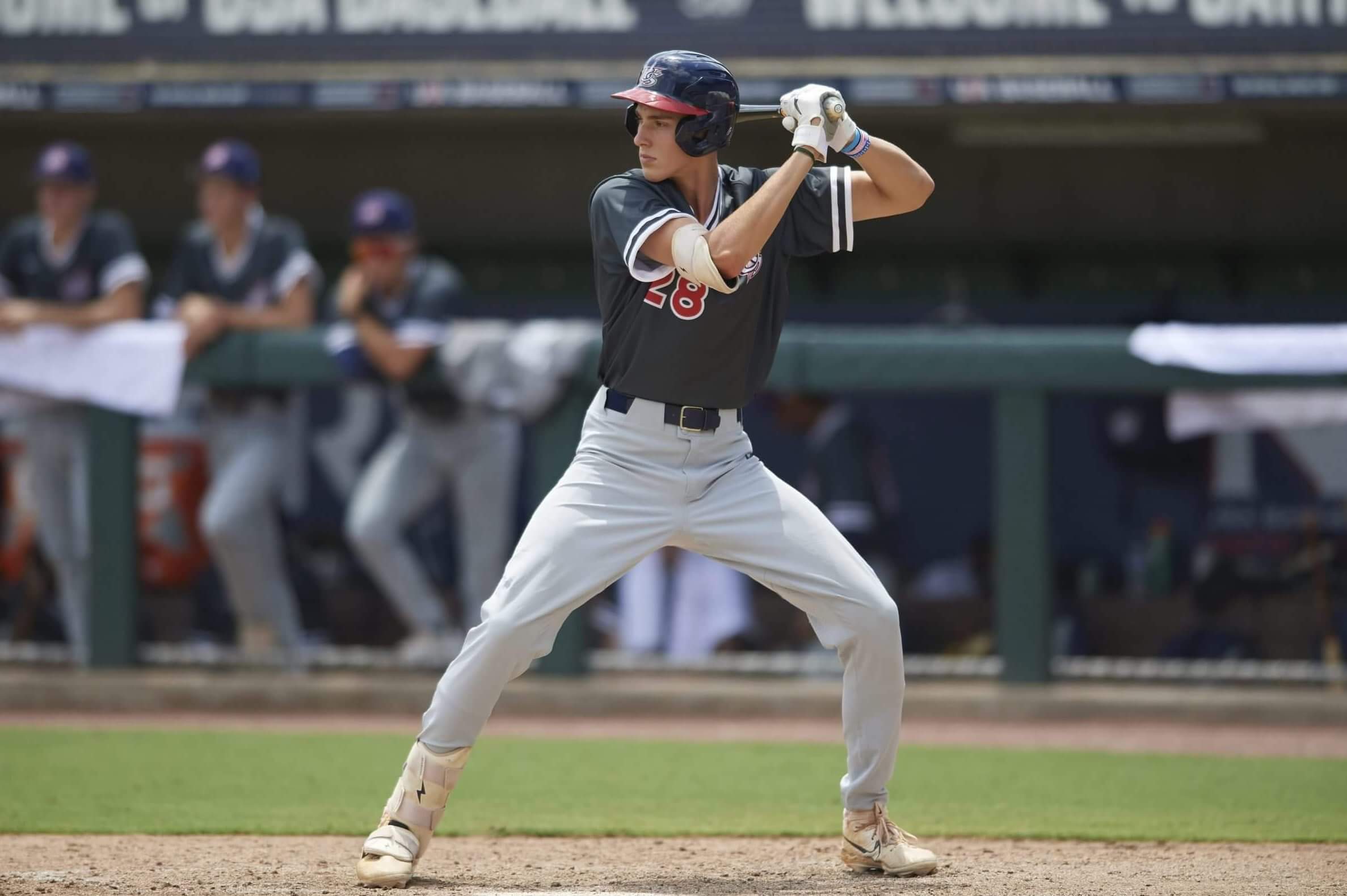
Blair is long and lanky, almost awkward-looking in the box, but when he syncs it up it’s a great swing that’s going to produce some big power. He’s shown a lot of swing and miss at showcases, unsurprising for his size, and he might take a longer time to develop because his body is going to change so much over the next few years. He had an ankle injury this spring from basketball and started late, but prior to that had shown enough speed to go out as a center fielder. He’s committed to Oklahoma.
Position Player
High School
OF
Scouting Report
Bats: R, Throws: R
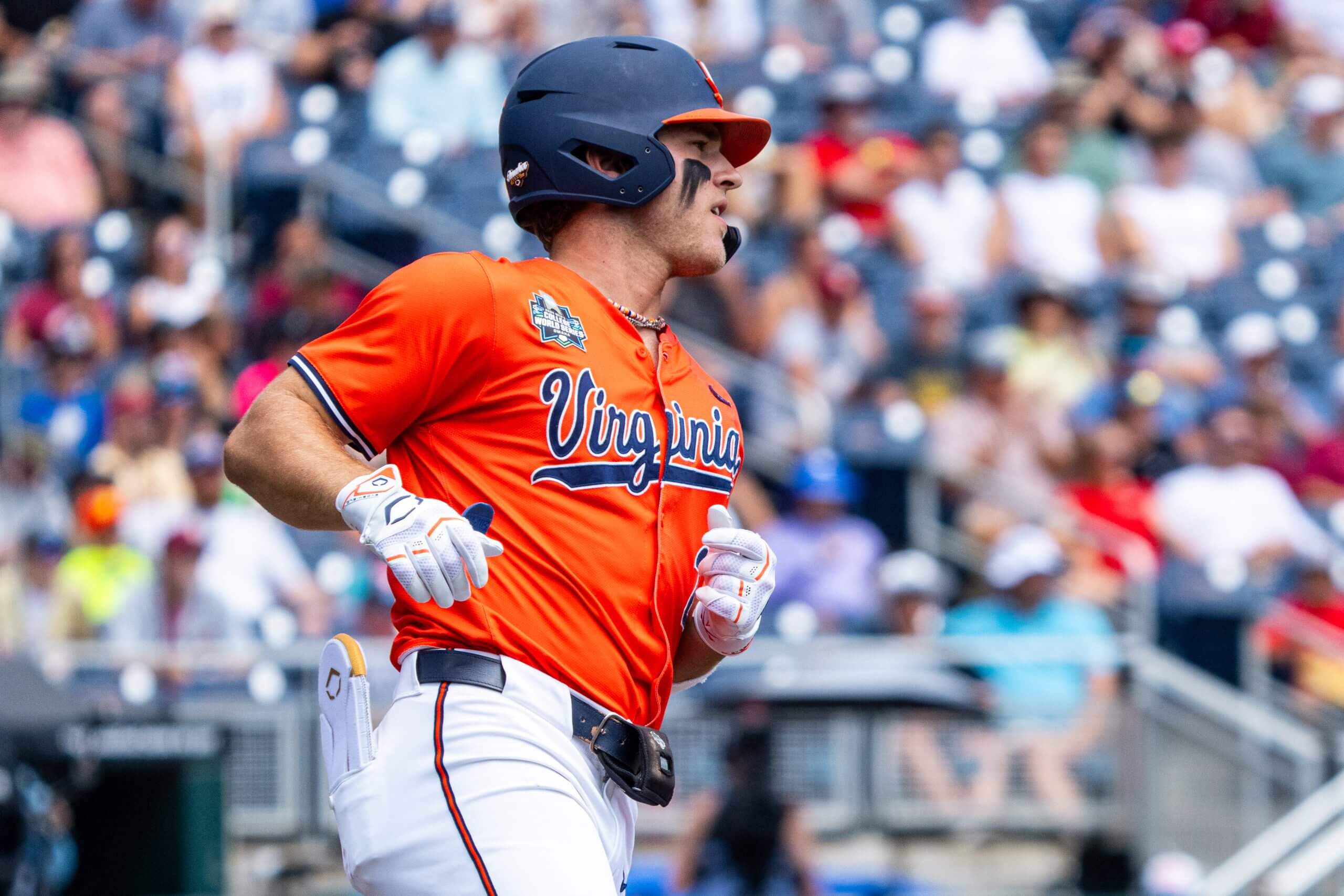
Godbout was tabbed early in his college career as a future first-rounder because of the hit tool, but he’s been affected by the teamwide slump in Virginia’s lineup, seeing his power numbers and his average drop significantly from 2024. He still has superb contact skills, with whiff rates on fastballs of 5-6 percent the last two years, and he wouldn’t be the first guy to leave Charlottesville and come into more power. He’ll be fine at second base.
Position Player
4-Year College
2B
Scouting Report
Bats: R, Throws: R
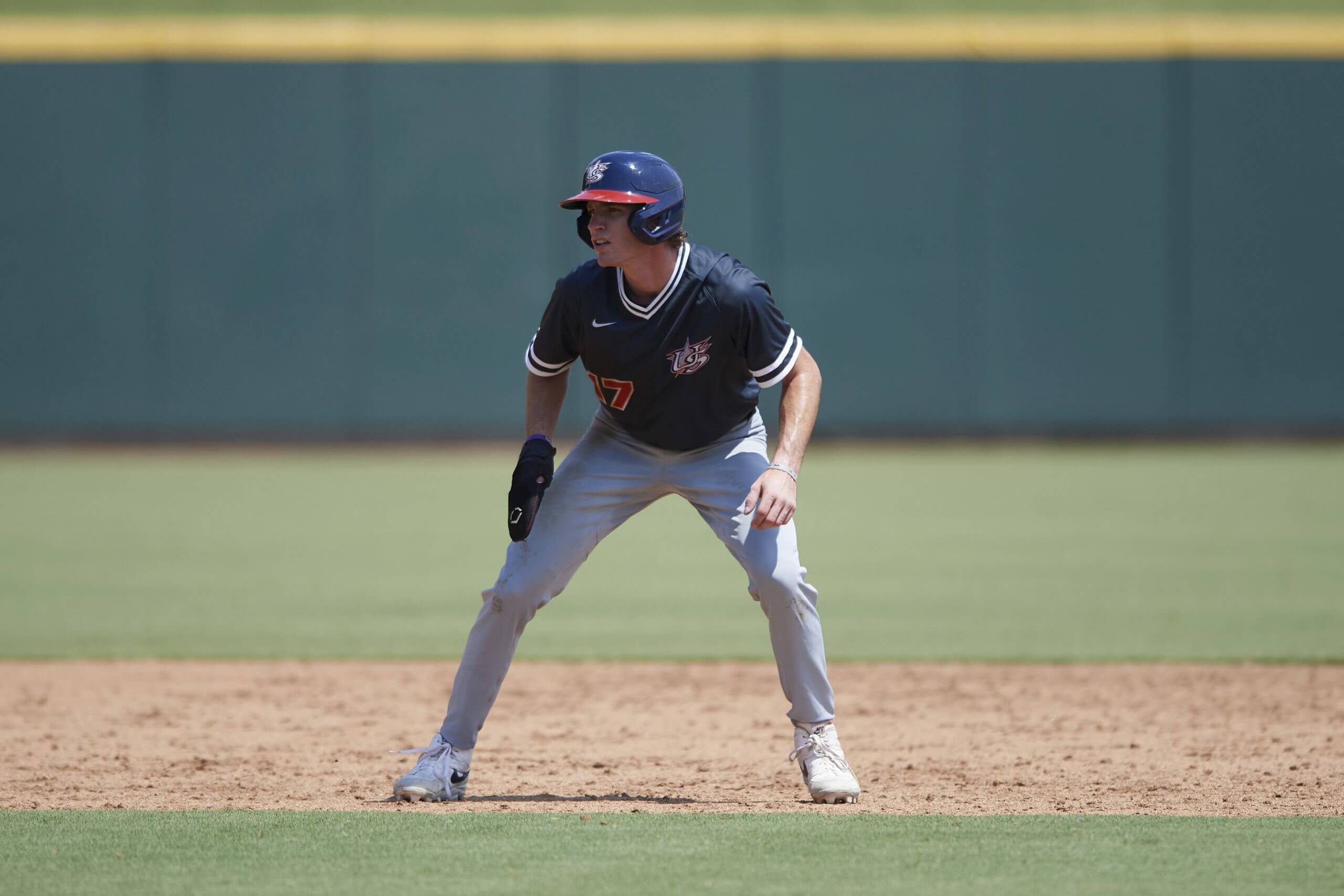
Schaefer is an excellent athlete who plays right in the shadow of the University of Arkansas, where he’s committed, and got substantially stronger this past winter to project to at least 55 power if not plus. He has bat speed and good bat control, but struggled with breaking ball recognition last summer and fall, before the strength gains. He’ll go out at shortstop but is a decent bet to move to second or third.
Position Player
High School
SS
Scouting Report
Bats: L, Throws: R
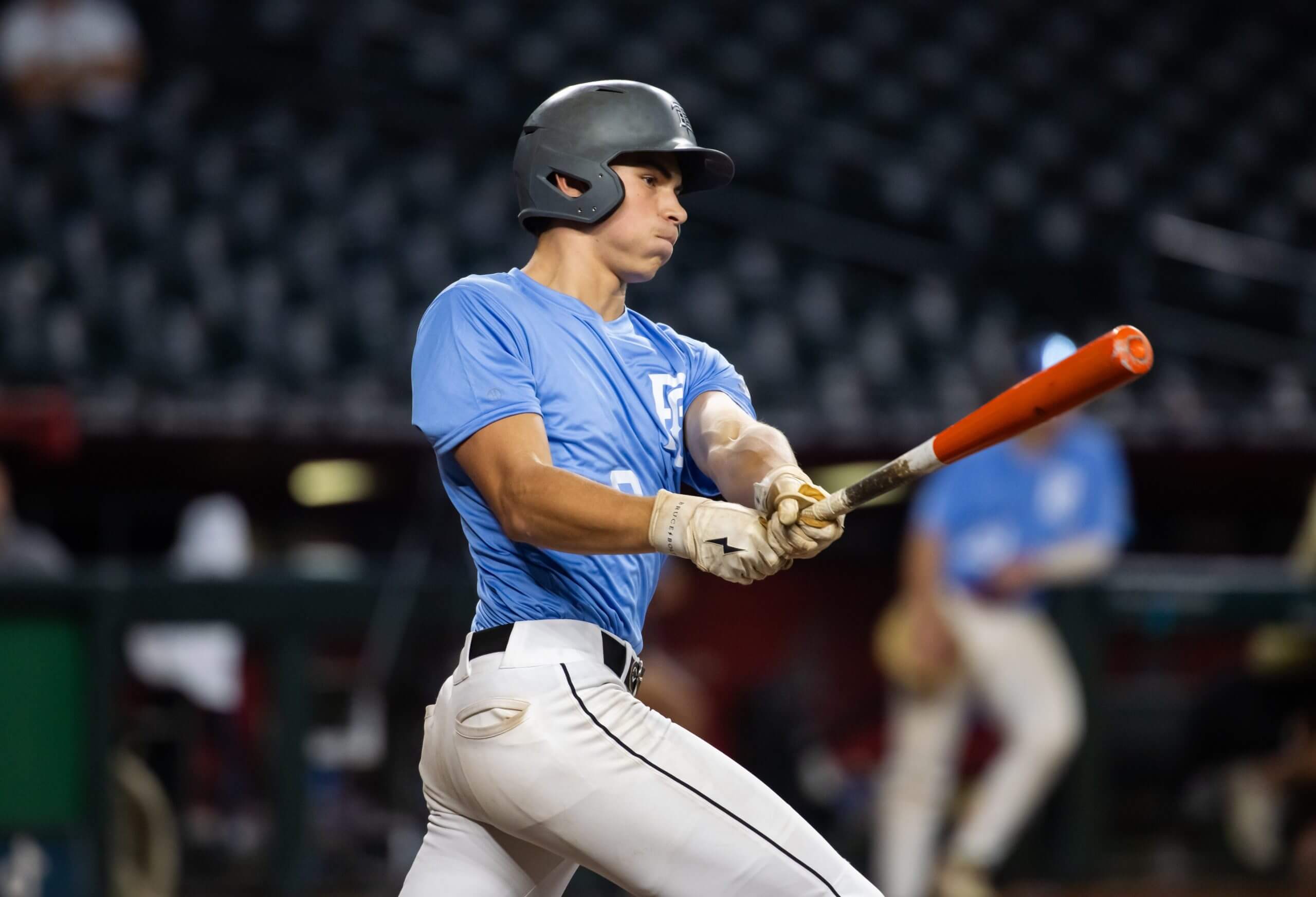
Kilby has one of the simplest and quietest approaches in the draft, college or high school, with a swing that’s short and direct and gets the bat to the ball consistently. He showed excellent contact skills and a low chase rate at tracked events last summer, swinging at just 9 percent of pitches beyond the shadow of the zone, with 40 power now but a chance to get to average as he fills out and perhaps with a little fine-tuning in the box. He’s not a shortstop and will end up at second or third.
Position Player
High School
SS
Scouting Report
Bats: R, Throws: R
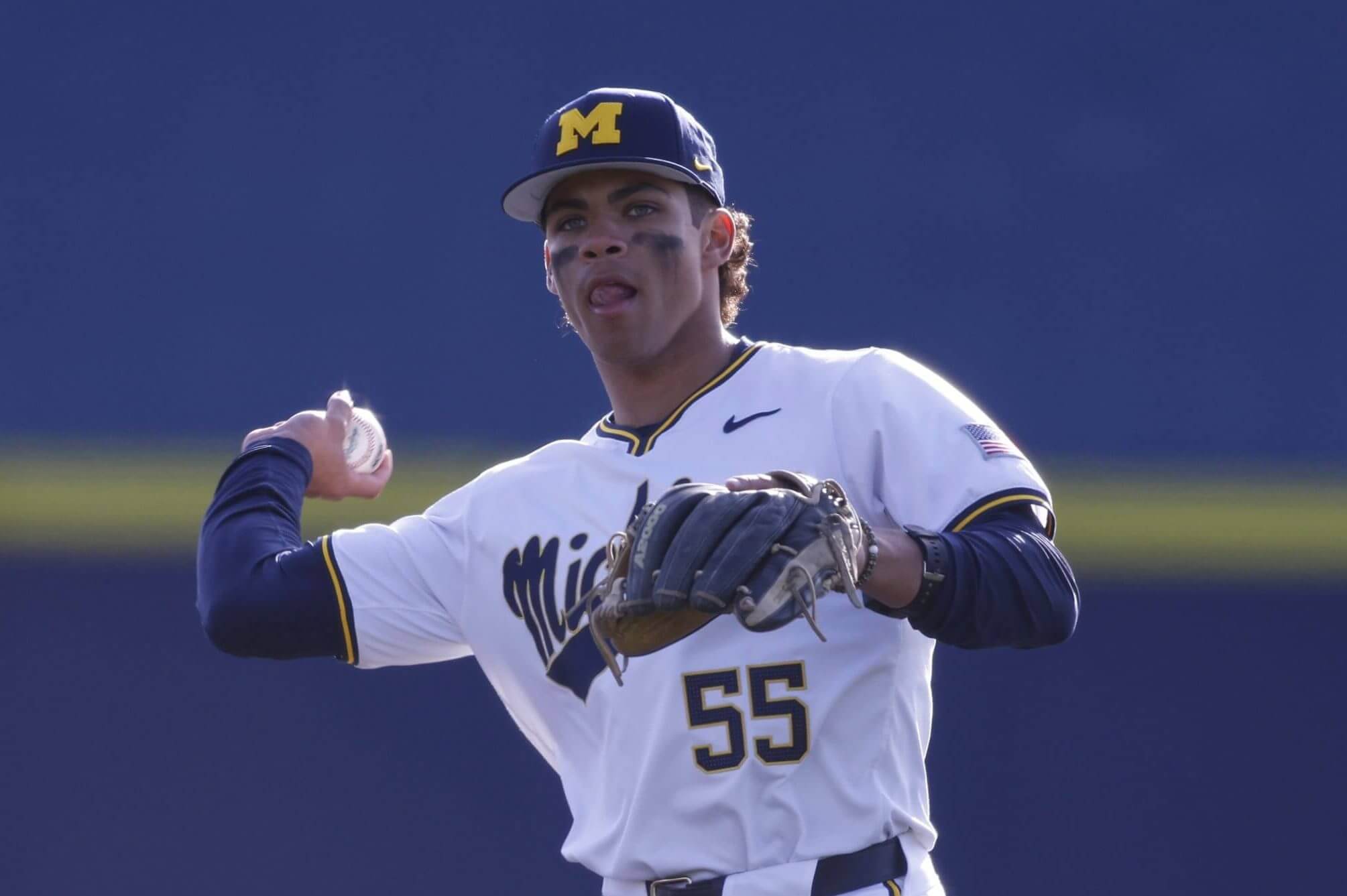
Voit has been one of the best hitters in the Big Ten this year with his combination of high contact rates and solid-average power, along with more walks than strikeouts on the season. He spent 2024 in the outfield for the Wolverines but moved full-time to second base this year and will stick there, although he also has the arm for third. He won’t turn 21 until September.
Position Player
4-Year College
2B
Scouting Report
Bats: R, Throws: R
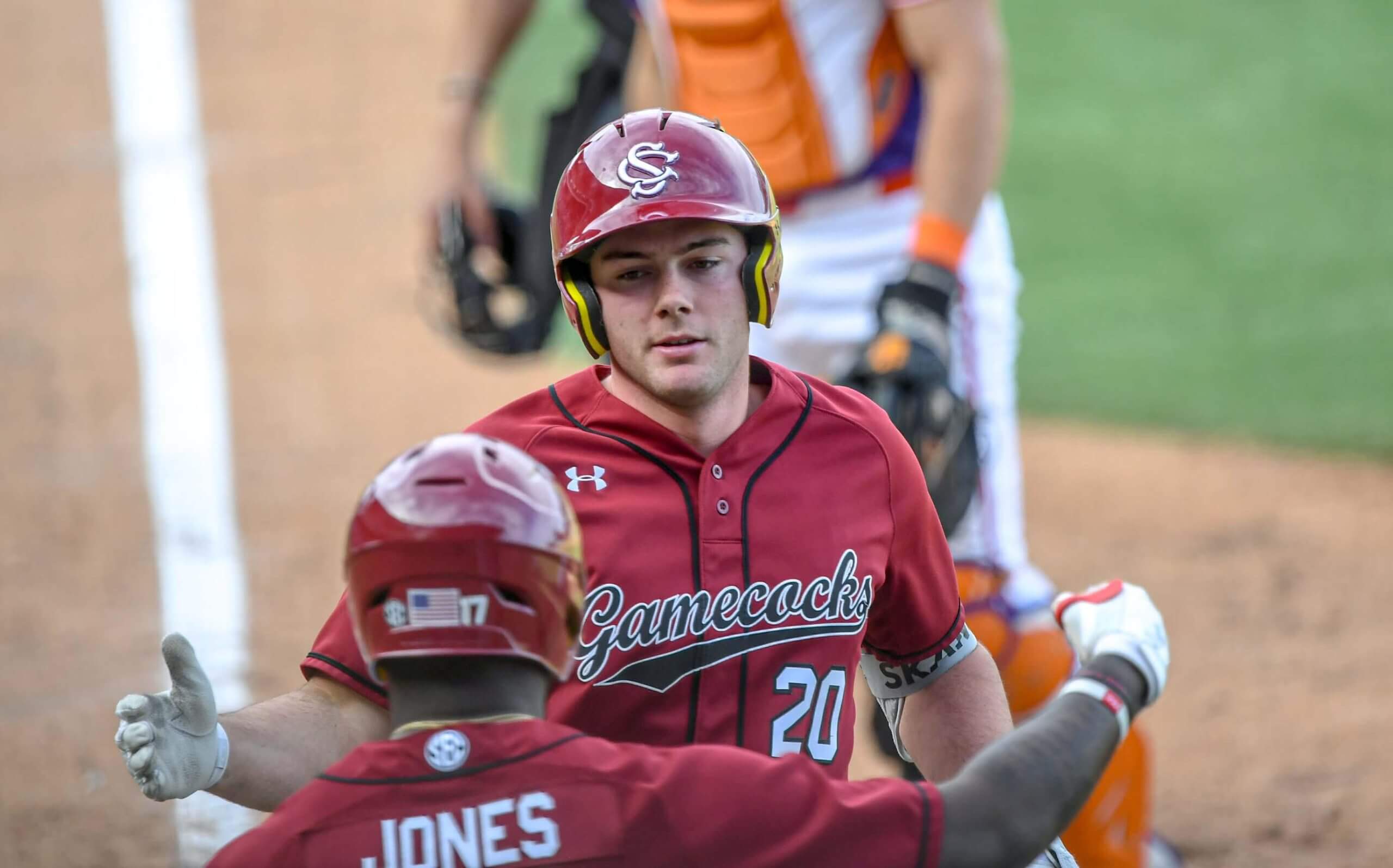
Petry is a power-over-hit first baseman/outfielder who hit 20+ homers in each of his first two years at South Carolina, but with high strikeout totals, including 73 as a sophomore (25.2 percent). He’s seen his strikeout rate and power output drop this year, and he’s been especially bad against SEC pitching, with just a .388 slugging percentage heading into the conference tournament.
Position Player
4-Year College
OF
1B
Scouting Report
Bats: L, Throws: L
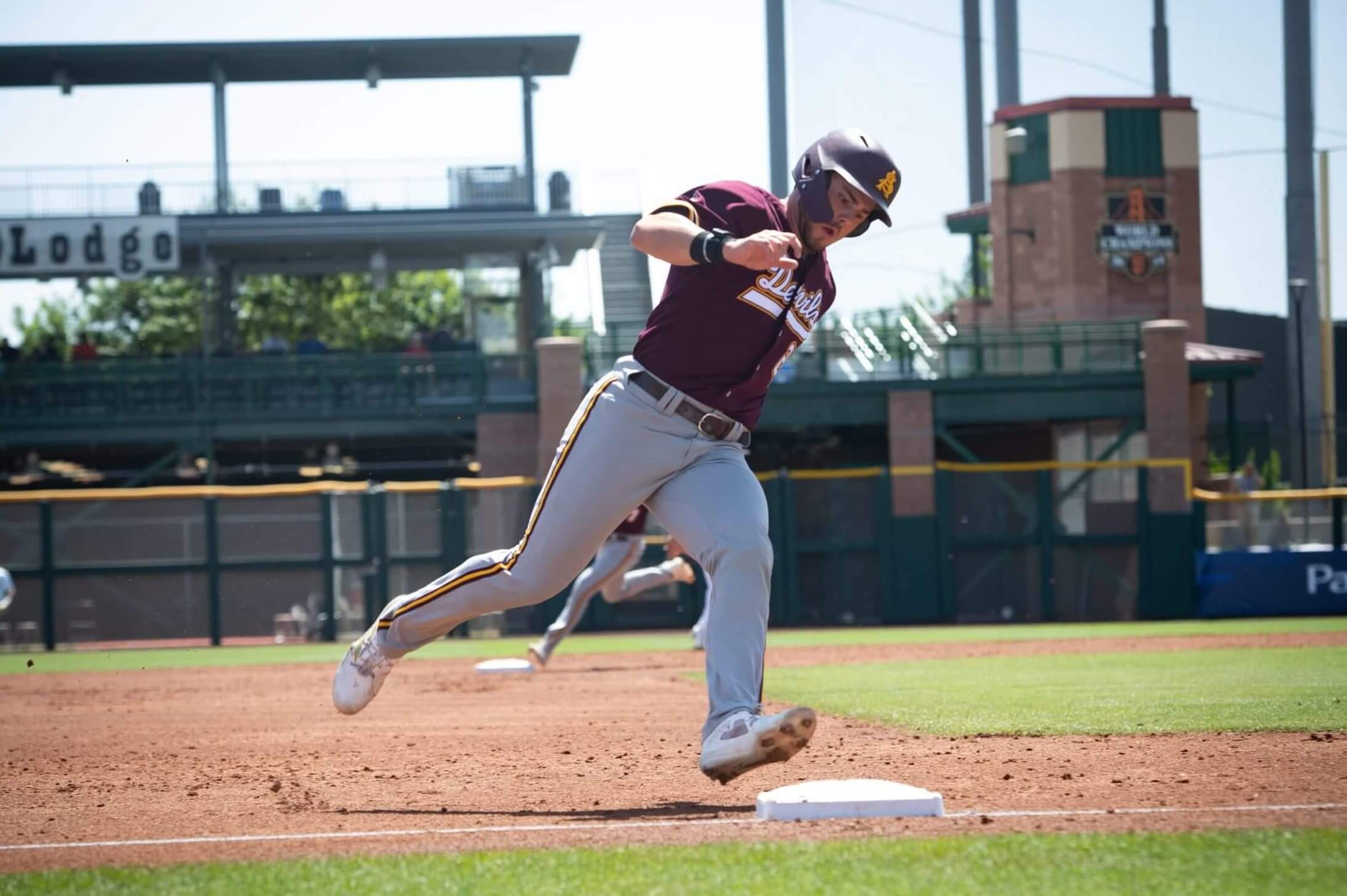
Compton came into the year as a potential first-rounder, but the Sun Devils’ left fielder has seen his offensive output decline across the board in his second year in Tempe. He has power and some patience, and could be a bounceback bet for a team that believes in the underlying offensive tools. He’s a redshirt sophomore who missed 2023 after undergoing Tommy John surgery.
Position Player
4-Year College
OF
Scouting Report
Bats: L, Throws: R
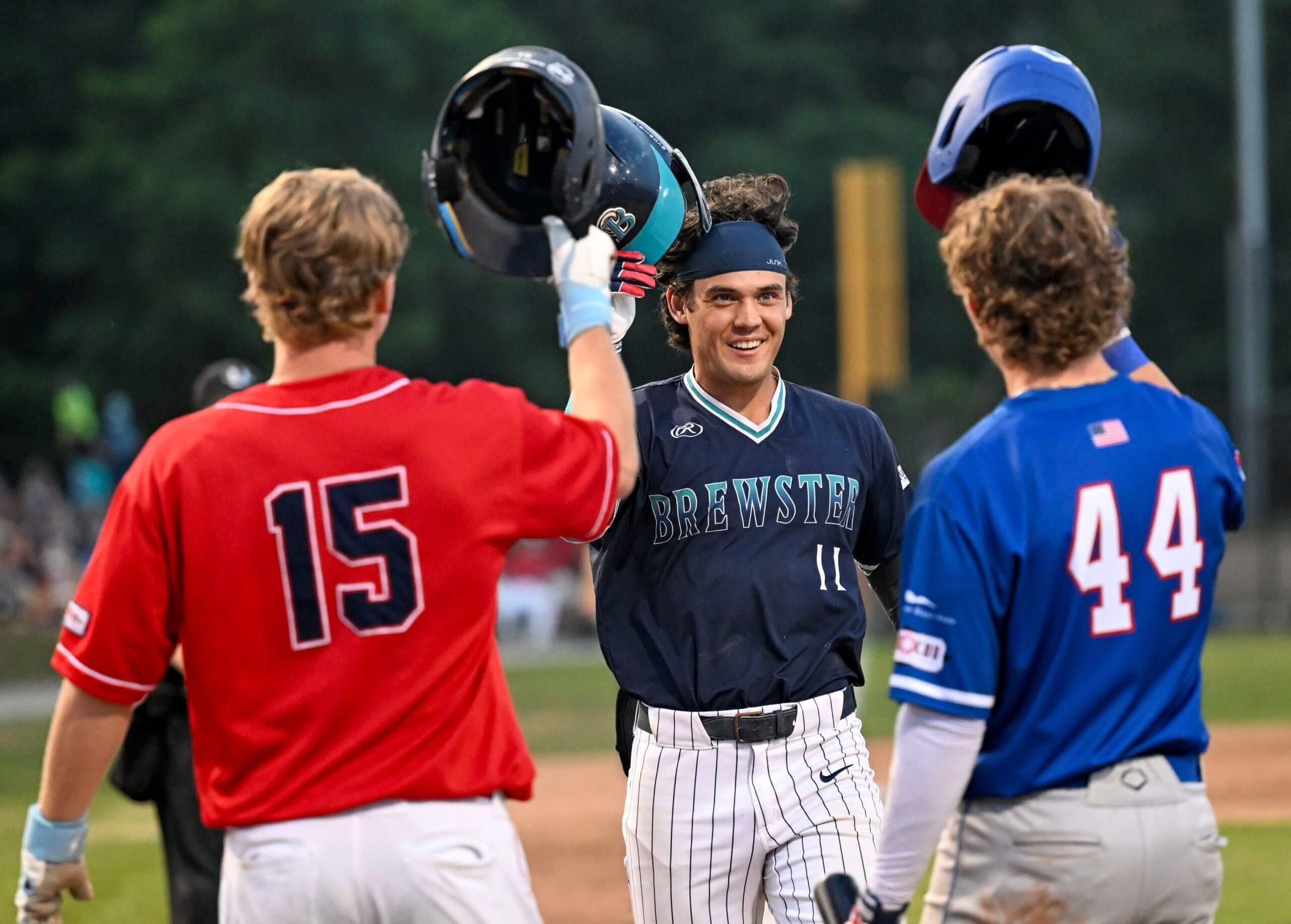
Power is down everywhere in Division 1, but Dumesnil saw a huge drop in his power output, going from 19 homers in 61 games as a sophomore to 10 in 55 games (so far) as a junior, enough to maybe push him down into the second round after some first-round buzz when he hit well on the Cape. He’s a center fielder now but an average runner who probably goes to a corner, and his performance, especially in measures of plate discipline and swing decisions, hasn’t been great given the competition he’s faced in the WAC. He’s had just one hit this year on a pitch with a recorded velocity of 94 or greater (although some pitches he’s seen don’t have a velocity listed).
Position Player
4-Year College
OF
Scouting Report
Bats: L, Throws: L
Slawinski is a very athletic, projectable lefty with a chance for three average or better pitches now that his velocity has started to creep up. He works in the low 90s with good carry, showing solid control already, and his slider projects to plus as long as he finishes it out front. He’s committed to Texas A&M.
Scouting Report
Bats: R, Throws: R
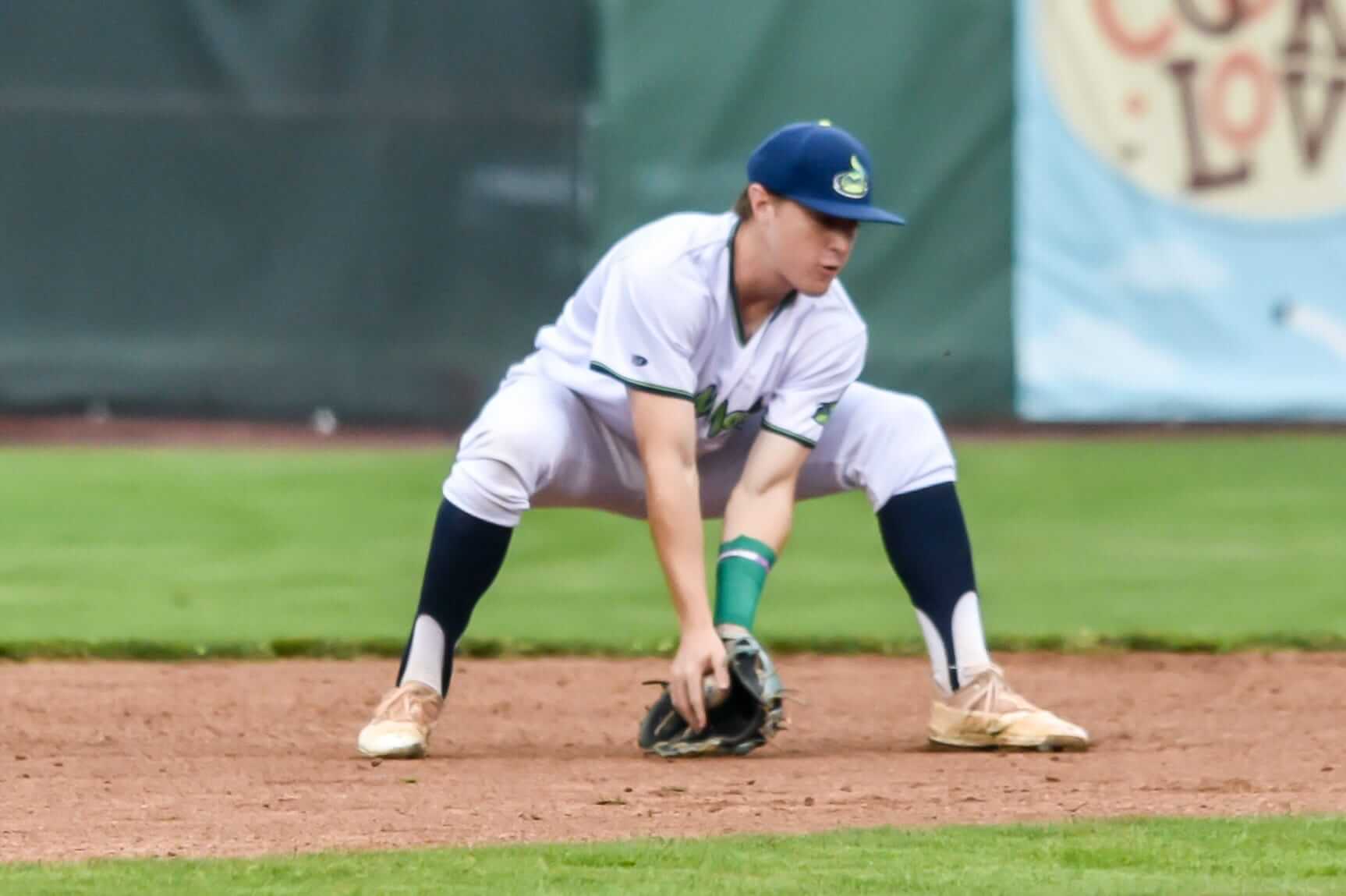
Lodise, the cousin of Florida State shortstop Alex Lodise, transferred from Division II Augusta to Georgia Tech and has held most of his performance even with the huge jump in competition. He took some time to adjust to ACC play but has a credible line, with 10 of his 14 homers coming in conference play. He’ll go out in pro ball as a shortstop but ends up at second base because his arm isn’t strong enough for the left side.
Position Player
4-Year College
SS
Scouting Report
Bats: R, Throws: R
Southisene’s older brother, Ty, was the Cubs’ fourth-round pick last year out of the same high school (which is also Mason Neville’s alma mater). Tate is a little ahead of Ty across the board — better hit tool now, better shortstop — with the same raves about his makeup from scouts. He probably goes out as a shortstop but moves to second or third in the high minors, or even center, as he’s a plus runner. He’s committed to University of Southern California, where another brother, Tee, is currently playing.
Position Player
High School
SS
Scouting Report
Bats: R, Throws: R
Becker, whose older brother, Ethan, is at Virginia and is likely to be a top-10 pick in 2026, came into this spring as a potential late first-rounder, but Nick started swinging for the fences more and some scouts have come back questioning whether he’s ready to hit pro pitching. He’s a good athlete who has a real chance to stick at short, with above-average speed and great hands. He has some power, but last summer was more of a hitter with occasional pop, and if he gets back to that — maybe in pro ball, maybe at Virginia himself next year — he’ll have a chance to be a regular.
Position Player
High School
SS
Scouting Report
Bats: L, Throws: L
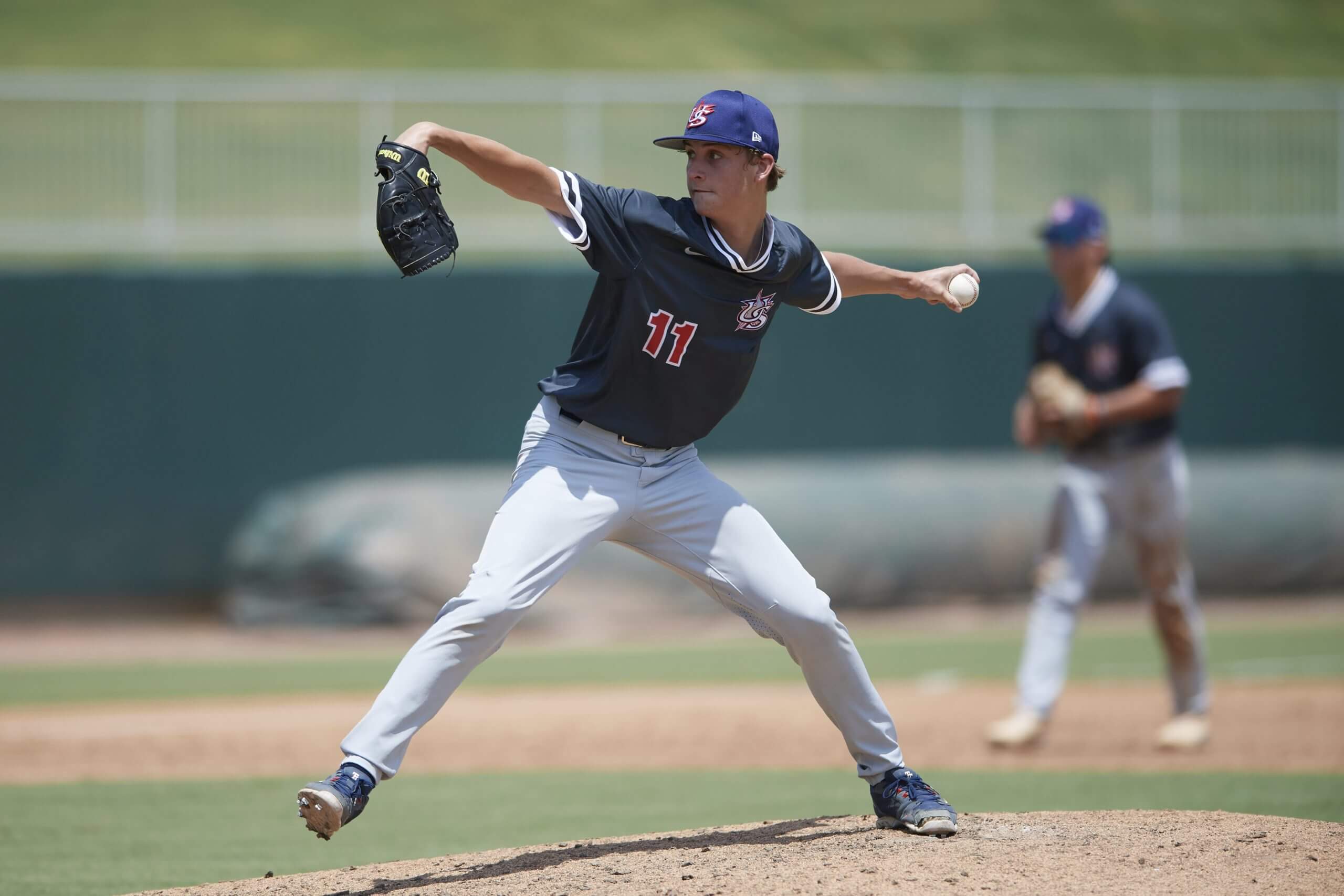
Bauer has been up to 102 mph multiple times this spring, getting himself a ton of attention, but the rest of the package doesn’t live up to the pure velocity; he was 94-98 when I saw him with a 45 slider and 40 command. There’s plenty of effort here and he doesn’t have a great feel for the secondaries. He can generate huge spin rates on his breaking stuff, but because he doesn’t throw enough strikes with the fastball, he hasn’t developed enough feel for throwing and locating his slider, and casts it to try to get it in the zone rather than throwing it with conviction. He cuts himself off in his landing, and really, no one is throwing 102 without some effort anyway. There’s a ton to dream on here between the pure arm strength and spin rates up to 3,000 rpms, especially from the left side, but you have to trust your pitching development process.
Scouting Report
Bats: R, Throws: R
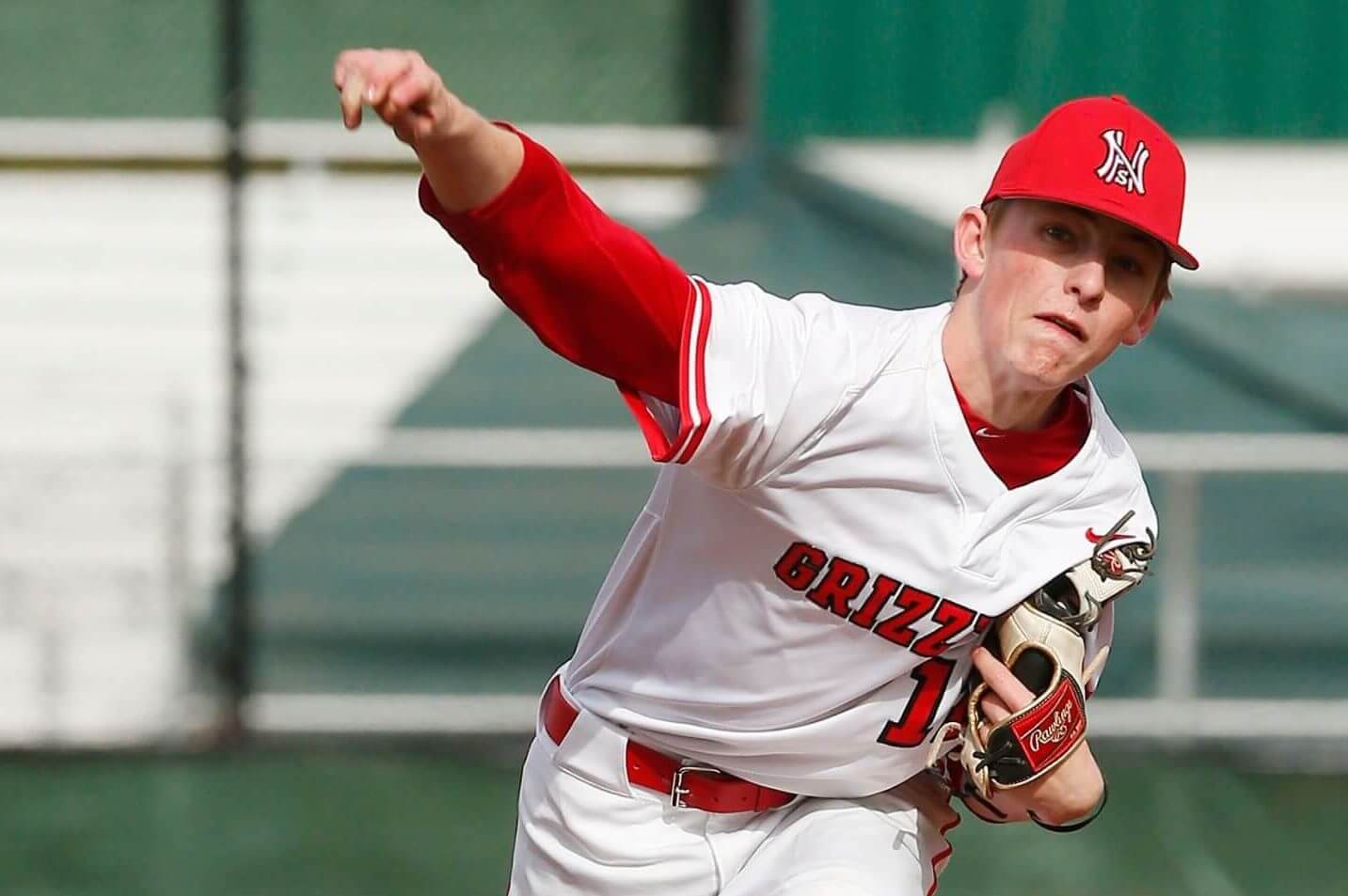
Moody is a projection right-hander who’s 90-93 now, touching 96 in shorter outings, and has a hammer slider along with a cutter and change, as well as a slow curveball he should probably ditch. He’s athletic and moves well but for some reason doesn’t take a very long stride even though he’s 6-7, so that might be an easy way to gain some deception and possibly more velocity. He’s committed to Arkansas and if he goes there I bet he’ll hit 99 at some point.
Scouting Report
Bats: L, Throws: L
McKenzie sits 90-92 with a 55 curveball and feel for a changeup that’s too close to the fastball in velocity right now, offering some physical projection for more velocity, although the long arm swing may be hard to repeat for real command. He’s a good later pick for a team looking at projection arms rather than guys with big fastballs right now.
Scouting Report
Bats: R, Throws: R
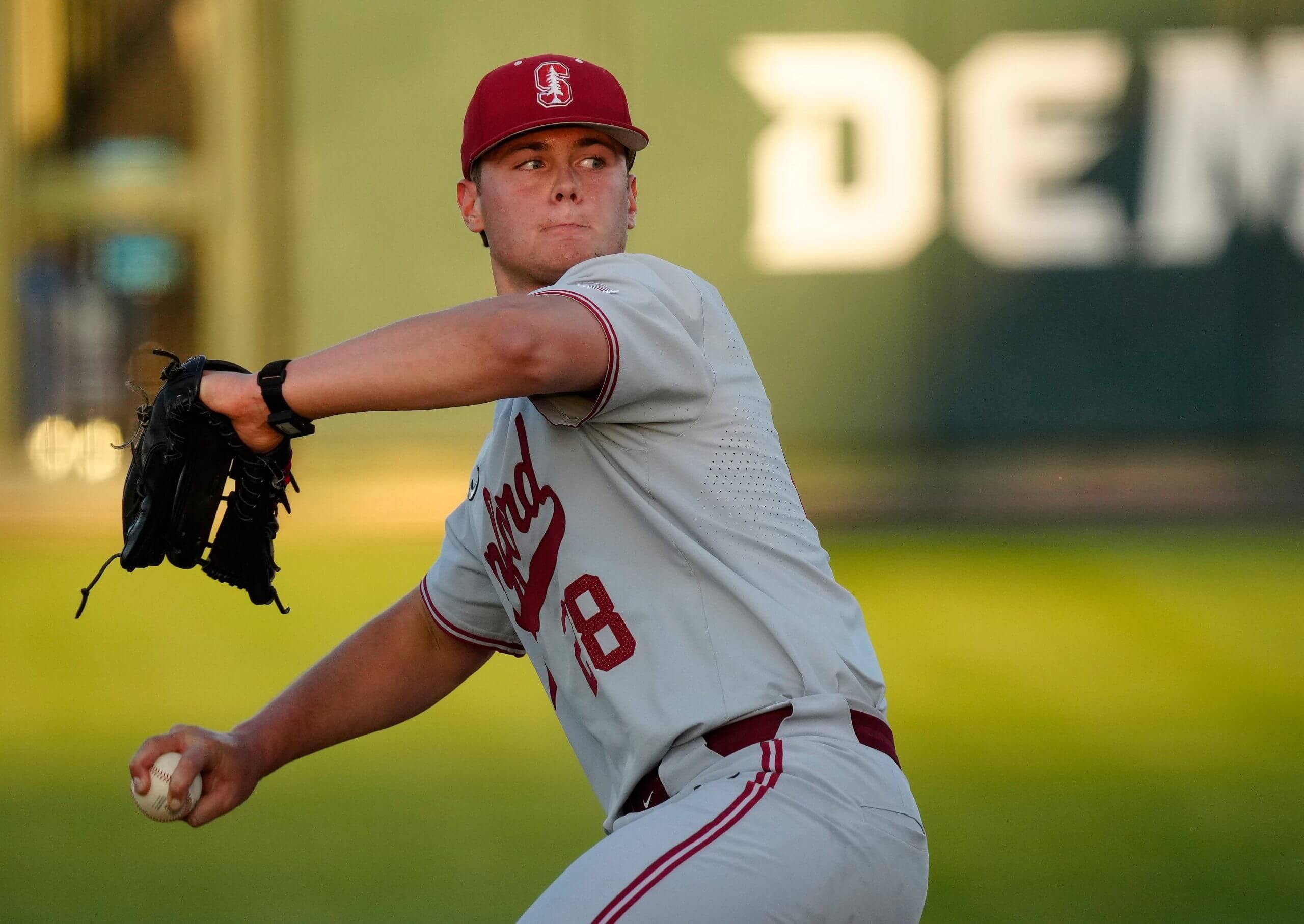
Scott came out strong to start the year but his command went back to pre-2025 levels, leaving him back to where he was before — a huge right-hander who’s been up to 97 but works in the low 90s with the potential for above-average pitches in his cutter and slider, lacking an average pitch for lefties or the command and control he’d need to stick in a starter role. He’s been out since the end of April with an oblique injury.
Scouting Report
Bats: L, Throws: L
Fernsler is 6-4 but comes from an extremely low release point that’s going to get him compared to Chris Sale and Jamie Arnold, averaging about 89-90 but missing a ton of bats because of the low slot and the ride on the pitch. He has a sweepy slider and a soft changeup, missing bats on everything in large part because hitters see the ball late out of his hand. He’s committed to TCU and by all accounts is very likely to end up there.
Scouting Report
Bats: R, Throws: R
Carmichael is a capable backstop with some power and enough contact skills to at least see a future as a backup, probably a low-OBP type who might get to 15+ homers if he plays every day. At Oklahoma, he’s handled the Witherspoon twins, who both show premium stuff, well enough to see him doing the same in the upper levels of pro ball.
Position Player
4-Year College
C
Scouting Report
Bats: L, Throws: L
Appenzeller is a two-sport athlete who rolled out of basketball right into baseball this spring, so he’s behind most other pitchers in velocity or readiness to pitch. He’s been up to 94 before, more 88-92 this spring, and can spin a slider well enough to see a future plus pitch there. He’s committed to Tennessee and I’d be 0 percent surprised if he went there and ended up a first-rounder in 2028.
Scouting Report
Bats: R, Throws: R
Grindlinger is a polished high school catcher with a clean swing that looks like it’ll get him to at least 55 power, maybe peaking around 20-22 homers a year if he’s playing every day. He can expand the zone slightly with two strikes but doesn’t chase pitches beyond the shadow of the zone very much (just 15 percent in tracked events since the start of 2024). He’s got a plus arm and a good catcher’s build, with some blocking skills already, enough to see him staying at the position and perhaps ending up an above-average defender.
Position Player
High School
C
Scouting Report
Bats: L, Throws: R
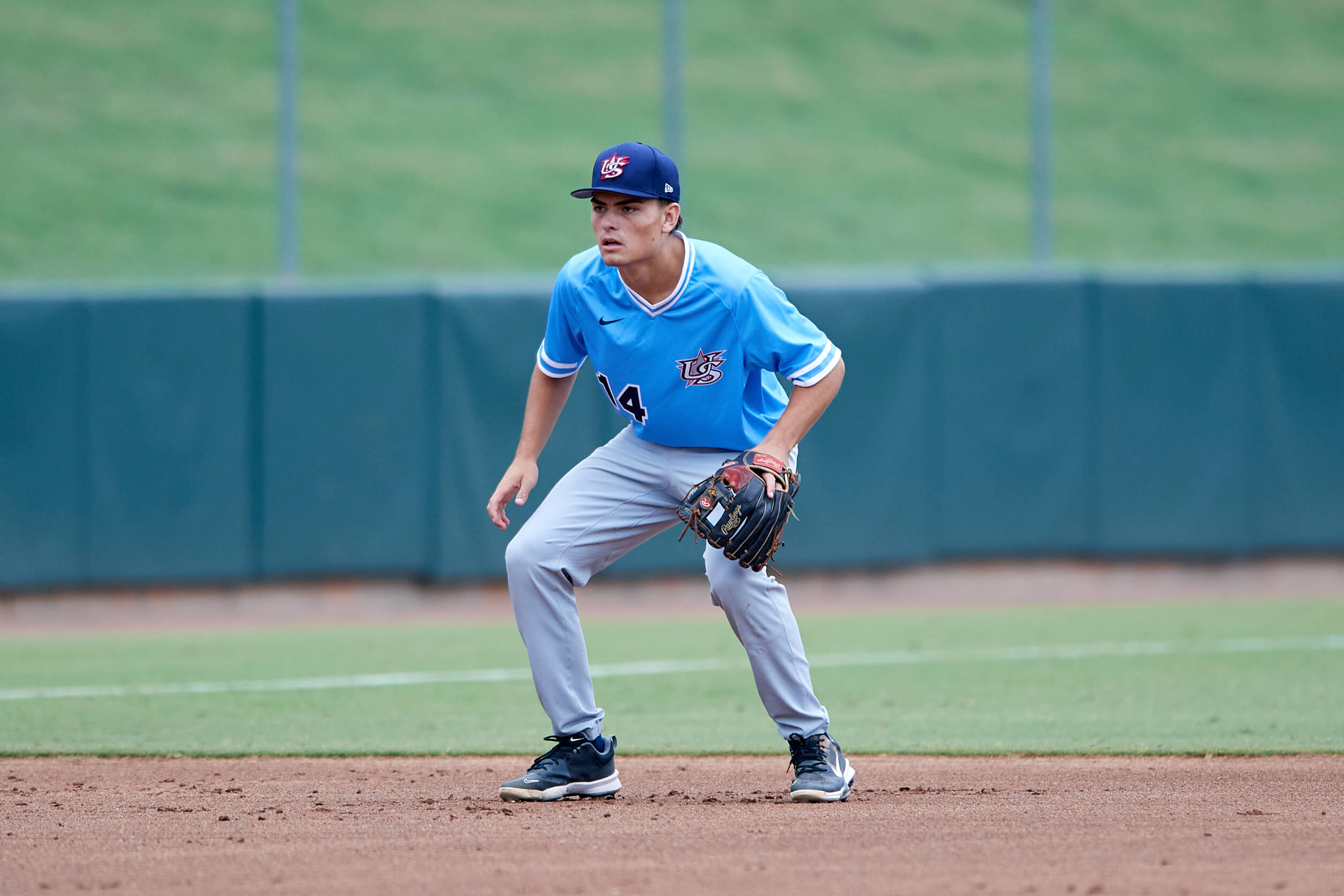
Ebel is a natural shortstop who’s playing third base for his high school team because their shortstop is first-rounder Billy Carlson, although in the long run Ebel’s going to end up at the hot corner or maybe at second, with his strong arm likely to keep him at third. I didn’t see good bat speed from him at NHSI, but he hasn’t had trouble with velocity, even up to 98, at showcases and other tracked events. It’s a solid swing for contact and some low line drives, probably not power as currently constituted. He’s got a chance to be a regular in the Bill Mueller mold, where his value is in his average/contact skills and solid defense at third.
Position Player
High School
3B
Scouting Report
Bats: L, Throws: R
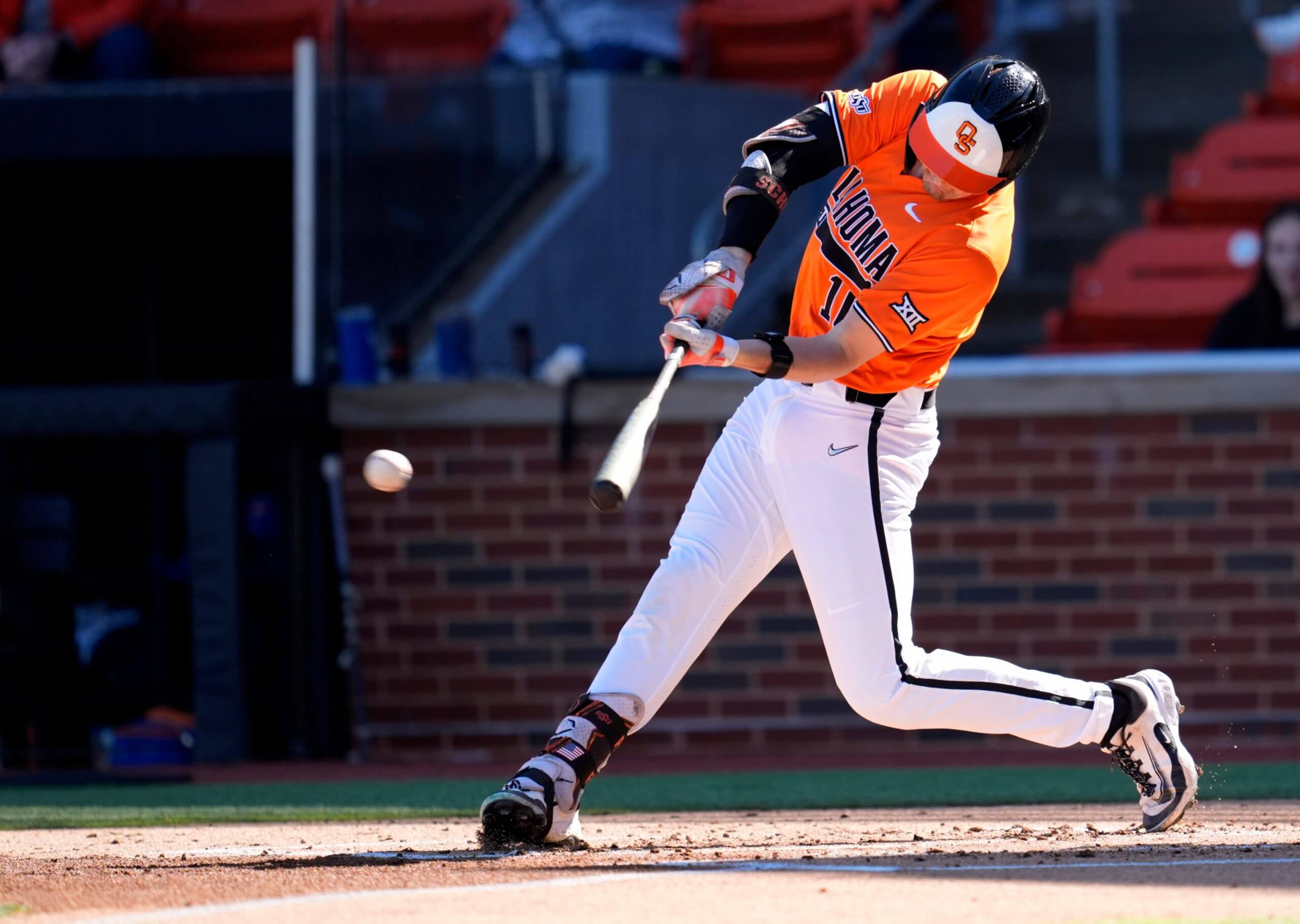
Schubart has plus power, but the hit tool is a real question, as he continues to punch out too often and he saw his average drop under .300 this year from .370 as a sophomore. He doesn’t hit breaking stuff at all and has whiffed a third of the time on fastballs 94 and up. He’s mostly played right field and is average there, with some experience at first and in left.
Position Player
4-Year College
OF
Scouting Report
Bats: L, Throws: R
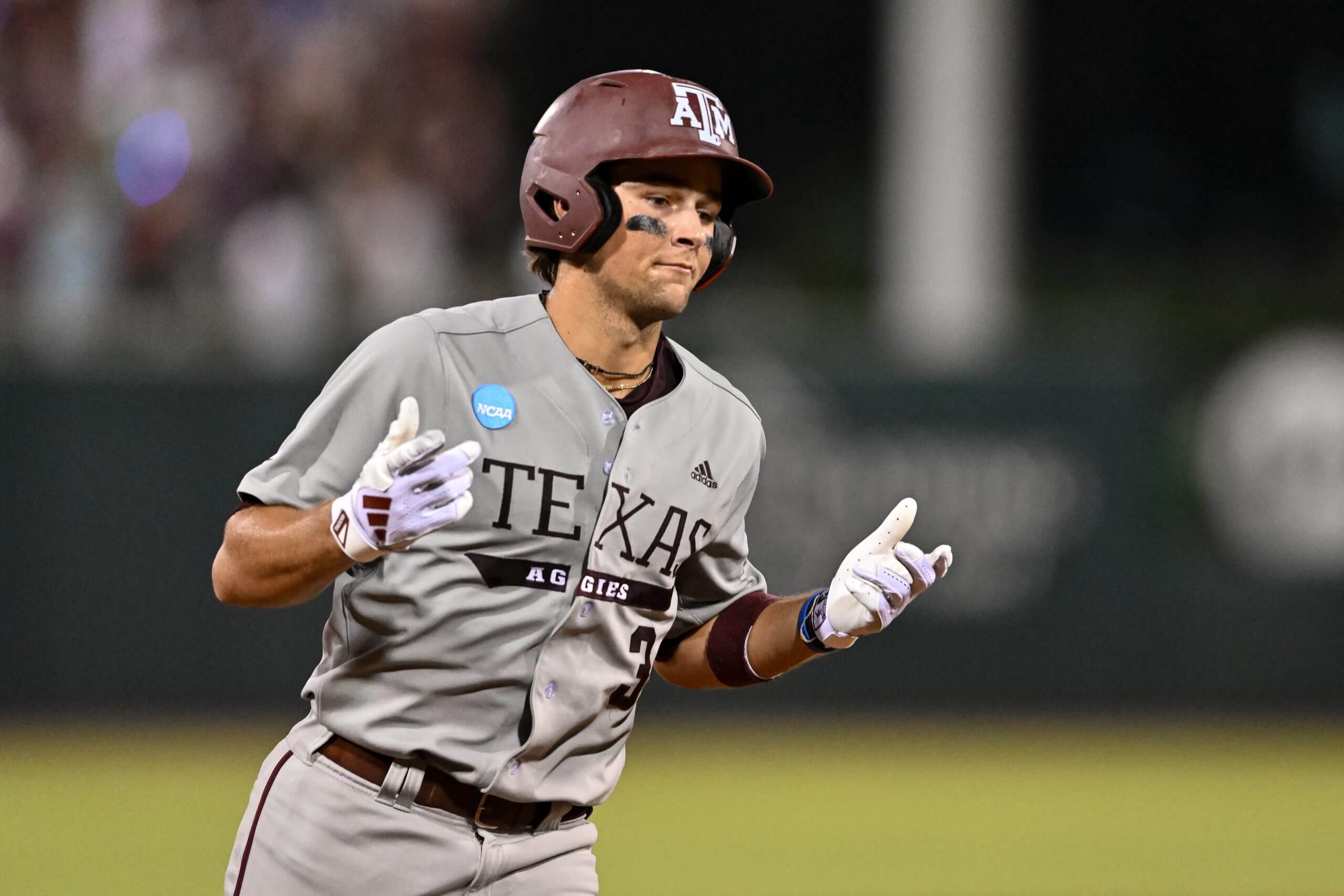
Kent has 55 power and good enough contact skills to see him as a future utility infielder. He’s best suited to second base but could back up at shortstop. He had some buzz coming into the year but hasn’t been able to pull his average up over .300 and has seen his strikeout rate in conference play rise to 19 percent (versus just 6 percent outside of it).
Position Player
4-Year College
2B
SS
Scouting Report
Bats: R, Throws: R
Brumbaugh is the third-best high school shortstop in Oklahoma this year, as it turns out, because of those two guys who are going in the top 10 (Holliday and Willits). He can hit some and has a good swing to produce line-drive contact, and he’s got a plus arm, up to 95 off the mound, with the hands and range for shortstop right now, although he could end up at third base. He’s committed to Arkansas.

Position Player
High School
SS
RHP
Scouting Report
Bats: R, Throws: R
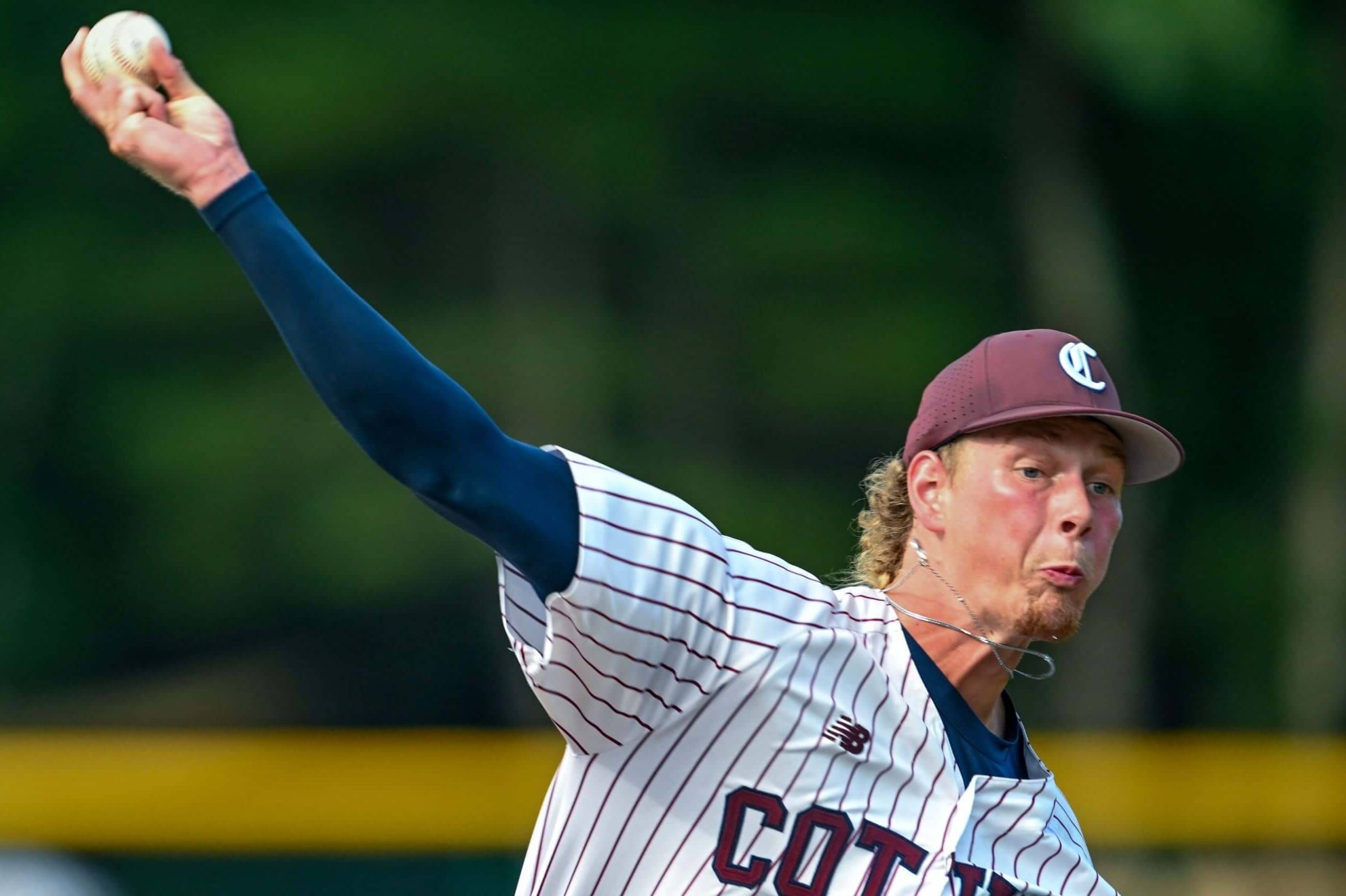
Ellwanger has been up to 100 with enough of a slider to see a two-pitch reliever there. He’s started for DBU this year but has walked 13.9 percent of hitters and doesn’t have a good enough chase pitch in the slider or the below-average curveball to see a future starter.
Scouting Report
Bats: R, Throws: R
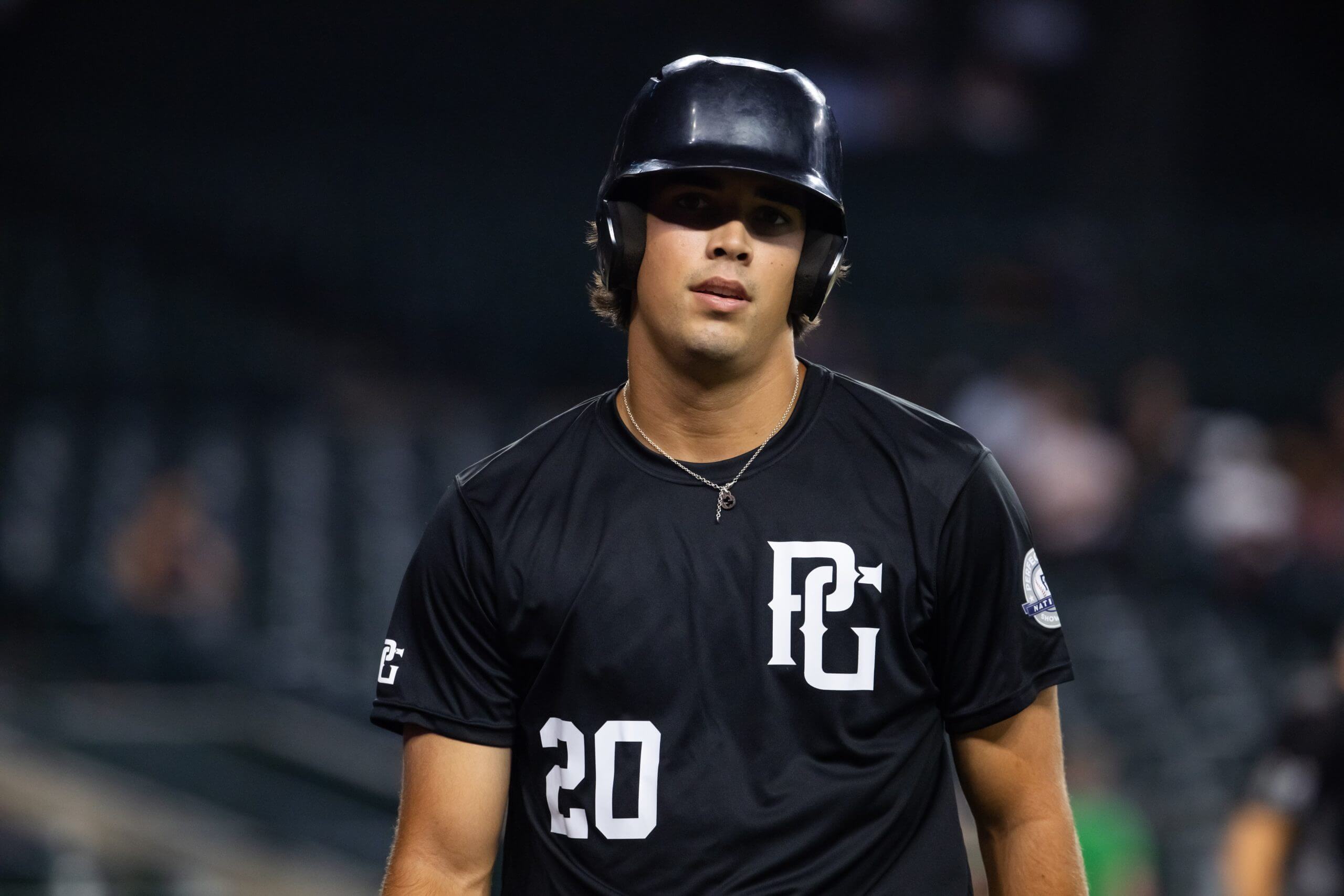
Patrick has a good swing and plenty of tools, with power and a plus arm, and shows well in workouts, but in games he’s had trouble with contact and doesn’t show the same run tool he flexes in the 60-yard dash. He’ll be 19 at the draft and is committed to LSU, so he may be unsignable and would be draft-eligible again in 2027.
Position Player
High School
OF
Scouting Report
Bats: L, Throws: R
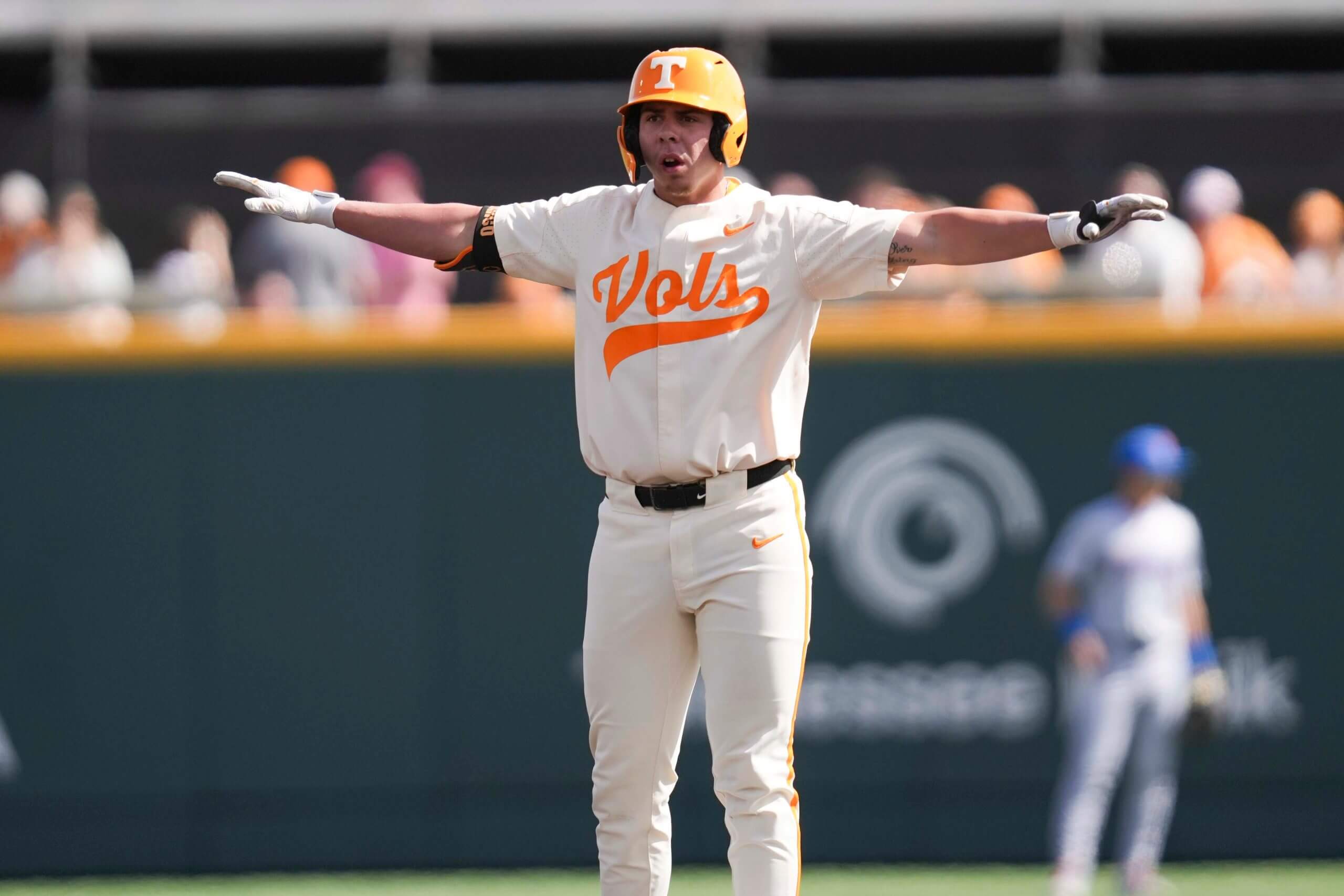
Bargo picked up more playing time when Gavin Kilen got hurt and is tied for second on the Vols with 14 homers, the same as Kilen has, in fact. Bargo can play third or second and makes really hard contact, without the pure hit tool or plate discipline right now to project as a clear regular.
Position Player
4-Year College
2B
3B
Scouting Report
Bats: L, Throws: L
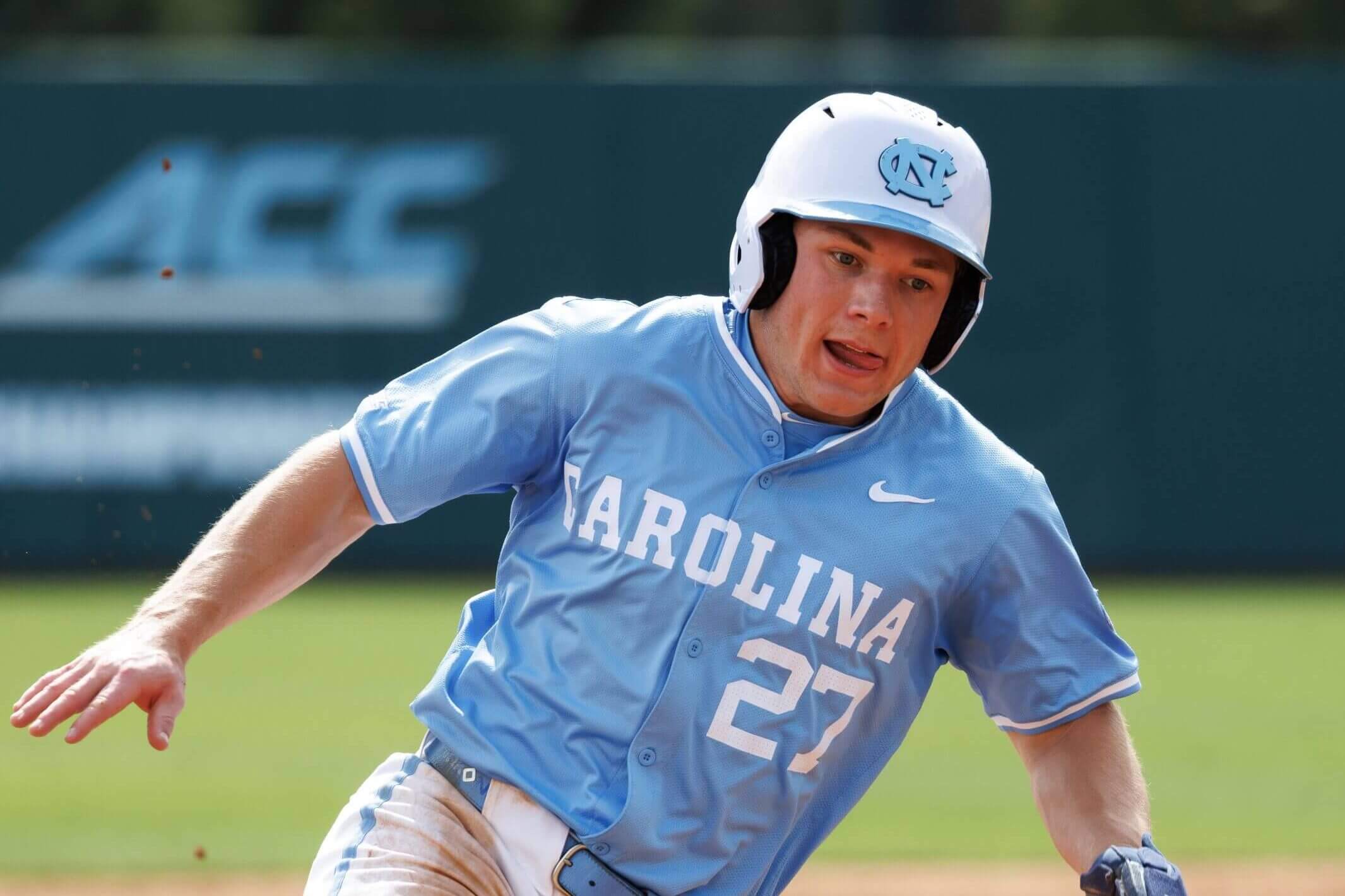
Kepley is a very undersized center fielder who’s a 70 runner and 60 defender, walking almost twice as often as he’s struck out, with almost no power at all. He’s probably a fourth outfielder unless he can add significant strength, and hitting under .300 through the regular season doesn’t help his draft cause.
Position Player
4-Year College
OF
Scouting Report
Bats: R, Throws: R
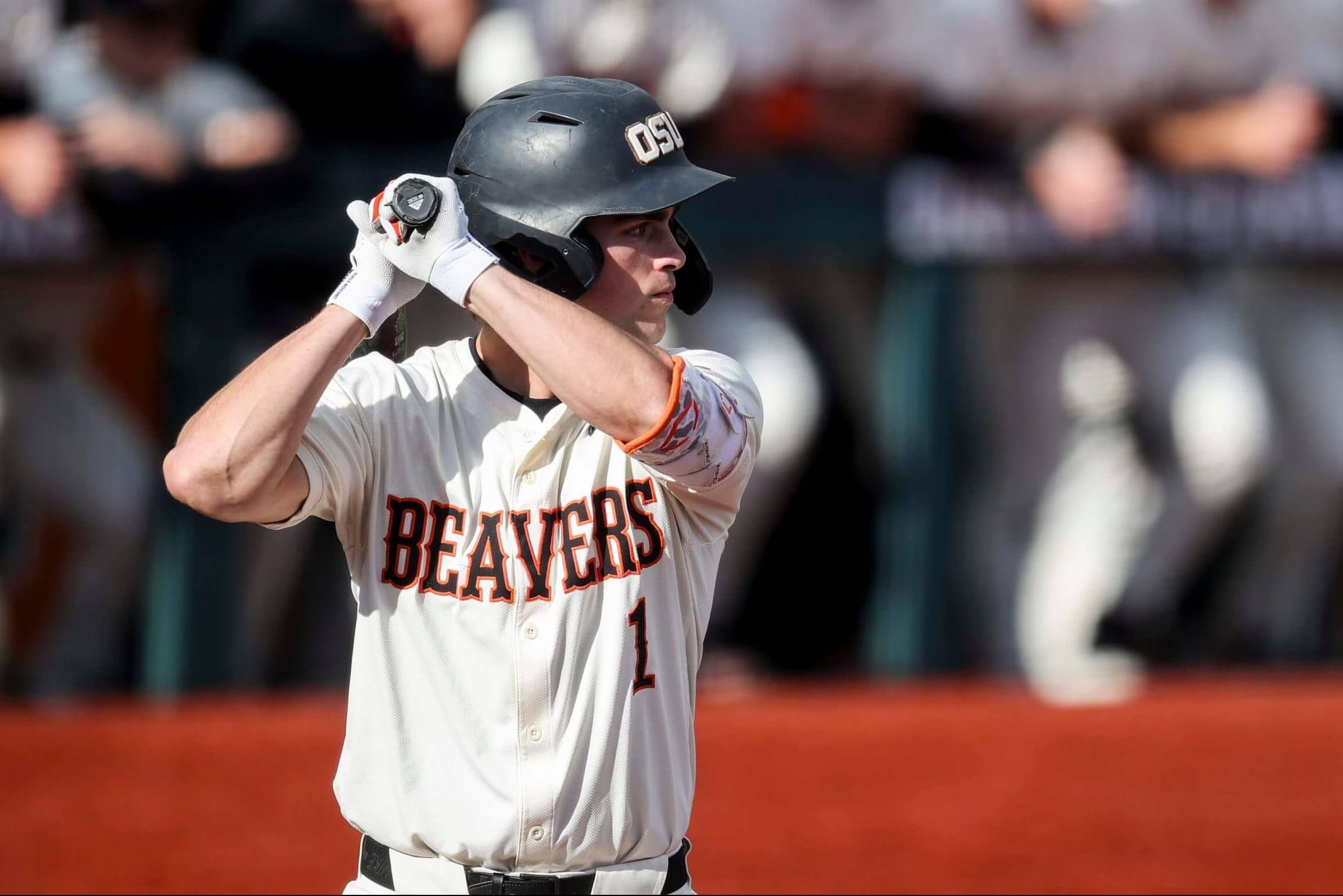
Turley has plus power and can hit a fastball, but he’s feasted on the weaker pitching of Oregon State’s independent schedule; against better pitching he struggles to hit anything with a wiggle. He’s a capable corner outfielder, and if he develops any pitch recognition he could be a 25-homer guy.
Position Player
4-Year College
OF
Scouting Report
Bats: L, Throws: L
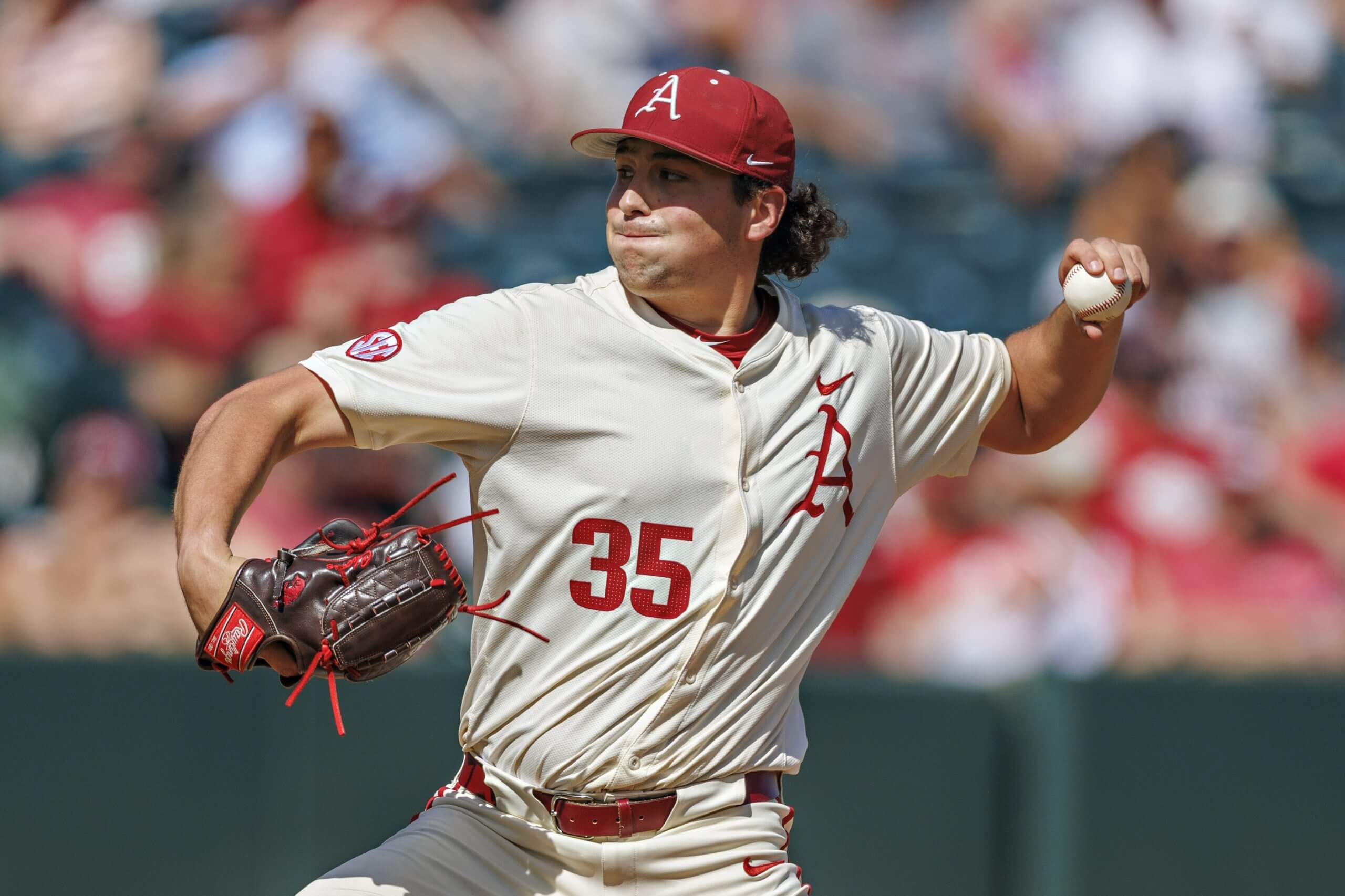
Beidelschies lost his rotation spot with the return of Gage Wood after a season of disappointing results for the transfer from Ohio State. He’s up to 97 and the slider looks like it should be at least a 55 if not plus, but hitters disagree, tagging him for 14 homers in 54 2/3 innings this year with a ton of hard contact. He’s big, left-handed, has arm strength, and seems to spin it OK, so maybe he’s just a candidate for someone’s pitching lab, but it’s hard to see a starter here given how hitters treated him this spring.
Scouting Report
Bats: R, Throws: R
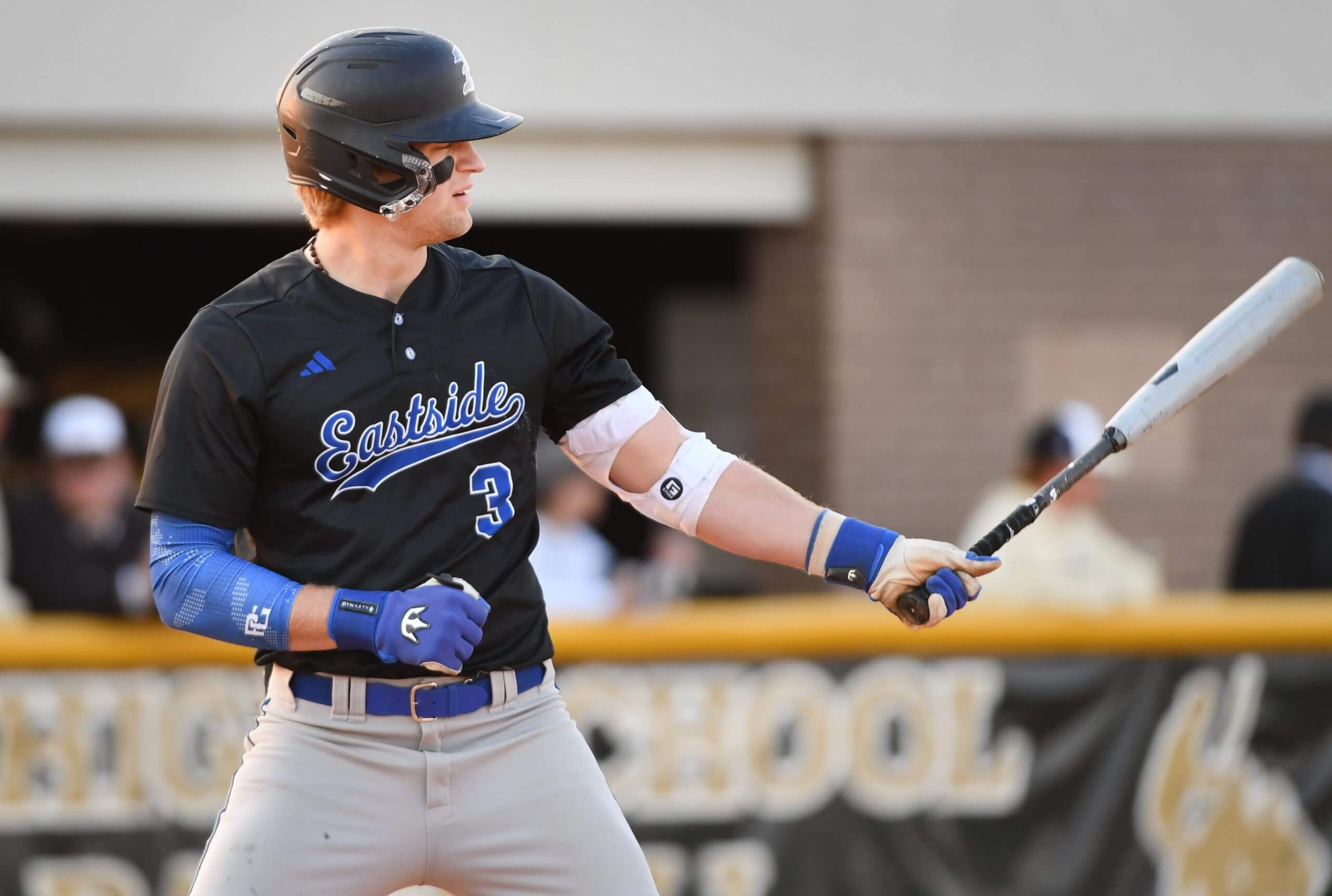
Mershon has great feel for contact, with a very wide setup that keeps him balanced but probably inhibits his ability to drive the ball, as he’s clearly strong enough for average or better power. He barely whiffed on anything, especially fastballs, at showcases last year (11 percent overall, 7 percent on heaters), and showed the ability to use the whole field. I think there’s untapped potential in the bat. He’s a catcher and center fielder, more likely to end up at the latter spot, with a 50/55 arm and plus speed out of the box that would be wasted behind the dish. He’s already 19 and is committed to Mississippi State.
Position Player
High School
C
OF
Scouting Report
Bats: R, Throws: L
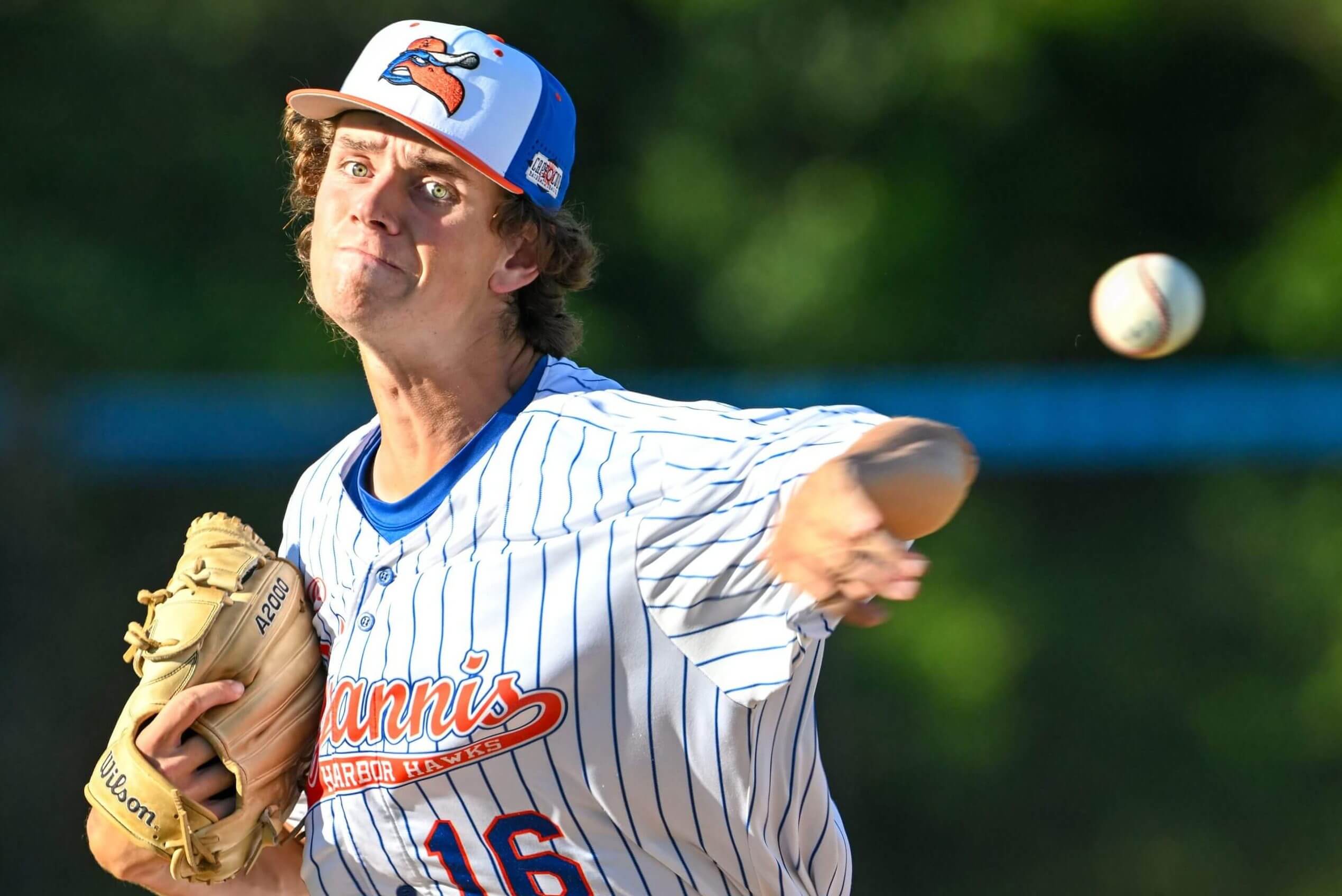
Dzierwa is a changeup lefty with good control, working with a somewhat stiff delivery and no windup. He goes after right-handed hitters with a low 90s heater and a plus change. The changeup has a lot of tumble to it and hitters don’t seem to pick it up well, whiffing on it in and out of the zone. Against lefties, he mostly throws the fastball and prefers his mid-70s curveball, which has some two-plane break to it but just doesn’t miss a lot of bats. With his above-average to plus control he might be a back-end starter.
Scouting Report
Bats: R, Throws: R
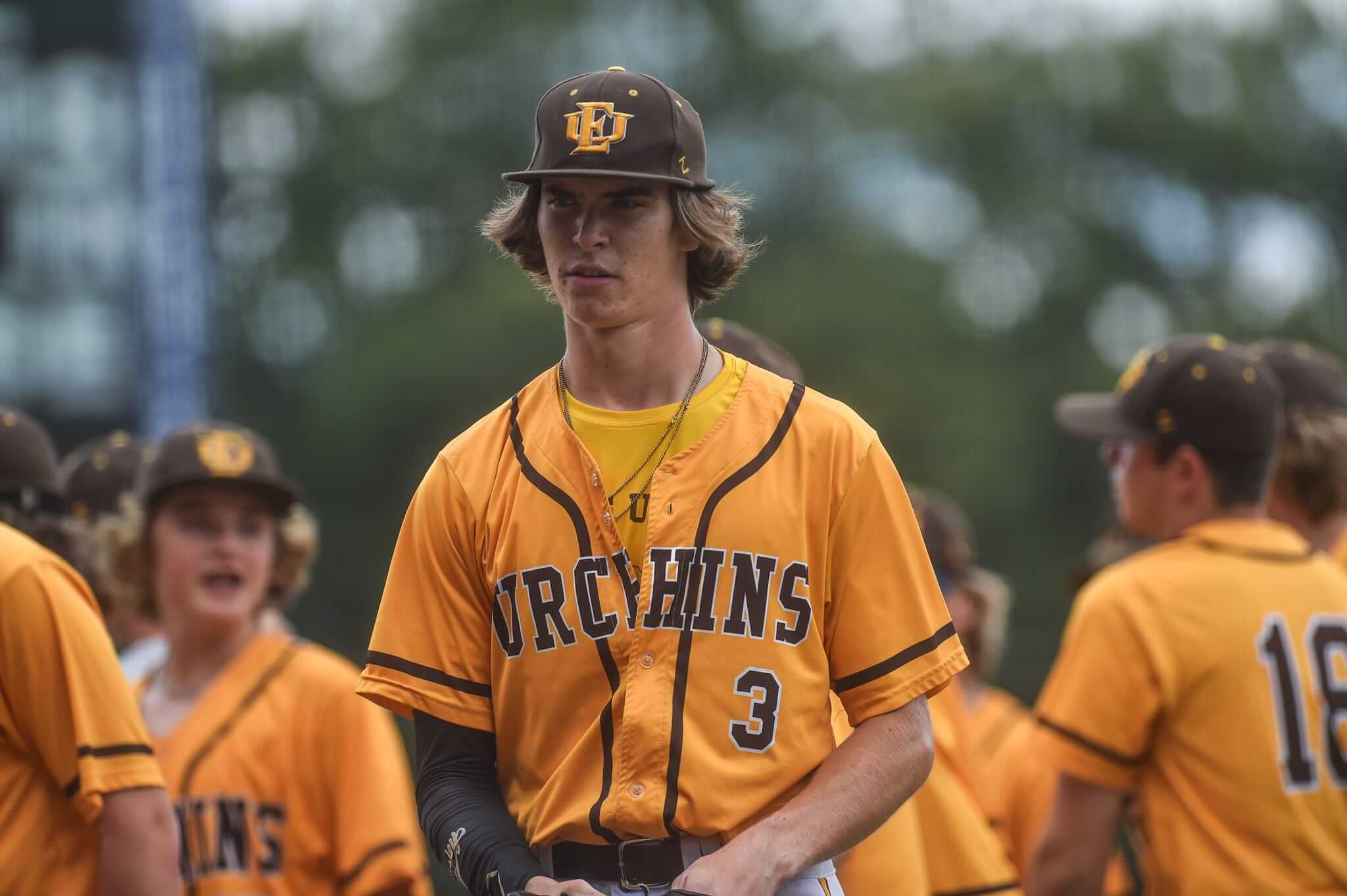
Harmon is an athletic pitcher who’s been up to 98, although he doesn’t pitch up there, and can flash a 55 slider. He takes a huge stride towards the plate to generate velocity, but beyond that it’s not a great delivery, as his arm is extremely late and he cuts himself off in his landing. The slider can get slurvy and he doesn’t have a consistent changeup. He’s a bet on arm strength and pure athleticism. He’s committed to Mississippi State.
Scouting Report
Bats: L, Throws: R
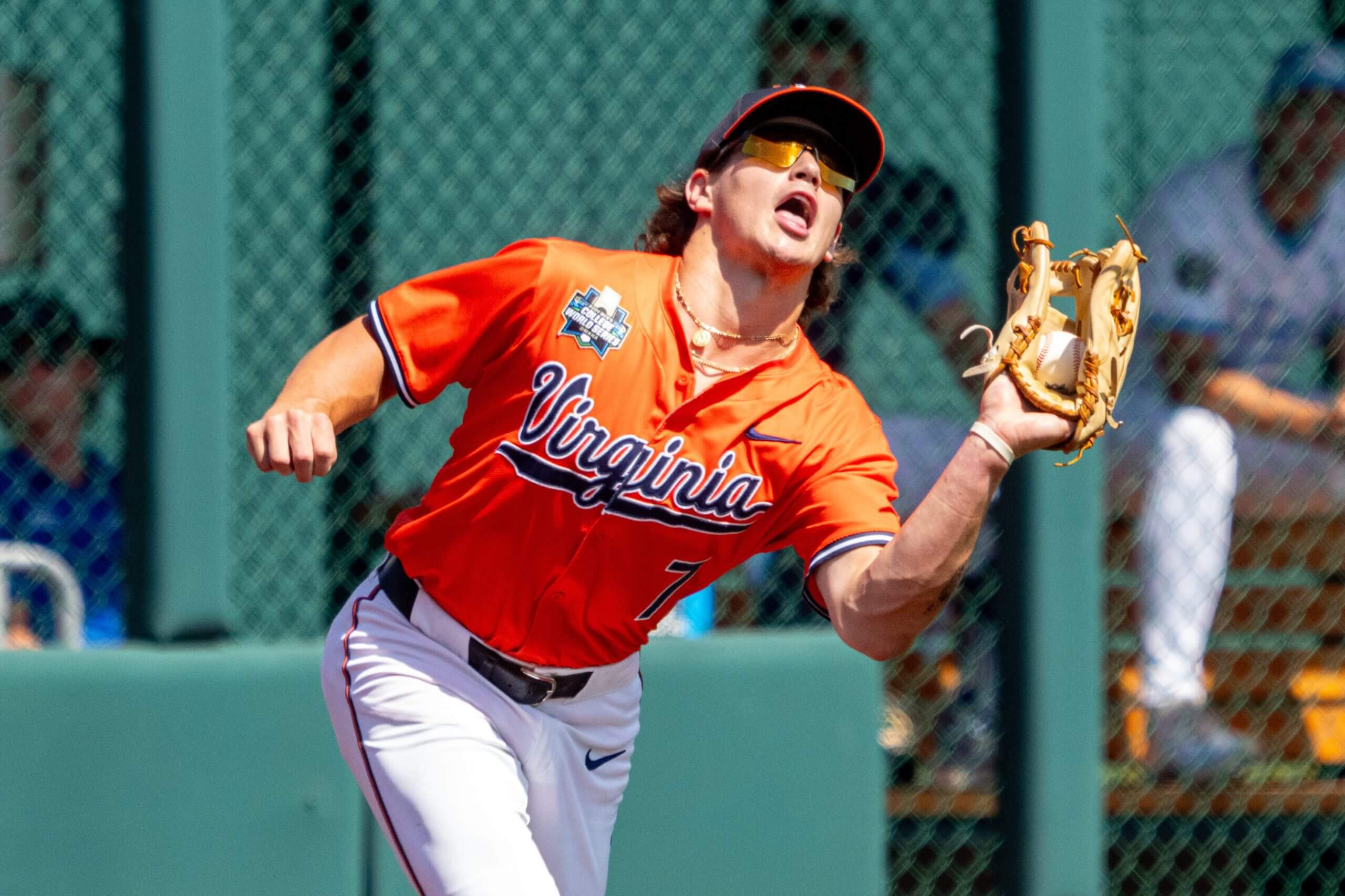
Teel is the younger brother of White Sox prospect Kyle Teel, having followed his brother to UVA. Aidan doesn’t have a plus tool but does everything reasonably well, hitting .321/.438/.543 in the regular season with just a 12.7 percent strikeout rate, showing 55 speed and 55 defense in center, even going 9-for-9 in stolen bases. He has a fourth outfielder floor and I wouldn’t be shocked if he ended up a regular because he keeps making adjustments.
Position Player
4-Year College
OF
Scouting Report
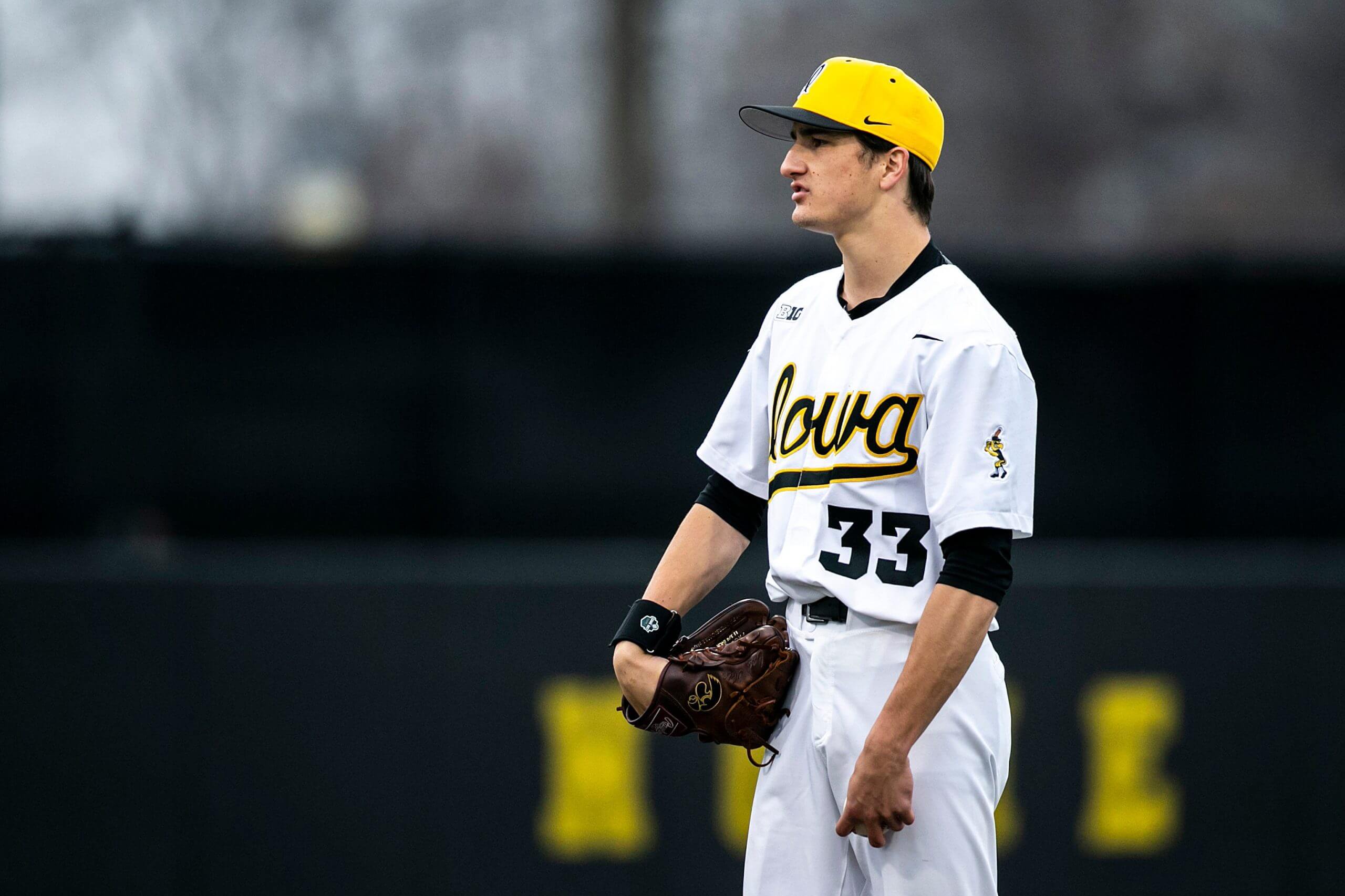
Bats: L, Throws: L
Obermuller was draft-eligible last year, and declined to sign when the Rangers took him in the 19th round, so he’s back in the draft this year and should go on Day 1 after a much better junior year. Obermuller has been up to 98 and sits 92-94 with a 55 slider that’s very horizontal, and given his low arm slot it’s not surprising that he’s very east-west. He barely uses a changeup and the whole operation is very relieverish, from the delivery to the arsenal to the command. He did improve his control significantly this year, however, cutting his walk rate from over 15 percent a year ago to 9.4 percent this spring. I could see someone hoping they can build on his adjustments and develop a left-handed starter with two 55s or better.
Scouting Report
Bats: R, Throws: R
Phillips needs a pitch to get lefties out, and if he finds one, he could be a mid-rotation starter. He’s 95-98 from a low three-quarters slot with a hard, sweepy slider at 86-88, also using an occasional cutter and changeup; the changeup isn’t bad, maybe a 45, just too firm and too often on the outer third. His arm action is a little long, but he repeats it enough for average control. Odds are he’s a reliever in the long run; someone should give him every opportunity to start, however.

Scouting Report
Bats: R, Throws: R
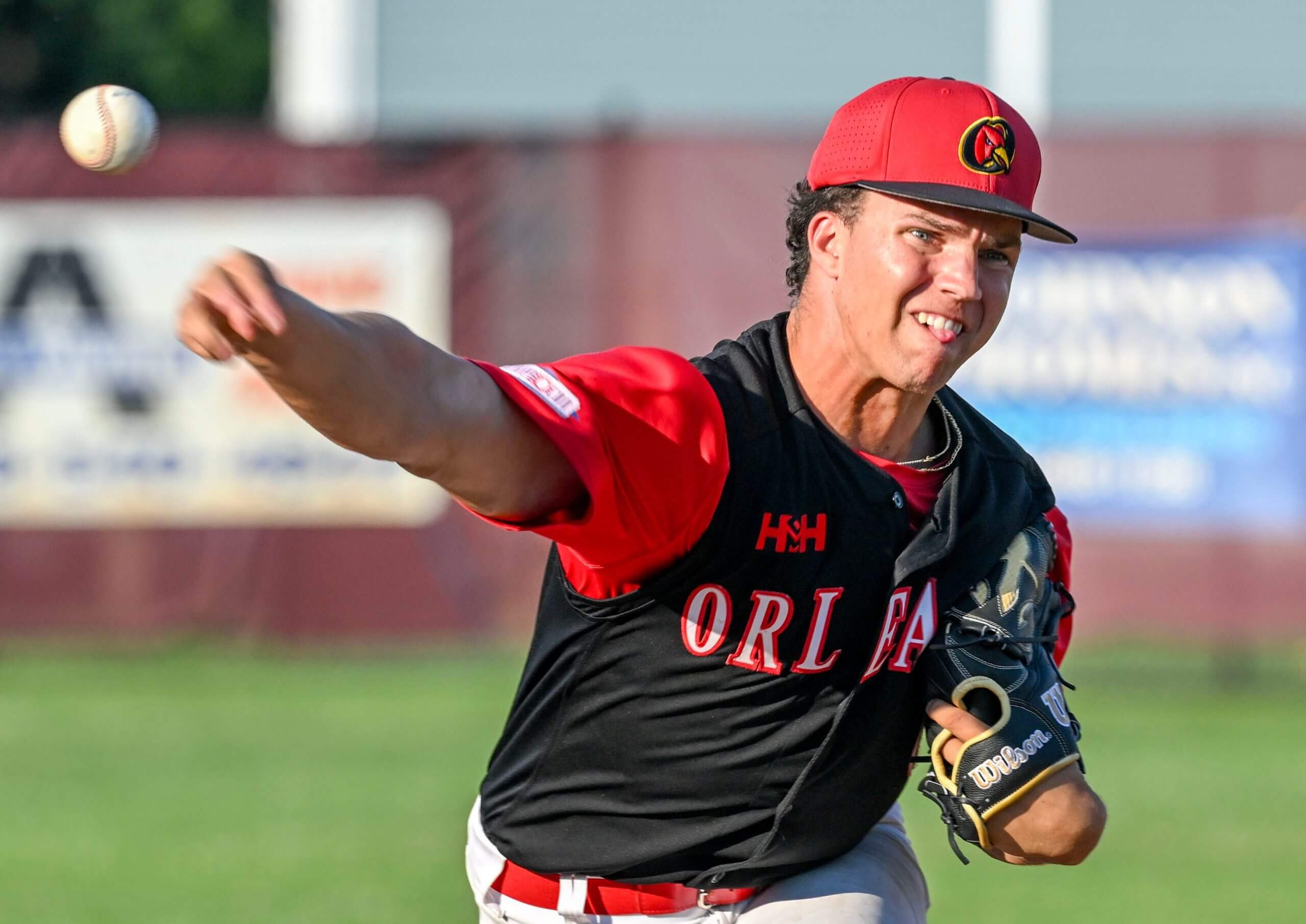
Bowker comes from a low three-quarters slot, working 92-95 with excellent ride on the pitch, and he has a 55 slider, enough to see a pretty good reliever floor here. He throws a cutter and changeup, both 45s, and probably should junk the cutter entirely as hitters have gotten to it — it’s one of the bigger reasons he’s allowed 12 homers in 62 innings this year. He hasn’t had a platoon split, however, and I’d start him for now and see if the changeup improves with usage enough to keep him in a rotation.
Scouting Report
Bats: L, Throws: R
West is a solid hitter for average and contact who’s already pretty filled out physically, enough to say he’s not going to stay at short for very long, with the arm for third base and possibly the speed for the outfield.
Position Player
High School
SS
Scouting Report
Bats: L, Throws: L
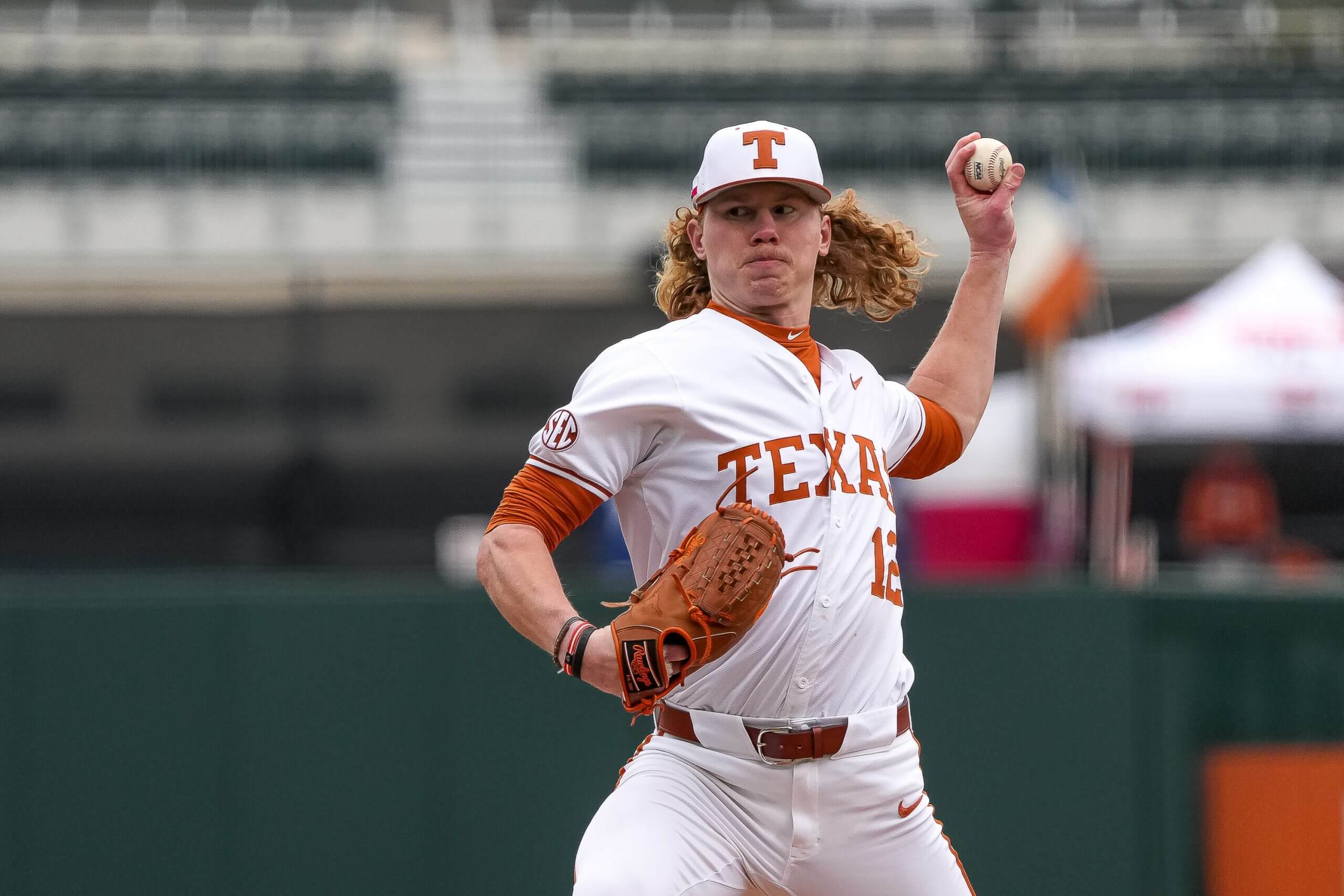
Spencer was 93-97 in the early going with a full pitch mix, including above-average pitches in his slider and changeup, but the Texas senior ended up having shoulder surgery in late April, ending his season and possibly pushing him into Day 2 of the draft. It’s not the cleanest delivery to begin with and he walked just over 10 percent of batters he faced before the injury, with maybe 45 command at best. If he comes back from the surgery, he could still be a back-end starter.
(Photo illustration: Will Tulos / The Athletic; photos: (from left to right) Seth Hernandez, Ethan Holliday, Gavin Kilen; Ric Tapia, Wesley Hitt / Getty Images; Steven Sisney / Imagn Images)