
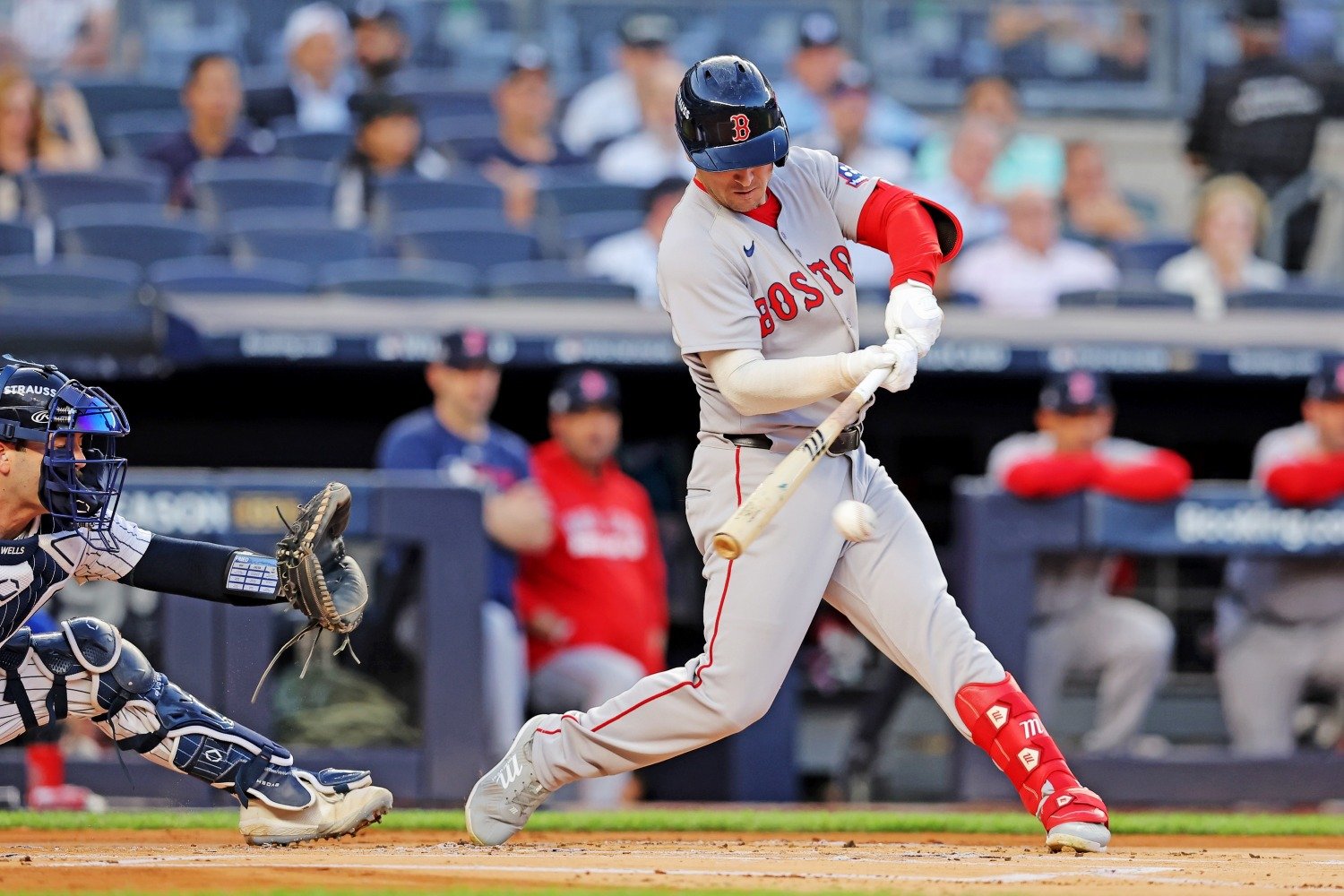
After an uneven rookie season, Matt Shaw has only a tenuous hold on the third-base job for the 2026 Chicago Cubs. Shaw comes with six more seasons of team control and will make a league-minimum salary for at least the next two years, and his defense improved by leaps and bounds over the course of 2025, but his bat is a shakier proposition.
Thus, as the team tries to upgrade its roster for next season, one free agent in whom they’ve taken a noteworthy interest is a player with whom they flirted last offseason, as his free agency stretched into late January and early February: Alex Bregman.
Sources with knowledge of the team’s thinking confirmed to North Side Baseball what Sahadev Sharma and Patrick Mooney reported at The Athletic. The Cubs are considering a version of their offseason where Bregman is the headline signee, which might mean trading Shaw (or other young hitters) to address their remaining need for a top-tier starting pitcher. However, they haven’t yet made more than cursory contact with agent Scott Boras about signing Bregman.
It should stay that way. Here, in a nutshell, is why.
Last winter, the opportunity to sign Bregman as a free agent was rightfully tantalizing. He cost the Red Sox a draft pick and some international spending capacity, because he’d rejected a qualifying offer from the Astros, but he signed a short-term deal and was always likely to opt out of it after 2025. Now, however, he’s shopping for a truer long-term home. That doesn’t make sense for the Cubs at the price Bregman is likely to command, because his power is probably fading in an irreversible way.
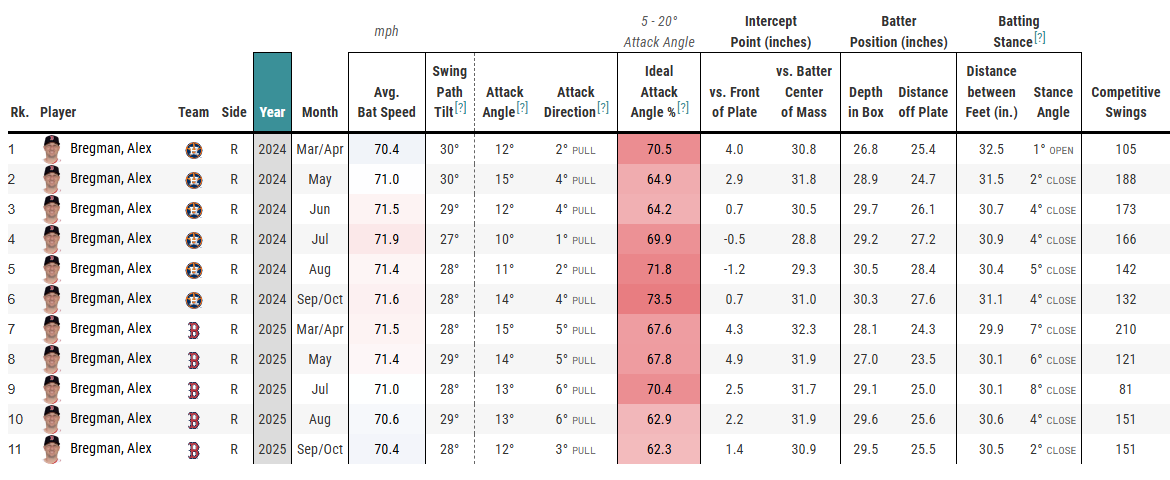
Bregman consistently swung the bat around 71.5 miles per hour in 2024, even in a season when his power production sagged. In 2025, he started at roughly the same level, but it was considerably slower after he missed considerable time with a strained quad.
It’s possible that his true-talent swing speed didn’t diminish much within the season, but it’s highly likely that it’s about to. Bregman will turn 32 years old just after Opening Day. As that chart from Tom Tango showed, at 32, hitters start losing bat speed at an accelerating rate. We’re unlikely to see the former All-Star get back the bat speed he lost, even if he only lost it because of an injury from which he’s now fully recovered.
If Bregman swung the bat as fast as Kyle Schwarber or Pete Alonso, that wouldn’t be so bad. Those sluggers are over-30 free agents this winter, but are in line for big deals because they have power that should remain well above average for the next few years. That just isn’t true of Bregman.
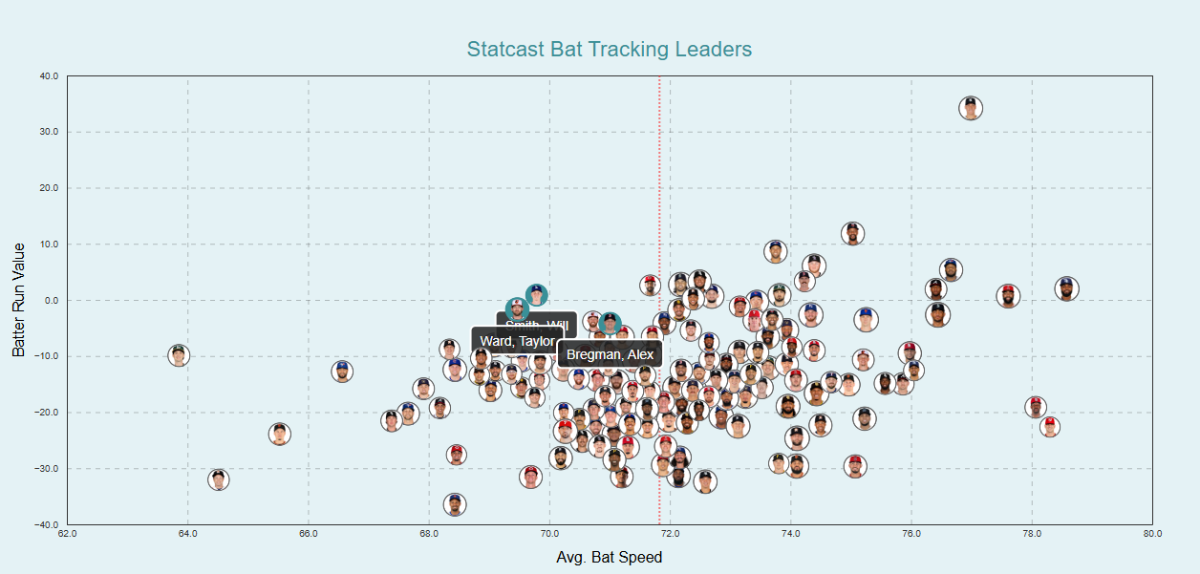
Based on the aging curve for bat speed, only two right-handed batters showed the ability to generate big power while swinging as slowly as Bregman is likely to swing in 2026: the Dodgers’ Will Smith and new Orioles outfielder Taylor Ward. Baltimore traded a high-upside starter for Ward earlier this offseason, in Grayson Rodriguez, but that’s because Rodriguez is a major, perennial injury risk—and because they only need to worry about Ward for one year, before he’ll hit free agency. Expect Ward’s market to be surprisingly cold next winter, because he’ll be a power-oriented righty hitter with a slow swing, heading toward his mid-30s.
That’s what Bregman is right now. He made a world of sense on a short-term deal, but a source close to the longtime Astro said he’s looking for a five-year contract this time around. He might have to settle for a four-year pact, but even that would likely pan out badly. He’s not a power-only player, in that he makes contact at a very high rate and draws walks well, but Bregman is too small to project to hold onto his bat speed unusually well; too slow to hold onto much value on the bases, or to augment the upside of a balls-in-play, high-average profile for the medium-term future; and too weak-armed to stay at third base all the way through even a four-year engagement.
If his market doesn’t go where Bregman hopes, and he’s available for under $100 million on a four-year deal, he fits the Cubs’ needs. That would leave money free to bolster the rotation and the bullpen, while rounding out the lineup nicely. Certainly, if he ends up being open to another one-year deal, the Cubs should be willing to throw big money at him.
If, however, he commands an annual average value over $30 million on a deal of three years or longer, the Cubs should stay away. He didn’t go over a cliff in 2025 with the Red Sox, thanks to adjustments focused on pulling the ball in the air and banging balls off the Green Monster at Fenway Park. He might very well start a steep decline in 2026, though, and Wrigley Field doesn’t offer the cushion against that kind of trouble that Fenway or Houston’s Daikin Park do.
The Cubs are unlikely to be as good in 2026 as they were in 2025. Bregman is the kind of player who could change that, but the type of deal he appears to want wouldn’t allow them to do the other things they need to do to justify it. If Chicago wants a big bat in this free-agent market, they would be better off shelling out bigger bucks for Alonso or Bo Bichette. They would be even wiser to roll the dice and sign Kazuma Okamoto, out of NPB, instead—and to spend the attendant savings on a more robust upgrade of their pitching staff. Bregman was a perfect fit last year, and Jed Hoyer should have done more to bring him in. That golden opportunity has passed, and the Cubs should move on, rather than making a big-money mistake on a player heading into his twilight.