
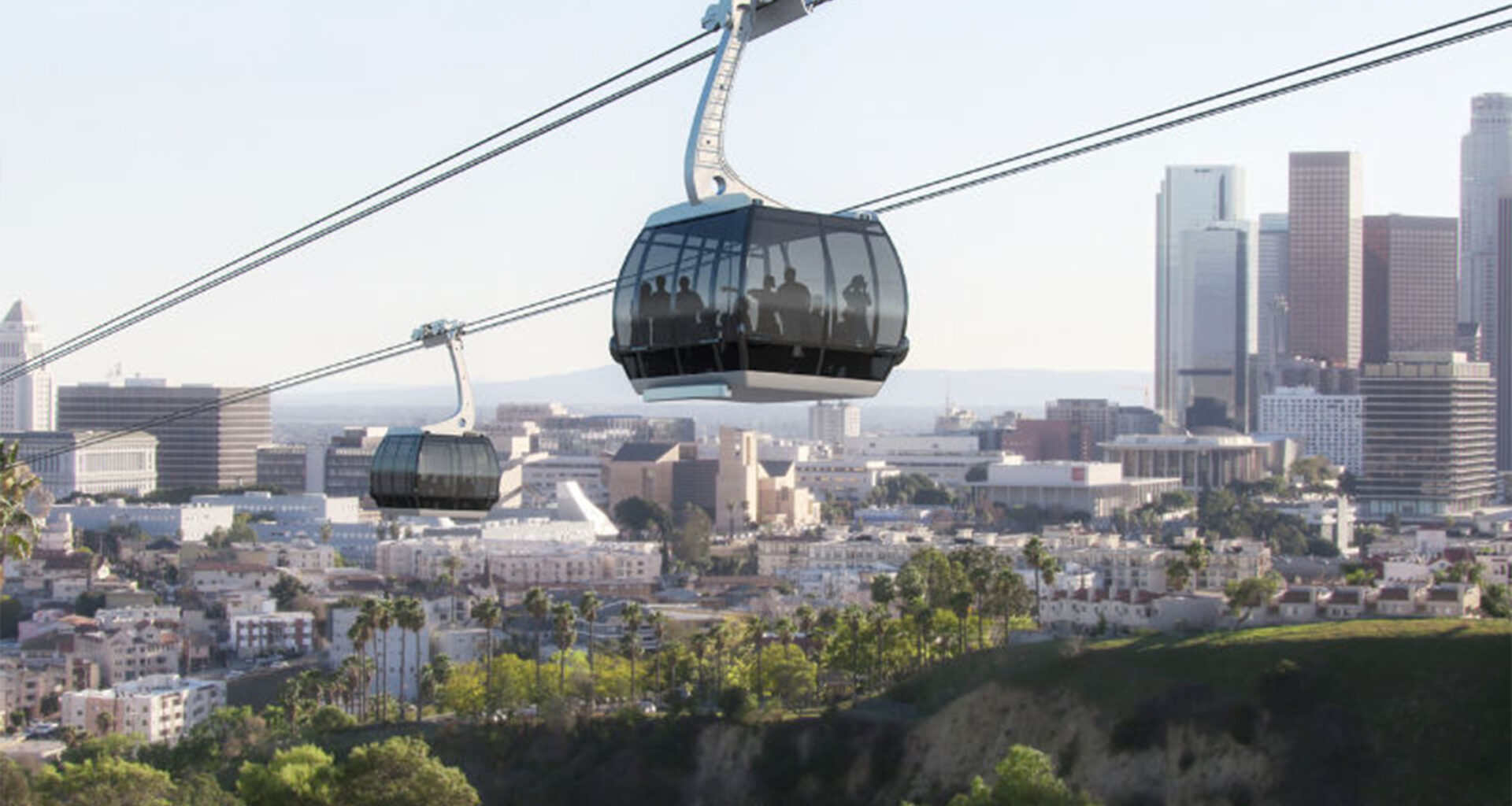
Metro is expected to approve the new environment report, allowing the project to move forward.
The Metro Board of Directors is expected to re-certify a court-ordered environmental impact report Thursday morning for a proposed gondola project, connecting Union Station and Dodger Stadium.
The $500 million gondola was proposed in 2014 by Frank McCourt, former Dodgers owner and current part-time owner of the Dodger Stadium parking lot.
If the board decides to finalize and recertify a report breaking down the impact on the environment for the project, it would allow the project to move forward with the approval process from the city and state.
The gondola system is planned to run roughly 1.2 miles from Union Station to Dodger Stadium suspended more than 100 feet above Alameda Street. With a stop next to Metro’s Chinatown Station and Los Angeles State Historic Park, then going west above Bishops Road toward Dodger Stadium. The proposed system could ferry up to 5,000 passengers per hour in each direction, with an end-to-end trip time of approximately seven minutes.
Many critics are skeptical of the project, facing opposition from the Chinatown community and the Los Angeles City Council. Arguing that it would take away public land and would impact the people who live and work in the areas it operates in.
“The proposed gondola is not a public transportation project but rather a private tourist attraction that would benefit Frank McCourt and the entertainment complex he wants to build at Dodger Stadium,” according to a statement from Stop the Gondola.
Meanwhile, supporters say it would be good for the local economy and enhance L.A.’s public transportation system. The project is backed by groups like the Chinese American Museum, Coalition for Clean Air, Los Angeles and Orange County Building Trades Council, the Los Angeles County Business Federation and the Los Angeles Chamber of Commerce.
The project would operate with zero emissions and would be the first permanent mass transit connecting Dodger Stadium to the city’s broader transit system through Union Station.
Scroll to continue reading