

CLEVELAND, Ohio — You’re not a real Guardians fan if the gambling allegations against Emmanuel Clase didn’t make you immediately flash back to his 2024 postseason collapse and wonder — could the fix have been in for some of those pitches?
As early as 2023, Cleveland’s ace reliever was intentionally throwing bad pitches or slower than his top speed in exchange for cash from the gambling world, according to a federal indictment released last month in New York.
If convicted of the charges Clase denies, he could be sentenced to 65 years in prison.
The indictment cites specific pitches on specific days in 2023 and 2025 in which authorities said Clase threw first-pitch balls or slower on purpose. The people who knew, made about $450,000 on bets, the indictment says.
Prosecutors have made no such accusations involving the 2024 postseason.
But court filings typically lay out only the strongest examples. So it’s a fair question to ask: Could gambling ties have played any role in how the nearly unhittable Clase of the regular season unraveled so dramatically in the playoffs?
It’s likely that only Clase knows the real answer. But baseball — perhaps the most numbers-driven sport there is — let us dig into the data to discover that his postseason failure was not just a Yankees problem. Nor was it just the case of facing better hitters or late-season fatigue.
Using statistics from baseball-reference.com, cleveland.com and The Plain Dealer analyzed Clase’s performance and found that the pitcher faltered in ways the numbers alone can’t explain.
What happened?
Before we dive into the statistical details, here’s a recap of Clase’s 2024 epic postseason deterioration.
Perhaps the biggest moment came during Game 3 of the American League Championship Series against the Yankees — a series eventually won by New York, 4-1.
With the Guardians clinging to postseason life, Clase — their star closer — surrendered back-to-back home runs after yielding just two home runs during the entire regular season.
The first blast came on what by most accounts was a near-perfect pitch — a 99 mph cut fastball on the outside corner of the plate. Those who watched closely reasoned that it was a case of Aaron Judge — the American League’s eventual MVP — simply winning the battle against the league’s best closer.
“I think there’s one person that could hit that pitch off Emmanuel Clase out of the yard, and he did,” Cleveland manager Stephen Vogt said afterwards. “As a baseball fan, it was really cool. As the opposing manager, it was not.”
Then Giancarlo Stanton, normally not nearly the dangerous threat of Judge but a noted Guardians’ playoff foil, followed with a solo home run. He’s homered in eight of 12 postseason games against Cleveland.
Bad night on the big stage? Plausible. After all, it’s an unpredictable sport.
But for Clase, the postseason was a disaster.
He gave up only five earned runs throughout the entire regular season, but eight earned runs in just seven postseason appearances.
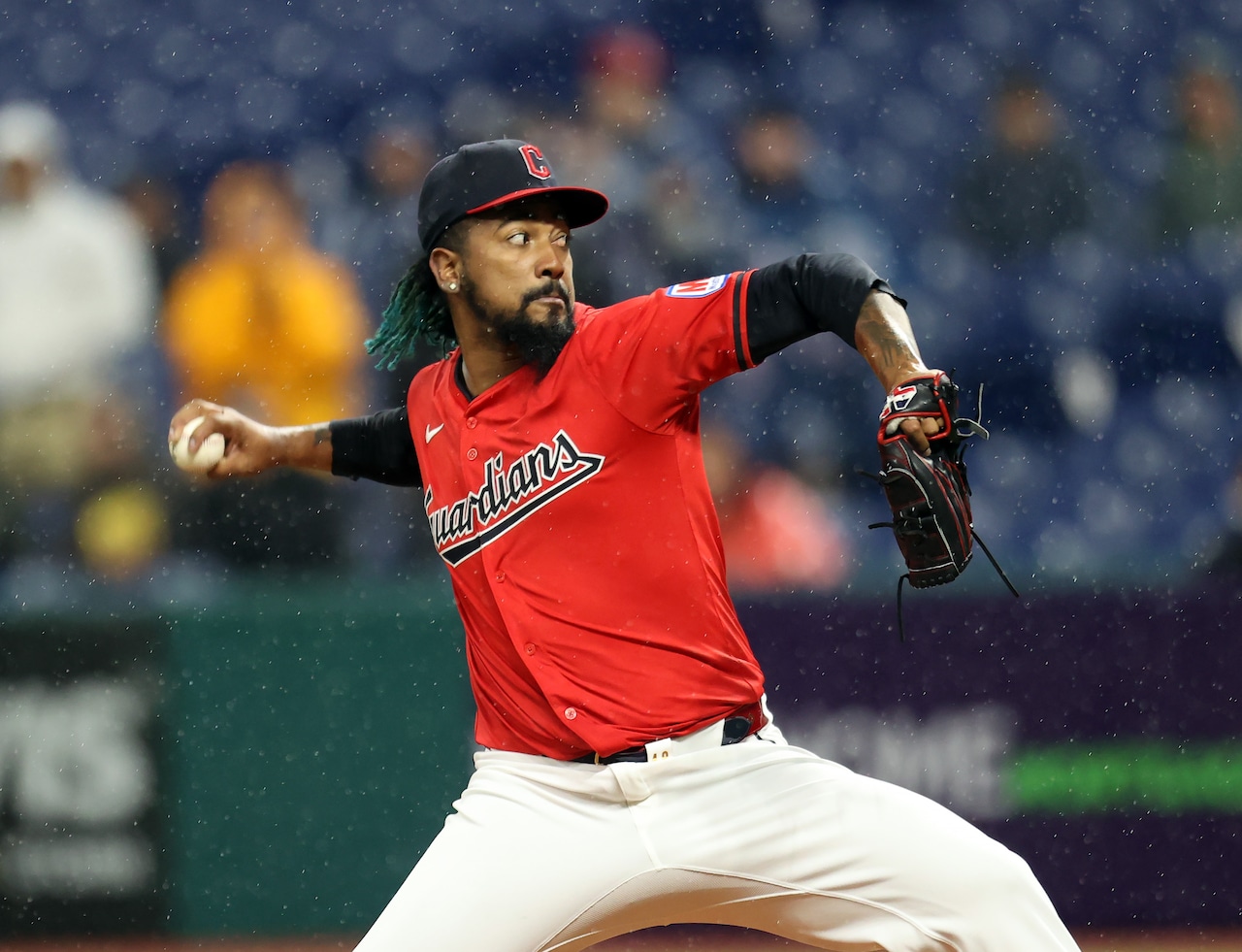 Cleveland Guardians relief pitcher Emmanuel Clase pitches against the Boston Red Sox during an early 2024 game. (File photo)Joshua Gunter, cleveland.comHow bad was his falloff?
Yes, the Yankees were the AL’s top scoring team, but Clase did dramatically worse against the Yankees in the postseason than he did in the regular season.
Since the sample size was small in facing the Yankees during the regular season, cleveland.com also looked at how he did against a grouping of the AL’s top-hitting teams. Again, Clase was way worse in the postseason.
Was he getting tired from an incredible 74 appearances during the regular season? He shouldn’t have been, since it was the fourth season in a row in which he appeared in 70-plus games.
And stronger to this point, Clase was lights out in September heading into the postseason, giving up no runs in his 11 appearances that month. There was no sign of the impending October doom. He was on a hot streak.
A batter-by-batter look at first pitches in September versus the postseason shows Clase got off to a nominally worse start on a per-batter basis in the playoffs. But then things went down from there.
The numbers — far beyond just his ERA — show that he was performing worse in the games that mattered most.
If Clase was “tipping” pitches — meaning that he had developed a habit that gave hitters clues on what pitch was to come — that raises two questions. First, how did opposing teams spot it when the Guardians didn’t? And second, is it possible he was tipping pitches intentionally?
Here’s what cleveland.com came up with, strictly from the data:
Regular season vs. postseason
Clase’s ERA — earned runs allowed per nine innings pitched — skyrocketed from 0.61 during the regular season to 9.00 during seven postseason games, in facing the Detroit Tigers and the Yankees. But his drop in performance extended well beyond that top-level statistic.
The number of walks and hits per inning more than doubled. And after giving up only two home runs during 74-plus regular season innings pitched, he allowed three homers in eight postseason innings.
However, there was little change in the number of strikes thrown — 71% in the regular season and 76% in the postseason.
A Yankee or Tiger issue?
The Yankees were the top-scoring team in the American League during the regular season and first in home runs.
Detroit, however, had been mediocre — ninth among the 15 AL teams for runs and 12th for home runs.
Clase underperformed by his standards against both in the postseason.
Against the Yankees, it was particularly bad. Clase’s ERA went up five-fold against the Yankees from 3.00 in the regular season to 15.45 in the postseason. The rate of hits and walks allowed per inning nearly tripled. And the only home runs he gave up to the Yankees were those two in the postseason.
Versus the Tigers, Clase did not permit a run in six regular season games. But he gave up four runs in four postseason appearances, mainly due to a three-run, four-hit inning in a loss to the Tigers in Game 2.
Problems against top-hitting teams?
What if we widened the comparison to include more of the league’s top-hitting teams, to get a better sense of how he performed against elite offenses during the regular season?
For that, we looked at Clase’s performance against the four top run-scoring AL teams in 2024 — the Baltimore Orioles, Boston Red Sox, Minnesota Twins and Yankees.
During the regular season, there wasn’t much difference.
He gave up one earned run in 18 innings for a 0.49 ERA against these teams. Against all others, his ERA was 0.64.
Yet, against the Yankees in the postseason, that jumped to 15.43.
And consider this: he gave up only seven hits over 18 innings against these teams in the regular season, but eight hits in two and one-third innings against the Yankees in the playoffs.
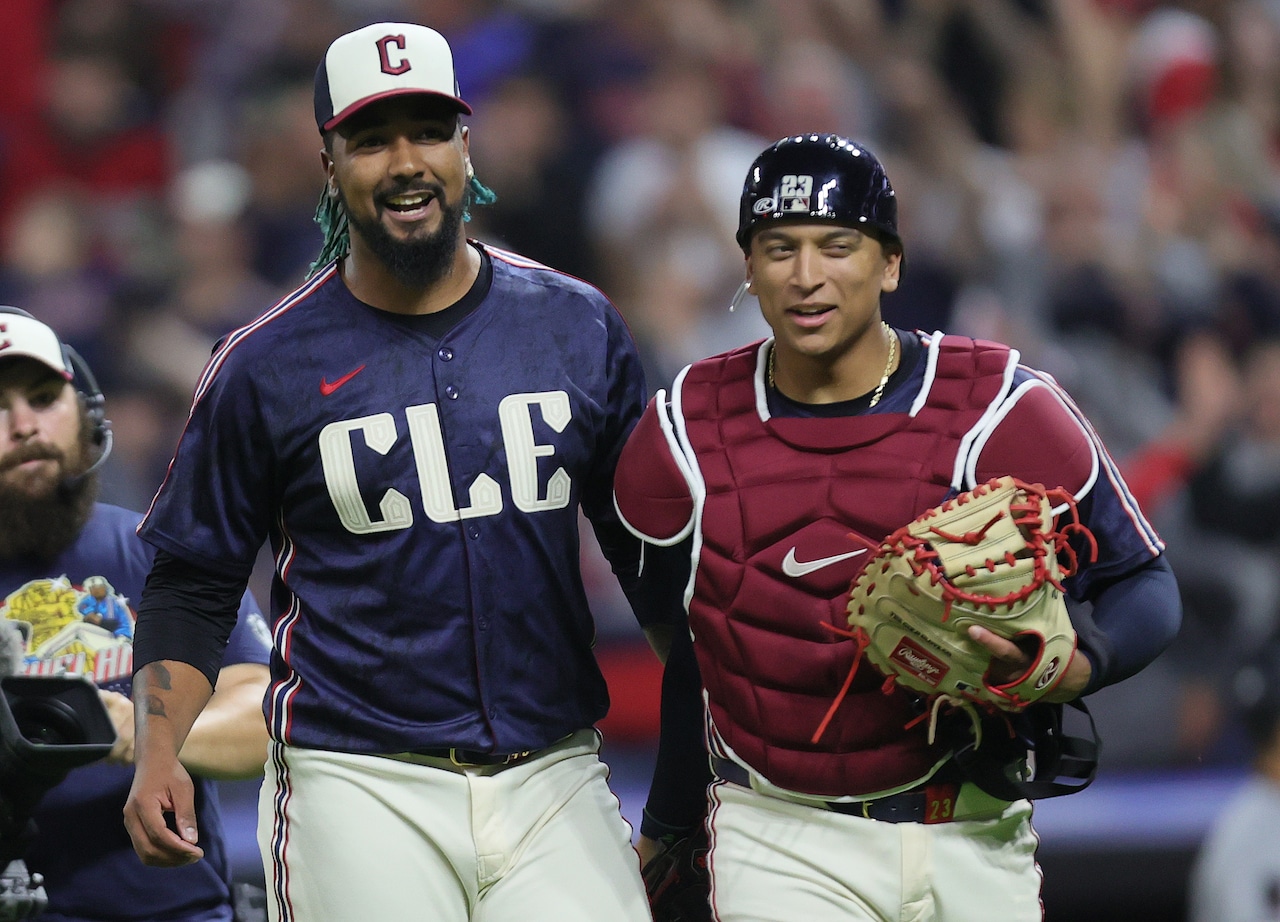 Cleveland Guardians relief pitcher Emmanuel Clase left, and catcher Bo Naylor celebrate after a 2024 win over the Minnesota Twins. (File photo)John Kuntz, cleveland.comA case of fatigue?
So, was Clase tailing off, headed into the playoffs? The stats say no — emphatically.
His ERA from March through August (a spectacular 0.71) dipped to zero for the month of September. The last run he allowed came on Aug. 30.
The number of hits he allowed per inning dropped by a third in September. And he threw strikes more often in the final month of the regular season (74%) than during the first five months (71%).
Additionally, the 74 appearances during 2024 was a normal workload for Clase — having appeared in 75, 77 and 71 games the previous three seasons.
No warning signs pointed to the postseason disaster ahead.
Getting behind in the count?
Because Clase is accused of intentionally throwing balls on some first pitches — and because getting ahead in the count is critical in baseball — we examined his first-pitch results from the final month of the regular season and from the postseason.
Dismissing one intentional walk, this covered facing 37 batters in each time period.
Although there was nominal difference in the number of first-pitch balls and strikes, there was a big difference in the results that followed.
First-pitch balls increased from nine-of-37 during September to 11-of-37 in the postseason, while first-pitch strikes fell from 24 to 20.
Called first strikes actually increased from 11 to 13, while swinging first strikes dropped from six to two and foul balls dropped from seven to five.
During September, when the count started off with a called ball, Clase recovered nicely, allowing just one hit (a single) and two walks in facing nine batters.
But in the postseason, after 1-0 counts, Clase allowed five hits (including a double and a home run) in 11 plate appearances.
What does all this mean?
Baseball has long trusted that its biggest moments hinge on talent, execution and luck.
Clase’s court case introduces a new, more unsettling variable. For now, the numbers point only to a collapse that defied nearly every trend line.
Whether they eventually point to something else is a question left hanging in the air, like a fluttering knuckleball.
Cleveland.com sportswriters Paul Hoynes and Joe Noga contributed to this story.