
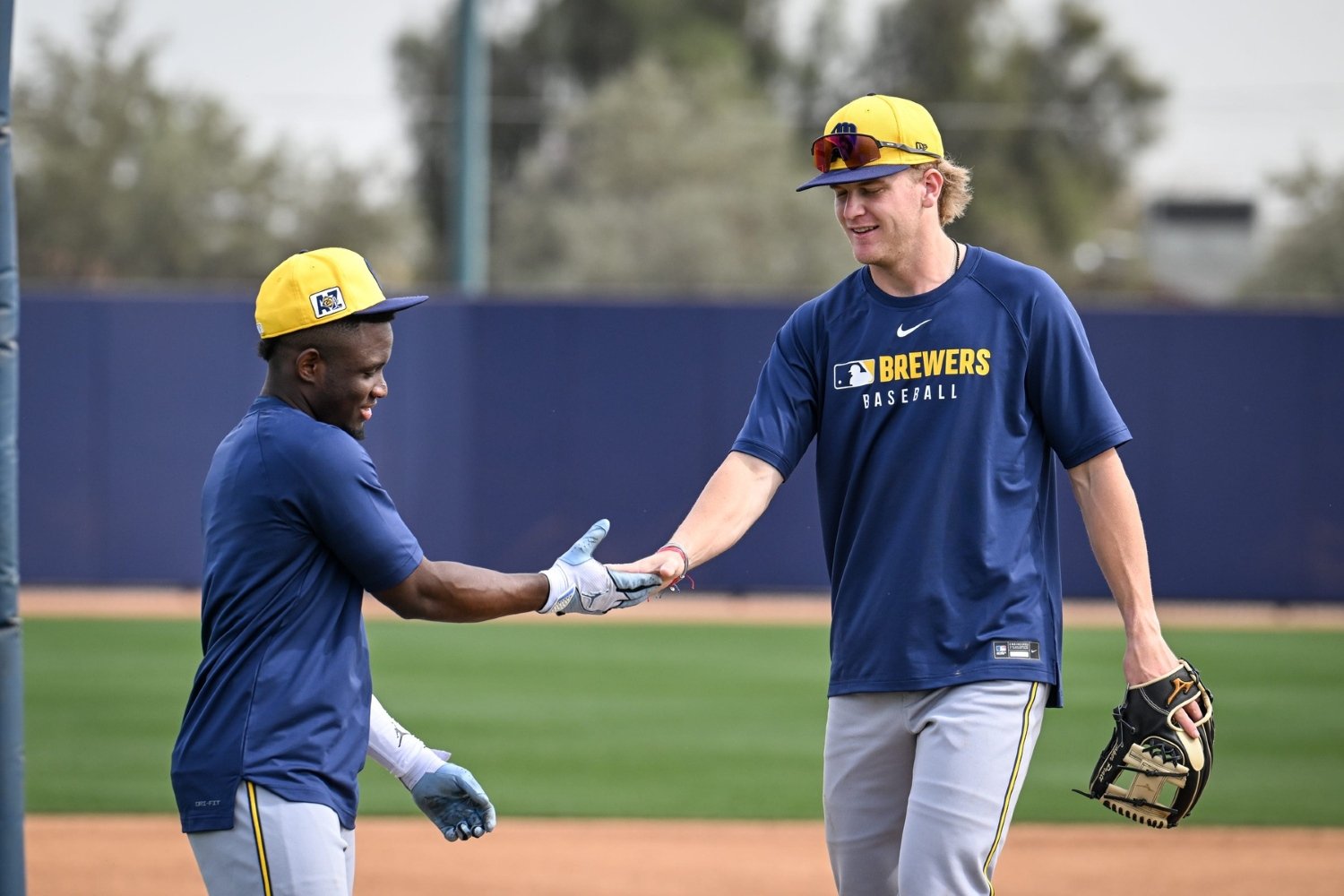
In 2023, the Brewers made a significant change in how they approached the MLB Draft. They selected a large number of high-school players and were able to sign many of them to overslot bonuses, stocking the lower levels of their minor leagues with raw talent and potential. They’ve cleaved to that strategy ever since, and the results look very promising. One of the biggest wins thus far was selecting Cooper Pratt in the sixth round of that 2023 draft, paying him second-round money and watching him jump onto industry-wide top-100 prospect lists after his first full season.
Pratt is a standout defensive shortstop with a strong and accurate arm. He won the Minor League Gold Glove Award at shortstop in 2024 and remained stout there in 2025. At 6-foot-3, Pratt moves well. He has the range to make all the necessary plays and the arm to be a regular shortstop at the highest level. Pratt is also savvy on the basepaths, stealing 31 bases this season with an 86% success rate. At the plate, Pratt makes contact at an above-average rate, but he hasn’t consistently hit the ball with authority and has struggled against premium velocity. As a 20-year-old promoted to Double A, Pratt saw his numbers slip from .277/.362/.406 to .238/.343/.348.
Last winter, as an ascending up-the-middle prospect, Pratt might have been a major piece in a trade for Kyle Tucker or Garret Crochet. Keith Law, for example, ranked Pratt 44th last offseason, while he ranked Kyle Teel 37th and Braden Montgomery 38th. They became the two main prospects the White Sox received for Crochet. Cam Smith ranked 43rd and was the prospect headliner in the Tucker trade. Could the Brewers have sold high on Pratt last offseason and added a key contributor to what ended up being a 97-win team? It’s not that simple—Crochet, clearly, would have cost at least two of Pratt, while the Tucker deal also involved a valuable big-leaguer going from Chicago to Houston. Still, that’s the caliber of prospect he was heading into his second full season as a professional.
This winter, Pratt’s stock will likely be down, FanGraphs published their Brewers 2026 prospect list, with Pratt moving from third in the organization (with a 50 overall grade) to eighth (with a 45 grade). Pratt is still very young and has plenty of time to grow into more power and make adjustments, but if this lower assessment is the industry consensus, then in the short term, he is likely to drop from top-100 lists and may have lost some trade value.
Long-term, the question appears to be whether becoming a solid everyday shortstop is now Pratt’s ceiling, instead of something more like his floor. It’s worth noting, though, that while FanGraphs has soured on him, both Baseball America and Baseball Prospectus ranked him third in the Brewers system again this fall, and each has the same grade (55, with a High risk grade) on him that they had last year. The tools haven’t collapsed or anything, and he held his own at age 20 in the upper minors. There’s cause for some concern, but not yet any call for panic.
Jesús Made has unequivocally overtaken Pratt as the Brewers’ shortstop of the future, and should begin 2026 at Double-A Biloxi. The team can continue to develop Pratt at Triple-A Nashville, where he will be one of the youngest regulars—or they can trade him now, hedging their bet that he becomes a star and taking the buyout on their winning draft wager.
What do you think? Should the Brewers cash in on Pratt this winter, or will he grow into his 2024 promise and become an upper-tier big-league shortstop?
Interested in learning more about the Milwaukee Brewers’ top prospects? Check out our comprehensive top prospects list that includes up-to-date stats, articles and videos about every prospect, scouting reports, and more!