
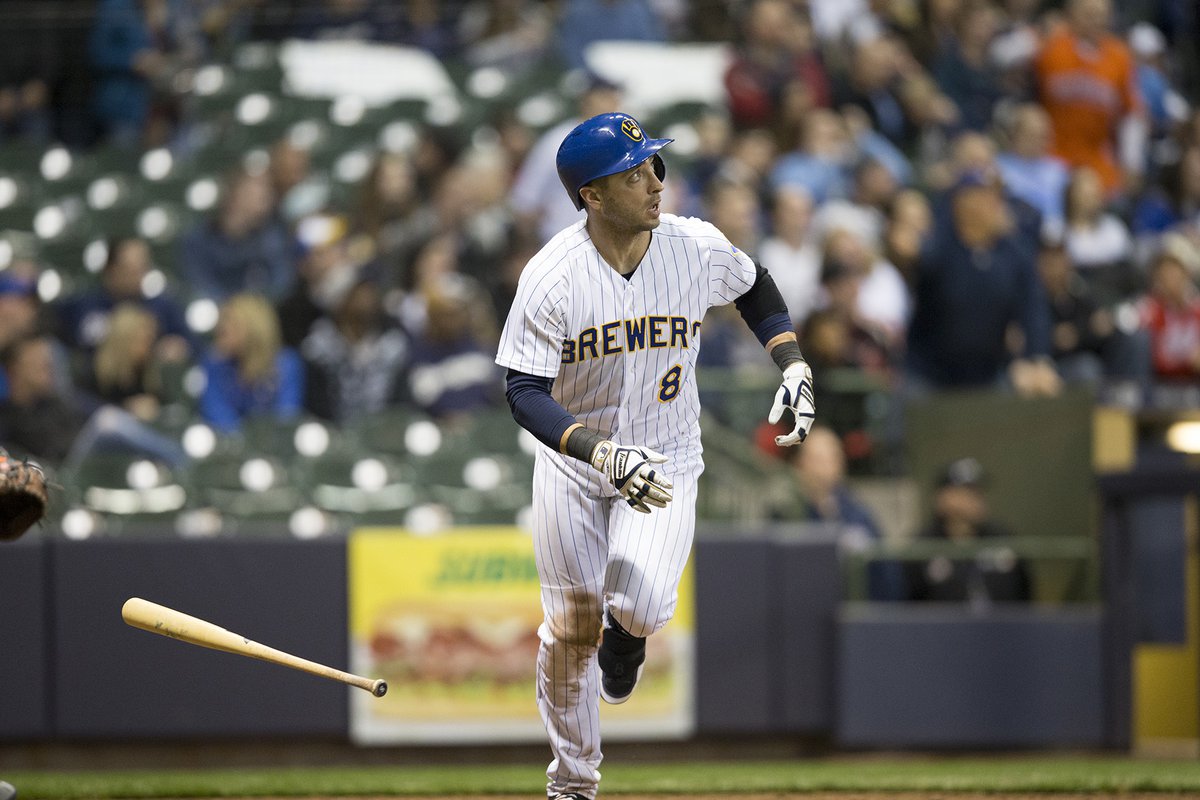
The 2026 MLB Hall of Fame ballot is out and once again this season there are three former Brewers among those up for consideration, although one name stands out from the others in Milwaukee history.
This year 27 recently retired players will appear on the BBWAA’s (Baseball Writers’ Association of America) ballot, up slightly from 26 last year but down from as many as 30 in 2022. This year’s list includes 15 players who received at least 5% of the vote on last year’s ballot and 12 players who made their final professional appearances in 2020 and are eligible for the first time. For the first time in a decade the list will not include Gary Sheffield, who exhausted his BBWAA eligibility last season but is now up for consideration by the Hall’s Contemporary Baseball Era Committee.
As we noted in the fall of 2023, the Hall’s screening committee has raised the bar for which players get to appear on a BBWAA ballot in recent years. Among others, players like Carlos Gomez and Yovani Gallardo would have seemed likely to appear on a HoF ballot in previous years but were left off last year and two years ago, respectively. This year the list of players who met minimum eligibility requirements but didn’t clear the screening committee’s standards were 2017 Brewer, Pirates Silver Slugger Award winner and 20 WAR middle infielder Neil Walker, two-time MLB home run champ Chris Davis, two-time All Star middle infielder Jason Kipnis, 2014 Cubs All Star pitcher Jeff Samardzija and four-time All Star and one-time consensus #1 prospect Matt Wieters. Other former Brewers left off the ballot include 2018 All Star Jeremy Jeffress, 2017 Brewer Jared Hughes (one of 40 players in MLB history with 500+ relief appearances and an ERA under 3), 2018 Brewer Erik Kratz and 2020 Brewers Logan Morrison and Justin Smoak.
 Stay on top of the news of the day
Subscribe to our free, daily e-newsletter to get Milwaukee’s latest local news, restaurants, music, arts and entertainment and events delivered right to your inbox every weekday, plus a bonus Week in Review email on Saturdays.
Even without all those players on the ballot, however, there are still three former Brewers among the candidates on the ballot this season.
Francisco Rodriguez
First, we have the lone holdover. Francisco Rodriguez is in his fourth season on the ballot and received 10.2% of the vote last year, up from 7.8% two years ago but still far shy of the 75% required for induction. On the field his credentials are clear: Rodriguez has the sixth-most saves in MLB history, led his league in that category three times and set the then-MLB record with 62 of them in 2008. He was a six-time All Star, two-time winner of the Rolaids Relief Award (the Reliever of the Year Award didn’t exist yet during his tenure) and by Win Probability Added he made his teams 24.5 wins better across his career, 11th most of any reliever in MLB history. His numbers are comparable or better in nearly every category than Billy Wagner, who was inducted last year.
The biggest differences between Wagner and Rodriguez appear to be off or away from the field. Wagner got a boost from being a “great story:” Much has been written about his childhood in poverty and his learning to throw left-handed after breaking his right arm. Less has been written/known about Rodriguez’s childhood or upbringing in Venezuela. Meanwhile, Rodriguez also has multiple credible domestic violence accusations on his record, a deal-breaker for many voters. Rodriguez was, quite clearly, one of the best relief pitchers of his or any era. He’s also unlikely to get significantly more votes this year than he has in any of the last three years.
Gio Gonzalez
A first round pick in the 2004 draft and a mainstay in MLB starting rotations for most of a decade, Gio Gonzalez is a prime example of how hard it is to stay relevant in MLB long enough to reach the game’s upper pantheon in the current era. Gonzalez was a full-time starter in the majors by the end of the 2009 season, when he was still only 23 years old, and from 2010 through 2018 he averaged almost three and a half wins of value per season for his teams. He was a two-time All Star who received Cy Young votes in 2012, when he led the majors in strikeouts per nine innings and only allowed nine home runs all season.
In past eras a pitcher who debuted in the majors in his early 20’s might have had 20 years to rack up a Hall of Fame case, but Gonzalez was already basically done as a full-time starting pitcher when he joined the Brewers as a 32-year-old in 2018. He’s still only 40 years old but has already been out of baseball for the requisite five years to be on a Hall of Fame ballot. By Baseball Reference’s version of Wins Above Replacement Gonzalez was the 13th best pitcher of the 2010s, but he’s unlikely to receive serious Hall of Fame consideration and this will likely be his only season on the ballot.
Ryan Braun
Braun is inarguably one of the greatest Brewers of all time, but his life in the game is a story of before and after. From his MLB debut in 2007 to the end of his age 28 season in 2012 Braun was a career .313/.374/.568 hitter and one of the game’s brightest stars. He was an All Star and Silver Slugger in each of his first five full seasons in the majors, won a Rookie of the Year and an MVP Award and led the Brewers to their first two postseason appearances since 1982.
Keep the Shepherd Free
Support Milwaukee’s locally owned free weekly magazine.
In December of 2011, however, news outlets reported that Braun had tested positive for performance enhancing drugs. Braun successfully appealed the suspension, held a press conference announcing his innocence that would go on to live in infamy, then eventually admitted to the charges and faced a suspension for much of the 2013 season. From 2007 to 2012 Braun averaged 5.5 Baseball Reference WAR per season across six years. From 2013-20 he averaged just 1.8 and made just one more All Star appearance.
Braun was, of course, not the only MLB star to face discipline for PED use or the only star to burn bright in his 20’s and see his production taper off early during his era. The way Braun conducted himself during that time, however, soured many fans and pundits’ opinions of him and will likely be reflected in his Hall of Fame vote totals.
Since the year 2000 Braun is 29th among all players with 352 home runs, 38th with 1000 runs, 40th with 47.2 Baseball Reference WAR and 42nd with 1963 hits. Those numbers weren’t likely to get him into the Hall of Fame, but they might have been enough to get him several appearances on the ballot and for a generation of voters to really consider his case. Given his PED suspension and the perception of how he handled it, however, many of the voters who could have considered him might instead see one final opportunity to knock him off of next year’s ballot and punish him one last time.