
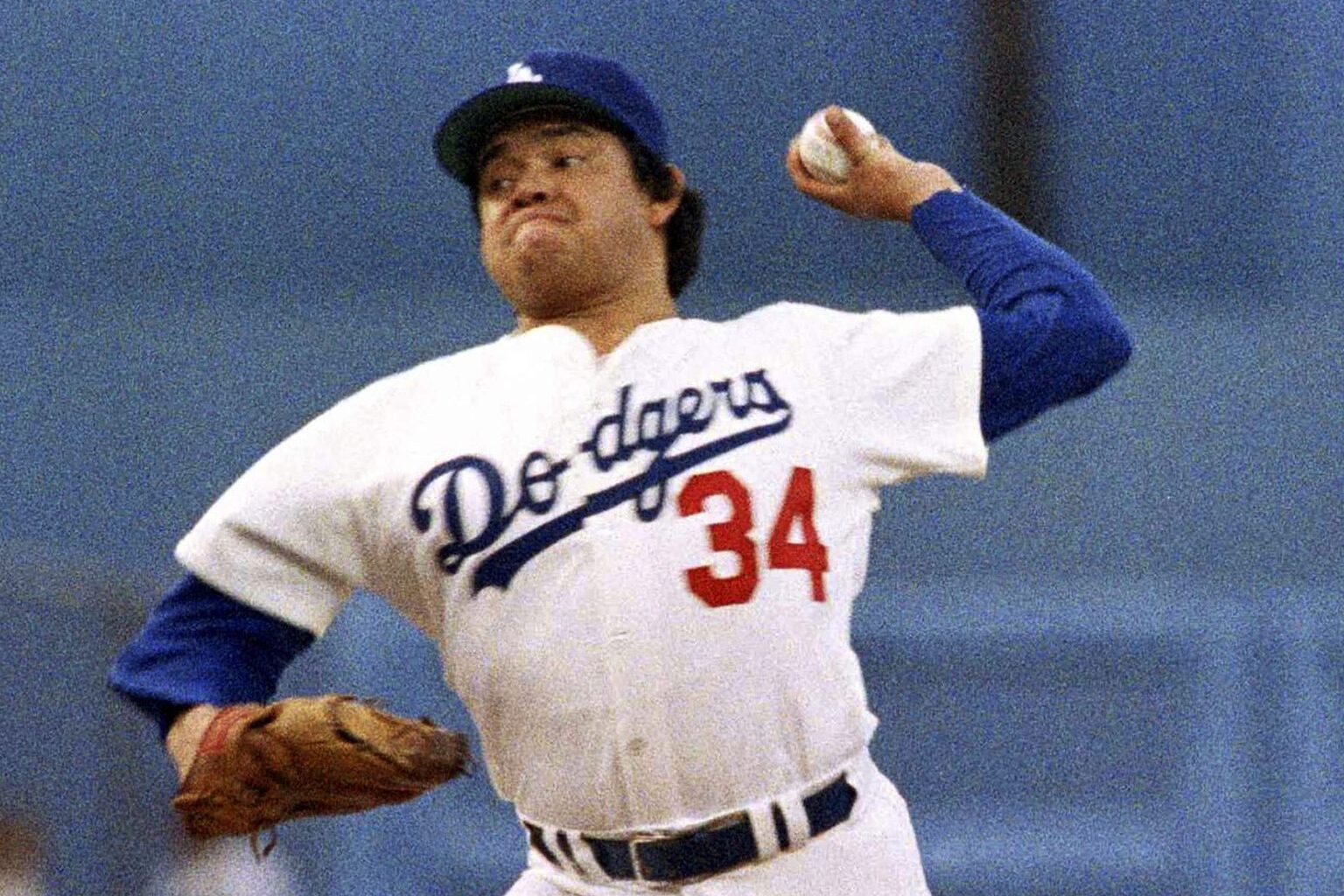
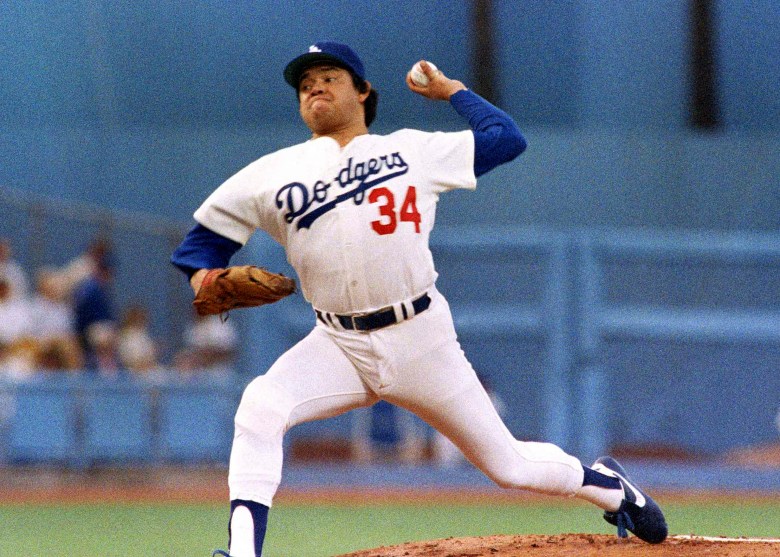
 FILE – Los Angeles Dodgers pitcher Fernando Valenzuela prepares to release the ball in the first inning of the opening game of the National League Championship series against the St. Louis Cardinals, Oct. 9, 1985, in Los Angeles. The Dodgers will retire the No. 34 jersey of Valenzuela during a three-day celebration this summer. (AP Photo/Lennox McLendon, File)
The most recent attempt to induct legendary player Fernando Valenzuela into the Baseball Hall of Fame (HOF) was unsuccessful yet again, prompting criticism of the Contemporary Baseball Era Committee.
The late Dodgers pitching star, who was born in Mexico, received fewer than five votes from the 16-member committee. This committee included seven Hall of Famers, six baseball executives – including Los Angeles Angels owner Artie Moreno and former Dodgers assistant general manager Kim Ng – and three veteran media members or historians.
Candidates need 12 votes – 75% of the committee – to be inducted.

Baseball experts and enthusiasts reacted to the committee’s decision by some highlighting Valenzuela’s cultural impact and history-making achievements, while others argued that “El Toro” simply lacked the statistics to justify induction into the Baseball Hall of Fame.
“Fernando Valenzuela was snubbed by the Baseball Hall of Fame,” said Tomas Benitez, a historian of baseball’s legacy in the Latino community. “They were wrong.” Benitez serves as an advisor for the Latino Baseball History Project, which produced a series of books that document the community’s longtime participation in the game.
Valenzuela made history during the 1981 season, winning both the Rookie of the Year and Cy Young Award. He led the Los Angeles Dodgers to two World Series titles and was selected to the All-Star Game six times.
When Valenzuela threw a no-hitter on June 28, 1990, against the St. Louis Cardinals, he continued to bring large numbers of Mexican Americans to fill the stadium seats.
That was a tremendous feat as Dodger Stadium was a source of pain for the community because Mexican American families in the 1950s were forcibly removed from their homes to make way for its construction. Displaced families never received the rightful compensation they were promised.
Like a family member, the community referred to him by his first name and “Fernando’s” success felt like their success. While the stadium’s history to this day is not forgotten, his presence somewhat eased the pain.
“Fernandomania” turned the stadium into a vibrant hub for Latino fans, bringing new demographics to baseball and creating an enduring cultural phenomenon that united LA, leading to sold-out games, record attendance and a lasting legacy of community connection and loyalty that continues today, prompting the Dodgers to retire his number 34 jersey.
“Fernando changed the way the nation and the world enjoys the game,” said Benitez. “He gave his own community and nation a place in the game that cannot be ever erased, will never be duplicated.”
Benitez also expressed criticism towards the Contemporary Baseball Era Committee for overlooking Valenzuela. “They do not understand us, and, honestly, they never have,” he said. “My mother always said that we need to know more about them than they need to know about us. I reflect on what she said, and it resonates with me.”
On the other hand, Joseph L. Price, director of the Institute for Baseball Studies at Whittier College, said Valenzuela’s career statistics “do not compare favorably with other HOF pitchers, nor with others neglected by Cooperstown, like former Dodger Tommy John,” referring to Cooperstown, the village in New York, home of the National Baseball Hall of Fame and Museum.
“To qualify for the Hall of Fame, a player must compile a stellar record over an extended career of at least 10 years,” Price continued. “In his first full season in the Majors, Fernando Valenzuela excelled, winning [the National League] Rookie of the Year and Cy Young Award, and for the next five years, he performed as an All-Star.”
Price added that while Valenzuela was a “solid starting pitcher” during the rest of his 17-year career, he never regained the exceptional form he displayed in his early years. “Unquestionably, he was and is a fan favorite, and he ignited the fire of Latinos’ passion for the Dodgers,” Price said.
“To use an analogy from the film industry, Fernando would certainly win the People’s Choice Award, but he would not receive an Oscar,” Price concluded.
In 2006, Valenzuela was inducted into the Shrine of the Eternals by the Baseball Reliquary, a nonprofit organization dedicated to promoting the appreciation of American art and culture through the lens of baseball history. The reliquary is located at Whittier College’s Institute for Baseball Studies and is directed by Price.
Unlike the National Baseball Hall of Fame, the Shrine of the Eternals prioritizes philosophical criteria over statistical accomplishments for election, as stated on its website.
Albert “Lefty” Olguin, a retired athletic director and professor in the California Community College system, said that induction into the Hall of Fame should not be based solely on statistics and longevity.
“Fernando Valenzuela had an incredible career that not only made waves in Dodger history but also significantly impacted an entire culture. The pride we felt for Fernando energized the Hispanic community,” said Olguin, who was an All-City pitcher at San Pedro High and later coached at LA Harbor College and Cal State Dominguez Hills. “He [Valenzuela] was an icon, and he is still recognized as such.”
Olguin added, “He [Valenzuela] is Hall of Fame worthy, and anybody who knows baseball understands how big Fernandomania was.” Olguin contributed to the book, “Mexican American Baseball in the South Bay.”
For reporter Manny Randhawa of MLB.com, Valenzuela belongs in the Hall of Fame because he is a Dodgers legend and a cultural icon who impacted the game like few others. “There have been 147 Mexican-born players in MLB history,” he stated in a Nov. 24 article advocating for “El Toro.”
“The greatest among them was the legendary Fernando Valenzuela, who became an instant sensation with the Dodgers in the early 1980s and the only pitcher in Major League history to win both a Rookie of the Year Award and a Cy Young Award in the same year.”
Randhawa also made the case that Valenzuela’s stats are comparable to those of two other Hall of Fame pitchers, Jack Morris of the Detroit Tigers and Catfish Hunter of the Oakland Athletics and the New York Yankees. The journalist also highlighted other accomplishments of Valenzuela, saying, “Valenzuela even finished fifth in NL MVP voting and won a Silver Slugger Award.”
For his part, Ron Gonzales, a retired journalist and contributor to the Latino Baseball History Project, said he understands the argument that Valenzuela’s stats might not rise to the level of the Hall of Fame, but listed reasons why he belongs on it. “Fernando’s contributions transcended baseball because his was a uniquely American, rags to riches story and a uniquely Mexican American one – the immigrant who pursues and achieves the American Dream,” Gonzales said. “His contribution to baseball put him in a category all his own.”
This was the first time Valenzuela had appeared on a Hall of Fame ballot since 2004, when he received 3.8% of the votes from members of the Baseball Writers’ Association of America and was dropped from future ballots because he received support from fewer than 5% of the electorate. Valenzuela received 6.2% of the votes when he was first on the ballot in 2003.
Valenzuela was not the only player denied induction into the Hall of Fame this year. Career home-run leader Barry Bonds, seven-time Cy Young Award winner Roger Clemens and Gary Sheffield also received fewer than five votes. Their specific totals were not announced. Bonds and Clemens have long been dogged by allegations that they used performance-enhancing drugs.
Valenzuela and the other candidates who received fewer than five votes from the Contemporary Baseball Era Committee will not be eligible for consideration when the group reconvenes in 2028. However, “El Toro” could be considered again for the Hall of Fame in 2031 or later.
“El Toro” continues to be an icon for Mexican Americans, Latinos, Angelenos and many baseball fans across the country.“Fernando Valenzuela deserves recognition in the Baseball Hall of Fame,” posted Benitez on Facebook. “He changed the game, changed the fan base, changed the world with [his] influence.”
Benitez concluded, “He was more than just a good player. He did more for baseball than any other player in modern history.”
Editor Diana Martinez contributed to this story.
Related