

Any player left unprotected for the minor league phase of the Rule 5 draft is an extreme longshot. It means they are at least four years into their professional career, yet still don’t occupy a spot on their team’s 40-man roster or Triple-A roster. There is something—usually, multiple things—holding them back from being viable major league contributors.
Following the third Rule 5 draft of the Peter Bendix era, I have spotted a trend: the Miami Marlins like to roll the dice on pitchers with control issues.
In 2023, it was Julio Dilone, who they selected from the Seattle Mariners organization. In 2024, it was Texas Rangers farmhand Ricky DeVito. Then this past Wednesday, the Marlins double-dipped with this player profile by picking right-handers Jake Smith (Los Angeles Angels) and Livan Reinoso (Los Angeles Dodgers).
I’m talking about pitchers who often don’t have a clue where the ball is going—at best 30-grade control on the 20-80 scale. During his pre-draft season, Dilone walked 20.2% of opposing batters compared to the Arizona Complex League average of 13.1%. DeVito was issuing free passes at more than doubled his league’s average (21.5% vs. 10.0% for all Texas League pitchers).
Smith and Reinoso were both in that neighborhood in 2025 and had the same deficiency in previous campaigns, as documented below:
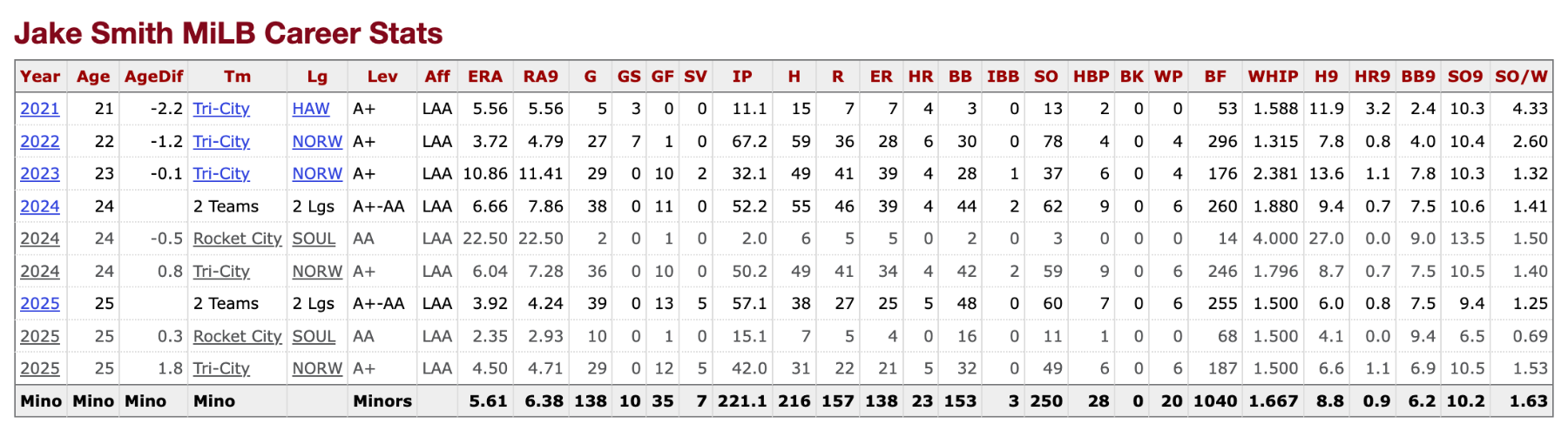
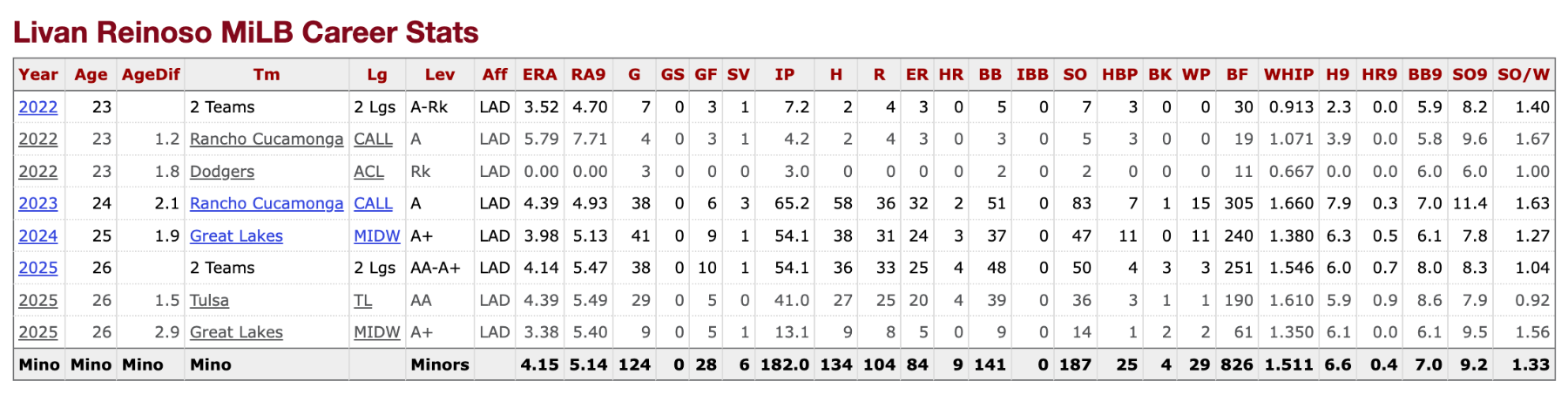
The Dilone and DeVito projects were unsuccessful—both of them were released less than a year after joining the Marlins org.
Why might this new erratic duo be any different?
Smith’s arsenal consists of a sinker, slider, curveball and changeup. Locating the sinker is his primary problem with frequent horizontal misses to both the glove side and arm side.
The 26-year-old’s walk rate was particularly high toward the end of last season following a promotion to Double-A (23.5 BB% in 15.1 IP). However, there were still some impressive sequences from him at that level. Check out these paint jobs:
The low-hanging fruit with Smith is his wiry frame—he packs only 189 pounds onto his 6’4″ frame. Adding strength to his lower body could help with repeating his delivery more consistently. He pretty reliably lands his breaking balls for strikes. If the Marlins can help him reshape those pitches to miss more bats, then he can utilize them to put away batters rather than relying so much on his volatile heater.
Reinoso, 27, is still relatively raw as a pitcher considering that most of his focus was devoted to being a position player prior to entering pro ball in 2022. The Dodgers moved him to the mound on a full-time basis.
Reinoso’s appeal to the Marlins is obvious. He throws gas, sitting 97-99 mph with his four-seam fastball (he touched 100 in the clip below), complemented by a sweeper. His most common mistakes are four-seamers that sail high for easy takes.
Only 53.8% of Reinoso’s pitches last season were strikes. For context, the worst strike rate by a qualified MLB reliever was Brendon Little at 56.8%. The likelihood of him sticking at the highest level is lower than Smith, but I can see why the Marlins deemed him worthy of the $24,500 draft fee as they dream on his upside.
Expect Smith and Reinoso to begin the 2026 season in the Double-A Pensacola bullpen.
Interested in learning more about the Miami Marlins’ top prospects? Check out our comprehensive top prospects list that includes up-to-date stats, articles and videos about every prospect, scouting reports, and more!