
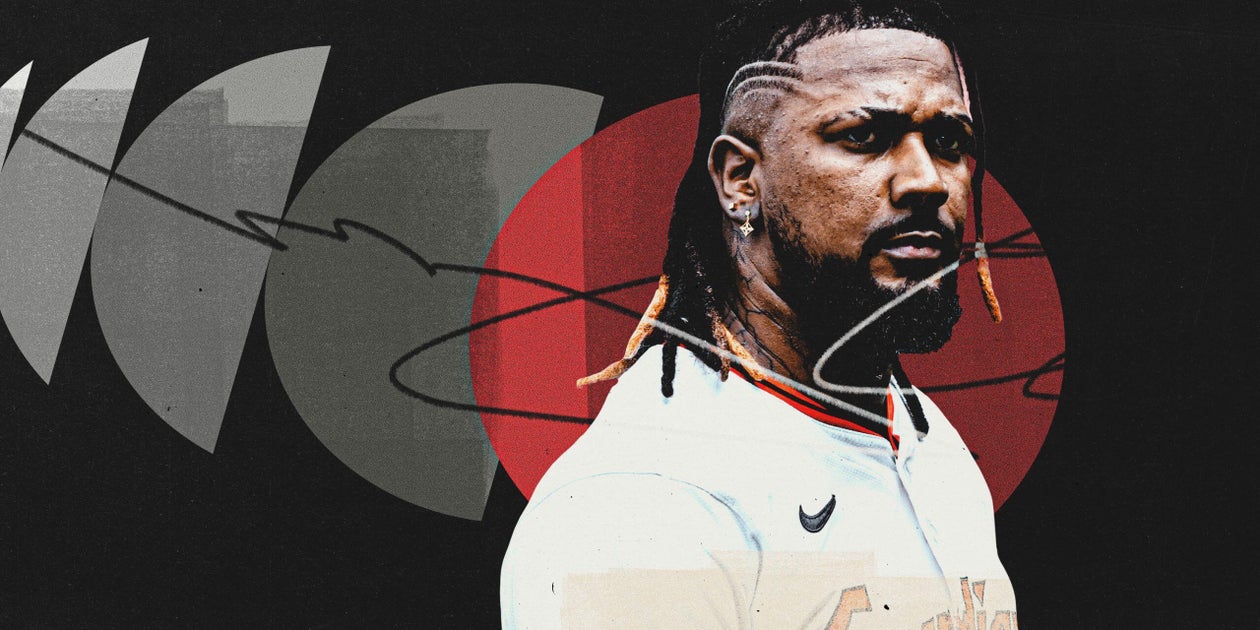
ORLANDO, Fla. — On June 7, 1977, the Cleveland Indians selected infielder Jerry Dybzinski in the 15th round of the MLB Draft out of Cleveland State University.
Six years later, the club traded Dybzinski. Then, they made another trade. And another. And another, until, nearly a half-century later, they fielded offers for their closer, Emmanuel Clase.
Cleveland turned Dybzinski into Pat Tabler, and Tabler into Bud Black. Cleveland kept swapping and flipping and wheeling and dealing, constructing perhaps the most prolific trade tree in baseball history. Clase, however, is standing atop the roots, chainsaw in hand.
In three seasons with the Indians, Dybzinski batted .238 with one home run, a solo shot on a late April afternoon off Jim Kern of the Texas Rangers in front of about 7,000 people in the cavernous Cleveland Stadium. Cleveland then converted him into 139 bWAR worth of production from a seemingly never-ending chain of players over the course of 48 years.
Along the way, with five different front-office figureheads keeping the string intact, Cleveland picked up a two-time Cy Young Award winner, an All-Star starting pitcher, an All-Star outfielder, an All-Star first baseman, the franchise’s stolen-base leader and, finally, Clase, the club’s all-time saves leader.
The Guardians were prepared to add another branch to the tree in July. As the trade deadline approached, though, the Guardians had to pull Clase from the market. The league was investigating his supposed involvement in a sports betting operation.
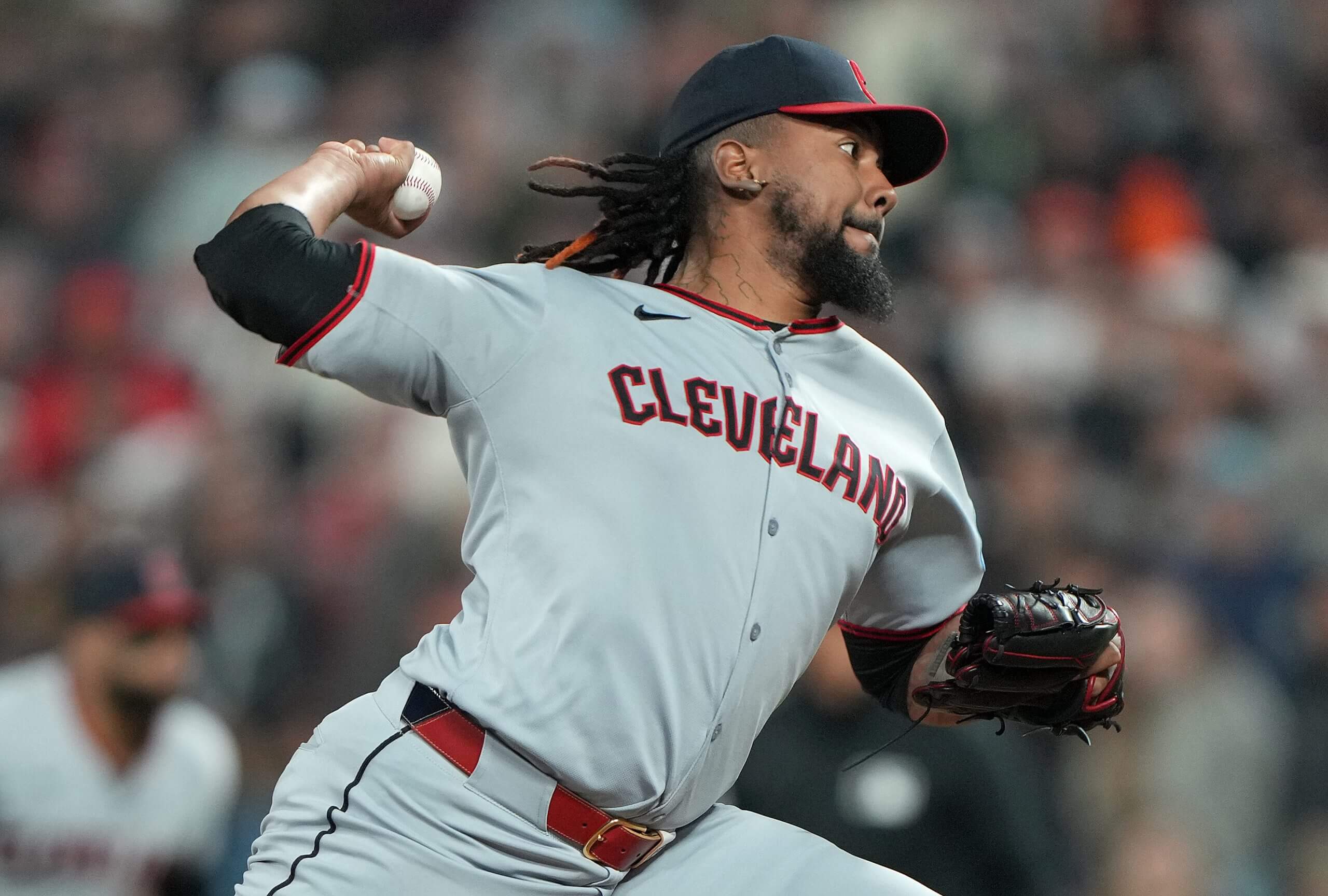
Emmanuel Clase was an All-Star in three of his first four seasons with Cleveland. (Thearon W. Henderson / Getty Images)
Clase and fellow Guardians pitcher Luis Ortiz face a series of charges stemming from a pitch-rigging scheme that allegedly netted co-conspirators more than $460,000. The defense teams for Clase and Ortiz vowed their clients would prove their innocence, despite a 23-page indictment that detailed coordinated efforts over more than two years to allegedly predetermine pitches that allowed co-conspirators to win prop bets. Their trial is set for May. The league has yet to levy a punishment, but both pitchers face up to 65 years in prison if convicted on all charges of wire fraud and several counts of conspiracy.
Since July, the Guardians have proceeded as if they won’t employ either pitcher moving forward. It appears the longstanding trade tree, going back over nearly 50 years, has met its demise.
April 1, 1983: Cleveland Indians trade IF Jerry Dybzinski to the Chicago White Sox for IF Pat Tabler
This all began more than four decades ago with a swap of two Ohio kids. Dybzinski attended Collinwood High School on the east side of Cleveland, and Tabler hails from the Cincinnati area. Cleveland GM Phil Seghi landed the club its first baseman for much of the ’80s, as Tabler hit .294 for Cleveland, made the 1987 All-Star team and totaled 7.4 bWAR for the Indians.
June 3, 1988: Cleveland Indians trade Pat Tabler to the Kansas City Royals for P Bud Black
Tabler had a rough start to the 1988 season, so Cleveland flipped him to the Royals for Black, who registered 7.5 bWAR for the club over the next two-plus seasons.
Sept. 16, 1990: Cleveland Indians trade Bud Black to the Toronto Blue Jays for pitchers Alex Sanchez, Steve Cummings and Mauro Gozzo
Black was headed for free agency, so near the end of the season, they sent him to Toronto as the Blue Jays tried to chase down the Boston Red Sox at the top of the AL East. Only Gozzo made it to the majors with Cleveland, and only for 7 2/3 innings. Cleveland shipped Cummings to the Tigers eight months later for minor-leaguer Eric Stone.
Nov. 6, 1990: Cleveland Indians trade Alex Sanchez to the Toronto Blue Jays for P Willie Blair
The Indians traded Sanchez back to the Blue Jays less than two months after they acquired him. In return, they landed Blair, who had a brief but rough stint in Cleveland in 1991.
Dec. 10, 1991: Cleveland Indians trade C Ed Taubensee and Willie Blair to the Houston Astros for CF Kenny Lofton and IF Dave Rohde
Ten years after this trade, on an August night in Cleveland, Taubensee lifted Lofton over his shoulder near home plate to celebrate one of the greatest comebacks in the sport’s history. On Aug. 5, 2001, Cleveland erased a 14-2 seventh-inning deficit to stun the 116-win Seattle Mariners, 15-14. Lofton scored the winning run, and Taubensee, the on-deck hitter, was waiting for him at the plate. Taubensee started his big-league career in Cleveland in 1991 and capped it in Cleveland in 2001. Lofton, meanwhile, appeared in 20 games for the Astros before they sent him to Cleveland, where he blossomed into a six-time All-Star, five-time AL stolen base leader and four-time Gold Glove Award winner.
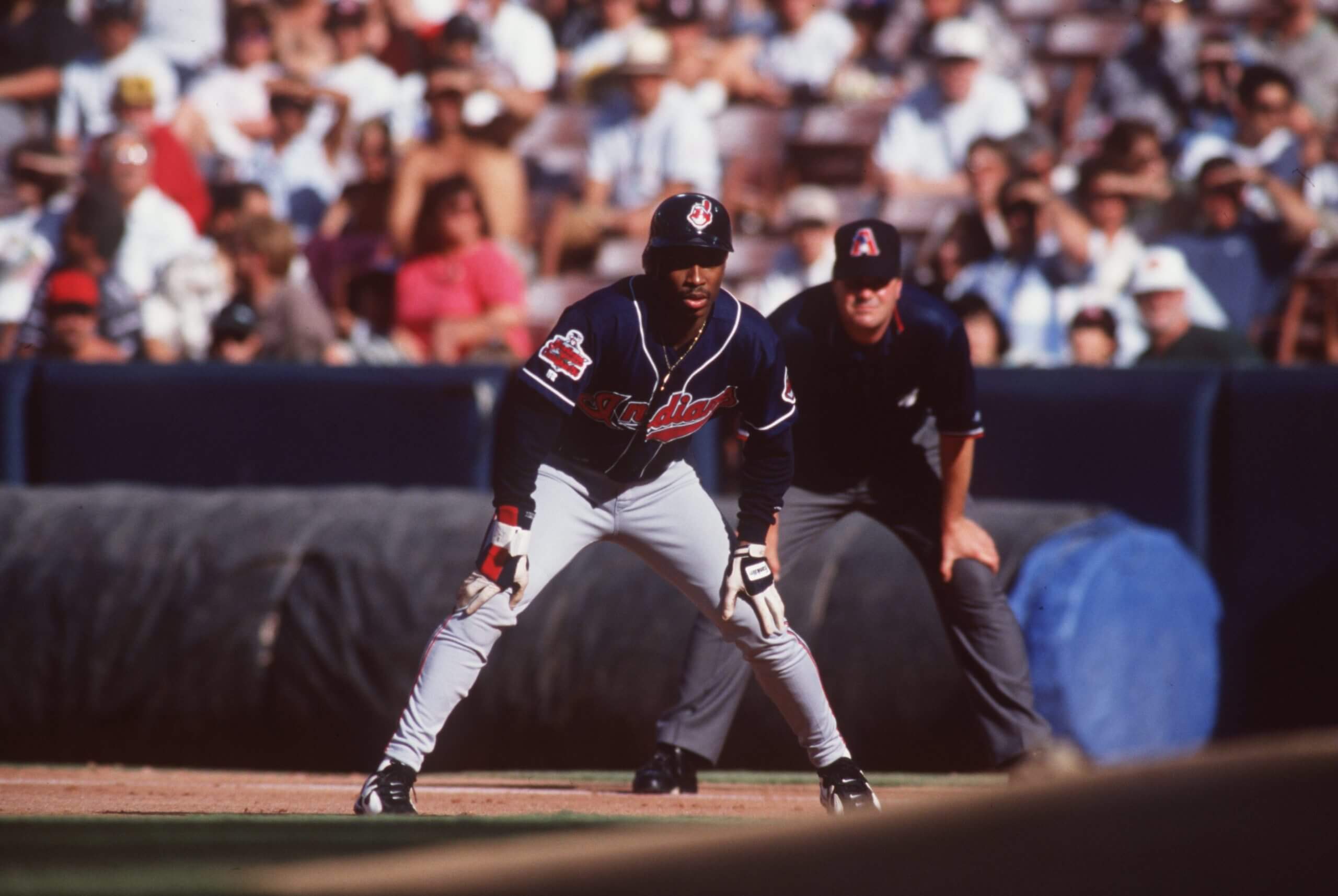
Lofton was a 3-time All-Star for the Indians before he was traded to the Braves in 1997. (Stephen Dunn / ALLSPORT)
Lofton posted 31.0 bWAR for Cleveland from 1992 to 1996, and then another 16.9 from 1998 to 2001. He returned for a third stint at the 2007 trade deadline.
March 25, 1997: Cleveland Indians trade Kenny Lofton and P Alan Embree to the Atlanta Braves for outfielders David Justice and Marquis Grissom
In an end-of-spring stunner, Cleveland GM John Hart flipped Lofton, an impending free agent, to the Braves. Hart feared he’d lose his leadoff hitter and net nothing in return, so he acquired two pieces for the outfield. Grissom replaced Lofton in center field and delivered a couple of key contributions that October. Justice joined Jim Thome and Manny Ramirez in the center of a lineup that remained imposing even after the departure of Albert Belle.
This is where the tree grows another branch, as the club eventually traded away both Grissom and Justice.
Dec. 8, 1997: Cleveland Indians trade Marquis Grissom to the Milwaukee Brewers for pitchers Ron Villone, Mike Fetters and Ben McDonald
This was a busy day for Hart, as he re-signed Lofton to a three-year deal, signed Dwight Gooden away from the Yankees, sent Grissom to Milwaukee and flipped Fetters to Oakland before he ever stepped foot in Cleveland.
Dec. 8, 1997: Cleveland Indians trade Mike Fetters to the Oakland Athletics for P Steve Karsay
Karsay emerged as a valuable reliever for Cleveland, posting a 3.23 ERA across four seasons and working as the team’s closer for part of the 2000 season.
March 11, 1998: Cleveland Indians trade Ben McDonald to the Milwaukee Brewers for P Mark Watson
McDonald never pitched for the Indians. Watson appeared in six games for the club in 2000, when Cleveland cycled through 32 different pitchers.
June 22, 2001: Cleveland Indians trade Steve Karsay and Steve Reed to the Atlanta Braves for P John Rocker and 3B Troy Cameron
Cleveland was nearing the end of its reign atop the AL Central and needed a shakeup, but acquiring the turbulent Rocker didn’t work. He lost his grip on the closer role after only three weeks; he logged a 5.45 ERA, and he remained a headache off the field.
Dec. 18, 2001: Cleveland Indians trade John Rocker to the Texas Rangers for P Dave Elder
Elder pitched in 19 games for Cleveland in 2002 and ’03. He served up Rafael Palmeiro’s 500th home run.
June 29, 2000: Cleveland Indians trade David Justice to the New York Yankees for P Jake Westbrook, P Zach Day and OF Ricky Ledée
The Yankees attempted to acquire Sammy Sosa and Juan Gonzalez but instead settled for Justice, and the Indians wanted to free up money to make a run at retaining Manny Ramirez. That didn’t work out, but Westbrook developed into a solid starter for them over the ensuing decade, including an All-Star season in 2004. Cleveland flipped Ledee for David Segui four weeks later to help replace Justice’s production.
July 31, 2001: Cleveland Indians trade Zach Day to the Montreal Expos for OF Milton Bradley
Day never pitched for Cleveland, but Bradley enjoyed a breakout season in 2003, with a .923 OPS and 4.1 bWAR in 101 games. Unfortunately, he wore out his welcome with Eric Wedge and company the following spring, and just before Opening Day, the club made known its intention to trade him.
April 3, 2004: Cleveland Indians trade Milton Bradley to the Los Angeles Dodgers for OF Franklin Gutiérrez and P Andrew Brown
Brown, a northeast Ohio native, made nine appearances for the Indians in 2006. Gutiérrez was a regular in Cleveland’s outfield in 2007 and ’08 before he found a more permanent home in Seattle.
Nov. 8, 2006: Cleveland Indians trade Andrew Brown and 3B Kevin Kouzmanoff to the San Diego Padres for 2B Josh Barfield
Barfield handled second base until Asdrubal Cabrera arrived in the second half of the 2007 season.
Dec. 11, 2008: Cleveland Indians trade Franklin Gutierrez to the Seattle Mariners in a three-team, 12-player deal that landed them P Joe Smith and IF Luis Valbuena
Toward the end of the Winter Meetings in Las Vegas, the three teams struck a wild arrangement that landed the Indians a new part-time infielder in Valbuena, and Smith, who became a bullpen staple.
July 31, 2010: Cleveland Indians trade Jake Westbrook to the St. Louis Cardinals as part of a three-team deal that lands them pitching prospect Corey Kluber from the San Diego Padres
The Indians were mired in a rebuild and wanted to shed the final couple of months of Westbrook’s salary. They liked Kluber’s strikeout rate in the minors, but nothing about the right-hander screamed he’d bloom into an ace. He didn’t crack any Padres top prospects list, he was a bit old for Double A, and he didn’t possess overpowering stuff. He partnered with Cleveland’s pitching experts and became the franchise’s only two-time Cy Young Award winner and nearly carried the Indians to a championship in 2016. He morphed from a lottery-ticket acquisition to perhaps the best Cleveland pitcher since Bob Feller.
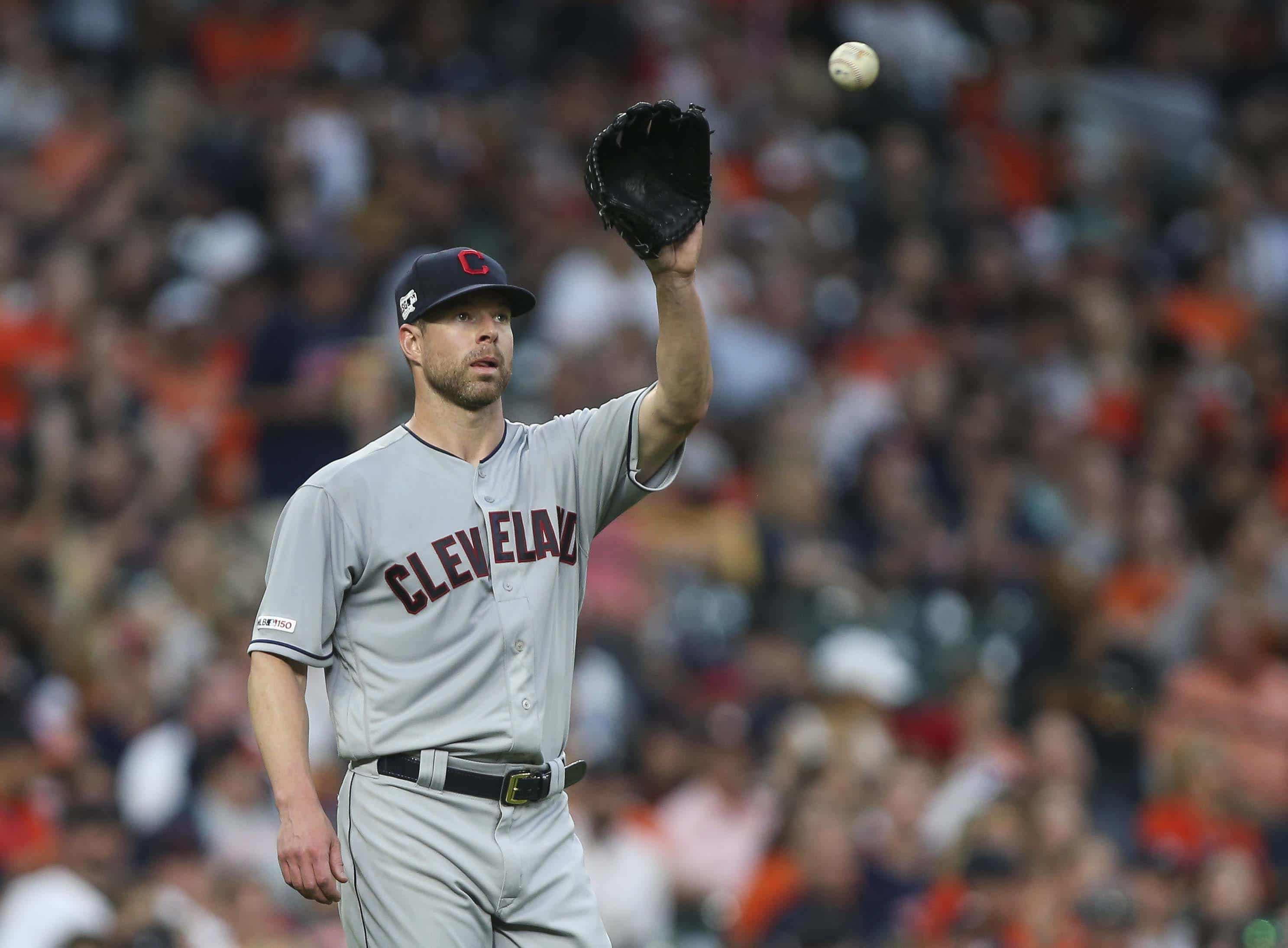
Corey Kluber was the final trade piece to bring Clase to Cleveland. (Troy Taormina / USA Today Sports)
Dec. 15, 2019: Cleveland Indians trade Corey Kluber to the Texas Rangers for P Emmanuel Clase and CF Delino DeShields Jr.
Kluber missed most of the 2019 season with a couple of injuries, and Cleveland wanted to unload the final year of his contract, so they zeroed in on a hard-throwing reliever who had debuted with the Rangers that year. The move wasn’t initially popular in Cleveland, as the Indians handed the reins of their rotation to Mike Clevinger, Zach Plesac and Aaron Civale. It didn’t help when Clase was suspended for the 60-game 2020 season because of a failed PED test.
By the summer of 2021, however, he was the team’s closer, and he produced a 1.84 ERA across five seasons with the club. He made three All-Star teams, finished third in the 2024 AL Cy Young Award balloting thanks to a 0.61 ERA, and he signed a long-term contract that could have kept him in Cleveland through 2028.
That all made him a popular trade target, too, and the Guardians’ front office was listening this summer. If they hadn’t moved him over the summer, he almost certainly would have been a popular name in trade talks this week at the Winter Meetings. Instead, he’s untradeable, and after 48 years, the book on this incredible trade tree appears to have closed.