
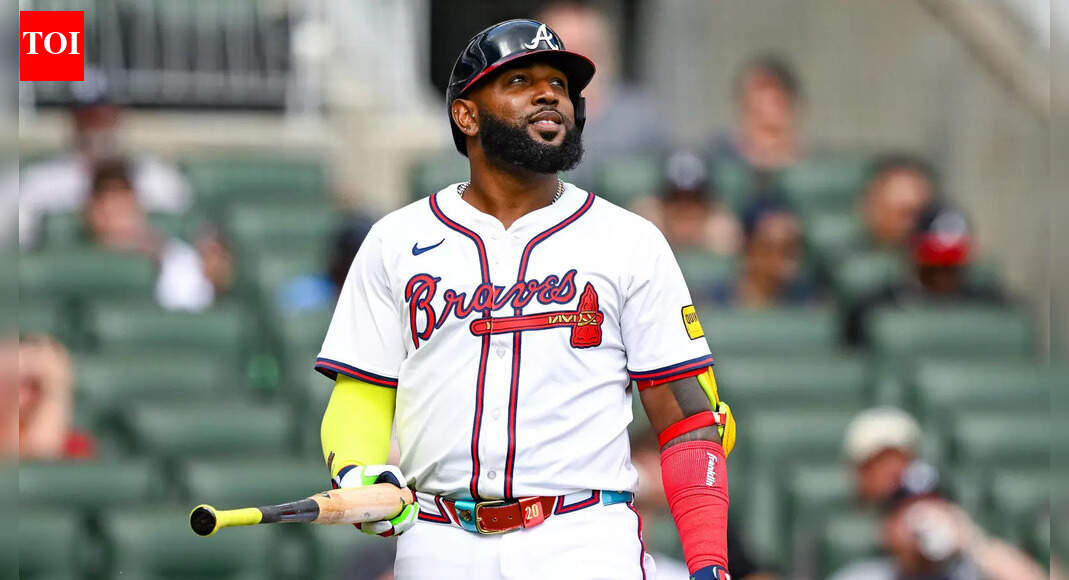
 Marcell Ozuna of the Atlanta Braves (Image via Getty) Atlanta Braves rumors are gaining serious traction as Atlanta continues to explore a blockbuster trade for Texas Rangers shortstop Corey Seager, a move that would instantly reshape the National League playoff picture. The two-time World Series MVP remains one of baseball’s most dangerous left-handed bats, and even preliminary interest from the Braves has ignited fan speculation across the league. While no deal is close, the combination of Atlanta’s glaring shortstop need and Texas’ willingness to listen on veterans has turned this into one of the most fascinating “what if” scenarios of the offseason.
Atlanta Braves exploring Corey Seager despite major roadblock
According to multiple reports from the Winter Meetings, the Atlanta Braves have checked in on Seager as they search for a long-term solution at shortstop following years of instability since Dansby Swanson’s departure. However, the biggest complication is structural rather than financial: Atlanta is on Corey Seager’s no-trade list, meaning any deal would require the star shortstop’s direct approval.That reality has kept discussions preliminary. Rangers GM Chris Young has publicly acknowledged openness to moving pieces as Texas adjusts payroll after dealing Marcus Semien, but there have been no substantial negotiations involving Seager’s contract, which still carries roughly $186 million over the next six seasons. Jeff Passan and other national insiders have framed Atlanta’s interest as exploratory, yet persistent.
Why Atlanta Braves sees Corey Seager as a perfect fit
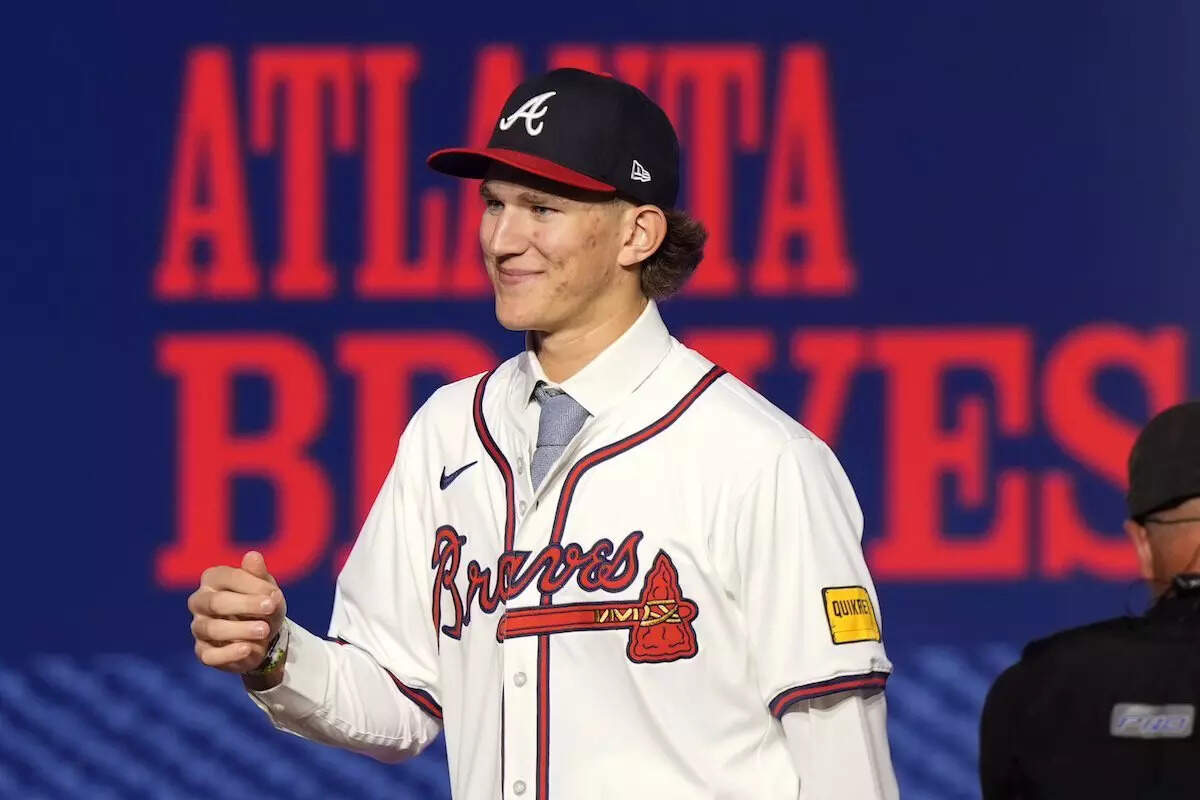
Cam Caminiti of Atlanta Braves (Image via Getty)
The Atlanta Braves’ motivation is clear. Atlanta’s shortstop production in 2025 ranked among the weakest of any contender, combining for just 1.1 fWAR with minimal power and on-base ability. Seager would immediately flip that weakness into a strength, giving the lineup another elite bat alongside Ronald Acuña Jr. and Matt Olson.Pundits have described Seager as a massive offensive upgrade over options like Mauricio Dubón, not only for his power but for his postseason résumé. His presence would allow Atlanta to stabilize the infield, either by keeping Seager at shortstop or shifting him to DH while adjusting Ozzie Albies defensively.
Hypothetical trade framework
While any proposal remains speculative, industry chatter has centered on a prospect-heavy return rather than elite, untouchable names. One scenario floated by analysts involves Atlanta sending mid-tier arms and depth pieces to Texas, paired with financial relief.Potential structure discussed by insiders includes: • Pitching prospects such as Hurston Waldrep and Dylan Dodd • Additional secondary pieces to balance value • Texas retaining $10–15 million annually to ease Seager’s $31 million AAVThe Rangers would gain controllable pitching for a retooling phase, while the Braves would absorb a superstar contract aligned with a win-now window. The largest hurdle remains Seager’s willingness to waive his no-trade clause, something considered unlikely but not impossible if competitive priorities outweigh geography.
What the Texas Rangers would be betting on
From the Texas Rangers’ perspective, moving Seager would signal a clear pivot. After an 81-81 season and mounting payroll pressure, shedding long-term salary while restocking a thinned farm system has appeal. Still, trading away a franchise face and postseason hero would be a tough sell internally and publicly.At 31, Seager’s durability has become part of the conversation, having missed significant time in recent seasons. Texas could choose to move early rather than risk decline, but replacing a hitter with a .289 career average and elite playoff production is no small task.
Statistical gap at shortstop
The contrast between Seager and Atlanta’s recent shortstop output highlights why this rumor won’t fade quietly.SeasonPlayer/TeamGAVGHRRBIOPSWAR 2025 Corey Seager 102 .271 21 50 .860 6.1 2025 Braves SS (combined) ~120 .220 8 35 .650 1.1 2023–25 avg Seager 120 .285 33 85 .950 6.0Advanced metrics paint an even sharper picture. Seager’s .365 wOBA and 15.3 percent barrel rate dwarf Atlanta’s infield production, with projections suggesting 30-plus home run potential in Truist Park.
Pros and cons for both sides

Corey Seager of Texas Rangers (Image via Getty)
Atlanta Braves advantages:
• Proven MVP-caliber talent fills a major lineup hole • Left-handed power plays well against NL East pitching • Postseason experience strengthens October ceiling
Atlanta Braves risks:
• Injury history over the past two seasons • $31 million AAV strains payroll flexibility • No-trade clause could halt talks entirely
Texas Rangers advantages:
• Prospect infusion for a system needing depth • Long-term salary relief • Opportunity to reset roster timeline
Texas Rangers risks:
• Loss of a franchise cornerstone • Difficulty replacing elite offensive production • Fan backlash following recent payroll cuts
Who really wins this deal?
If Corey Seager were to approve a move, Atlanta would land one of the biggest trade prizes imaginable, instantly shifting the NL East balance of power and positioning themselves to challenge Philadelphia at the top of the division. For Texas, the return would help stabilize the future but at the cost of star power and identity.Alsi read: MLB trade rumors: Boston Red Sox might sign $116.5 million Arizona Diamondbacks superstar to bolster rotation in Winter MeetingsFor now, this remains a high-end hypothetical rather than an imminent blockbuster. Still, as long as the Braves are searching for answers at shortstop and the Rangers remain open to restructuring their roster, Corey Seager’s name will continue to hover over the offseason like a spark waiting for fuel.