
As the 2025 MLB Winter Meetings came and went, the Chicago Cubs largely sat idly. In fairness, so did many of their competitors; there was limited action at the league’s annual hot stove festival. The Cubs signed two relievers: reclamation project Collin Snider (on a minor-league deal), and Hoby Milner, a soft-tossing lefty with a funky delivery and familiarity with Craig Counsell.
Other teams were busier, though. Most of the top free-agent relievers have signed elsewhere. The Braves re-signed Raisel Iglesias and lured in ex-Padres closer Robert Suarez. The Dodgers and Mets gave three-year deals to Edwin Díaz and Devin Williams, respectively; the Blue Jays gave a slightly less lucrative one to Tyler Rogers. Kyle Finnegan and Kenley Jansen signed with the Tigers. Ryan Helsley went to the Orioles on a two-year deal, which he can renounce after 2026 if he sees a chance to make more money elsewhere. Emilio Pagán went back to the Reds on a two-year deal worth $20 million.
The Cubs have signed righty setup man Phil Maton, in addition to Snider and Milner, but some of those players signing elsewhere stung. Helsley would have been a great fit. Williams made sense, as well, and it was reported that he was interested in reuniting with Counsell. Suarez was a fit, and the Cubs were allegedly kicking the tires on him, but the kick must not have inspired much confidence in his ability to hold up. Díaz, Helsley, Williams, and Suarez were considered the elite relief options on the free-agent market. It’s no surprise, though, that the Cubs weren’t willing to offer up the deals any of them ultimately secured. That’s not how Jed Hoyer believes in building a bullpen.
In each of the last few years, though, Hoyer has found bargains once the initial surge of relief signings has softened the demand for players and begun to pull down their price tags. Here are a few of the top relievers remaining, whom Hoyer could turn to as he tries to fill out a bullpen still rife with opportunity.
Brad Keller
A longtime starter, Keller reinvented himself as a high-leverage reliever for the 2025 Cubs. The initial engagement between player and team worked gorgeously; why should Keller risk going somewhere else? In 69 2/3 innings this season, Keller had a 2.07 ERA, a WHIP of 0.96, and 75 strikeouts, and even filled the closer role late in the season. His fastball averaged 97 mph, trailing only Daniel Palencia among Cubs hurlers. There is little reason to believe this was a fluke, and the Cubs should have the inside track on signing him. He’s likely to command a multi-year deal worth at least $10 million per year, though.
Taylor Rogers
Sticking with the theme of familiar faces, Rogers has a potential role with the team in 2026, even with the signing of Milner, who has a similar profile. Outside of Milner, the only left-handed relief options on the roster are Luke Little, Jordan Wicks, and rookie Riley Martin. Ideally, there would be another hard thrower added to the bunch, but Rogers would serve as much-needed depth. Though he had an unimpressive 5.02 ERA after being traded to the Cubs, Rogers had a 3.32 ERA across his 50 2/3 total innings in 2025. He should be willing to sign a cheap one-year contract this offseason.
Pete Fairbanks
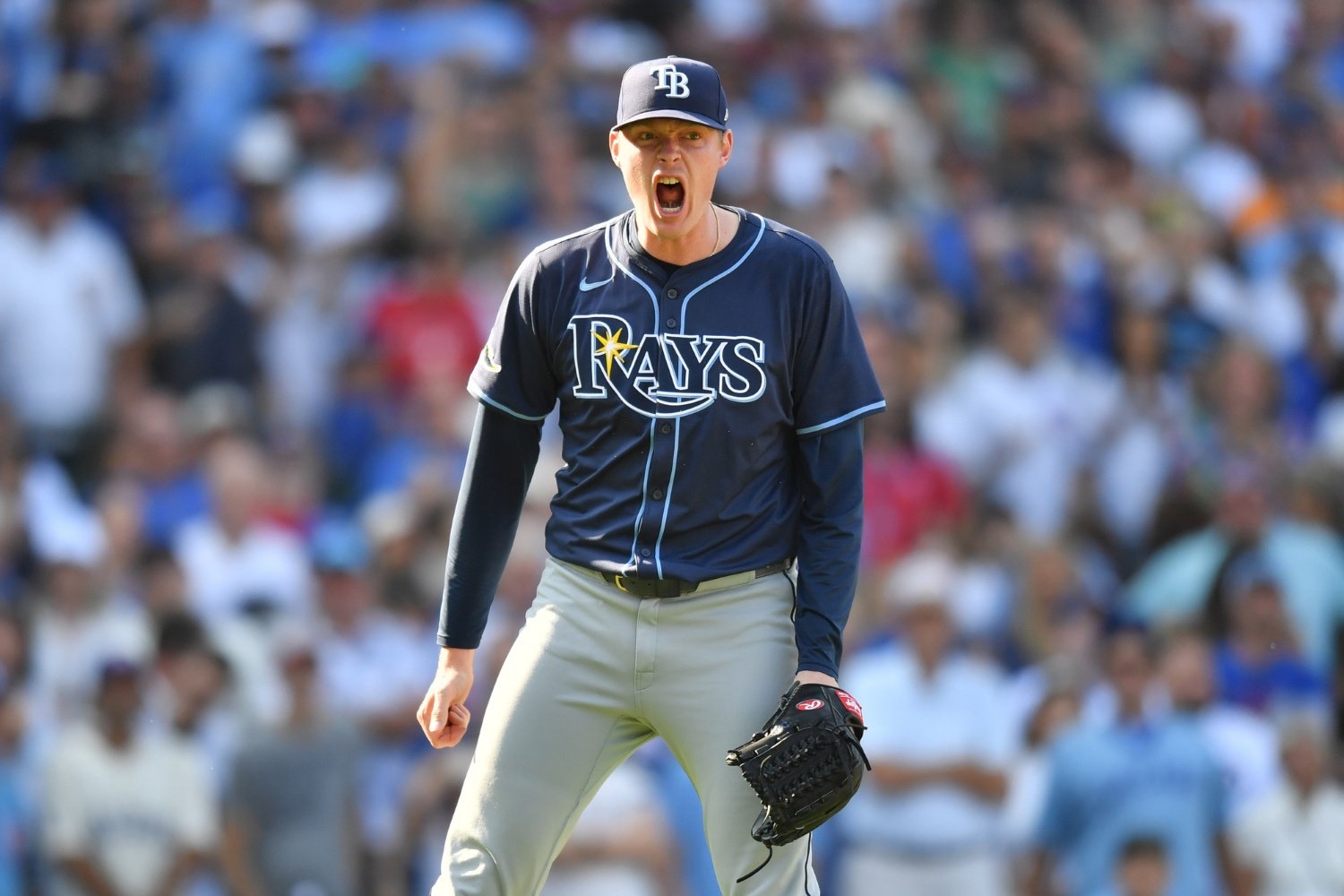
Fairbanks is arguably the most exciting option left on the relief market. He served as the Rays’ closer for the last three seasons, and collected 75 saves over that span. In 2025, Fairbanks had a 2.83 ERA, 59 strikeouts to 18 walks, and 27 saves in 60 1/3 innings. If the Cubs sign Fairbanks, he would immediately become the most accomplished closer on the roster. Fairbanks will be 32 before Opening Day and is coming off his first fully healthy season since 2020. From 2021-2024, he dealt with rotator cuff, shoulder, lat and hip problems, and even a nerve issue that limited him to 156 2/3 innings during that time. While injuries will be a concern, Fairbanks’s price should reflect that. A two–year deal somewhere in the same neighborhood as Pagán’s will likely be what gets it done.
Luke Weaver
Weaver made his debut in 2016 with the Cardinals. He was one of the better starting pitching prospects in baseball at the time. After eight seasons as (mostly) a back-of-the-rotation arm, mainly with the Cardinals and Diamondbacks, he converted to relief with the Yankees in 2024. He rewarded them with a 2.89 ERA and 103 strikeouts in 84 innings. He did take a slight step back in 2025, as he posted a 3.62 ERA and was limited to mostly one-inning appearances, but that had much to do with the heavy workload he bore all the way through October the year before. The transition to the bullpen has helped Weaver improve his fastball velocity, which has lived above 95 mph since 2024. Weaver doesn’t have full seasons of closing experience like Fairbanks, but would still be an established right-handed, late-inning option in a Cubs bullpen that thins out after Palencia and Maton.
Evan Phillips
A key piece of the Dodgers’ bullpen from 2022-2024, Phillips was non-tendered after undergoing Tommy John surgery early in the 2025 season. Phillips will not be available for the start of 2026, but should be able to make an impact at some point. He was excellent with the Dodgers in 2022, with a 1.14 ERA and 77 strikeouts, and had another elite year in 2023 with a 2.04 ERA. At 31 years old, he should be able to regain at least some of that form.
The Cubs would need to add a few more arms to make the bullpen a strength for next season, but if they do add the necessary reinforcements, Phillips can be that piece to put them over the top in October. In 15 1/3 postseason innings, he has not given up a run. There are not many arms on the market that have the same postseason experience and recent success as Phillips. The Tommy John recovery will likely limit him to a one-year deal.