
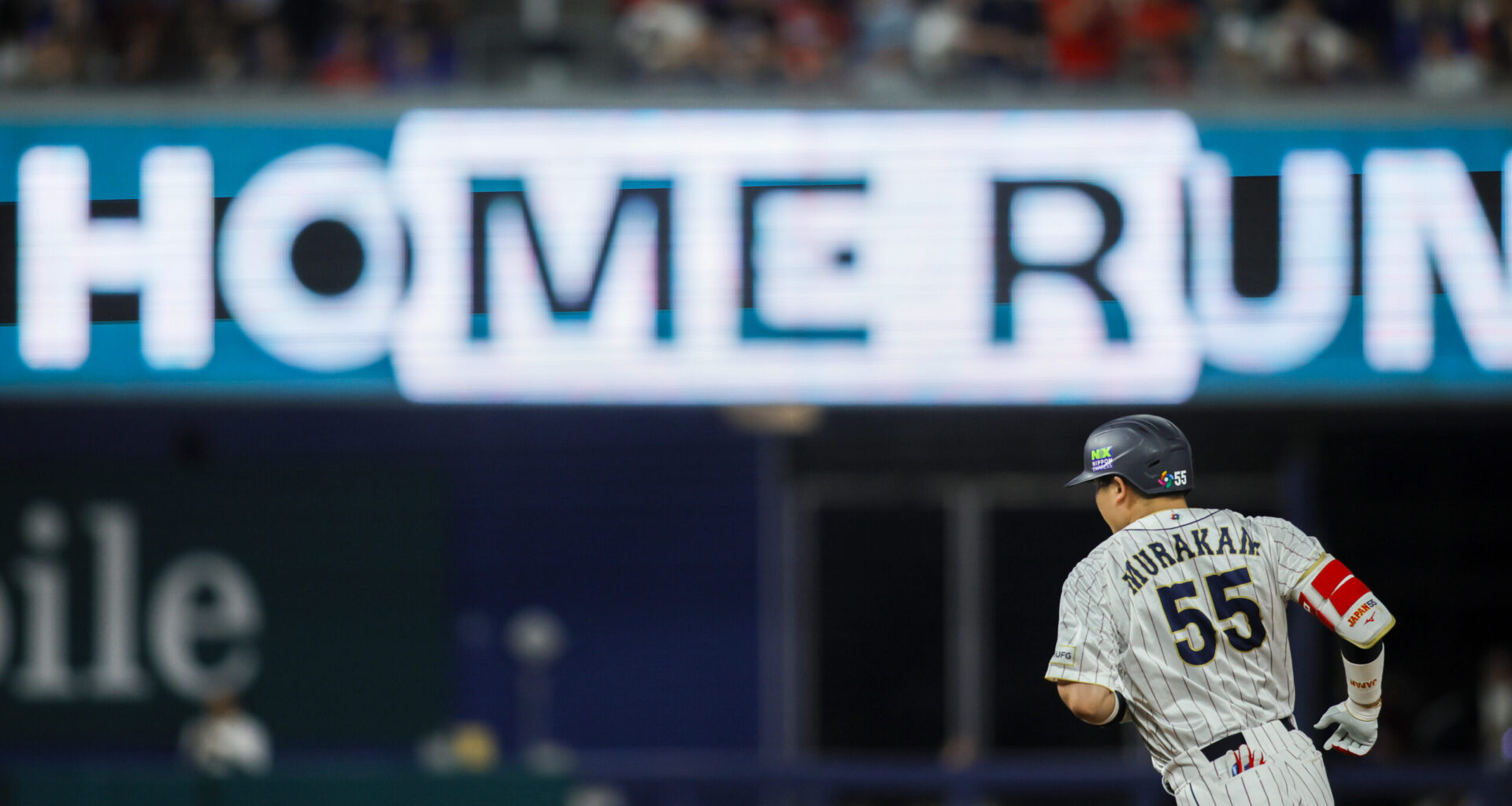
The White Sox sign Munetaka Murakami, betting on upside, global appeal, and a slugger who gives fans a reason to care again.
It’s still hard to believe it actually happened. The Chicago White Sox, under Chris Getz, went out and signed a meaningful free agent.
Not the top of the market.
Not a former MLB MVP.
Not a perennial American All-Star.
But very much a real one.
Story continues below.
More Sports News
.wp-block-group__inner-container:has(> .embla),
.wp-block-group:where(.alignfull) > .wp-block-group__inner-container:has(> .embla) {
width: calc(100vw – (var(–side-spacing) * 2)) !important;
}
.embla {
position: relative;
overflow: hidden;
}
.embla__container {
display: flex;
flex-wrap: nowrap;
gap: 0 !important;
width: 75%;
}
.embla__slide {
margin-inline-end: var(–column-gap);
}
.embla__arrow,
.embla__arrow:active,
.embla__arrow:target,
.embla__arrow:hover,
.embla__arrow:focus-visible {
display: none;
position: absolute;
top: 50%;
transform: translateY(-50%);
width: 40px;
height: 40px;
margin: 0;
padding: 0;
line-height: 0;
background: rgba(255, 255, 255, 0.75);
color: var(–color-primary);
border-radius: 100vw;
svg {
width: 24px;
}
}
.embla__prev {
left: 0;
}
.embla__next {
right: 0;
}
]]>
Munetaka Murakami is a Chicago White Sox. Two years. $34 million. However you want to slice it, this is a real swing by an organization that has spent years bunting in free agency and calling it strategy.
Murakami arrives as Japan’s best slugger and the NPB single-season home run record holder. That alone makes this signing feel different. And for a fan base that has grown numb to winter transactions, this is the rare move that actually jolts the pulse.
For many American fans, the second-best league in the world still gets treated like a retirement home for former MLB players. That perception is lazy and outdated. The NPB is fiercely competitive, technically demanding, and full of players who range from future stars to high-end contributors. Murakami didn’t come here to coast. He came here because the market forced him to prove something.
Why the Market Blinked on Murakami
Murakami entered the offseason projected to land north of $100 million. That projection lived squarely in a financial neighborhood the White Sox never visit. Then reality hit.
MLB teams evaluated Murakami’s profile and hesitated, not because of talent, but because of variance.
His in-zone contact rate raises concerns. His strikeout rate sits around 30 percent. He walks at an elite 16 percent clip. He hits the ball violently, up to 117 mph, but doesn’t always hit it often.
This is a true three-outcome bat in its purest form, and teams don’t love uncertainty when they’re writing nine-figure checks.
We’ve seen players with this profile thrive. We’ve also seen them crater. What we haven’t seen much of is a hitter arriving from Japan with this exact offensive shape. Shohei Ohtani, Ichiro Suzuki, Hideki Matsui, Kosuke Fukudome, and Masataka Yoshida all brought very different skill sets. Murakami doesn’t fit that mold.
He’s closer to Japan’s version of Kyle Schwarber.
Defensively, Murakami doesn’t have a clean home. He played mostly third base in Japan, but evaluators don’t believe he can stick there. The White Sox plan to play him at first base, but even that comes with skepticism. If first base doesn’t work, the bat still plays, but now you’re talking about a DH-only outcome.
So Murakami took the stopgap deal. Two years. Prove it translates. Bet on himself.
And somehow, the White Sox were the ones holding the winning ticket.
Why This Actually Matters for the White Sox
Here’s the part that deserves credit.
Getz and his front office didn’t misread the market. They read it correctly. They evaluated Murakami the same way other teams did and still found a way to make it work. They waited until the price aligned with reality.
That’s new.
This signing lives in the same financial neighborhood as a high-leverage reliever. David Robertson. Liam Hendriks. Now, instead of buying bullpen certainty (or uncertainty), they bought upside in the middle of the lineup.
That matters.
This also matters because the White Sox need more than wins right now. They need relevance. They need curiosity. They need reasons to show up.
Murakami gives fans a reason to go to the ballpark the same way José Abreu once did on bad teams. He gives casual fans something to latch onto. He gives the national media a hook. He gives the organization a foothold in a global baseball market that teams like the Dodgers have monetized aggressively.
If Murakami even approaches his Japanese power output, the ripple effects go far beyond the box score. Broadcasts. Sponsorships. Merchandise. International attention. This is baseball economics in 2025, not 2005.
What’s On Tap Next?
Decades ago, the White Sox revived their franchise by acquiring a right-handed slugger who changed the temperature of the entire organization. Dick Allen didn’t fix everything, but he made the team matter again. He gave fans a reason to care, to watch, to believe.
Murakami isn’t Dick Allen. The profiles differ. The circumstances differ. The history differs.
But the effect could rhyme.
The White Sox needed a player who made people look up from their phones. Murakami represents possibility, risk, and intent all at once.
That’s not nothing.
Now we find out what it turns into.