
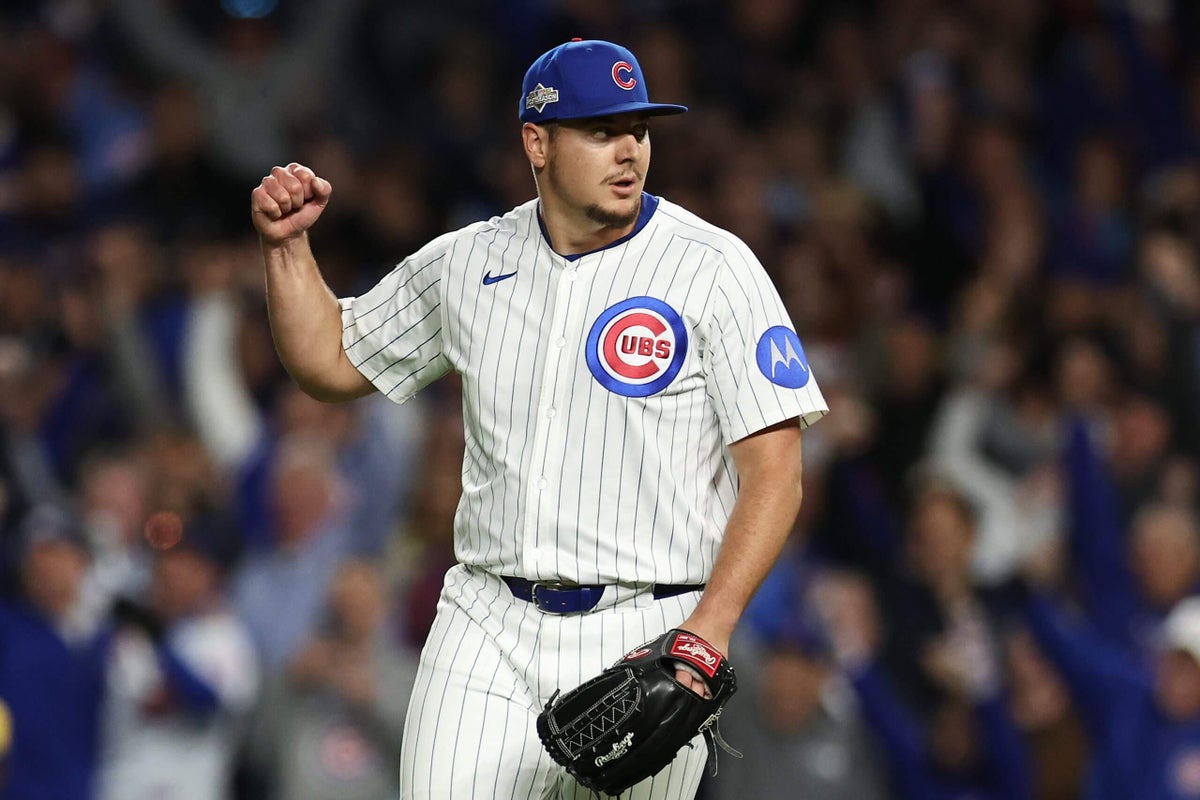
Brad Keller finally played in the postseason with the Chicago Cubs in 2025 after pitching parts of eight seasons in the major leagues
He finished the year as one of the Cubs’ most important relievers and closed playoff games. That winning feeling is part of what propelled Keller to sign a two-year, $22 million deal with the Philadelphia Phillies last week.
“Once you get a taste of that, that’s what you crave,” Keller said Monday. “It was such an awesome experience. That’s something that I want to do year-in and year-out, and I feel like Philly really gives a good opportunity for that. Obviously, the track record speaks for itself.”
Keller, 30, will provide the Phillies with much-desired right-handed relief help. He was one of the top leverage options on the free-agent market, ranked No. 36 on The Athletic’s Big Board less than two years after the Chicago White Sox released him and then repeatedly cut and re-signed by the Boston Red Sox — moves that precipitated his renaissance as a Cubs reliever.
The Phillies, after acquiring at least one right-handed reliever at each of the past four trade deadlines, now have a strong righty leverage core in Keller, Jhoan Duran and Orion Kerkering. Keller, who initially signed a minor-league contract with the Cubs in 2025, was their setup man by midseason. He will likely fit into a similar role in Philadelphia.
Pretty much everything improved for Keller last season: his average velocity jumped more than 3 mph, his whiff and strikeout rates rose and his hard-hit and walk rates fell.
Some of it can be chalked up to moving to the bullpen full-time after spending most of his career as a starter. However, it was also the result of mechanical adjustments and playing fully healthy after suffering from symptoms of thoracic outlet syndrome, including a lack of blood flow that turned his hand white and swelling in his arm and hand.
Keller endured some neurogenic symptoms, but he mostly dealt with vascular thoracic outlet syndrome symptoms — the same kind Zack Wheeler was diagnosed with. He underwent surgery in October 2023, saying he somewhat rushed his return because he was a free agent that winter.
“But I felt, by the (2024) All-Star break and the second half when I was with Boston, I was in Triple A, but my average velo was like 96,” he said. “I finally felt like myself, and I finally felt healthy, and I could trust that the surgery worked. Then I just carried that second half into last year, where it’s like, ‘Alright, that’s in the rearview. I feel good. I don’t have to worry about that stuff anymore.’”
That feeling, paired with improving how he used his lower half in his pitching mechanics, anchored Keller in his breakout 2025 campaign. Now, after beginning the past two seasons on minor-league deals, Keller has a team before Christmas and a major-league salary to match what he showed pitching in relief.
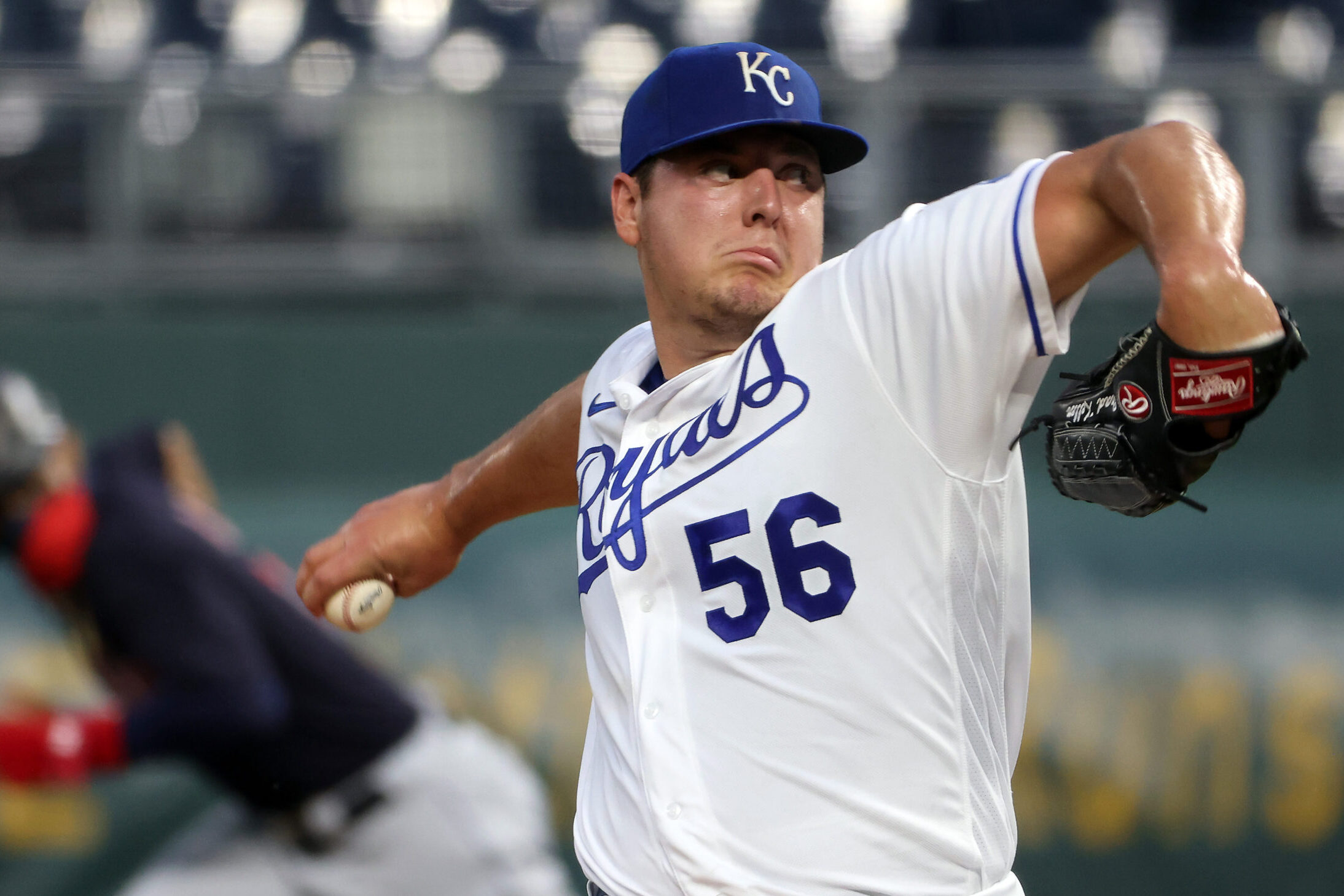
Keller began his major-league career as a starter for the Royals and still features a starter’s pitch mix. (Jamie Squire / Getty Images)
After a season of dominance, president of baseball operations Dave Dombrowski said the club feels this is who Keller is now.
“He’s a legit, back-end type guy,” Dombrowski said. “When you throw him with Duran and Kerkering from the right-hand side, we really feel great about that, in addition to the lefties. We just think it’s legit. We think he’s made that turn.”
Keller effectively handled righties in 2025, holding them to a .148 average and .466 OPS, and limited left-handers to a .223 average and a .569 OPS. He also excelled in back-to-backs, pitching 18 innings with 24 strikeouts, three walks and a 1.50 ERA on zero days’ rest. He credited that success to a good routine and relying on teammates, including veteran Ryan Pressly, for advice.
Keller still throws varied pitches. He utilized a four-seam fastball, sinker, changeup, sweeper and slider last season, only cutting out a knuckle-curve that he’d thrown in 2023 and 2024.
The sweeper has already come up in early conversations with the Phillies. Keller introduced the pitch in 2024, but said its movement endured an inconsistent period mid-season in 2025. The pitch’s average horizontal break fell to 12 inches in June after beginning the season at 15. It reached 15 inches again by the end of the regular season.
Keller rarely threw the sweeper to left-handed batters, but he and Phillies pitching coach Caleb Cotham talked during a Zoom call last week about finding a way to do that.
“(Caleb) brought up some ideas that we feel would be fun things to try — throwing sweepers to lefties, changeups to righties, things like that,” Keller said. “That’s kind of a little unorthodox. But, when you get to a point where you’ve got to switch things up, it’d be something new to try.”
Whatever the plan is moving forward, Keller will provide some stability to the Phillies’ right side. It is a newfound strength for the club since acquiring Duran at the trade deadline and signing Keller. Last winter’s righty bounce-back candidates, Joe Ross and Jordan Romano, did not bounce back. Opening Day roster adds José Ruiz and Carlos Hernández did not perform and were cut from the roster within a couple of months. Now, the Phillies are poised to begin 2026 with a strong right-handed bullpen core, with Keller, Duran and Kerkering.
There will be two open spots in the bullpen. Low leverage righty options to fill those spots could include Jonathan Bowlan, Rule 5 pick Zach McCambley and Zach Pop, a journeyman whom the Phillies agreed to terms with on Monday. Righty relievers like Seth Johnson and Max Lazar, who finished 2025 in Triple A, could also be among those factoring into those spots.
Alex McFarlane, a hard-throwing righty added to the 40-man roster in November, could eventually play a role. Yet, what the Phillies have now is a better starting point from the right-handed side — and a new leverage option who has fallen in love with relief pitching.
“It was an awesome adjustment,” Keller said. “There’s nothing like the adrenaline spike when the phone rings and your name’s called. I really grew into that.”