
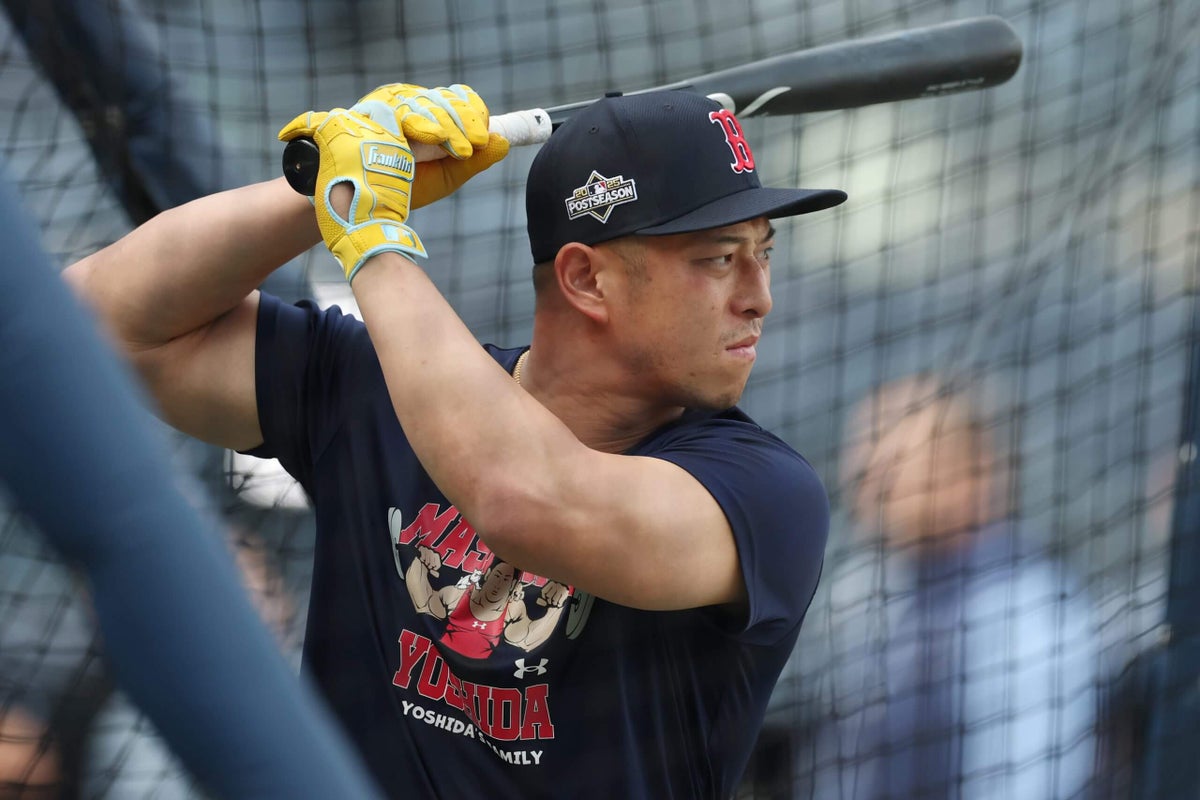
Around the batting cage at Yankee Stadium, the superstars talked hitting while the kid tried to keep up. Alex Rodriguez described the way he split the plate in half. Carlos Beltran explained a similar tactic. Brian McCann, too, had a method of picking his battles and maximizing damage.
Rob Refsnyder, fresh from Triple A, nodded along while a bunch of All-Stars described an approach that ran counter to everything Refsnyder tried to do at the plate. Refsnyder covered every pitch. He was hard to strike out. He was ready for anything. He considered it his greatest strength.
Split the plate in half?
“I kinda understood what that meant,” Refsnyder said.
A decade later, Refsnyder gets it, and it’s made all the difference.
On Monday, four months before his 35th birthday, Refsnyder signed a $6.5-million deal with the Seattle Mariners. It is, by far, the largest contract of his life, and it’s come in the twilight of his career. Refsnyder has never made more than $2.1 million in a season, and he’s spent much of his career playing on minor league deals or else earning the big league minimum.
But at an age when so many others are fading from relevance, Refsnyder has only now established himself as a player worth such a commitment.
He is, perhaps, less complete than he used to be, but he’s unmistakably more productive. Since 2022, among players with at least 900 plate appearances, Refsnyder ranks 40th in OPS, just ahead of Fernando Tatis Jr., Alex Bregman and Trea Turner. Almost all of his damage has come with a platoon advantage, but in an era when left-handed pitching is better than ever, Refsnyder has crushed lefties at an elite level.
OPS leaders vs. LHP since 2022 (400 PA)
“My swing-and-miss is probably up a good amount from earlier in my career,” Refsnyder said. “But for me to do anything, you have to make these educated guesses.”
He has to split the plate.
Refsnyder’s unusual career arc is about more than a single player’s rise to a late-30s payday. His transformation helps explain an entire industry’s shift in offensive approach. Refsnyder didn’t arrive in the big leagues overmatched so much as outdated. To adapt, he had to make more than mechanical adjustments. He had to overhaul his mindset and embrace his limitations.
In the middle of last season, Refsnyder stood in front of the home dugout at Fenway Park and drew pictures in the dirt. He used the handle of his bat to show pitch locations around a facsimile of home plate.
“For a sweeper or slider to end up right here in the middle of the plate,” he said, “it has to start, like, here.”
Refsnyder drew a spot in the dirt three or four feet in front of the plate and behind where a right-handed batter would stand. It was a pitch that would start, as Refsnyder put it, “behind my ass,” and cross the plate as if the shortstop threw it.
Refsnyder can drive that pitch to left-center, but gearing it up, he explained, requires that he lay off any pitch on the outer half, which leaves him vulnerable to an inside sinker that could drill him in the hip if he doesn’t recognize it early enough.
“If I pick a side of the plate here,” he said, drawing another spot on the outside, “then I want the sinker to come back and end up here.”
He put a dot on the outer half of the plate. Again, it was a pitch Refsnyder can drive, but when he looks for it, he gives up the inside slider and risks becoming Pitching Ninja punchline if he’s fooled by a sweeper.
“You’re looking at this window right here,” he said, drawing a line that’s unbearably precise, leaving most of the plate uncovered. That line is the loss of youthful innocence. It’s the vulnerability Refsnyder has learned to embrace in order to hit modern big league pitching.
“When I was younger and in the minor leagues, you could sit more middle and be in between a couple of different pitches,” he said. “Because the velocity was a little bit lower, and you could cover a couple of different things and be OK. Now, if you’re facing, like, (Bryan) Woo from Seattle, you’re going to look like an a— at some point in your three at-bats. His stuff is too explosive in, and for you to be on time for 97 to 99, you can’t cover 85 and below. It’s, like, impossible.”
Refsnyder has come to realize that he got to the big leagues trying to do the impossible. A fifth-round pick out of the University of Arizona, he rose through minor leagues with modest power and limited speed. His greatest strength was a balanced, all-fields approach, and Refsnyder took pride his ability to work an at-bat, draw some walks, and make contact on absolutely anything.
He made his debut with the New York Yankees in 2015, and seven years later, he was a career .224 hitter with six home runs, nine stolen bases, and one full season’s worth of at-bats. Refsnyder was quality depth and little more as he bounced from New York to Toronto, Tampa Bay, Texas, Minnesota and eventually to Boston. Through all those organizations, multiple hitting coaches, and a variety of teammates, Refsnyder not only tweaked his swing, he also began to embrace a new way of thinking about his at-bats.
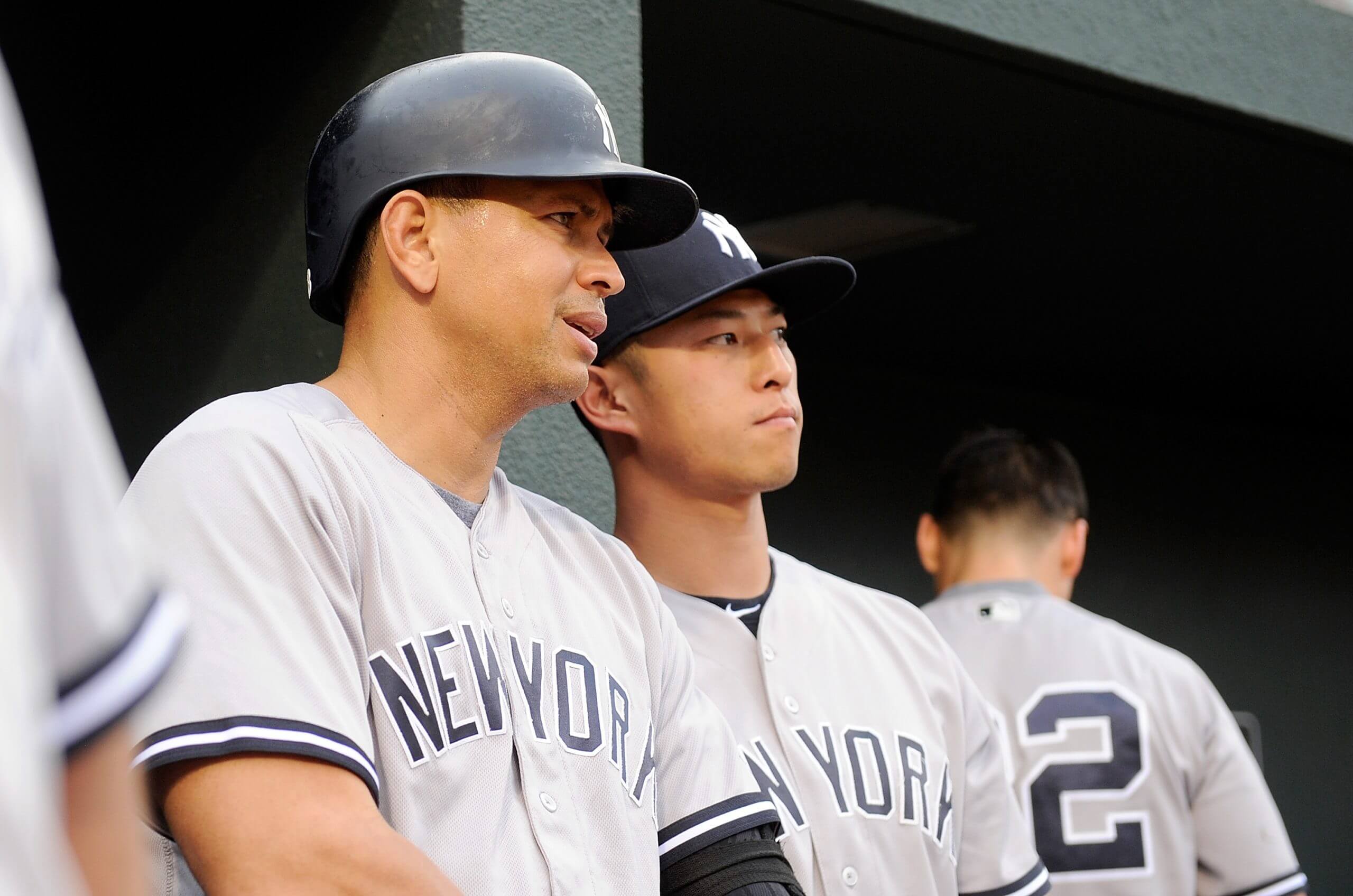
When Alex Rodriguez talked hitting, Refsnyder listened. (Greg Fiume / Getty Images)
Sure, he could draw some walks, but Refsnyder didn’t have the speed to steal bases, and a passive approach was hindering his ability to take aggressive, impactful swing. He had a knack for making contact, but without a commitment to specific pitch types and locations, Refsnyder was generating weak flyballs and pointless groundballs.
By preparing for anything, he was doing damage against nothing, and it was wasting his career. He was 31 years old and on his way out of the game.
“As an industry we value hitting the ball hard and damage,” Refsnyder said. “So, if I’m not going to steal bases, and I’m not hitting the ball hard, I’m at home. That’s just the way it is.”
Refsnyder’s old approach might have worked wonders in a different era, but it made him easy prey in an age of widespread velocity and lab-created breaking balls.
“I think you see older-generation hitters seeing really bad swing and misses now, and they just think you’re swinging out of your ass,” Refsnyder said.
There was a time when Refsnyder might have agreed, but conversation after conversation forced him to think differently.
When he was with the Twins in 2021, Nelson Cruz told Refsnyder that he looked only for pitches he could crush, and if Cruz didn’t get one of those pitches, he made an out. Cruz was fine with that. Part of Refsnyder thought such an approach was nuts — why accept such vulnerability? — but Cruz was an MVP candidate with 400-plus home runs, while Refsnyder was a bench player trying to avoid the waiver wire.
Eventually, he came to see it this way: Some hitters are so absurdly gifted, they can hit anything at any time, but the mere mortals have to embrace their limitations and accept being exposed.
“Strikeouts are up because they have to be up,” Refsnyder said. “It’s so hard to take an aggressive swing and not lay off other pitches.”
Refsnyder signed his last minor league contract in December of 2021. The Red Sox called him up the following April, and he’s been in the big leagues ever since, proving himself year after year. Last season, at 34, Refsnyder had the highest hard-hit percentage of his career, and his wRC+ against lefties was, yet again, among the 10 best in the Majors.
“He knows he’s a good player,” Red Sox shortstop Trevor Story said. “And when he doesn’t do what he wants, you can see that it bothers him.”
The frustration comes with the territory, and Refsnyder doesn’t mind talking about it. In fact, he loves the conversation. Refsnyder talks hitting in the clubhouse, rehashes at-bats in the dugout, and draws pictures of pitches in the dirt. And every once in a while, one of those conversations will take him back to his early days at Yankee Stadium, when Refsnyder first got the big leagues and began the long process of understanding what it would take to stay there.
“You have to give up something to have good swings,” Refsnyder said. “That’s kind of what they were saying.”