
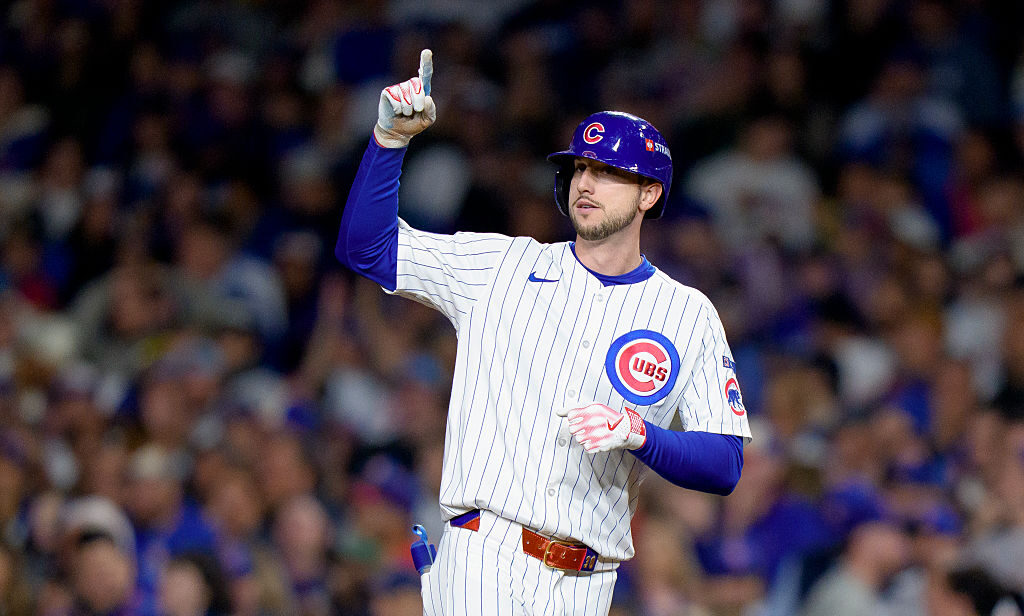
The drawback? The top remaining free-agent starters — southpaws Framber Valdez and Ranger Suarez — each come with the qualifying offer attached. While Tucker also does, he’s younger and an everyday player in addition to being more valuable on an annual basis. While he’ll cost significantly more per season, he’s got a greater chance to meet the value of his contract for longer.
Of course, the Orioles also have some uncertain futures on the roster, namely shortstop Gunnar Henderson and catcher Adley Rutschman. Unfortunately, the former is a Scott Boras client and the latter’s recent struggles may dissuade him from signing something long term.
By the time Rutschman’s rookie deal expires, contracts such as Helsley and Tyler O’Neill will be up. Even if the switch-hitter resurrects his offensive output, that’s $30.5 million off the books in time for those negotiations.
Outfield Upgrade Could Be Helpful
The Orioles outfield, by and large, is set in stone for 2026. They traded for Ward in November, have Colton Cowser in center, and Dylan Beavers in right. Moreover, they have an abundance of first basemen, so it’s not like they can rotate an outfielder at designated hitter and sign Tucker.
That said, Ward is a rental. While there’s also Leody Taveras, the aforementioned O’Neill, and a trio of minor leaguers with Heston Kjerstad, Enrique Bradfield Jr., and Jud Fabian, none are close to Tucker’s pedigree.
The reason the outfield is still an area of weakness stems from Cowser’s regression in 2025. After finishing as a Rookie of the Year finalist in 2024, he struck out 35.6% of the time, posted an 83 wRC+, and his defense has also historically been better in left than center.