
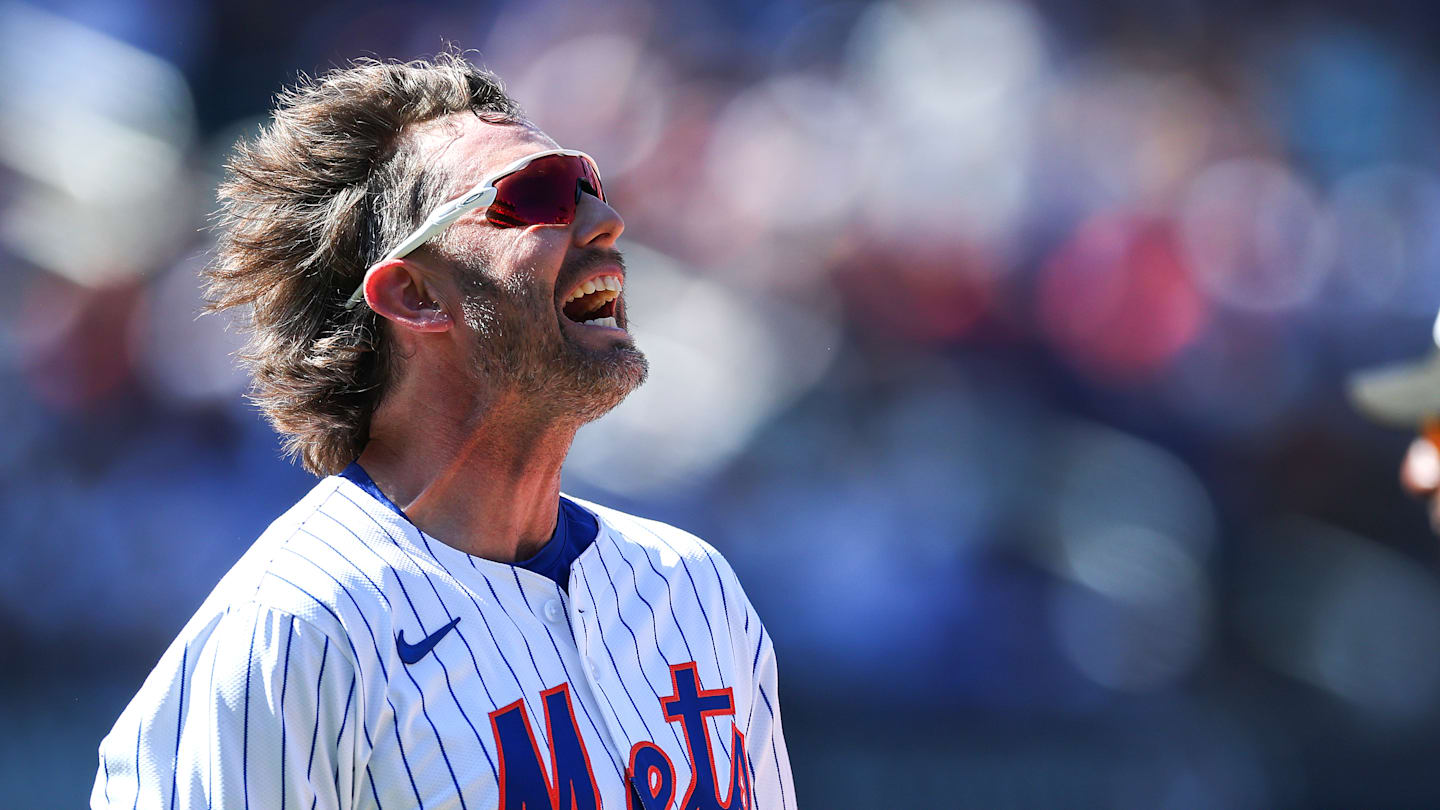
It felt for a while that, for as much as the New York Mets wanted to trade Jeff McNeil, no one really wanted to step up to the plate and be their dance partner, at least until the dust settled on higher-upside options.
The fact that they moved him now, with higher-end options like Ketel Marte and Brendan Donovan still on the board, is a minor miracle. In the deal, the Mets did about as well as one could have expected, even though it cost them a bit of cash to pry away a lottery ticket.
When it comes to trading an overpaid, clearly declining veteran, who is also coming off an injury, there are really only two types of returns you can expect. Option A is a fringe roster player, the kind of guy who is in his mid-to-late 20s, hasn’t really stuck anywhere, but is good enough to be the last man off your bench or out of our bullpen. Option B is to take a flier on a complete unknown and roll the dice on a youngster whose range of outcomes is more diverse than the rainbow.
The Mets chose Option B, and they’re all the better for it.
The Mets made the right call in trading Jeff McNeil for a teenage lottery ticket in Yordan Rodriguez
Yordan Rodriguez sighed with the Athletics out of Cuba for the not-so-insignificant sum of $400,000 in January. While that’s a far cry from the $5 million bonus the Mets gave Elian Peña, deals like the one Rodriguez received are far more common than the astronomical number the Mets gave their highly touted youngster from the same class.
All of this is to say, Rodriguez has potential, and he started to show it off during his brief stint in the Dominican Summer League this past season. Baseball America’s Ben Badler (subscription required) had Rodriguez ranked as one of the 20 best pitching prospects in the DSL this past summer, noting that the young right-hander was already able to run his fastball up to 96 miles per hour.
And youth is the biggest takeaway here with Rodriguez. He doesn’t turn 18 until January 29, and already measuring in at six-foot-three, 190 pounds, he has the type of frame scouts drool over.
A 15.1 inning sample in which he struck out 11.74 batters per nine innings and posted a 2.93 ERA is encouraging, but it isn’t enough to draw any meaningful conclusions. And that’s kind of the point. The potential outcomes are wide open.
Rodriguez could eventually become an ace, or maybe he turns into a dominant high-leverage reliever. If you set your sights lower, he could be a reliable innings eater in the middle or back end of a rotation, or a bullpen arm that can get you through the middle innings. Maybe he’s just relegated to mop-up duty when and if he ever reaches the bigs. Maybe he flames out entirely.
The uncertainty abounds while the potential tantalizes, which is the exact opposite of a fringe roster guy that would have been the other option in a McNeil deal.
Those guys, replacement-level players, are a dime a dozen and can easily be acquired by scouring the waiver wire. In taking this route with McNeil, the Mets get the opportunity to get a player who could become something, over the more established player who has proven he isn’t much of anything, and that means they made the correct choice. Regardless of what Rodriguez becomes, this deal is a win for New York.