
There are so many layers that go into running a professional sports team.
For most controlling owners—those who operate their clubs more as business assets than hobbies—the year-to-year focus is simple: turn a profit, keep shareholders happy, and increase the value of the franchise.
Advertisement
And as I said, there are a lot of cogs in the wheel. It’s not just the front office or the players on the field. It’s every team employee. Every grounds crew member. Everyone in ticket sales, maintenance, travel, and all of the behind-the-scenes work that makes the day-to-day operation of a baseball team run smoothly.
And yet, for a business that is so layered and complex, the path to success is often remarkably simple.
Revenue comes when fans come. Fans come when winning comes.
You can even see it in the most basic metric: attendance.
In 2025, the Los Angeles Dodgers sold 4,012,470 tickets across 81 home games.
Advertisement
According to Drotto.com, the average primary-market ticket price was $54 (and much higher on the secondary market). That number might even be conservative, but let’s take it at face value.
Multiply $54 by the number of tickets sold at Dodger Stadium in 2025, and you’re looking at over $216.6 million in ticket revenue alone.
That’s more than two-thirds of the Dodgers’ payroll, which sat around $338 million in 2025—and that’s just ticket sales. No TV revenue. No jersey sales. No parking. No food. No beer. No postseason home games during yet another World Series run.
Sometimes, in the baseball business, you have to spend money to make money.
Advertisement
The Dodgers gave Shohei Ohtani an unprecedented $700 million contract two years ago. Between sponsorships with Japanese brands, merchandise sales, attendance, tourism, and international broadcasting rights, sources estimate Ohtani’s direct annual revenue impact on the Dodgers to be somewhere between $100 million and $200 million annually.
Within 48 hours of his No. 17 Dodgers jersey going on sale through Fanatics, it became the best-selling sports jersey in history, surpassing Lionel Messi.
A massive contract? Absolutely. Worth every penny? Without question.
Some owners understand this. Others simply don’t.
Advertisement
For a long time, Chicago White Sox owner and chairman Jerry Reinsdorf has fallen into the latter category.
Year after year, Reinsdorf refuses to make a meaningful investment in payroll. He fields a subpar roster, and when a season like 2024 happens—one in which the White Sox lose more games than any team in MLB history—fans understandably stop showing up.
But instead of seeing that as motivation to change course, Reinsdorf uses it as justification not to invest.
He goes cheap. The team stinks. Fans stay home. Then he blames the fans and goes cheap again.
Around and around we go.
For the first time in a long while, though, there is a sense of optimism on the South Side that things might be changing—and while much of that hope is tied to Justin Ishbia, the owner-in-waiting with deeper pockets and a willingness to pay for wins, it’s not entirely about him.
Advertisement
Ishbia won’t take over for at least a few years, and no one can be certain when that transition will happen.
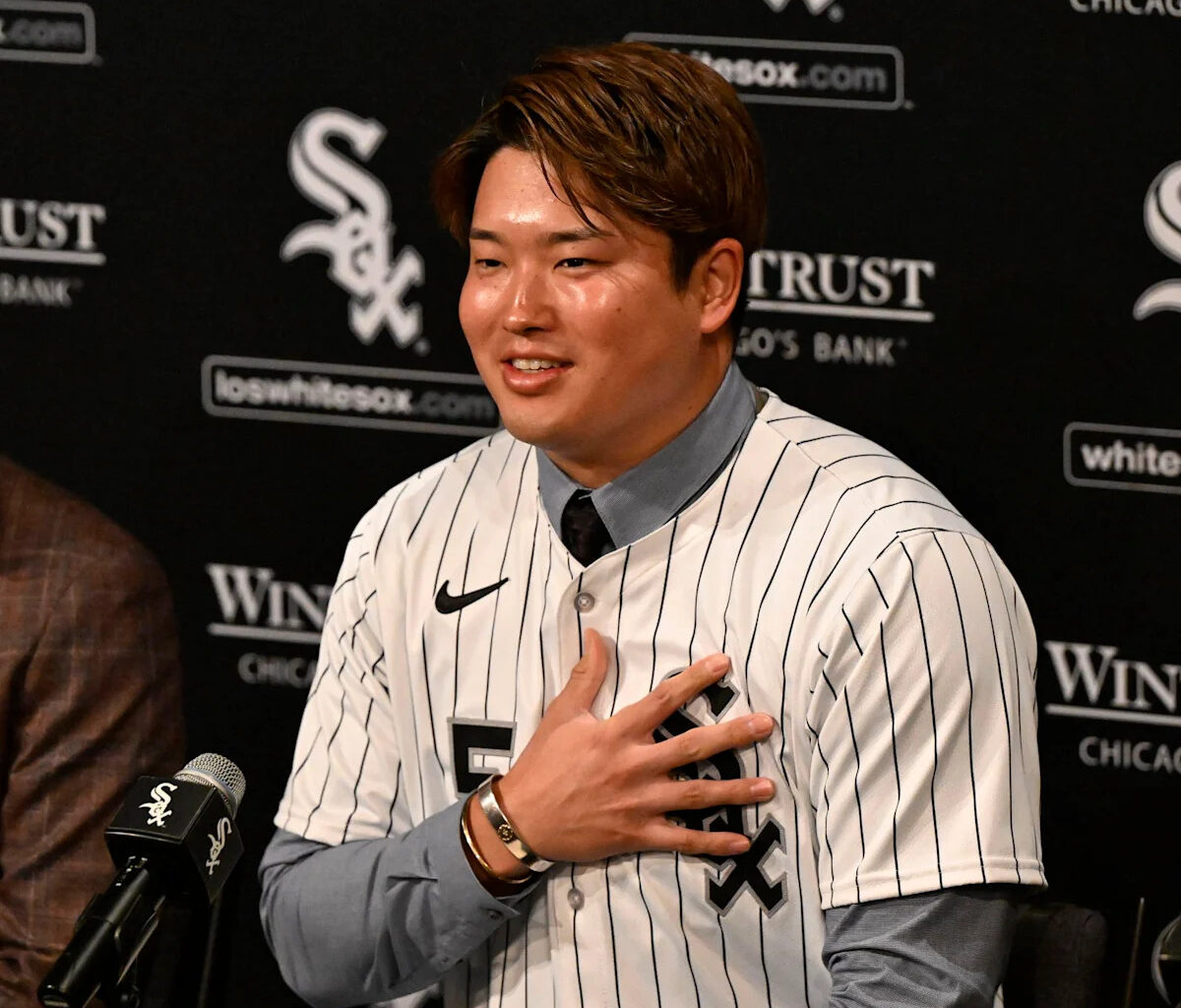
But even with Reinsdorf still calling the shots, the White Sox did something unprecedented this weekend: they signed international star Munetaka Murakami to a two-year, $34 million contract.
The fan reaction was exactly what you’d expect.
Murakami jerseys are already sold out at the team store. Season-ticket sales are climbing. The team’s announcement post on X generated more engagement than every White Sox post from the entire offseason combined.
This is precisely what general manager Chris Getz and chief revenue and marketing officer Brooks Boyer envisioned—and exactly what they pitched to Reinsdorf to get the deal approved.
Advertisement
“Got Jerry up to speed on the reality of bringing in Mune,” Getz said at Murakami’s introductory press conference. “The more he was hearing from me, and from Brooks on the marketing front and the international impact, it led us to get to the finish line.”
Now, let’s call it what it is: it’s depressing that the general manager of the Chicago White Sox has to loop in the club’s marketing executive and spend weeks convincing ownership to approve a $17 million-per-year contract.
That kind of deal is routine in today’s game.
If you’re talking about a $300 million commitment, fine—pause, analyze, ask questions. But most ownership groups don’t blink at two years and $34 million.
Advertisement
That alone tells you how far behind the White Sox have been operating.
Still, Getz got Reinsdorf on board. The deal got done.
And with all the positivity already flowing—with No. 5 Murakami jerseys filling the concourses at Rate Field in 2026, with Japanese baseball fans tuning in, buying CHSN, purchasing merchandise, and maybe even traveling to Chicago to see him play—I hope this serves as a lesson for Jerry Reinsdorf.
Because if there was ever a clear example of how this works, this is it.
Spending money can make you money.