
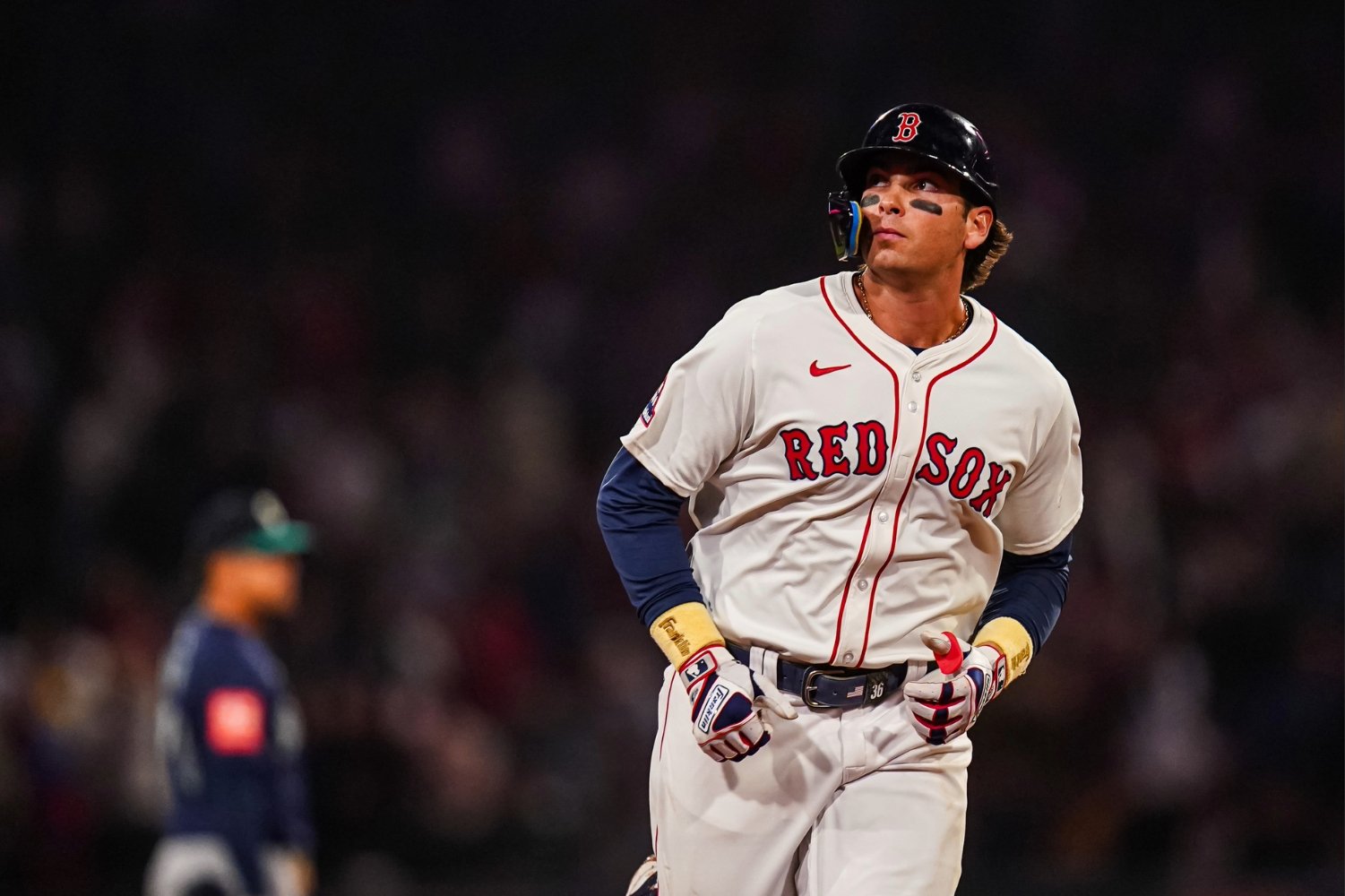
For a contending team, it wouldn’t have been pragmatic for the Boston Red Sox to go into the 2026 season without additional depth at first base, a position that has been a glaring weakness over the past three years. Moreover, first base seemed to be the obvious place to acquire a desperately-needed power bat. Following the acquisition of Willson Contreras from the St. Louis Cardinals, Triston Casas faces an uncertain path to playing time in 2026.
Let me start with this: I’m a vocal Triston Casas fan. In college, I took a break from following the Red Sox closely as my studies (and extracurricular activities) took precedence. After graduation, I started watching the team again, largely drawn back to baseball by Casas’ rookie season. As someone who’s also been labeled as quirky throughout my whole life, it was refreshing to see an MLB player with a similar personality on my favorite team. Growing up during the boring era of baseball personalities, Casas was like a shot of espresso. I love that Casas is unapologetically himself, from his adherence to routines (I also eat strawberries daily) to his love for sushi, and most importantly, his ability to demolish the ball.
After finishing third in the 2023 American League Rookie of the Year voting, it looked like Triston Casas was going to be the Red Sox’s middle-of-the-order power bat for the future. In 2024, a rib cartilage tear sidelined him for most of the season. In 2025, a torn patellar tendon abruptly cut his season short. Due to Casas’ extensive injury history, Chief Baseball Officer Craig Breslow was reluctant to name him as the team’s starting first baseman in 2026.
Year
PA
BB%
K%
AVG
OPS
wOBA
wRC+
WAR
2023
502
13.9%
25.1%
.263
.856
.367
131
1.8
2024
243
12.3%
31.7%
.241
.800
.342
120
0.6
2025
112
9.8%
24.1%
.182
.580
.256
56
-0.6
Casas’ value comes from his bat, which peaked during his rookie season. His defense at first has been subpar, posting -9 Outs Above Average (OAA) in his 2023 rookie season, -2 OAA in 2024, and -3 OAA in 2025. On the other hand, Contreras is a plus defender at first, recording +6 OAA in his first full season manning the position.
Back in June, Casas said he aims to be ready by Opening Day. The addition of Contreras alleviates the pressure on Casas to rush his recovery and return Notably, he has three remaining minor league options and could start the season in Triple-A Worcester. When fully healthy, Casas, as a left-handed bat, could work out some platoon with Contreras between designated hitter and first base.
Figuring out what to do with Masataka Yoshida, the team’s designated hitter, is a bridge to cross later in this possible future. If Casas obliterates the ball in spring training, releasing Yoshida could be an option; the former NPB phenom has never provided much value defensively, and he’s a square peg in a round hole as a designated hitter. He profiles more as a contact hitter than the power bat that teams want from the position. Considering the uncertainty surrounding Casas’ health and questions about his performance returning from consecutive substantial injuries, however, cutting ties with Yoshida now would be premature.
The Red Sox finally have depth at first base, a position that has only accumulated 1.4 fWAR for the team since 2022 (24th in baseball). Contreras himself brings his own history of injuries, albeit most of them were related to catching. Trading or releasing Casas when his value is at an all-time low would be short-sighted. At just 26 years old next season (his birthday is in early January), he remains controllable and won’t reach arbitration until after 2026.
Take it from Breslow, who summed up the team’s approach: “(It’s an) opportunity to keep everybody fresh, to keep everybody involved and engaged at the same time. As we sit here in late December with Triston coming off of a season-ending injury, to get too far ahead of ourselves probably doesn’t make a ton of sense. To have right-handed impact, left-handed impact, both guys that can hit the ball out of the park, it’s going to make us better.”
For now, patience is the best strategy. The Red Sox can afford to let the situation unfold.