
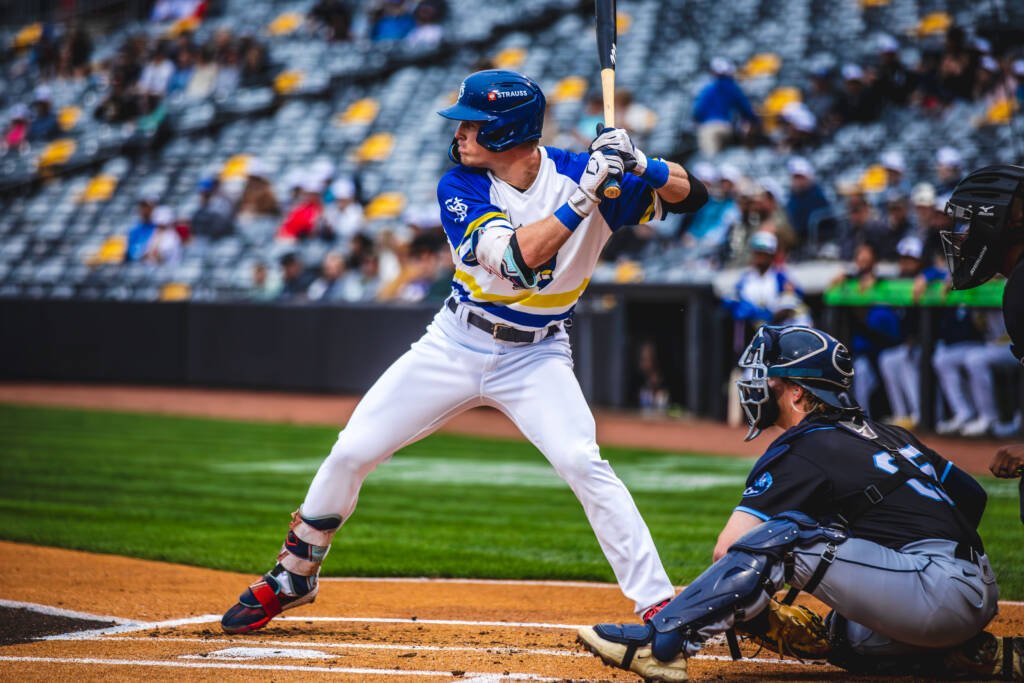
The Twins’ 2025 season will not be remembered fondly, at the major-league level. For the second straight year, Minnesota faded badly in the second half, and the trade deadline only deepened the frustration. Fan favorites with multiple years of team control, like Jhoan Duran, Griffin Jax, and Louis Varland, were shipped out—moves that signaled another organizational reset, rather than a push forward.
Those decisions understandably strained the relationship between the front office and the fanbase. Still, the offseason remains unfinished, and perspective matters. When you zoom out beyond Target Field and look across the organization, there was legitimate progress made in 2025. The Twins’ farm system provided some of the brightest moments of the year and offered a reminder of why patience still matters in the Twin Cities.
Here are five ways to remember 2025, through the lens of Twins minor leaguers.
Big Years from Gabriel Gonzalez and Dasan Hill
If there was one clear takeaway from the farm system this season, it was the emergence of legitimate impact talent. Gabriel Gonzalez was named Twins Daily’s Minor League Hitter of the Year after putting together his most complete professional season. In 123 games, he hit .329/.395/.513 with a 148 wRC+, while reaching Triple-A as a 21-year-old. He showed improved plate discipline, consistent power to all fields, and the kind of offensive profile that now projects comfortably into a corner outfield role at the major-league level. Plus, he’s a right-handed hitter, something the Twins have lacked for that very role in recent seasons.
On the mound, Dasan Hill earned Twins Daily’s Minor League Pitcher of the Year honors, and his rise felt just as meaningful. In 19 starts (62 IP), he posted a 3.19 ERA, a 3.35 FIP, a 31.1% strikeout rate, and a 15.0% walk rate. The 19-year-old took noticeable steps forward with his command and secondary offerings, turning raw arm strength into sustainable production. If he continues to make strides next season, he could enter the picture as a top-100 prospect. In an organization that continues to prioritize pitching development, Hill’s progress stood out as a significant win.
Top Prospects on the Brink: Walker Jenkins and Emmanuel Rodriguez
The Twins still possess two of the most intriguing offensive prospects in baseball. Walker Jenkins continued to validate the hype surrounding him, showing why he is viewed as a potential franchise cornerstone. He reached Triple A in his age-20 season, a rare feat, and posted a 135 wRC+ across three levels. Many national outlets will have him ranked among baseball’s top 10 prospects entering 2026. His combination of physicality, athleticism, and advanced approach at the plate keeps his ceiling among the highest in the system.
Emmanuel Rodriguez remains a fascinating case study. When healthy, he is one of the most dangerous hitters in the minors, pairing elite on-base skills with game-changing power. While durability remains i doubt, however, 2025 reinforced that Rodriguez is not a fringe prospect. In 65 games, he posted a 135 wRC+ with an .839 OPS and a 20.6% walk rate. Minnesota allowed him to play in the Dominican Winter League, and he’s posted a .292 batting average with a .417 OBP and a .646 slugging percentage for a robust 1.063 OPS over 18 games. He is a potential middle-of-the-order bat knocking on the door of Target Field.
Cedar Rapids Wins the Midwest League West Division Title
Team success at the minor-league level does not always translate directly to future wins in the majors, but it still matters. The Kernels had to win back-to-back games in the best-of-three series to clinch the Midwest League West Division title. Their run to a runner-up finish in the Midwest League Championship showcased a group that played meaningful games late into the season. It was the team’s third Midwest League Championship series in five years, showcasing that the organization is finding ways to win in the low minors.
That experience is valuable. Prospects learning how to handle pressure, adjust during playoff series, and perform in high-leverage situations adds an element that development plans cannot fully replicate. Cedar Rapids finished the season with a 74-63 record. The Kernels’ success was a reminder that the system is not just producing individual standouts, but also competitive teams.
Breakout Seasons from Connor Prielipp and Kaelen Culpepper
Few prospects needed a strong year more than Connor Prielipp, and he delivered. After injuries slowed his early professional career, Prielipp finally enjoyed extended time on the mound and looked the part of a polished left-handed arm. In 24 games (82 2/3 IP), he posted a 4.03 ERA, a 3.54 FIP, a 27.0% strikeout rate, and an 8.5% walk rate. Earlier this winter, Derek Falvey mentioned him as a potential arm that could shift to a bullpen role for 2026. His ability to miss bats and attack hitters reestablished him as a meaningful piece of the pitching pipeline.
Kaelen Culpepper also made noise in 2025, emerging as one of the system’s most pleasant surprises. The former first-round pick slashed .289/.375/.469 with a 138 wRC+ and 25 steals. His blend of athleticism, defensive versatility, and improving offensive output raised his stock, to something befitting a player taken higher than 21st in his draft class. Culpepper’s development added depth to a system that increasingly values flexibility and up-the-middle talent.
A Restocked Farm System from the Trade Deadline
The trade deadline hurt, but it served a purpose. By moving established big-league relievers and veterans on expiring deals, the Twins replenished a farm system that had thinned out in recent years. Minnesota acquired multiple prospects ranked in Twins Daily’s top-20 prospects, including catcher Eduardo Tait, right-handed pitcher Mick Abel, and lefty Kendry Rojas. Other prospects acquired include righty Ryan Gallagher, outfielder Hendry Mendez, righty Geremy Villoria, catcher Enrique Jimenez, righthander Sam Armstrong, and southpaw Garrett Horn. Not every prospect turns out to be a star, but the Twins need viable options for the long term.
The incoming talent may not all become household names, but the organization added volume, upside, and developmental options across multiple levels. That matters for a front office that continues to operate under owner-imposed payroll constraints. Minnesota’s farm system is now ranked among baseball’s best, and the team will add to that depth with the third overall pick in the 2026 MLB Draft. A deeper farm system creates options, whether that means internal promotions or future trades that better align with competitive windows.
The 2025 Twins will be remembered for another collapse and difficult decisions from the dugout to the owners’ suite. The 2025 farm system, however, tells a different story—one of growth, opportunity, and a reminder that the next core of Twins baseball is still very much under construction.
What stands out from the past year in the Twins farm system? Leave a comment and start the discussion.
Interested in learning more about the Minnesota Twins’ top prospects? Check out our comprehensive top prospects list that includes up-to-date stats, articles and videos about every prospect, scouting reports, and more!