
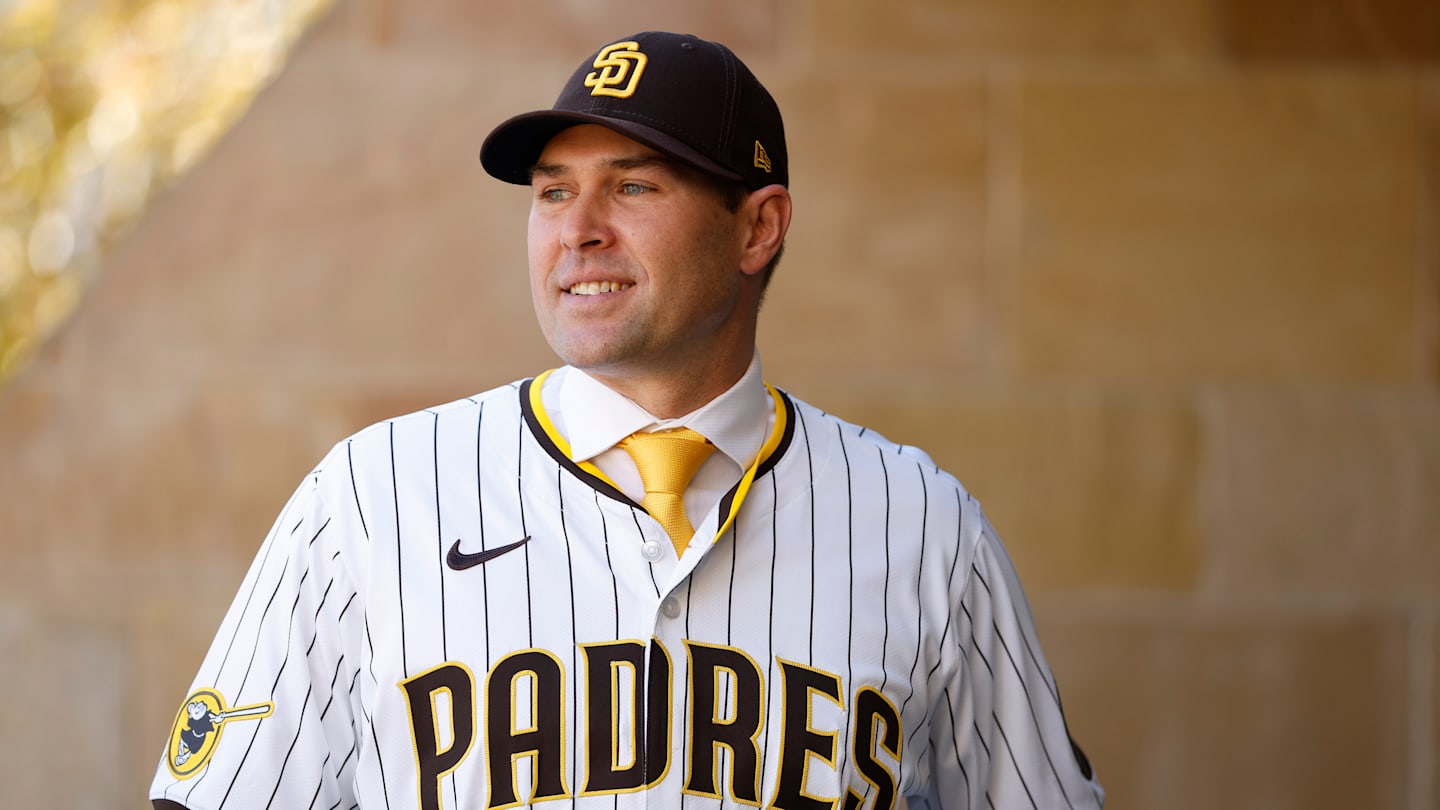
The San Diego Padres didn’t hand Sung-mun Song four years and $15 million because they needed a new face to sit quietly at the end of the bench. They signed him because “useful” is a skill — and in a long season, it might be the most valuable skill on the roster.
Song arrives from the KBO with the kind of resume that makes you blink twice. In 2024, he hit .340 with 19 home runs, 21 stolen bases, and a .927 OPS. Then in 2025, he followed it up with .315, 26 homers, 25 steals, and a .917 OPS.
Sung-mun Song could become the Padres’ most important lineup glue
Of course, MLB isn’t the KBO, and the Padres aren’t pretending Song is going to waltz into the middle of a big-league lineup and immediately put up a 20/20 season. But that’s also kind of the point: San Diego doesn’t need him to be an everyday star to justify the signing. They need him to be the guy who fixes problems before they become injuries, losing streaks, or lineup black holes.
The Padres’ core is talented — and also very human. Manny Machado and Xander Bogaerts aren’t 24 anymore, and asking either one to grind out 162 games on the dirt every year is how you end up with the dreaded “day-to-day, lower-body tightness” update that lasts six weeks. Song’s ability to move around first, second, and third (with the potential to dabble elsewhere) gives the coaching staff a way to rotate rest into the lineup without waving the white flag offensively.
It also gives the Padres options with Jake Cronenworth, who already lives in the “where do you want me today?” universe. If Cronenworth stays with the Padres, and needs to slide across the infield, or if first base turns into a game of musical chairs, Song suddenly becomes the stabilizer — the plug-and-play piece who keeps the lineup from looking like it was built five minutes before first pitch.
And players like Song end up starting more than fans expect. Not because they’re “taking someone’s job,” but because they’re constantly the best answer to whatever problem pops up next. Song might not be written into the lineup card in Sharpie every day — but by September, the Padres could look back and realize he was one of the reasons the roster didn’t crack.