
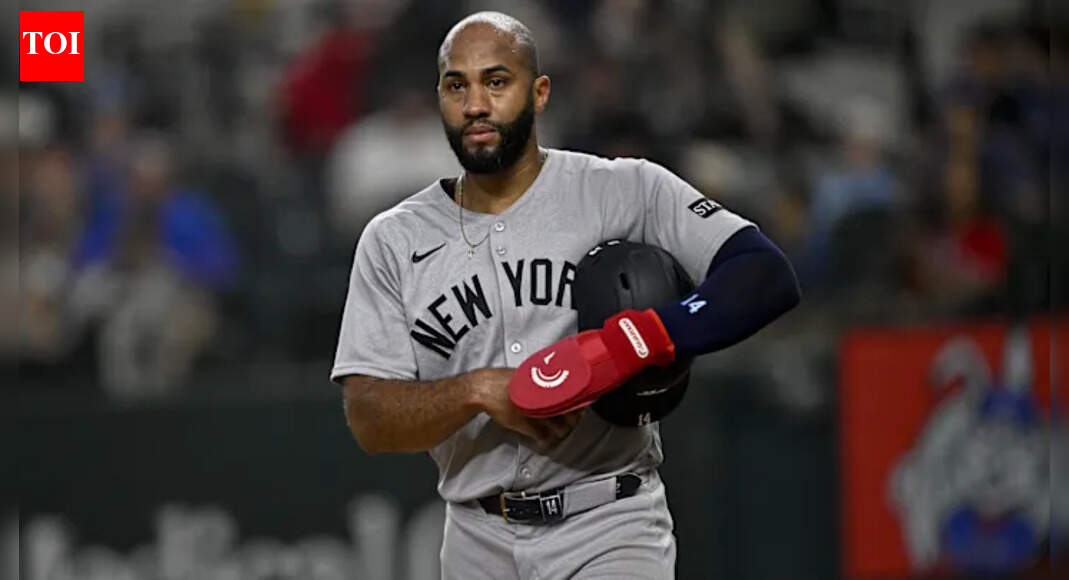
 Amed Rosario of the New York Yankees (Image via Getty) The New York Yankees did not get Kyle Tucker. That forced a decision, and Cody Bellinger is the clear alternative. He gives them a left-handed bat, defensive flexibility, and a way to steady the offseason without touching the farm system.This is not a panic move. It is a practical one. Tucker was the top target. Bellinger fills many of the same needs and fits the roster without creating new problems.
How the move would happen
With Kyke Tucker off the board, Cody Bellinger is expected to be a free-agent signing or a contract-heavy arrangement rather than a prospect-based trade. The New York Yankees would be paying for production, not upside.
Expected structure:
• Contract length: Six to seven years • Annual value: Around $25–27 million • Total value: Roughly $160–190 million • Opt-out: Likely after Year 2 or 3This keeps the Yankees near the top competitive balance tax tier. It also limits flexibility elsewhere, especially with pitching, but the front office has shown it is willing to live with that.Cody Bellinger has already been traded to the New York Yankees once for Cody Poteet and cash. Any new deal would be about winning a bidding process, not giving up prospects.
Why the New York Yankees do it
The lineup still leans right-handed. That has hurt them in tight games and in October. Cody Bellinger addresses that issue right away.
What he brings:
• A left-handed bat that fits Yankee Stadium • Ability to play center field, corner outfield, or first base • Postseason experience with a track record of handling pressureHe gives the manager options and reduces the need to reshuffle the lineup when injuries hit.
Why Cody Bellinger does it
For Cody Bellinger, New York offers money, exposure, and fit. • The ballpark helps his power • The market boosts his profile • The team is built to contend every yearHe can continue playing center field while also moving around the diamond. That keeps his value up over the life of the deal.
Effects beyond the lineup
Adding Bellinger helps in quiet ways. • The pitching staff gets more run support • The front office avoids an empty offseason narrative • Fans see a clear response after missing on TuckerIt stabilizes the roster without forcing follow-up moves.
What the upside looks like
The best version of this deal is straightforward. In 2025 with the Yankees, Bellinger hit 29 home runs with a .272/.334/.480 line. That was his highest total since his 2019 MVP season. The quality of contact backed it up.2025 contact profile:MetricValue Average exit velocity 88.3 mph Hard-hit rate 37.9% Barrel rate 7.5% wOBA .347Those numbers point to a solid middle-of-the-order hitter rather than a short-term spike.
Where the risk sits
The concerns are clear. • A seven-year deal pushes into decline years • His offense has swung year to year in the past • A large salary limits future movesThis works only if the early seasons deliver real value.
Cody Bellinger at a glance
CategoryDetail Age (2025) 30 Bats / Throws Left / Left Positions CF, LF, RF, 1B MLB seasons 9 Teams Dodgers, Cubs, YankeesCareer totals through 2025:StatNumber Games 1,100+ Batting average .261 Home runs 225 RBI 695 Major awards MVP, Rookie of the Year, Gold Glove, two Silver SluggersMajor awards MVP, Rookie of the Year, Gold Glove, two Silver SluggersRecent seasons:Season Team Slash line HR2023 Cubs Above .800 OPS 20+2024 Cubs Below peak Mid-teens2025 Yankees .272/.334/.480 29Who benefits mostIn the short term, the Yankees do. They replace much of what Tucker would have provided and keep their title window open. Bellinger gets long-term security in a park that suits his swing and a lineup that protects him.Also read: MLB trade rumors: Boston Red Sox could sign 6-foot-5 four-seam fastballer to bolster rotation and improve title oddsOver the full contract, the balance evens out. The early years favor New York. The later years may favor the player. If the first few seasons help push the Yankees deeper into October, that trade-off is one the organization will accept.