
Show summary Hide summary
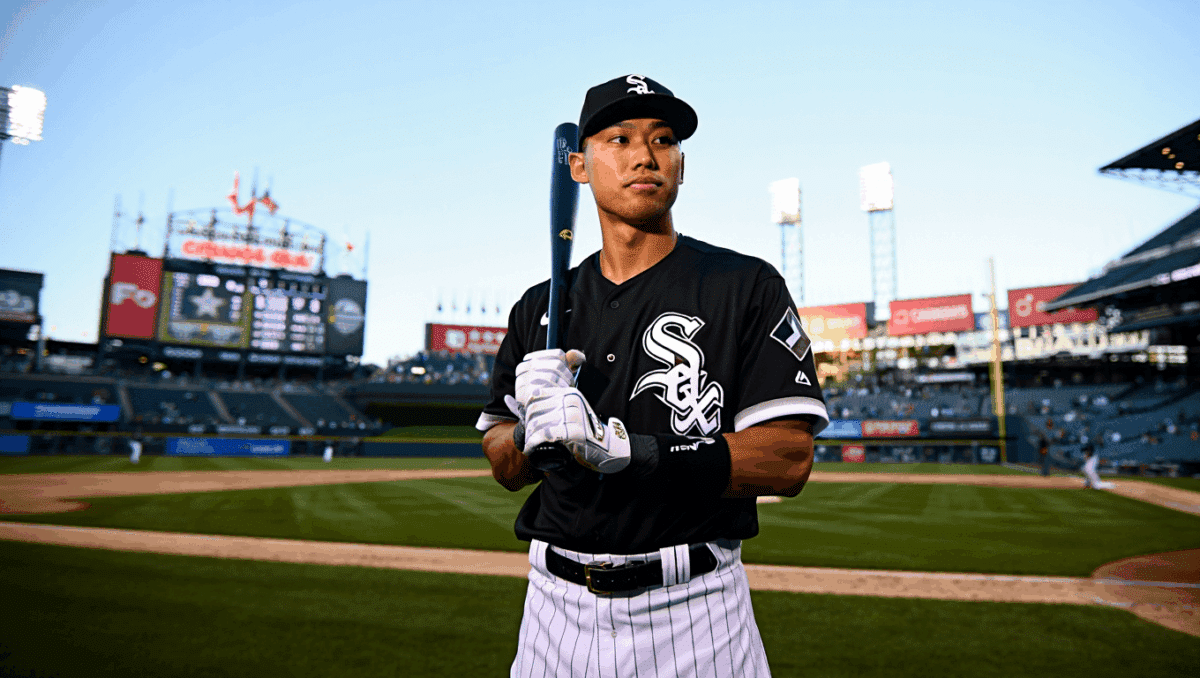
Chicago’s baseball scene jolted awake this week when the White Sox officially announced the signing of Japanese slugger Munetaka Murakami. The short, sharp statement at Guaranteed Rate Field didn’t just add a power bat to the lineup — it reshaped expectations for a franchise that has spent recent seasons near the bottom of the standings.
The two-year, $34 million deal surprised many analysts who had forecast a much larger commitment for the 25-year-old star leaving Nippon Professional Baseball. Beyond the dollar figures, Murakami’s arrival injects international curiosity, a potential lineup centerpiece, and a fresh storyline for a team navigating transition and new ownership talk.
What the contract means for the White Sox and the market
At face value, the price tag is modest for a player of Murakami’s pedigree. Scouts and pundits had floated larger projections — some as high as $100–$150 million on longer deals — which makes this signing notable for how it reflects the intersection of market caution and team strategy.
Term and guarantee: Two years at $34 million, giving the White Sox a short-term path to evaluate Murakami against big-league pitching.
Franchise context: The White Sox have not typically been a top free-spending team; this contract fits a pattern of measured investment while the club sorts through competitive rebuilding and potential ownership changes.
Market signal: Teams’ reluctance to hand Murakami a blockbuster underscores lingering questions about how his skill set translates to MLB velocity and pitch profiles.
Murakami’s resume: NPB star turned MLB prospect
Murakami arrives with a resume that reads like one of the most productive young careers in Japan. He produced prodigious home-run totals with the Yakult Swallows and became a national figure after dominating the 2022 NPB season.
Power numbers: Over roughly 1,000 NPB games, Murakami hit 265 home runs, including a league-record 56 in his triple crown season at age 22.
International experience: He played a key role on Japan’s 2023 World Baseball Classic championship roster.
Recent form and injury: An oblique issue limited Murakami last season, but he still produced 22 homers in just 56 games — a sign of lasting power despite fewer plate appearances.
How Murakami will fit into the White Sox lineup and clubhouse
The White Sox plan to deploy Murakami primarily at first base, a position that offers him defensive stability while freeing the club to reconfigure other roster pieces. Beyond position logistics, his personality and public outreach made an immediate impression at his introductory press event.
On-field role and offensive profile
Projected middle-of-the-order bat with an emphasis on extra-base power and run production.
Could lengthen the lineup for younger hitters surrounding him and change opposing pitching strategies.
Off-field connection
Murakami addressed fans in English during the team presentation and emphasized his intention to help change the culture. He paired talk with action by making donations to South Side families — a sign that he understands the role of community relations in his new city.
Strengths and clear concerns scouts will watch
While Murakami’s raw power is unquestioned, several factors temper expectations and explain why the market was cautious.
Hit-or-miss approach: His profile includes massive home-run upside but also rising strikeout rates and fewer walks as his career progressed in NPB.
Velocity challenge: Scouting reports identify difficulty with the game’s fastest fastballs — a red flag for adaptation to elite MLB pitching.
Comparative archetype: Some comparisons place him closer to high-variance power hitters — think peak Joey Gallo-style outcomes — than to every-day contact-and-power stars like Hideki Matsui.
Community impact and early goodwill moves
On his first day in Chicago, Murakami made charitable contributions that stood out amid the headlines. The team confirmed he donated grocery gift certificates and additional cash to a local food pantry, a move that resonated with a city facing cold-weather needs.
$10,000 in grocery certificates distributed to 100 families through a South Side pantry.
An additional $10,000 donated in cash to support holiday food assistance.
Those gestures, while a small fraction of his contract, created immediate local warmth and media attention — and signaled Murakami’s eagerness to be part of the community beyond the diamond.
Why the signing matters beyond Chicago
Murakami’s jump from NPB to Major League Baseball will be watched closely from both sides of the Pacific. The deal is a reminder that international stars don’t always follow a predictable free-agent arc when they arrive in the U.S., and teams balance potential upside with financial prudence.
For MLB: Evaluators will study how his swing and approach translate against consistently higher-velocity pitching.
For the White Sox: Murakami becomes a focal point in a club that just secured the top pick in the upcoming draft and is navigating broader organizational shifts tied to ownership and direction.
For fans: His charisma and early community work offer a narrative beyond wins and losses — a new face for a franchise seeking momentum.
You might also like:

John Davis is a sports journalist focused on the NBA, NFL, and major global championships. With seven years of live coverage, he breaks down performances and key strategies. His expertise gives you a clear view of every game and its impact.
Give your feedback
★★★★★
Be the first to rate this post
or leave a detailed review