
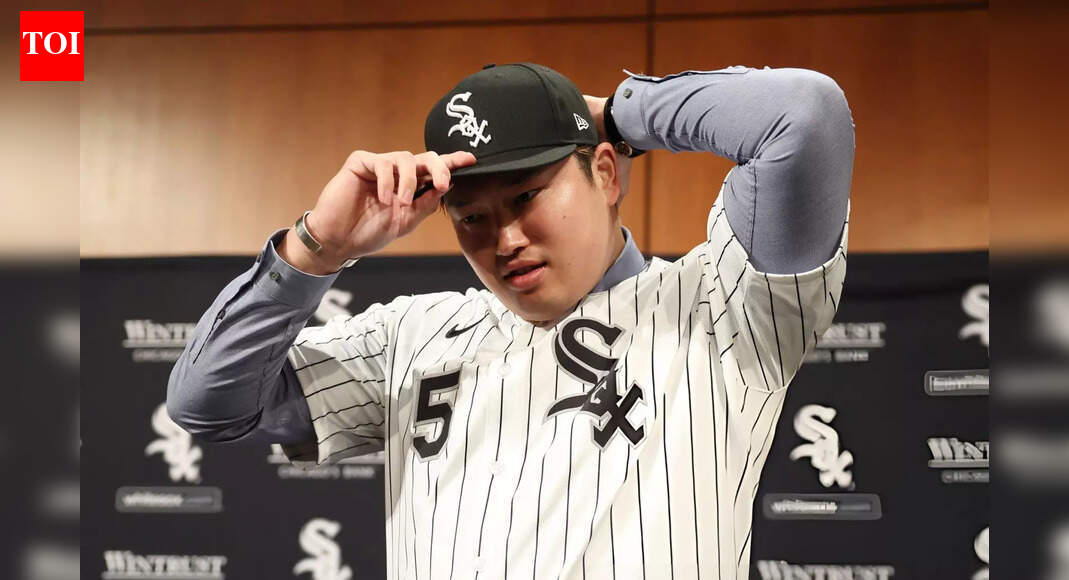
 (Image Source – Getty Images) The signing of Munetaka Murakami by the Chicago White Sox sparked a variety of reactions in the baseball world. His power was undeniable. The strikeouts were hard to miss. Yet, within the White Sox’s front office, the talks were a different story. Instead of fixating on Murakami’s difficulties in Japan, general manager Chris Getz focused on the untapped potential that remains.In a recent chat, Getz explained why the team thinks Murakami’s main issue isn’t a warning sign but rather a common transition challenge. From pitch speed to exposure gaps and behind-the-scenes development tools, the White Sox viewed potential where others saw danger. With spring training still a few weeks off, the organization is already positioning Murakami as more than just a risk. They see him as a measure of faith, patience, and whether their system can transform raw power into something even greater.
Chris Getz explains why Munetaka Murakami’s strikeout rate fits a familiar MLB transition pattern
White Sox GM Chris Getz tackled Murakami’s strikeout worries directly in a chat with Chuck Garfien from Chicago Sports Network. Getz pointed out that although this is a significant issue, it’s pretty typical for successful Japanese players and can be eased with proper acclimation and the team’s support.Getz said, “You look at recent hitters that have come over and their strike out rates. It’s pretty similar. We’re talking about guys that have had a lot of success here. So, you look underneath the hood a little bit more.”He mentioned players such as Shohei Ohtani and others who made adjustments after experiencing high strikeout rates at first, implying a need for a more thorough analysis beyond just the basic stats.Getz then pinpointed specific areas for improvement, “Some exposure to velocity, certain types of pitches. Yeah, we’ve identified that. But we also know that there’s an acclimation to Major League Baseball, there’s an acclimation to certain types of velocity.”This indicates that NPB pitchers typically have a lower throwing speed compared to MLB pitchers, which influences Murakami’s whiff rate. However, it portrays this as a challenge he can conquer instead of a serious concern.
Munetaka Murakami on His Fit With the Sox and Breaking Down the Signing With Chris Getz
The GM expressed strong confidence in the White Sox’s infrastructure to facilitate this growth. “We’ve got training methods, we’ve got an infrastructure that could help him. He hasn’t been provided what we’re able to provide him. We’ve got a big engine he’s operating with. He’s got bat speed, he’s got strength, he’s shown the ability to hit for a unique amount of power. To get him in our door, under the watch of our coaches, we feel like we can really tap into another level,” Getz continued in the same interview.Getz’s remarks match the team’s plan for Murakami to be a key hitter in the middle of the lineup and the main first baseman as spring training kicks off, taking advantage of his 72.6% in-zone contact rate while this would place him towards the lower end of MLB, it indicates potential for MLB-level coaching to improve it.The two-year framework of the agreement offers a low-risk opportunity for this project, including options to opt-out after the first year to safeguard both parties.
Munetaka Murakami set to make Chicago White Sox spring training debut in February 2026
Murakami is set to wear the White Sox uniform for the first time in February 2026 during spring training at Camelback Ranch in Glendale, Arizona. The team sees him as a key player in their lineup, likely batting fourth or fifth, and they believe his power will shine through even with the strikeout challenges.The White Sox, aiming for a comeback, see Murakami as a source of immediate offensive power and a way to test their player development system. Getz mentioned that this signing opens up “exciting new territory” by combining international talent with homegrown talent. Fans in both Chicago and Japan will be watching closely as Murakami gets used to the league, with his first official MLB at-bats expected in late March 2026.Also Read: Bryce Harper net worth in 2025: Assets, salary, endorsements, and how he Built a $100 Million empire