
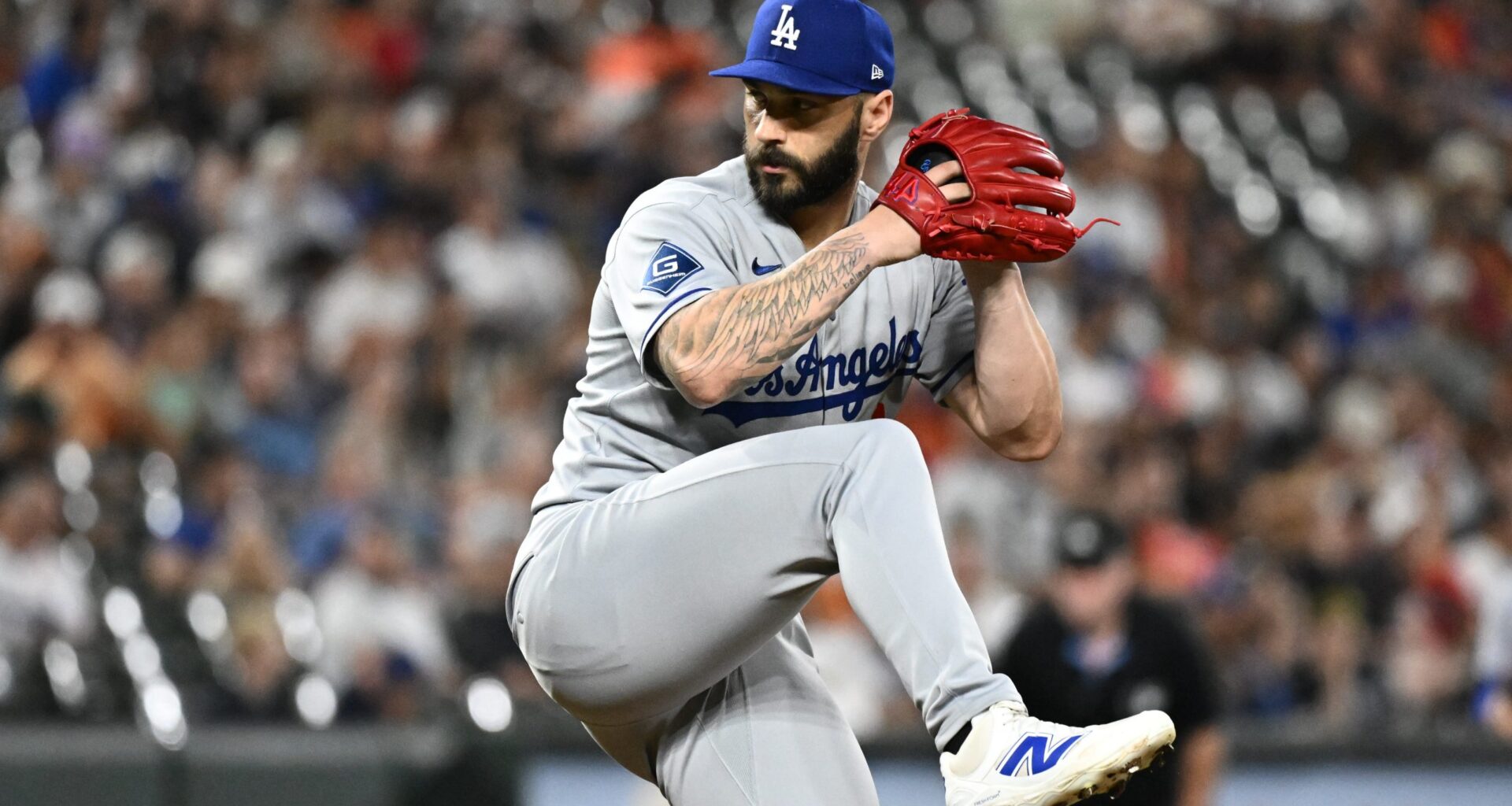
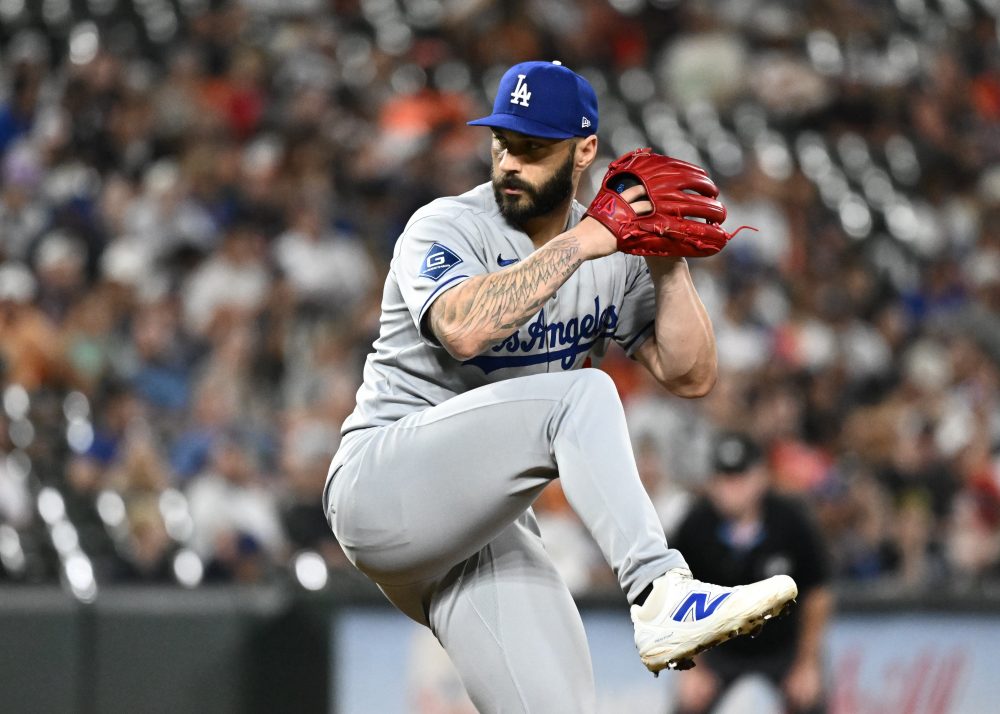
Image credit: © James A. Pittman-Imagn Images
Back before the season started, we were treated to a number of questions and takes centering around the question of whether the Dodgers were ruining baseball. The question was never particularly reasonable, but it arose, again and again, because the club followed up its World Series victory with what qualifies as a free agent blitz in these slow-moving winters. They inked Blake Snell, Tanner Scott, Kirby Yates, Michael Conforto, Enrique Hernández, Clayton Kershaw, Roki Sasaki, and Teoscar Hernández to new contracts. If that doesn’t really move the needle for you at the moment, well, baseball always punishes hubris. Which is also how the team that could be ruining baseball is currently on pace for its worst full-season finish since 2012.
The team that entered the season looking like the Monstars has had the talent sucked out of them. Sure, Shohei Ohtani is probably going to win another MVP, but Mookie Betts’ early-season illness seemed to have taken an extended toll on his bat, Max Muncy has missed extended periods of time, and key postseason cog Tommy Edman has been unavailable or limited throughout much of the season. Perhaps Michael Conforto is an energy vampire?
But every iteration of this decade-plus run has dealt with significant injuries—the team was built to withstand them—and to varying degrees, underperformance. It’s not hard to recall the amount of rope the club gave Craig Kimbrel in 2022, before ultimately leaving him off the postseason roster. And as anyone who follows me on social media knows, they repeatedly employed Joe Kelly. So Conforto’s continued presence in the lineup and Tanner Scott’s continued use in leverage situations aren’t exactly a surprise.
The difference between this season and Kimbrel’s, though, is that the Dodgers had enough cushion within the division that whatever in-season experiments they wanted to run were basically irrelevant. That’s the kind of thing you can do without causing agita when you win 111 games and finish the season 22 up on your next closest competitor. It’s less endearing when you’re running Scott out on a back-to-back, with the bases loaded and up a solitary run, in the midst of a four-game losing streak and in the heat of a divisional race…while trying to salvage what was 8 ⅔ innings of a no-hitter. [Update: Dave Roberts then went back to Scott (and Blake Treinen) in the latter stages of another no-hit effort Monday night, just two games later]
But it’s the similarities that create the bigger problem. In both situations, Roberts and the Dodgers seem to just…not care all that much. Obviously, their preference is to win, you don’t spend what they’ve spent just to win in the playoffs, but to be good enough to sell lots of tickets and ads throughout the season, too. Maybe make little children fall in lifelong love with the sport, as a fun little bonus. But we know from the team’s pursuit of Ohtani that they do not consider a division title without a World Series a success, while they’ll surely consider a World Series without a division title on equal footing as a championship with one.
There’s nothing strictly wrong with prioritizing a World Series; it’s where the league and its culture have arrived, hand in hand. But the impact of taking the longest view available at every possible turn undeniably results in a diluted on-field product—again, much as we’ve seen with the league as a whole. There’s no argument available that Tanner Scott was the best, or even a good option for the Dodgers in that Saturday game, given the conditions—a one-run affair, with the bases loaded, and a right-handed hitter due up, not to mention the slim divisional lead the Dodgers are currently nursing. But Roberts likes to get struggling players back on the horse and restore confidence. That was his motivation in going to Scott, to straighten him out for when things really matter. And it’s the same logic behind going back to Scott in Monday’s game, so soon after failing in a similar situation.
And that kind of thinking can make a certain kind of sense. The league has devalued winning the division, especially if you’re not a top-two seed. The Dodgers likely look at the benefits of being the third-seed division winner compared to the fourth-seed top Wild Card and…shrug. It’s home-field advantage in the Wild Card round either way, so why press things? And that’s precisely the issue. Incentives, famously, are not mandates, so this doesn’t fall solely at the feet of the league. Roberts and the Dodgers own a piece of this too. Their insistence on some sort of extreme utilitarian long view when it comes to chasing a championship has become a detriment to the on-field product, and perhaps crucially, the on-field results. The product can suffer when the results are there (see: Kimbrel, Craig), but when both are diluted it becomes a bigger problem. The club is at least as much of a symptom as a cause, though. If teams show minimal interest in the regular season and its related stakes, it threatens the entire project.
The seams of the league’s insatiable desire for guaranteed postseason dollars are on display for all to see, thanks to the Dodgers indifference to anything but that same postseason. It leaves us wondering how long it will take to see the rest of the league take the same approach, only with less profligate spending. And when MLB teams do follow LA’s lead, one wonders what the point of baseball’s regular season becomes. The NBA, after all, has been dealing with this same problem for years, under the pretense of load management. Basketball doesn’t really have a solution for the incentives motivating teams—and nor would baseball—which has led to the league crafting awkward rules for making its regular-season product watchable. The difficulty remains. Why would we attend regular-season games, or subscribe to increasingly expensive packages to watch them? Why not just tune in come playoff time? That’s what matters, right?
Thank you for reading
This is a free article. If you enjoyed it, consider subscribing to Baseball Prospectus. Subscriptions support ongoing public baseball research and analysis in an increasingly proprietary environment.