
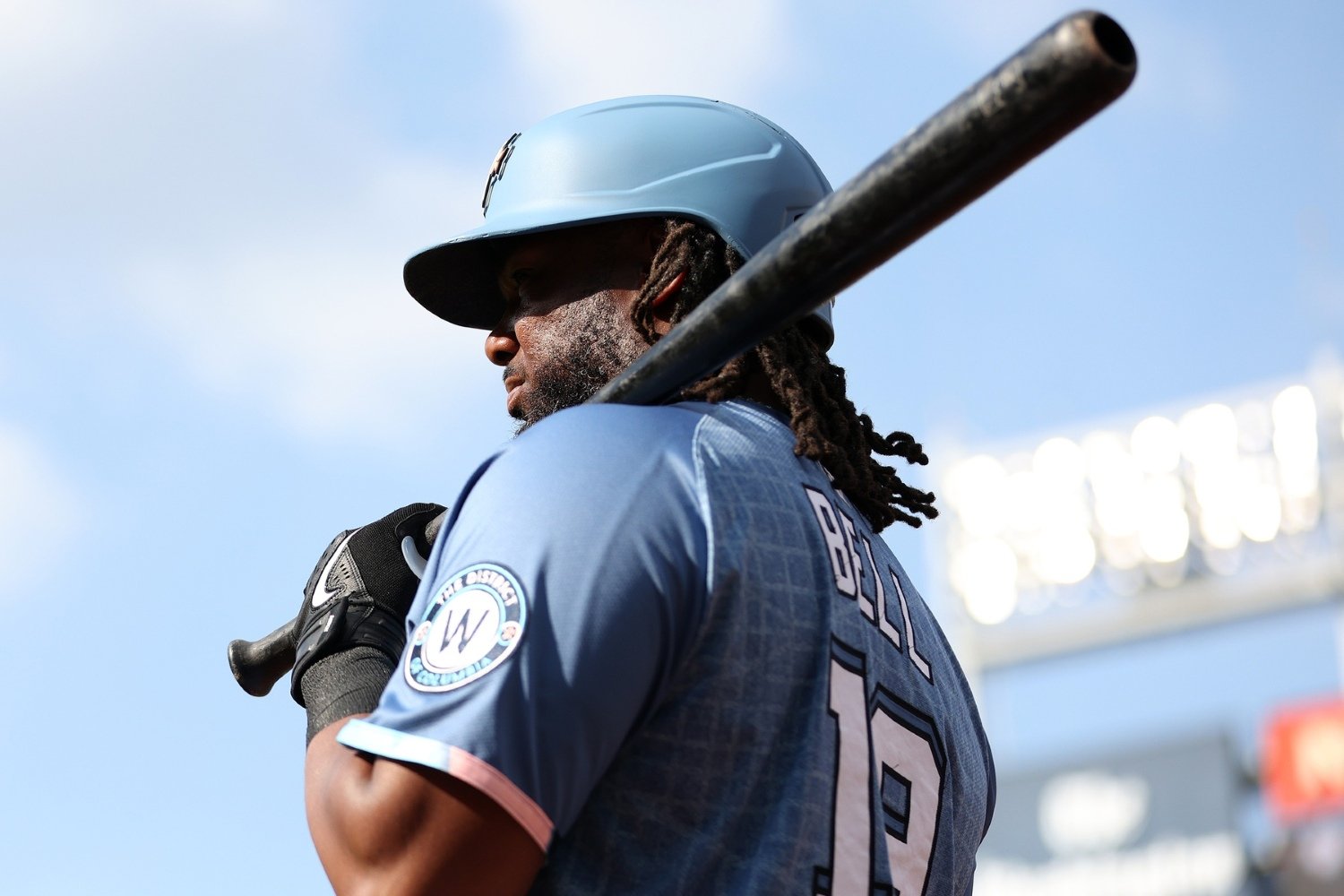
Josh Bell is not the kind of signing that flips an organization on its head, but he is the kind that quietly reshapes how a lineup comes together. At 33, Bell arrives in Minnesota as a known quantity. He has been an above-average hitter for nearly a decade—durable to a fault, and consistently productive even when the overall package has not quite matched the star-level expectations once placed on his prospect profile.
Bell has spent much of his career teasing something more. The power is real. The plate discipline is real. The problem has always been the ground balls. Despite that flaw, Bell has averaged better than 26 home runs per 162 games over the past seven season, and has shown an ability to carry an offense for weeks at a time when he gets hot. The Twins are betting that stability and experience can help lift a lineup that has too often relied on streaky young bats to do the heavy lifting.
First Base Fit and Defensive Tradeoffs
Bell figures to be the primary first baseman for new manager Derek Shelton, who briefly overlapped with Bell in Pittsburgh. The Twins’ current internal options at first base are serviceable, but limited. Edouard Julien can handle the position in short spurts, but is stretched defensively. Kody Clemens brings versatility and pop, but profiles better as a part-time player. Neither option offers the middle-of-the-order presence that Bell provides.
The downside is obvious. Bell is not a good defender. While he posted solid grades at first base in 2021 and 2022, the longer-term numbers are ugly. Over his past 1,551 innings in the field, Bell has been charged with -20 Defensive Runs Saved and -16 Outs Above Average. He struggles with range and consistency, and his lack of speed shows when plays require lateral movement.
Minnesota is scheduled to have a young infield around Bell, which could throw his defensive shortcomings into sharp relief. Royce Lewis saw improvements at third base last year, but he has previously struggled with throwing issues. Brooks Lee and Luke Keaschall will form the team’s double-play duo, at least some of the time, but both are seen as below-average defenders. The Twins need someone at first who can help their young infield with scoops and errant throws.
That reality likely pushes the Twins toward a flexible usage plan. Bell will play first base often, but the club can mitigate some of the defensive damage by rotating him through the designated hitter spot. That would also open occasional opportunities for Julien or Clemens to see time at first, keeping more bats in the lineup without asking Bell to shoulder the full defensive burden.
The Designated Hitter Picture
Like most teams, the Twins do not operate with a fixed designated hitter. That fluid approach becomes even more critical with Bell in the fold. Sliding him into the DH role on certain days helps the overall defense and keeps him fresh across what is typically a heavy workload. Bell has appeared in 91.5 percent of his team’s possible games since becoming a full-time regular, averaging better than 148 games per season.
The DH situation also intersects with Trevor Larnach, whom the Twins retained through the arbitration process. Larnach remains a bat-first corner outfielder who can soak up DH at-bats, particularly against right-handed pitching. At the same time, he is one of the more logical trade candidates on the roster, if the Twins look to rebalance or address another need.
With Bell in the mix, the Twins have more freedom to rotate players through the DH spot. That flexibility could keep Larnach involved, while also making him expendable. If Bell occupies first base on a given night, the DH can be used to rest a regular or to keep an extra left-handed bat in the lineup. If Bell is the DH, Julien or Clemens can slide to first, and the outfield alignment becomes easier to manage.
How Bell Reshapes the Lineup
Even with the defensive shortcomings, Bell adds a legitimate bat to the middle of Minnesota’s order. When he elevates the ball, he does so with authority. Statcast ranked his 96.4-mph average exit velocity on line drives and fly balls 25th among 251 qualified hitters. His isolated power of .507 on fly balls sits well above the league average, even if it falls short of elite territory.
Bell’s long-standing issue has been his tendency to hit the ball on the ground. Last season’s 45.7% ground ball rate was actually the second-lowest of his career, trailing only the 44% mark from his 37-homer season in 2019. Even so, that number remains well above the league average. For a hitter with terrible speed for a big-leaguer, grounders sap value and suppress overall production.
In the lineup, Bell slots neatly into the top half of the Twins’ batting order. Minnesota needs more right-handed pop, but Bell, a switch-hitter, had an OPS that was 252 points lower against lefties last season. His .804 OPS against righties should make him an everyday player when lefties aren’t on the mound. His presence eases pressure on talented but inconsistent hitters like Lewis, Lee, and Matt Wallner, while also providing insulation if Larnach remains with the club.
If the Twins compete in 2025, it will be because in-house talents take meaningful steps forward. Bell, alone, does not change that equation. What he does offer is reliability. He has been at least an average bat in every full season of his career (outside of the shortened 2020 campaign). In a lineup searching for stability, that matters.
If the season veers the other direction in a competitive AL Central, Bell’s durability and track record make him a sensible trade chip. In that sense, his signing fits the Twins’ current reality. It raises the floor without closing doors, and it gives the lineup a clearer shape heading into spring.
What does Bell bring to the Twins lineup? Leave a comment and start the discussion.