
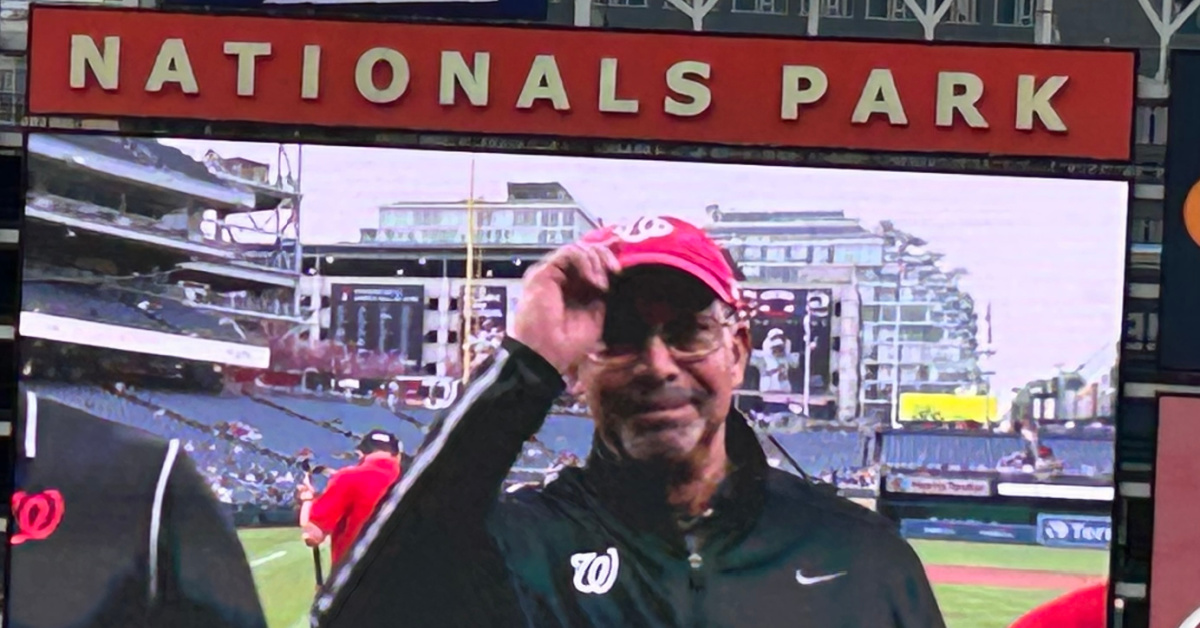
Alexandria, VA — For most fans at a Washington Nationals game, the scoreboard is simply there—quietly updating balls, strikes, outs, and runs in real time. Few ever think about the person behind it. For nearly two decades, that responsibility belonged to Keith Staples, a local baseball devotee whose steady hand and watchful eye became part of the game itself.
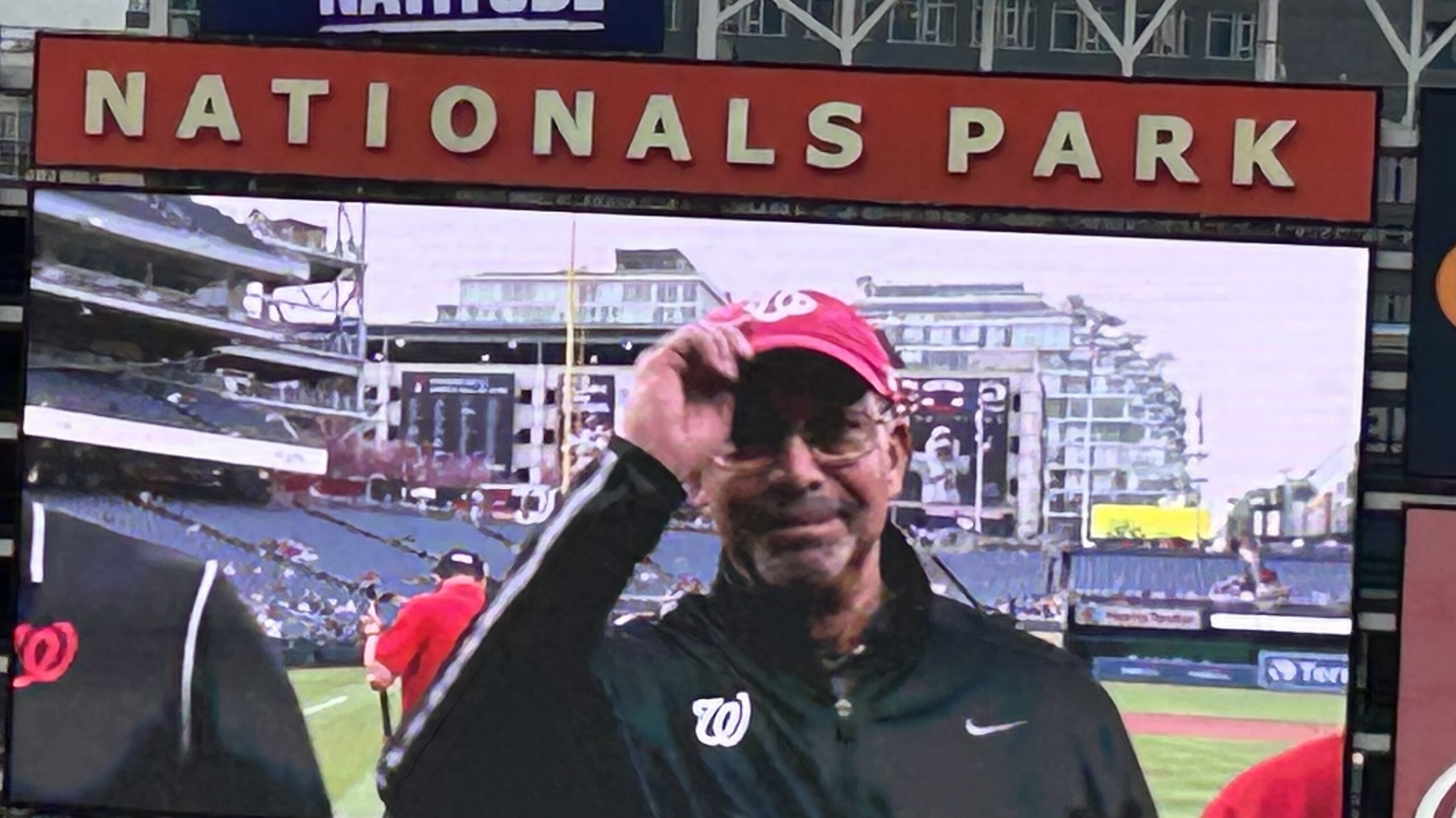 Keith Staples was honored on the scoreboard for his 20 years as the National’s Balls and Strikes Operator (BSO). (Courtesy photo)
His journey to the Nationals’ production booth began in 2004, when it was announced that the Montreal Expos were moving to Washington, returning professional baseball to the city after a 35-year absence. Like thousands of others, he went to Union Station for the official unveiling of the team’s name and logo, thrilled that baseball was finally coming home.
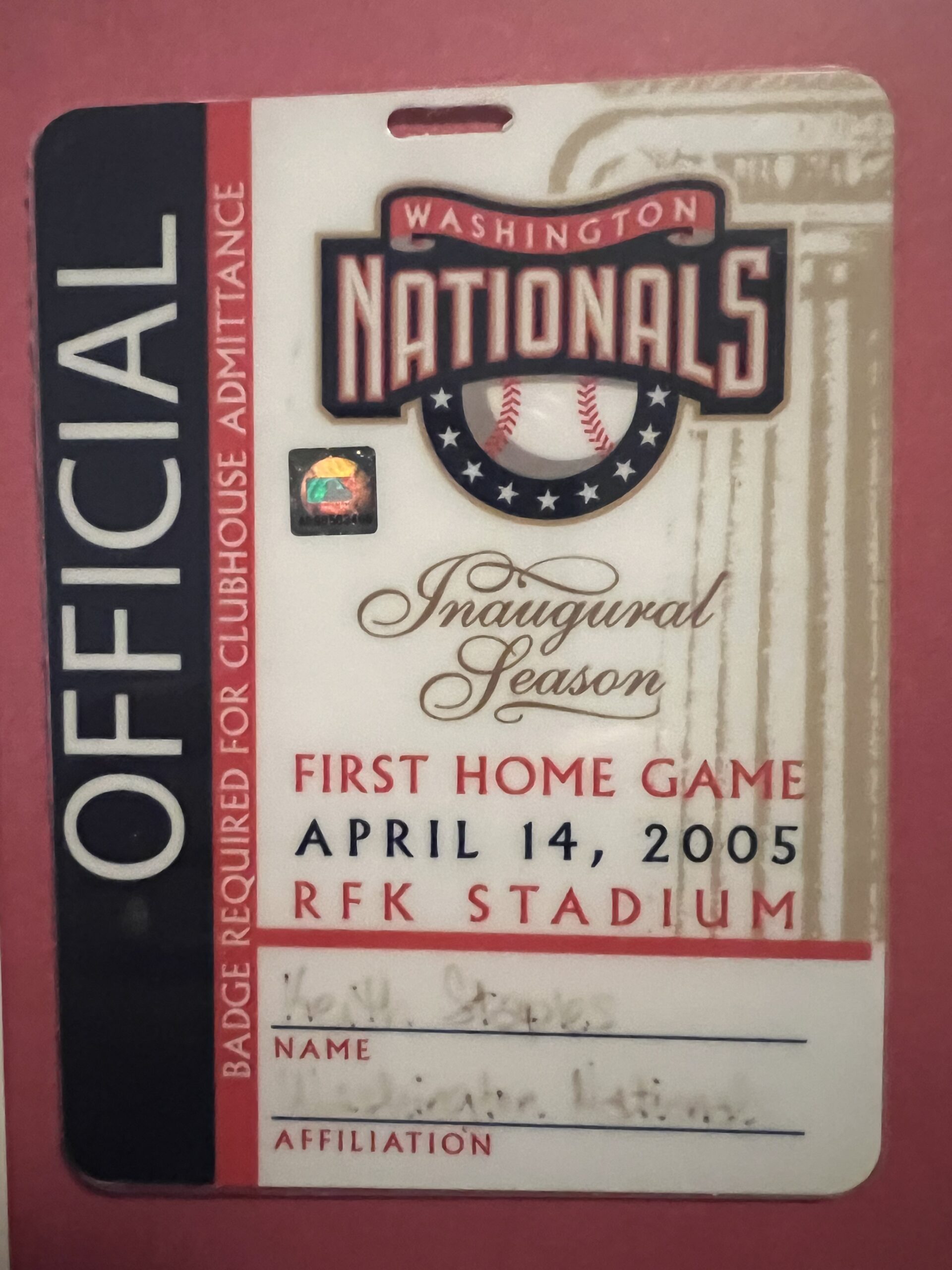 Keith Staples’ Opening Day credentials. Courtesy photo
Shortly afterward, a friend mentioned the franchise was staffing its production department. With no formal experience but plenty of enthusiasm, he offered his name. The phone rang the same day, and he was hired to enter statistics for the scoreboard crew.
Then came an unexpected turning point. The day before the Nationals’ lone preseason game at RFK Stadium, the team president visited the production booth. When it was explained that the new computerized system would be used, he immediately stopped the discussion. The computers, he said, were for backup only. He wanted a traditional scoreboard operator.
“Who can be here tomorrow who has run a scoreboard?” he asked.
No hands went up—except one.
Keith Staples’ only experience was running the scoreboard once at Simpson Field for his son’s Alexandria Little League team. Nervous and fully aware the game would be broadcast nationally on ESPN, Staples stepped in anyway. He ran the board successfully that day—and for the next 20 years—serving as the Nationals’ Balls and Strikes Operator.
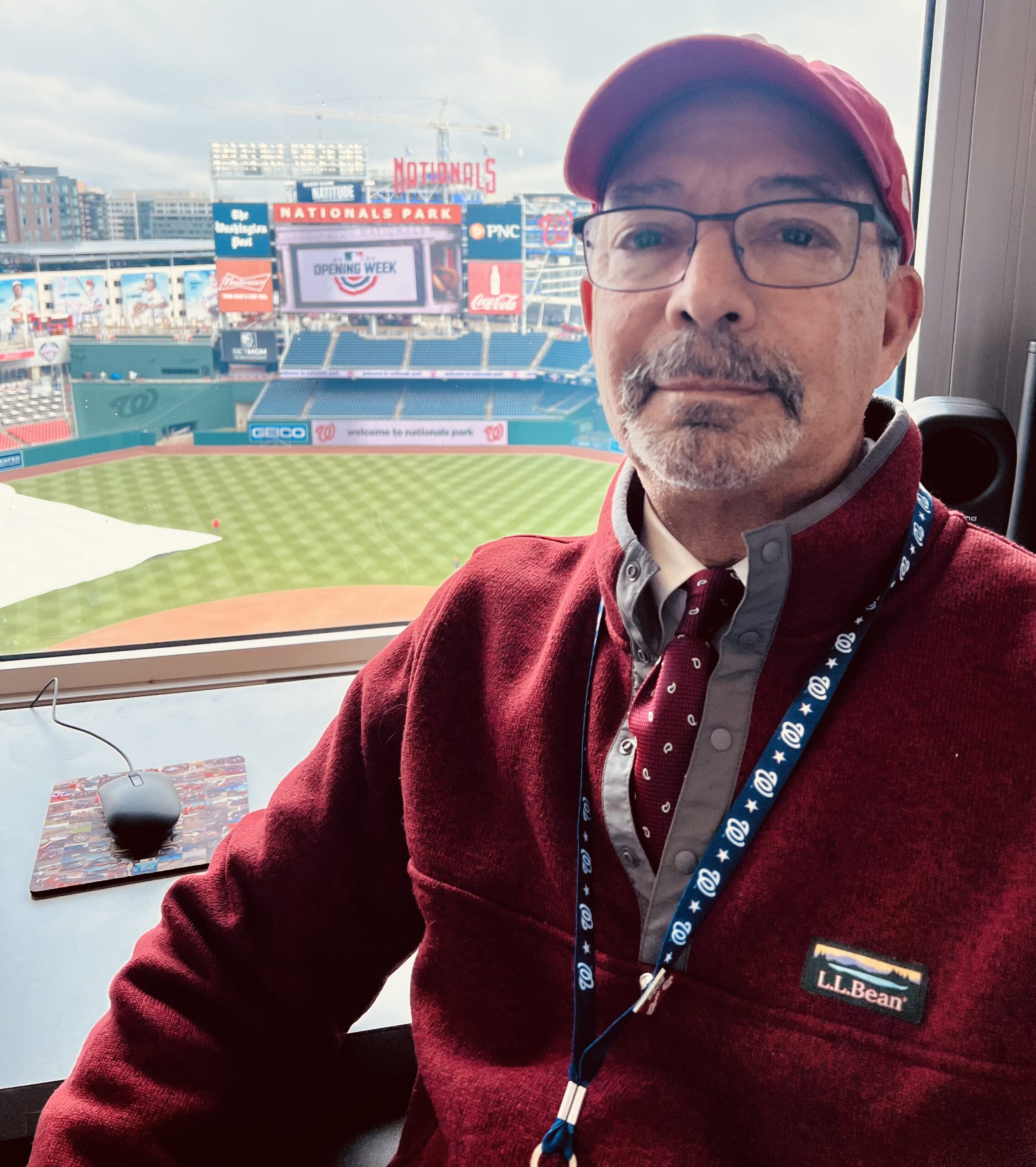 Keith Staples, on the job. (Courtesy photo)
Baseball has always been central to his life, and to his marriage. He and his wife, Leslie, who have been together for more than 44 years, shared a love of the game from the very beginning. Their first date was a Baltimore Orioles game at Memorial Stadium, watching Reggie Jackson and the New York Yankees. Over the years, they attended countless games together, including Old Timers games at RFK.
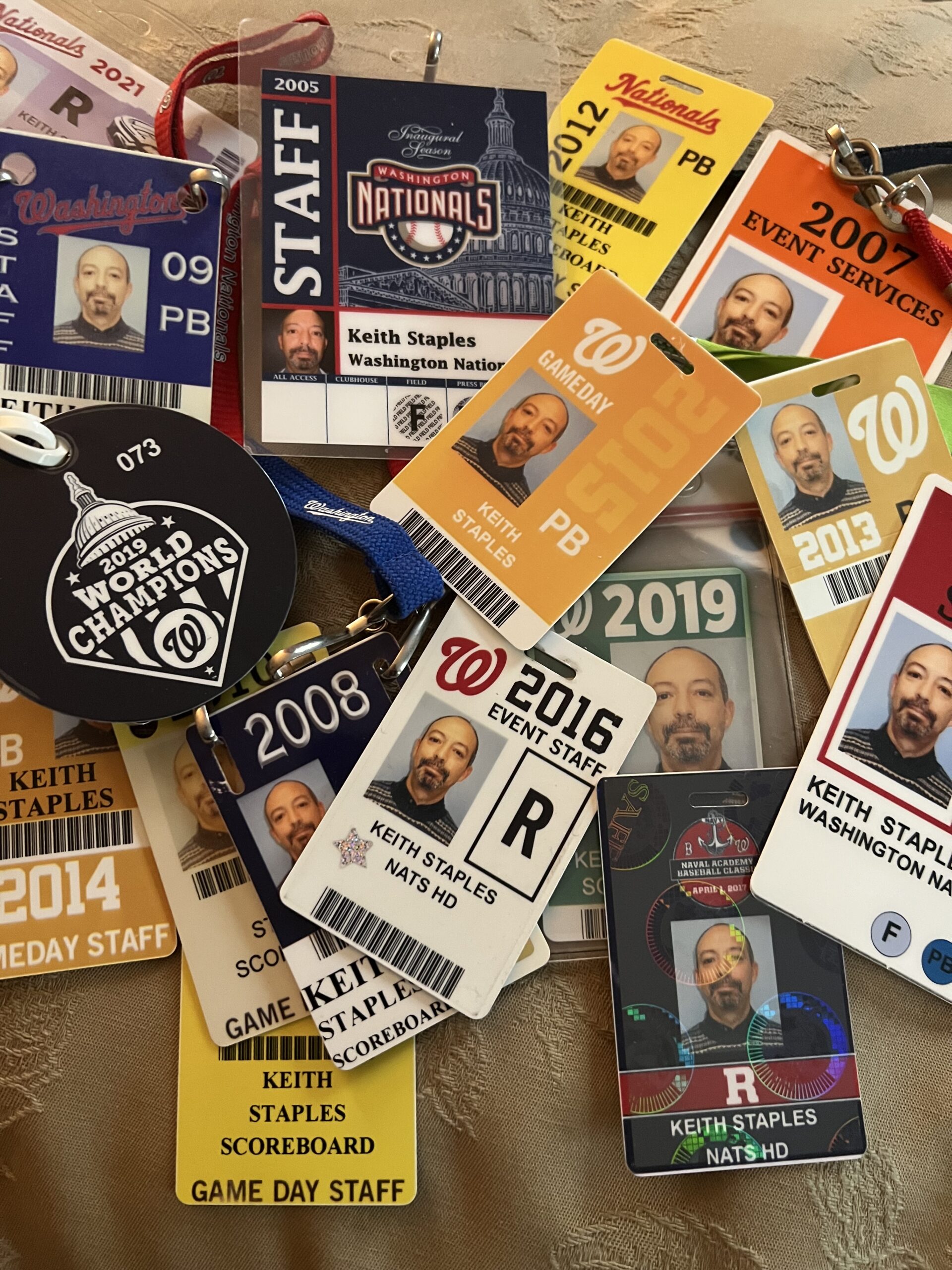 Assorted credentials from 20 years as the Balls and Strikes Operator.
When baseball returned to Washington, they eagerly purchased season tickets. But in a twist worthy of an O. Henry story, once he began working for the Nationals, Leslie became what he affectionately calls a “baseball widow.” While he worked in the booth, she watched from the stands. For years, they were rarely able to attend games together.
Staples’ time behind the scoreboard has come to an end—not by choice, but as part of the Nationals’ transition to automated systems. As technology increasingly takes over tasks once performed by human operators, the role he held for two decades has been phased out. Nevertheless, he reflects on those years with gratitude rather than regret.
“I was fortunate enough to spend 20 years watching baseball from the best seat in the house,” he says. “I’d do it all over again in a heartbeat.”
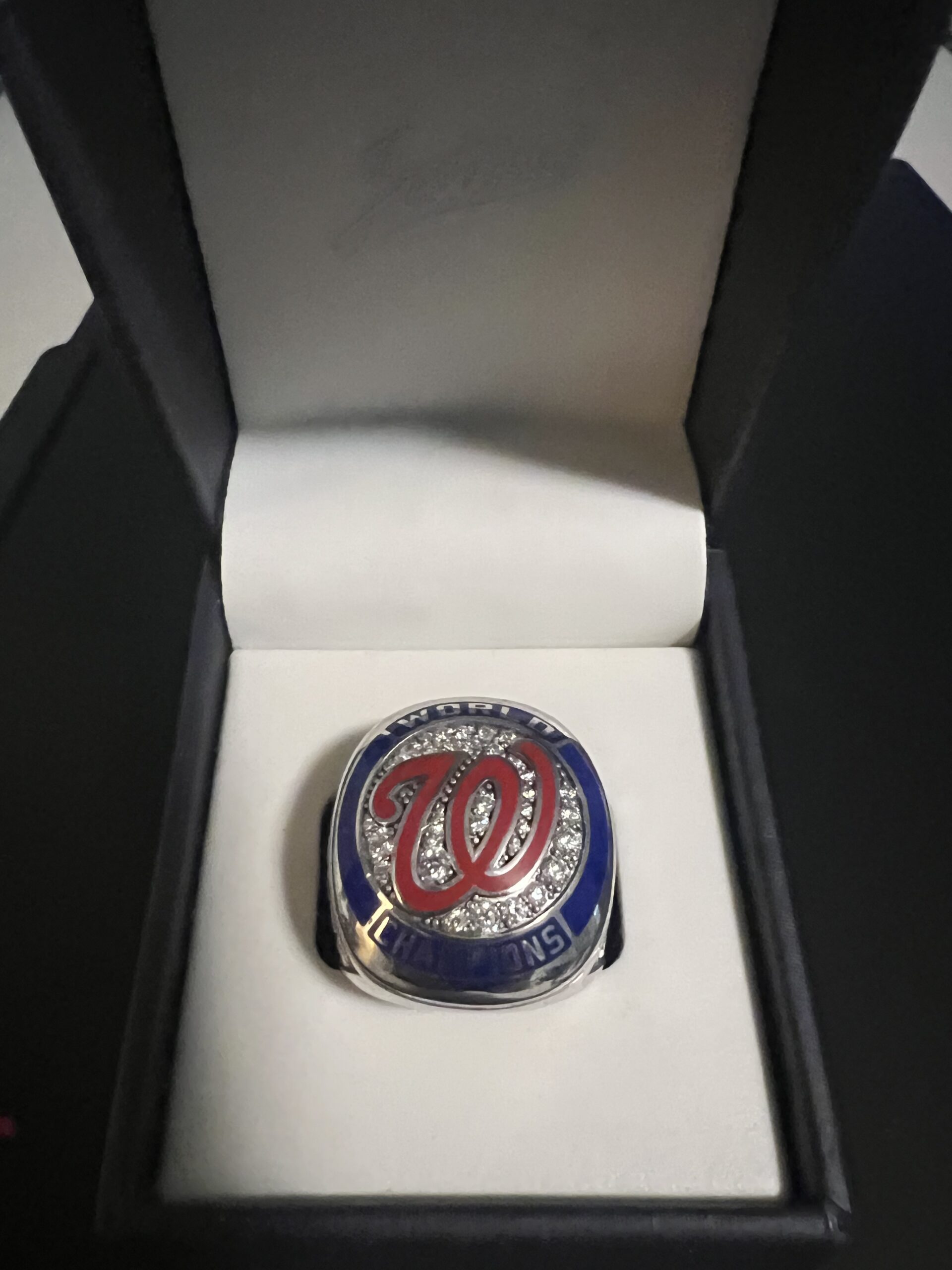 The 2019 World Series ring for the Washington Nationals.
One moment continues to stand out above all others. As a child, he once missed school to attend Opening Day at the newly built DC Stadium, where President John F. Kennedy threw out the first pitch. Decades later, on April 14, 2005, as he climbed the steps to the press box for the Nationals’ first game at RFK Stadium, he watched a mother and her young son walk through the tunnel and see the field for the first time. The boy stopped, looked out, and whispered, “It’s beautiful.”
That memory still brings tears to his eyes, and he adds wistfully, “The scoreboard may be automated now, but the magic of baseball will always be human.”
Post Views: 221