
Welcome to part five of North Side Baseball’s offseason series covering the 1918 Chicago Cubs. You can find the first four parts here:
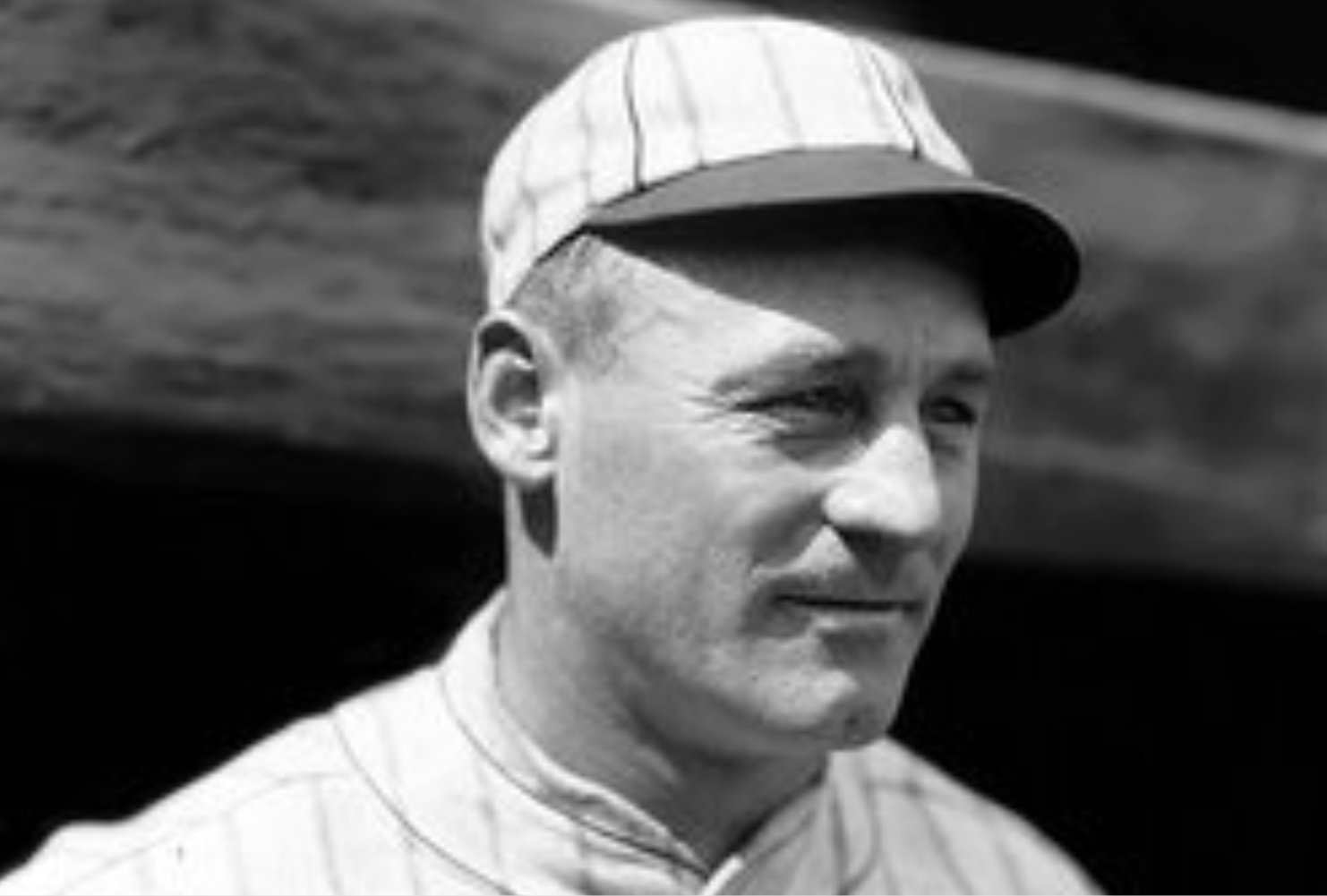
Today, we’ll be taking a look at the life and career of Les Mann. Mann was an outfielder for the Cubs from the 1916 season until he was dealt to the Boston Braves during the 1919 season.
Coming off of an epic championship game in 2023 that pitted Mike Trout against Shohei Ohtani in the ninth inning, the 2026 World Baseball Classic is starting to gather a lot of hype. The United States will be bringing arguably their best collection of talent ever in an effort to avenge their loss in that 2023 final game to Japan. And that fails to mention the stacked lineup that the Dominican Republic may field.
The World Baseball Classic is sanctioned by the World Baseball Softball Confederation, which was created from a merger earlier this century between the International Baseball Federation and the International Softball Federation. The International Baseball Federation was created in 1938, thanks in large part to the work of Leslie Mann.
Mann was born in Lincoln, Nebraska on November 18, 1892. He attended the Y.M.C.A. College in Springfield, Massachusetts. It was there where he would begin an illustrious career in athletics. In November of 1916, The Pittsburgh Press declared Mann as “one of the best football players the training school ever had.”
According to his Society for American Baseball Research biography, with Mann being so close by, the Boston Braves took note of his athletic prowess and signed him to a contract that would pay him $150 per month.
After a rough first couple of seasons with the Braves, Mann signed with the Chicago Whales of the Federal League, where he helped them win the 1915 pennant. After the Federal League disbanded, the outfielder found himself with the Cubs.
Mann was serviceable, but not great, in his three plus seasons with the Cubs, with his best season coming in 1918. He posted a .288/.342/.384 batting line, which was 18 percent above league average, according to wRC+ at FanGraphs. His 2.3 FanGraphs WAR for that season was a major-league career high. He also put up 2.3 fWAR in the 1921 season with the St. Louis Cardinals, and while he did manage a 4.3 fWAR season in 1915, that was during his lone season in the Federal League.
In 1922, Mann was with the Cardinals. They found themselves in a battle for first place with the New York Giants when Mann received a letter from his old 1918 Cubs teammate, Phil Douglas. Douglas, who did not get along with his manager, John McGraw, told Mann to “send a man over here with the goods and I will leave for home on the next train.”
Rather than taking Douglas up on his offer, Mann turned his former teammate in. Douglas was banned from baseball for life until he was posthumously reinstated last May.
In total, Mann finished his career with 1,332 hits, however, it is his post-playing career that is truly remarkable. As reported by SABR, the Nebraska native had a passion for youth sports, and even organized a baseball school. At the Leslie Mann Coaching System, he was one of the first adopters of film to enhance baseball teaching. He invented the Mannscope, which was a patented device that could stop film on a specific frame to allow for teaching.
The Mannscope, which the National Baseball Hall of Fame is currently in possession of, sounds to me like the earliest form of an edgertronic camera. As stated in the patent for the device, and as listed on the Hall of Fame’s website, the camera allows for “plenty of time to thoroughly explain each play or movement shown on the screen before passing to the next one.”
Being a huge advocate for making baseball international, Mann was determined to make baseball an Olympic sport. His efforts led to an exhibition at the 1936 Olympic Games in Berlin, and Mann even convinced the International Olympic Committee to make baseball an official Olympic sport at the 1940 Games. Those Games, though, were cancelled due to World War II.
The World Baseball Softball Confederation, which sanctions the aforementioned World Baseball Classic and is the governing body for baseball and softball internationally, credits Mann as the “father of international baseball” on their website, as well as with proposing and launching the original International Baseball Federation, where he was the inaugural president. A lot of baseball’s worldwide popularity now is thanks to Les Mann’s efforts back in the first half of the 1900s.
Are you interested in Cubs history? Then check out the Chicago Cubs Players Project, a community-driven project to discover and collect great information on every player to wear a Cubs uniform!