
Every season brings a handful of players who rewrite their own narratives. Sometimes it’s health. Sometimes it’s timing. Sometimes it’s simply baseball being baseball. For the Minnesota Twins, 2026 sets up as a year where several familiar names could remind the league why the expectations were so high in the first place. Matt Wallner, Royce Lewis, and Brooks Lee all entered 2025 with hype and finished it in a cloud of disappointment. That combination makes them ideal candidates to surprise in the season ahead.
Matt Wallner
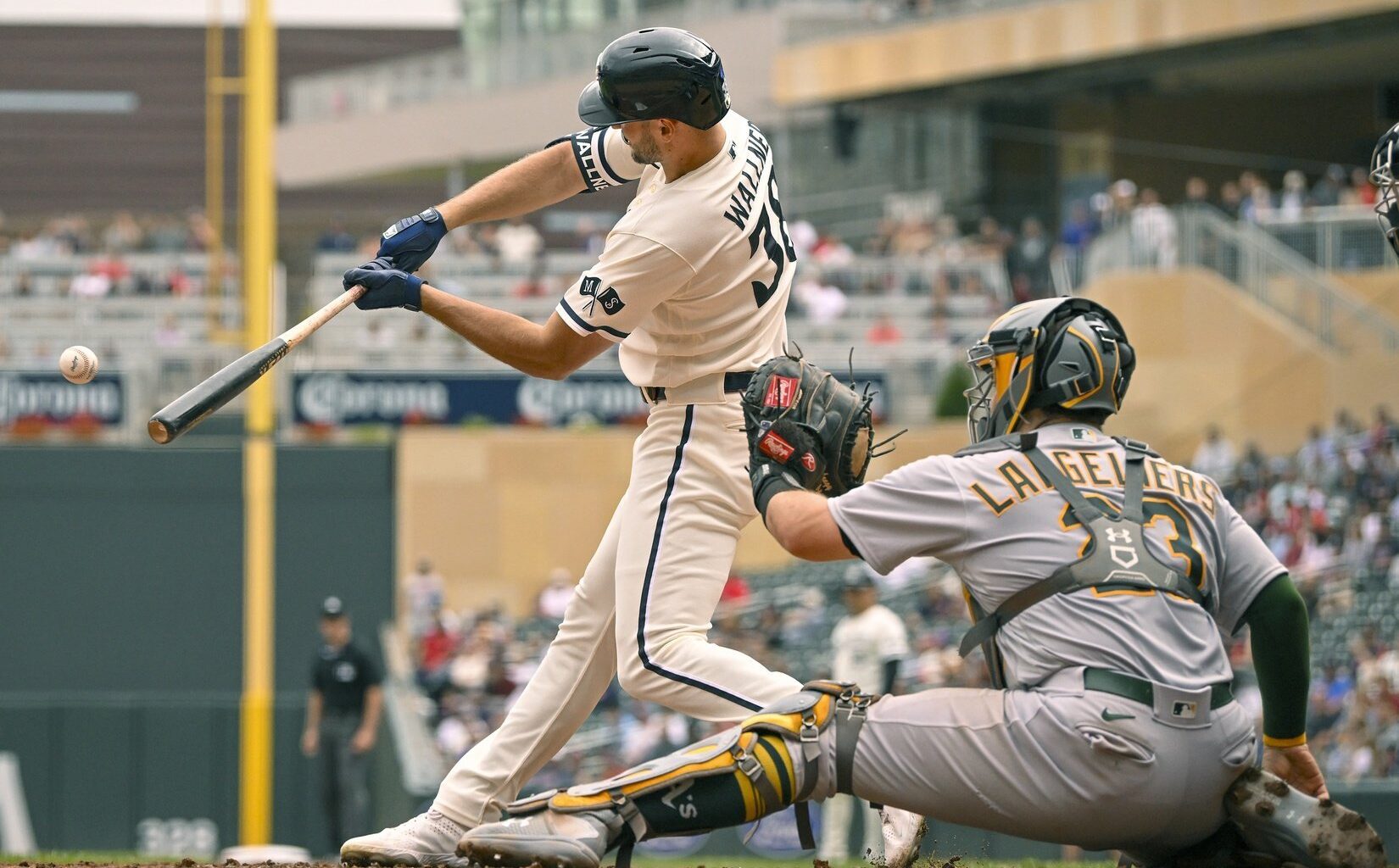
Wallner entered 2025 as one of the few hitters coming off a legitimately strong 2024 campaign. He was expected to be a middle-of-the-order force and a stabilizing presence, alongside the veteran bats. Instead, his season never quite found a rhythm. An oblique strain and back spasms limited his availability and consistency, and while a 110 OPS+ is nothing to scoff at, it paled in comparison to the 143 OPS+ he averaged across 2023 and 2024. When Wallner was healthy, the impact still flashed, but it came in shorter bursts than the Twins needed.
Looking ahead to 2026, the underlying traits remain extremely enticing. Wallner’s 76.6-mph bat speed is among the best in the league, and his 11.8% walk rate shows a hitter who understands the strike zone. Those two skills tend to age well, and offer a sturdy foundation even when things are not clicking perfectly. With better health and a full season of at-bats, Wallner has a clear path back to being a difference maker in the heart of the lineup.
Royce Lewis
Trying to define Lewis’s next step feels like trying to hit a moving target. On paper, 2025 looked like progress. He appeared in a career-high 106 games and showed tangible defensive improvement at third base. Offensively, however, the offensive results were jarring. His 83 OPS+ was not what anyone envisioned, especially for a player once viewed as a franchise cornerstone. A hamstring injury in spring training cost him Opening Day, and the same issue resurfaced later in the summer, interrupting any momentum.
The Twins are betting that a healthy runway changes everything. This winter, the organization has been vocal in its support of Lewis, which feels intentional. Confidence has always been part of his profile, and the flashes are still there. Last June offered a glimpse, when he went 11-for-28 (.393 BA) with three extra base hits. Once the hamstring acted up again, that stretch became a footnote, instead of a turning point. As a right-handed hitter on a roster heavy with left-side bats, Lewis brings lineup balance that Minnesota sorely needs. If his body cooperates, the impact could be immediate.
Brooks Lee
From the moment the Twins selected Lee in the first round of the 2022 draft, his calling card was simple: He hit. That profile carried him through the minors, where he posted a .289 batting average with an .836 OPS across parts of four seasons. The transition to the majors has been far less kind. Over his first two big-league seasons, Lee owns a .636 OPS and a 75 OPS+, numbers that fall well short of expectations.
What makes Lee intriguing is that many of the building blocks remain intact. He continues to square the ball up at a strong rate (28.6% of the time, as a percentage of all swings), and his 17.5% strikeout rate suggests a hitter who is not overmatched. In 2026, Lee is set to take over as the primary shortstop, a role that comes with both opportunity and pressure. In the minors, his power was more pronounced from the right side of the plate. So far in the majors, his production has been more evenly split, with just 33 points of OPS separating his two sides. If that right-sided power shows up consistently, Lee’s offensive profile could take a meaningful step forward.
What It Means If They All Click
Individually, each of these players has a chance for a major rebound. Collectively, the impact could be enormous. A productive Wallner lengthens the lineup and protects the middle order. A healthy and confident Lewis adds right-handed thump and positional stability at third base. A more comfortable Lee at shortstop provides on-base skills and contact ability. Suddenly, the Twins’ lineup looks deeper, more balanced, and far less dependent on a small group of veterans carrying the load.
Baseball seasons often hinge on these types of internal surprises. If even two of these three take a step forward, Minnesota benefits. If all three find their stride in the same season, the Twins could field one of their most complete lineups in years. Of course, that’s a big collection of ‘if’s.
Which of these three players do you believe is most likely to surprise the league in 2026, and why? Share your thoughts in the comments and join the conversation.