
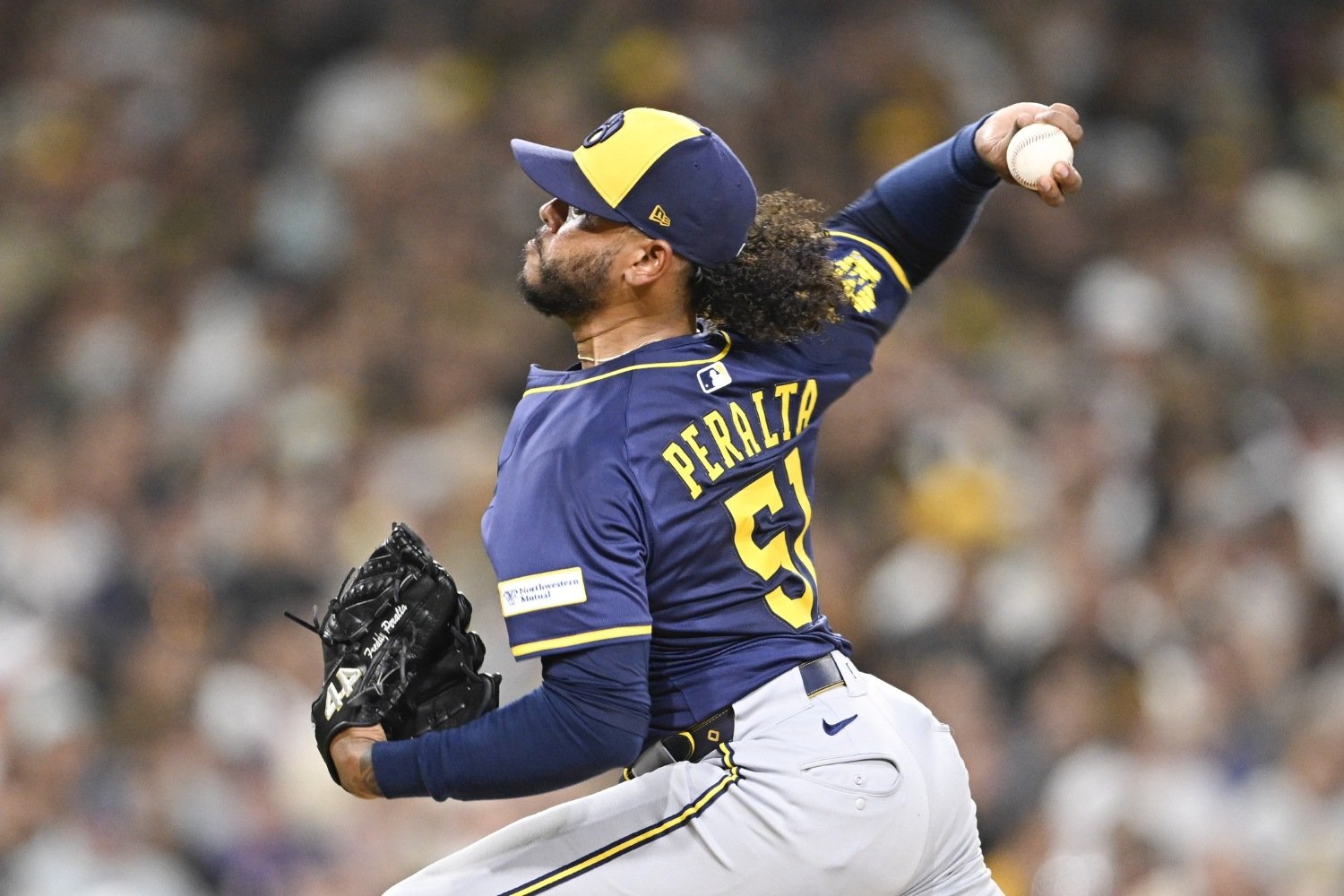
By no means do the Milwaukee Brewers need to trim their payroll for 2026. In fact, they could and should spend even more than they’re currently slated to, and more than they’re likely to spend before the offseason is over. If they decide to trade Freddy Peralta, it won’t be to save the $8 million they owe him in 2026; it will be solely because they get a haul of young talent too good to pass up.
Still, they’re likely to save money in any Peralta deal. They struck a nearly cash-neutral deal with the Yankees last winter when they traded Devin Williams, receiving Nestor Cortes as part of the package in return, but that was a rare case of being able to match need for need and dollar for dollar. Peralta is a much more valuable trade chip than Williams was, and any deal for him will bring back more than the package of Cortes and Caleb Durbin, so the Brewers are unlikely to take back a player with a substantial salary.
How, then, should they spend whatever they save by moving their erstwhile ace, should they pull that trigger? First, let’s assume (for the sake of argument) that no player acquired for Peralta fills any of the team’s top needs for 2026. In reality, they’re likely to get someone who can help immediately in such a deal, as they did with DL Hall and Joey Ortiz in the Corbin Burnes trade two offseasons ago and in the Williams trade last winter. It’s very hard to predict who that might be, though, so let’s sidestep the question by imagining a package that primarily makes them better in 2027 and beyond. Since they have superb pitching depth right now, trading Peralta without getting back an instant contributor isn’t out of the question, if the prospects in question are strong enough.
For somewhere between $7 million and $10 million in 2026 payroll, the team could fill an interesting potential need, after moving Peralta. The market has been slow to develop for Harrison Bader and Austin Hays, two athletic, right-hitting outfielders coming off solid but unspectacular seasons and hitting free agency for a second time in their early 30s. A competent right-handed bat for a corner outfield spot is one profile the Brewers could fit seamlessly into their 26-man roster for the coming season, especially in the wake of the trade that sent Isaac Collins to the Royals.
If Blake Perkins and Garrett Mitchell are the right combination of healthy and good, they might keep Jackson Chourio primarily to left field, but it’s much more likely that Chourio will spend at least a good chunk of 2026 in center. Sal Frelick has right field held down, but he’s a lefty batter who could benefit tremendously from having a platoon partner to shield him from left-handed pitchers. If Chourio is in center, meanwhile, left field falls to some combination of Christian Yelich (when his back permits him to play the outfield), Jake Bauers and players expected to spend most of the season in the minors: Brandon Lockridge, Steward Berroa, and Akil Baddoo.
Bader, 31, batted a stellar .277/.347/.449 in 501 plate appearances with the Twins and Phillies in 2025. He’s lost a step in center field, but he’s a markedly above-average left fielder and a lefty-masher who figured some things out last year. He’d posted ugly numbers in the previous two seasons, though, and given his age, he’s not finding the eight-figure salaries or multi-year offers he’d hoped for this winter. He would fit gorgeously into the team’s defensive plans and add some punch against southpaws.
Hays, 30, has been more consistently competent than Bader at the plate. He batted .266/.315/.453 in 2025, taking 416 plate appearances for the Reds and cracking 16 home runs. He’s not the same caliber of defender as Bader, though, and durability is an important question for him.
Either of these players could help the Brewers in slightly less than a full-time role, but still a substantial one. They’re likely to make something similar to what Peralta will in 2026, so if and when the Brewers get the offer they’ve been awaiting on their star hurler, they should turn their attention to signing a key complementary piece with the money the move frees up.