
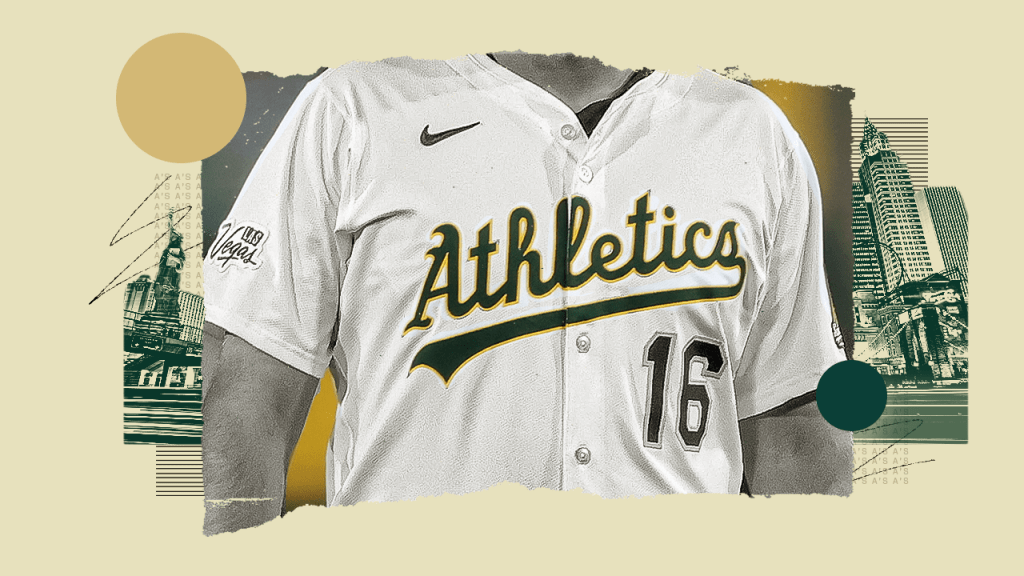
The U.S. Patent and Trademark Office has—for now—denied the A’s applications to register trademarks for Las Vegas Athletics and Vegas Athletics for clothing, footwear, entertainment and other purposes. But the team has more opportunities to stake their claim.
On Dec. 29, USPTO examining attorney Janet Lee issued a non-final office action in which Lee described several problems with the proposed registrations. The word “non-final” is important. Over the next few months, the A’s can try to address and rectify the problems and gain approval for their applications.
The impact of the denial is also softened by the fact that the A’s, which are set to move from West Sacramento, Calif., to Las Vegas in 2028, have two dozen other federal trademark registrations. The team can also draw legal protection from other trademark law sources, including state law and licensing contracts.
As to the non-final action, one problem for the A’s is that the marks fail to show enough distinctiveness. Registration is more likely when a mark instantly identifies to consumers the registrant as the source. That can be true when a mark is arbitrary, such as “Apple” for a computer, or suggestive, such as “Coppertone” for suntan lotion. In contrast, descriptive marks only describe a good or service and fail to distinguish further.
Lee wrote that the word “Athletics” is generic and undistinctive for clothing, playing baseball and various other goods and services. She cited the broad dictionary definition of athletics, which includes sports and exercise. In addition, Lee referenced excerpts from websites, including MLB Shop, “that shows that the wording ATHLETICS is used to refer to the type of clothing worn while performing sports activities.”
Lee also was unpersuaded by the A’s contention that “Athletics” has become distinctive of applicable goods/services by virtue of its previous trademark registrations for the standalone word “Athletics” as well as “Philadelphia Athletics” and “Kansas City Athletics” (the A’s played in Philadelphia from 1901 to 1954 and in Kansas City from 1955 to 1967). Lee wrote that “prior registrations do not support applicant’s claim of acquired distinctiveness,” in part because “they are not the same marks” as Las Vegas Athletics, and consumers wouldn’t consider them to be the same.
To that point, Lee stressed the importance of city names preceding a team name as a distinguishing factor. Lee listed the Giants (New York and San Francisco), Cardinals (St. Louis Cardinals and Arizona), Rangers (New York and Texas), Panthers (Carolina and Florida) and Kings (Sacramento and Los Angeles) to explain how often “the city or state combined with the team name indicates which team it is, and by extension, even the sport to those familiar with those sports and leagues.”
In other words, there’s no confusion between the Las Vegas Athletics and the Oakland Athletics, Kansas City Athletics or Philadelphia Athletics.
Another problem in Lee’s view is that Las Vegas Athletics is geographically descriptive. Geographic marks that run the risk of monopolizing a common term are rejected, with the main concern here being that providers of athletics goods and athletics services in Las Vegas could be harmed by registration of Las Vegas Athletics. To support her conclusion, Lee cited a trademark case where the phrase “Paradise Island Airlines” was deemed geographically descriptive because it referred to “air transportation services of passengers and/or goods that are performed at least in part on Paradise Island.”
While Lee’s decision is a setback for the A’s, it’s important to stress what it doesn’t mean.
For starters, the A’s—or more technically the Athletics Investment Group LLC—have other trademark registrations with the USPTO, and some of them will remain in play when the team heads to Sin City. Notable registrations include “A’s” and “Athletics” for various clothing goods and entertainment services. Federal registration for these terms supply the A’s with an exclusive right to use those marks, presumption of ownership, superior positioning for licensing marks for compensation and anti-counterfeiting protections from U.S. Customs and Border Protection.
Beyond that, the A’s are in no way obligated to drop the name Las Vegas Athletics because the USPTO hasn’t yet trademarked the phrase. The team can use the name it wants so long as it complies with MLB rules. Trademark registration and choice of team name should not be confused or conflated.
Moreover, federal trademark registration is not the only source of trademark protection in the U.S. legal system for the A’s to rely on in protecting their brand. Court decisions, state laws and licensing contracts are other sources of protection against a team’s name and logo being copied without consent. That said, registration is often considered the strongest form of legal protection.
Lastly, the denial is non-final. The A’s can attempt to rebut Lee’s conclusions and persuade her to reconsider. If that fails, the A’s can appeal through the Trademark Trial and Appeal Board. The game isn’t over.
The A’s are hardly alone among pro teams with rejected trademarks. As detailed by Sportico, the New York Jets have come up short thus far with the USPTO in their quest to trademark Gotham City Football. The USPTO has explained its rejection on grounds that Gotham City can be understood as a physical location—New York City—and generally physical locations can’t be trademarked.
The Jets insist Gotham City isn’t a physical location, since it’s a made-up city for the Batman universe.