
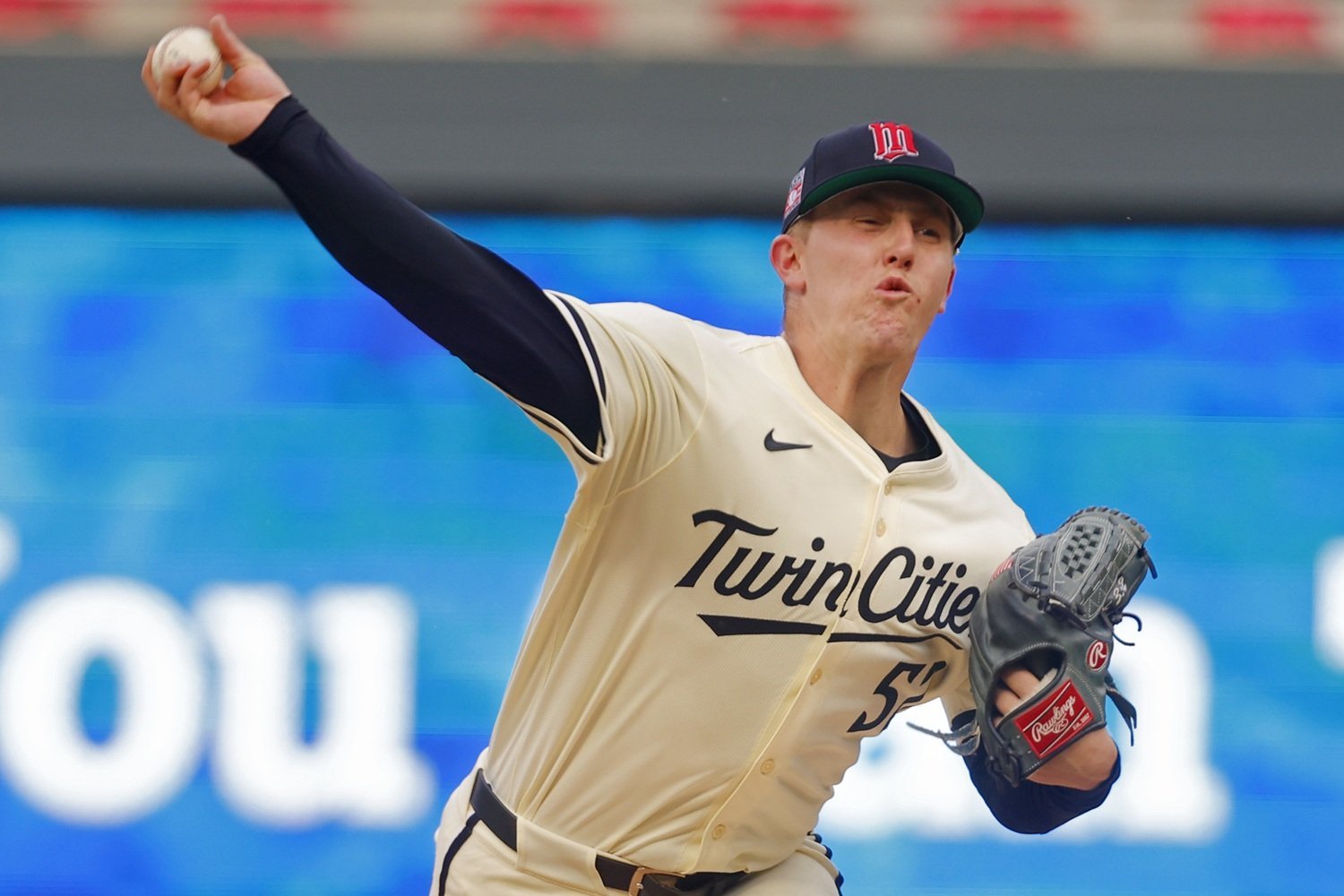
Zebby Matthews did not deliver the season many had hoped for in 2025, especially after his breakout minor league season. The surface numbers were rough, the contact quality was worse than expected, and the results often failed to live up to the promise that followed him up the minor league ladder. Still, writing him off after one uneven year would miss the bigger picture. When you look beyond the ERA and dig into how Matthews actually pitched, there are plenty of reasons to believe his 2026 season could look very different.
The run prevention was ugly. Matthews finished his rookie campaign with a 5.56 ERA across just under 80 innings, and the batted ball profile worked against him. Too many balls were hit hard (38.8 Hard-Hit%), and too many were lifted into the air, leaving little margin for error. Even the expected numbers did not entirely bail him out, reinforcing that hitters were squaring him up more often than a pitcher with his stuff should allow.
That said, the Twins have every incentive to keep giving Matthews opportunities. He currently projects to be one of the team’s options for the back of the rotation, but there are plenty of arms to consider, including David Festa, Taj Bradley, Mick Abel, and Simeon Woods Richardson. The rotation could also look very different by midseason. With trade speculation swirling around established arms, Matthews is positioned to climb the depth chart simply by staying healthy and available. Opportunity alone matters, and Matthews is likely to get it.
What makes that opportunity intriguing is how strong his underlying performance actually was. Matthews posted a 3.79 FIP and paired it with an 18.1 K-BB% that sat well above league average. Those numbers paint the picture of a pitcher who was doing many things right, even as the results lagged behind. For a young starter, that combination is usually a sign of future growth rather than a dead end.
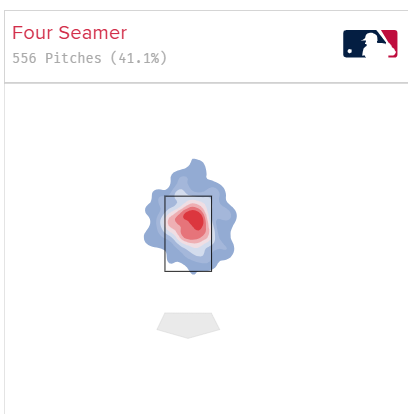
There was also tangible progress in his raw stuff. Matthews added velocity to his fastball, pushing it from 95.2 mph to 96.3 mph without sacrificing movement or shape. The issue was not quality but approach. Matthews lived in the heart of the strike zone far too often, and big league hitters rarely miss those mistakes. A more selective fastball plan, especially later in counts, could go a long way toward cutting down the damage.
His slider remains the calling card. Thrown harder (88 mph) with tighter action, it became a legitimate bat-missing weapon against right-handed hitters (39.6 Whiff%). Matthews consistently buried it on the outer edge, generating chases and whiffs while limiting quality contact (0.260 xwOBACON). When the slider stayed down, hitters had little chance. When it drifted back into the zone, especially against left-handed bats, it became vulnerable. That is a command refinement issue, not a stuff problem.
His splits against lefties are where the puzzle gets interesting. Matthews’ K-BB% barely changed by handedness, yet the run prevention gap was massive. He held righties to a 2.73 FIP and lefties to a 4.97 FIP. That points almost entirely to home run susceptibility rather than to an inability to compete. Against left-handed hitters, most of his pitches were punished when they caught too much of the plate.
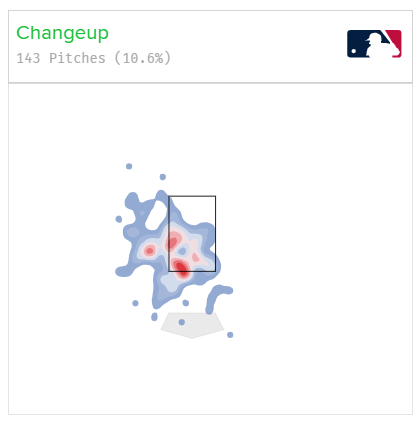
The exception was his changeup. Quietly, it was his best answer to lefties. Matthews located it well on the outer third and avoided the heart of the zone, keeping contact relatively soft. However, he rarely threw the pitch with two strikes and only had one strikeout using arguably his best offspeed pitch for lefties. The result was a pitch that looked useful but never had the chance to impact outcomes. This could be a confidence issue for a player getting accustomed to big-league hitters.
Pitch usage is one of the easiest adjustments a pitcher can make, and Matthews feels like a prime candidate. Reducing reliance on fastballs, especially in finishing counts, would better leverage his deep arsenal. Trusting the changeup against lefties, particularly when ahead, could directly address his biggest weakness from a year ago. These are not mechanical overhauls or health gambles. They are strategic tweaks.
When you zoom out, Matthews still checks every box teams look for in a mid-rotation starter. He has size, velocity, multiple usable pitches, and command that already grade above average. The foundation is there. The challenge is aligning his approach with his strengths.
That is why 2026 feels less like a crossroads and more like an opportunity. If Matthews makes even modest adjustments to how he sequences and deploys his arsenal, the gap between his peripherals and his results should narrow quickly. His 2025 season may have been disappointing, but the 2026 season has all the ingredients for a breakout.
Do you believe Matthews can break out in 2026? Leave a comment and start the discussion.