
Image courtesy of © Bruce Kluckhohn (Buxton), Jordan Johnson (Lewis, Mauer)- Imagn Images
Throughout the franchise’s history, the Twins have prided themselves on drafting and developing talent into big-league impact. Today, we look at the nine hitters who have left a lasting legacy on the organization, examining what made them can’t-miss stars, how they fared once they arrived in the Show, and why one bright young phenom is still waiting in the wings.
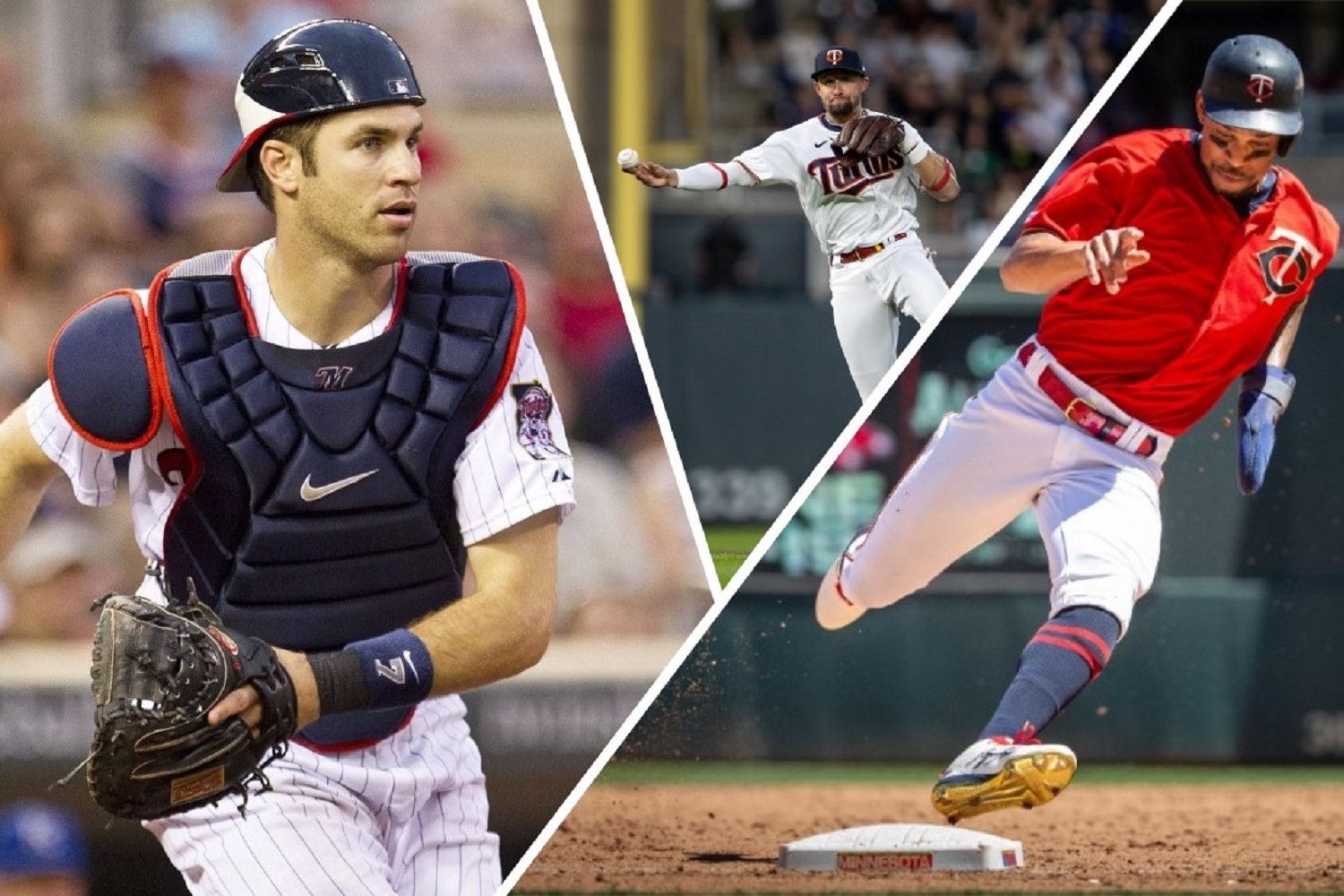
C: Joe Mauer
Selected first overall in the 2001 draft, Mauer was the rare catcher whose bat overshadowed even his gold-glove glove. Scouts drooled over his advanced plate discipline (he walked more than he struck out in High-A) and natural hitter’s hands. He debuted as a 21-year-old and went on to win three batting titles and an MVP (2009). While chronic concussions eventually forced him off the position to first base, Mauer vastly exceeded expectations, becoming the face of the franchise and retiring as perhaps the greatest pure-hitting catcher in MLB history. He was a first-ballot Hall of Famer and quite possibly the best prospect in Twins history.
1B: Justin Morneau
Taken in the third round in 1999, Morneau was a hulking slugger with jaw-dropping raw power and surprising on-base chops for someone who hit so many homers. His swing’s blend of torque and balance made him an easy fit for the Metrodome’s friendly right-center dimensions. He debuted in 2003, but 2006 was his breakout: .321/.375/.559 (.934), and the start of a five-year run that included an MVP (2006), two All-Star nods, and a Silver Slugger. While injuries, especially back and concussion issues, chipped away at his production later on, Morneau met, and at times surpassed, the lofty prospect billing.
2B: Brian Dozier
Dozier wasn’t a household name when the Twins drafted him in the eighth round of 2009, and he was never a consensus top-100 prospect. However, he put himself on the map after hitting .320/.399/.491 (.890) between High-A and Double-A. Over seven Twins seasons, he clubbed 167 homers, peaking at 42 in 2016, and earned an All-Star nod in 2015. Some could argue that Jorge Polanco could’ve held this second base spot because he was a top-100 prospect but spent the first several years of his career at shortstop. Dozier’s blend of defense and power ultimately gave him the nod, and he might be the prospect that most greatly exceeded expectations.
SS: Royce Lewis
Lewis entered the 2019 season as a global top-10 prospect after a standout debut at Cedar Rapids, where he posted a .803 OPS with 14 homers and 29 doubles. Lewis possessed five-tool upside with power and the agility to handle shortstop. Unfortunately, he tore his ACL twice on his way to becoming a big-league regular. When healthy, Lewis looks every bit the centerpiece he was projected to be in the minors. He hasn’t yet had the sustained opportunity to prove he can deliver on that top-100 billing, but the pedigree remains impeccable.
3B: Miguel Sanó
Signed as part of the heralded 2009 international class, Sanó carried a slugger’s reputation on par with any in baseball. At just 18, he blasted 20 homers in 66 rookie ball games, showcasing uncanny raw power. Scouts worried about his swing-and-miss tendencies and defensive footwork, but few doubted he’d hit. When Sanó finally debuted in 2015, he mashed 18 homers in 80 games, confirming the prodigious power and finishing third in the AL Rookie of the Year voting. Yet inconsistency at the plate (.233 career average) and defensive limitations frustrated fans. Sanó delivered on part of his prospect promise (115 OPS+) but fell short of becoming a complete star.
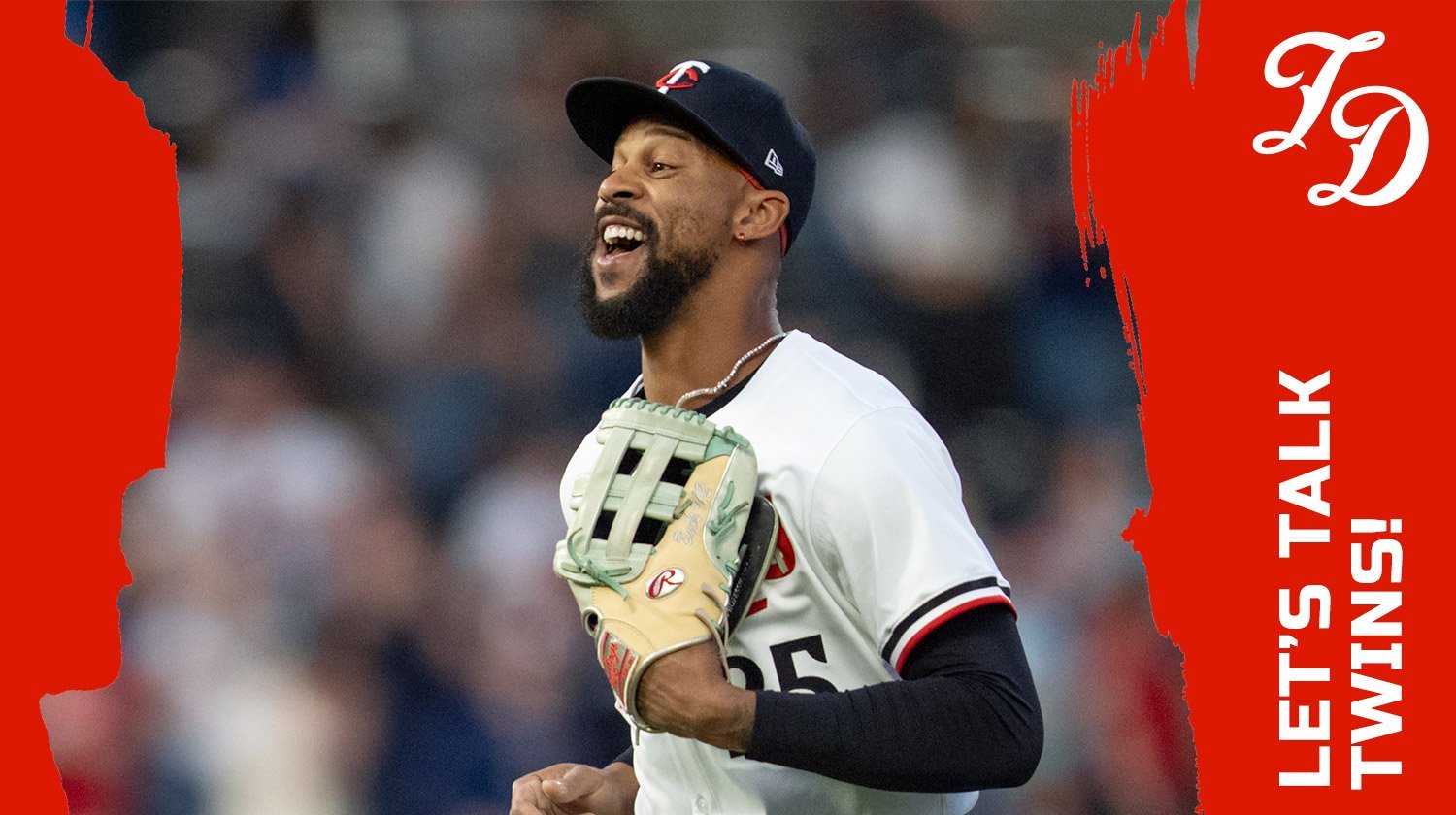
OF: Byron Buxton
Buxton might be the most hyped prospect in Twins’ history. Everyone remembers turning on a Twins game circa 2016 to see him beat out an infield hit or uncork a laser throw from center. That was Buxton in a nutshell: the dynamic athleticism that made him the consensus No. 1 Twins prospect for multiple seasons (2014-15). He paired 80-grade speed with a 70-grade arm and sneaky pop. Yet injuries have been the overarching story of his big-league career. He’s been an All-Star and won a Gold Glove but has only played over 100 games twice. Health remains the significant variable. When he’s on the field, he’s closer to his prospect projection than almost anyone, but consistency has been elusive.
OF: Walker Jenkins
In 2023, the Twins selected Jenkins with the 5th overall pick, instantly vaulting him to the top of their farm system. His combination of plus raw power, 60-grade hit tool, and high-end athleticism drew immediate comparisons to Buxton. Yet Jenkins remains a prospect in the truest sense: his time in the minors has been severely impacted by injuries, so it has been tough to gauge his long-term skills. Will he stick in center or shift to a corner spot? Can he refine his swing-and-miss rate? He remains one of the game’s top prospects, but he must find a way to be successful in the upper minors.
OF: Aaron Hicks
The 14th overall pick in 2008, Hicks broke into pro ball as a five-tool threat. He was a top-100 prospect leading into four different seasons. He posted a .829 OPS in low A, turning heads with gap power and plus defense in center. Yet Hicks didn’t debut until 2013, and it took until 2018 with the Yankees for him to deliver a full 500-PA season (127 OPS+). With the Twins from 2013–15, Hicks provided streaky hitting but never quite blossomed into the atop-the-chart prospect many had pegged. His career line of .231/.330/.383 (.713) suggests a solid fourth-outfielder profile rather than the five-tool star once envisioned.
DH: Jason Kubel
Kubel, a 12th-rounder in 2000, emerged as one of the game’s best prospects, with Baseball America ranking him 17th entering the 2005 season. He earned prospect props for his mature approach and power potential as he hit 17 homers in Low-A at age 20, then slashed .352/.414/.590 (1.004) in Double-A. His polished bat hinted at a middle-of-the-order future, but a devastating knee injury slowed his trajectory. From 2004–10, Kubel delivered six seasons above 20 homers, including a .300 average in 2009, and slotted into the middle of the order behind Mauer and Morneau. Chronic back issues and a shoulder injury later sapped his pop. Still, Kubel never blossomed into an MVP candidate after his injury in the minors, but he carved out a decent big-league career.
Across a quarter century of scouting, the Twins have uncovered hitters whose tools promised stardom: Mauer’s sweet swing, Morneau’s thunder, Lewis’s five-tool ceiling, and Jenkins’s potential emergence. Some like Mauer, Morneau, or Dozier met or exceeded those lofty marks, embedding themselves in franchise lore. Others like Sanó, Hicks, and Kubel delivered parts of the package, leaving fans to wonder what might have been. Lewis and Jenkins remind us that the story isn’t finished, with both attempting to overcome injury adversity.
As the Twins look toward their next quarter century, these nine hitters stand as proof that top prospects can define eras, shape franchises, and captivate fans, no matter whether they crush it in a Twins uniform or simply crush homers in our memories.
Should someone else have made the list? Leave a comment and start the discussion.