
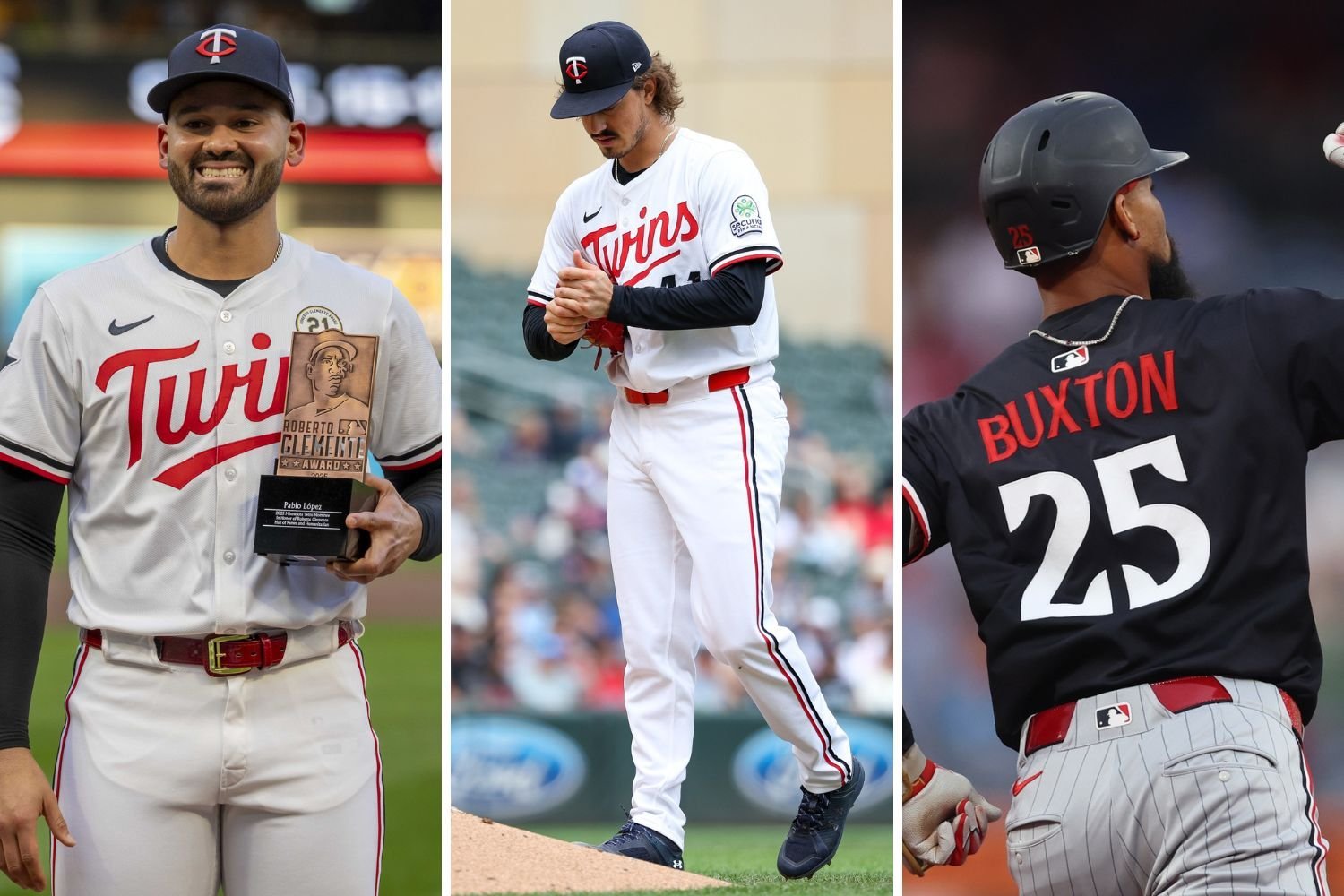
Earlier this winter, it felt inevitable that the Minnesota Twins would be at the center of the offseason rumor mill. Rival fanbases could practically see the headlines forming, imagining Joe Ryan or Pablo López anchoring a playoff rotation elsewhere, or Byron Buxton providing a high-upside spark to a contender. It was the kind of speculation that follows a franchise balancing the aspiration to contend with real (if self-inflicted) financial constraints.
Then came the pushback. Derek Falvey and the Twins front office made it clear that the core was staying put. Ryan, López, Buxton, and the rest were not available. Minnesota was not tearing it down, and Falvey had the green light to add around them. On the surface, it was a declaration of intent—a statement that the Twins planned to compete in 2026.
Nearly a month later, the gap between words and actions has become hard to ignore.
The Twins have been dormant this offseason. Their most notable addition is first baseman Josh Bell, on a one-year deal. Bell has bounced from team to team in recent seasons, and over the last two years, he has combined for exactly 0.0 fWAR. That’s not a condemnation of Bell as a player, but it is difficult to frame the move as meaningful roster-building. This looks less like an offseason retool and more like a holding pattern.
The fact that the Twins have said they will not trade their stars doesn’t mean those players are truly off the table. If anything, Minnesota is operating like a franchise keeping its options open. Offseasons are for selling optimism and season tickets. Trade deadlines are for hard truths. The Twins can present themselves as contenders now, see how the first half unfolds, be sellers again, and regroup next winter if they choose. That flexibility feels intentional.
The context matters. At last season’s deadline, financial pressure drove Minnesota to sell, although that wasn’t the only reason. Relievers Jhoan Duran, Griffin Jax, and Louis Varland were moved with multiple years of team control. Carlos Correa and his contract were sent back to Houston, with the Twins footing some of the bill. Those were not baseball-only decisions, and while the Pohlad family’s sale of minority stakes may have brought in cash, it did not magically erase the underlying constraints.
It’s particularly galling to see Minnesota refuse to improve, because the AL Central remains wide-open. Cleveland remains the division’s standard, with back-to-back division titles and a payroll lower than the Twins. Detroit is pushing forward with a strong young core. Kansas City is openly trying to contend during the Bobby Witt Jr. Era. Even the White Sox found a way to make noise, by landing Munetaka Murakami. Standing pat carries real risk, in a division where incremental gains can swing the race.
If the Twins stumble early, the math becomes simple. Another sell-off would not signal failure, so much as pragmatism.
Ryan would be the crown jewel. With two years of team control remaining, his value would be immense, especially in a market that has already rewarded teams dealing lesser arms like Shane Baz and Mike Burrows thanks to their control. The price would be enormous, and that alone may keep Ryan in Minnesota (for now).
López, however, presents a different equation. He’s owed $43.5 million over the next two seasons, a significant commitment for a team watching every dollar. That makes him the more attainable arm for an acquiring club and potentially the more logical trade chip for the Twins. It also means the return for him would be less robust than what the team could get for Ryan.
Then there’s Buxton—always the wild card, especially with his full no-trade clause. A contending team could talk itself into the upside of an elite center fielder, even with the injury risk baked in. With $45 million owed to Buxton across the next three years, he represents both hope and hazard, depending on your perspective.
None of this guarantees that the Twins will sell. But it does suggest that their public insistence on holding the core together may be doing more work than the actual roster moves. Minnesota has protested too much, and history tells us that franchises in this position often pivot quickly once July arrives.
If the Twins do make an about-face at the 2026 trade deadline, it shouldn’t come as a shock. It will simply confirm what this quiet offseason has been hinting at all along.
Are the Twins setting up to sell at the 2026 trade deadline? Leave a comment and start the discussion.