
CLEVELAND, Ohio — Betting scandals have rocked the sports world in recent months. Federal probes have targeted suspected pitch-rigging in professional baseball, mafia poker games in the NBA and now, a points-shaving scheme in men’s college basketball.
The FBI led all three probes, which involve so-called prop bets — not on who wins or loses, but on specific acts, like how fast a pitcher throws a certain pitch, how a player will perform or the halftime score.
The scope of the probes is nationwide, but the cases all feature Northeast Ohio connections.
Guardians pitchers accused of fixing pitches
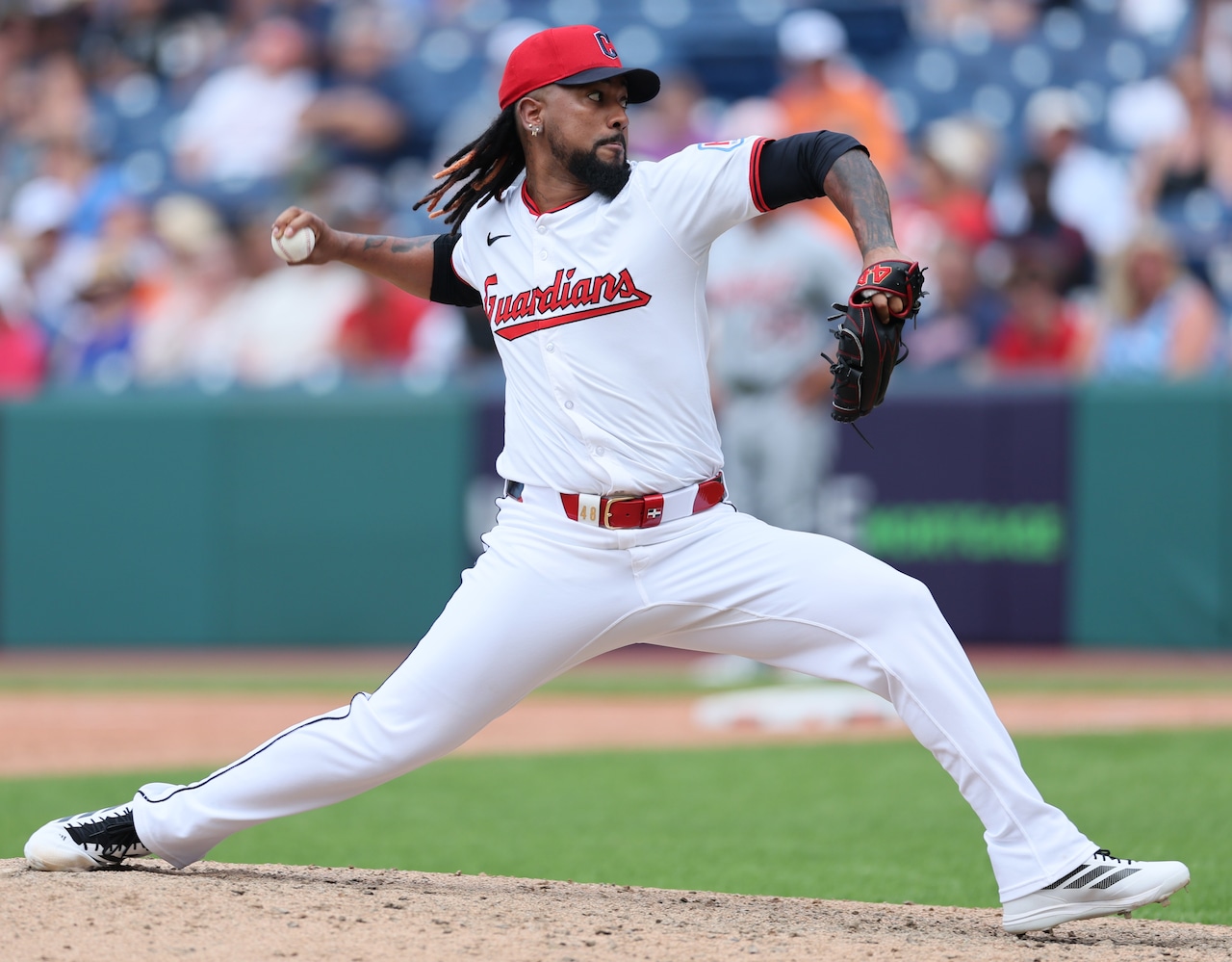
One case involves Cleveland Guardians closer Emmanuel Clase and teammate Luis Ortiz, who are accused of secretly coordinating with gamblers from 2023 to 2025 to throw rigged pitches — a scheme that earned bettors roughly $450,000 and paid the pitchers bribes and kickbacks.
Clase, who was approaching the franchise’s saves record, gave bettors advance notice of what pitch he would throw, allowing them to place micro‑bets on pitch speed or whether the pitch would be a ball, according to prosecutors. Prosecutors say he repeatedly met with a bettor at his Cleveland home to coordinate the fixes and sometimes used a cellphone from the bullpen during games — a violation of MLB rules.
Ortiz, acquired by the Guardians before the 2025 season, is accused of joining the scheme in June. Prosecutors say he deliberately threw balls on specific pitches in two games.
Both have pleaded not guilty. Clase’s defense attorneys have said in recent filings that prosecutors misinterpreted text messages between Clase and one bettor, saying they were actually about cockfighting, house repairs or horses, and not coded language about betting on baseball.
NBA betting scheme includes Terry Rozier
Another indictment centers on former Shaker Heights High School basketball star Terry Rozier, who is accused of providing insider information to Cleveland Heights football standout DeNiro Laster.
Rozier — who most recently played for the Miami Heat until he was suspended in October — is accused of tipping off Laster, a childhood friend, that he would pull himself early from a March 23, 2023 game. Prosecutors say more than $259,000 was wagered on his underperformance, and Rozier played only nine minutes.
Laster is accused of selling the information to betting influencer Marves Fairley for $100,000. Fairley and another influencer Shane Hennen, placed a number of bets themselves or through other bettors, according to prosecutors.
Former Cavaliers 3-point marksman charged in two cases
The same indictment includes charges against former Cleveland Cavalier player and assistant coach Damon Jones.
Jones, a Cavs guard from 2005 to 2008, is accused of feeding inside information about Lakers player availability to bettors, including Fairley, in exchange for kickbacks.
The scheme also spilled into an April 6, 2023 Cavaliers game, when insiders wagered on the Cavs to cover the spread after learning the Orlando Magic would bench its starters.
In Jones’ other case, he is accused of participating in Mafia‑run poker games with rigged shufflers and hidden cameras. Prosecutors say Jones and Portland Trail Blazers head coach Chauncey Billups helped mob‑connected operators entice deep-pocketed players to the high-stakes games.
College basketball point‑shaving scheme touched Kent State game
Another indictment, unsealed on Thursday, focuses on Fairley and Hennen, who are already linked to the Rozier scheme. Prosecutors say the duo recruited more than 39 basketball players to manipulate halftime spreads during the 2023‑2024 and 2024‑2025 seasons.
Their operation reached into the Mid‑American Conference, where two players from the University at Buffalo— Shawn Fulcher and Isaiah Adams— were bribed to influence three games, including one against Kent State, prosecutors say.
During the Feb. 27, 2024 game, the Buffalo players were supposed to tank their performance to ensure that the Bulls would be down by nine points or more at the end of the first half. Prosecutors say they tried— they missed shots, including layups, and committed several turnovers. But it ultimately didn’t work. Kent State led at halftime by only eight points and the bettors lost $424,000, according to the indictment.
The bettors won on similar halftime score bets placed on a Feb. 24, 2024 game against Western Michigan and March 5, 2024 against Ohio University.
The bettors are accused of paying the Buffalo players $54,000 in bribes on March 2, 2024, according to the indictment.