
1949
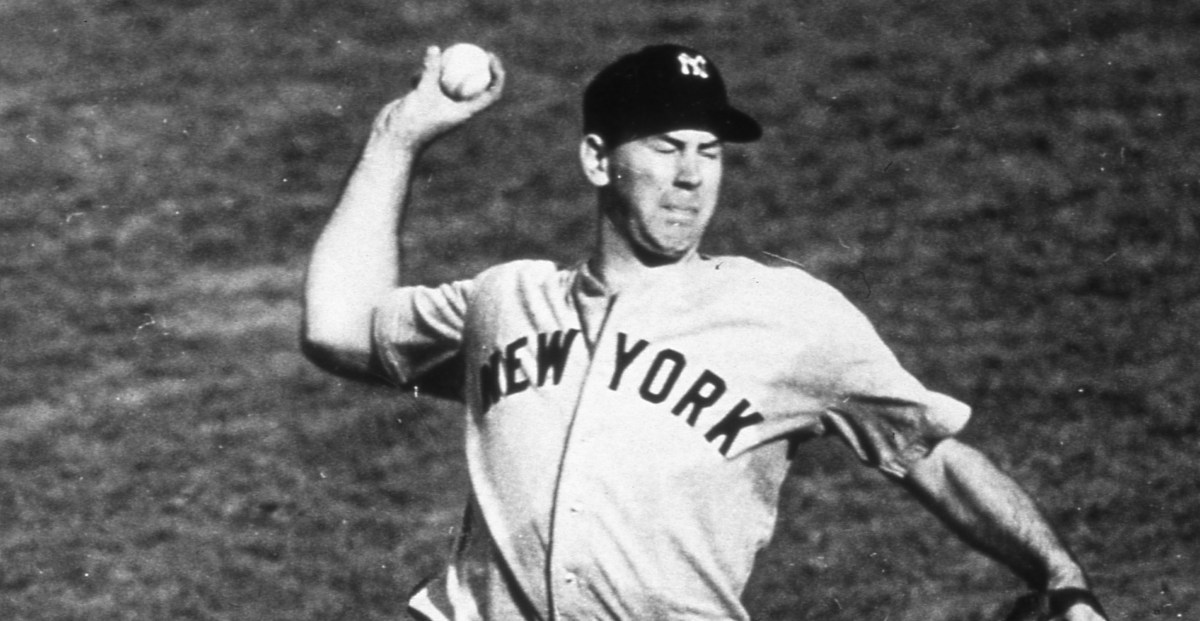
The White Sox purchased starter Bill Bevens from the Yankees. The righthander battled control issues throughout his career, but had managed to ascend from journeyman to star with a brilliant 1946 season in the Bronx: 16-13, 2.23 ERA/3.14 FIP, 154 ERA+ and 5.0 WAR over 249 2/3 innings.
But after a poor 1947 season (0.4 ERA in “only” 165 innings), Bevens rallied in the Fall Classic. He started Game 4 and came within one out of pitching the first no-hitter in World Series history. He was wild in the game (10 walks, a Series record), but still led, 2-1, entering the ninth. One walk, and another intentional pass, put runners on first and second with two outs; on an 0-1 count, Dodgers pinch-hitter Cookie Lavagetto lined a ball off of the right field wall for a walk-off Brooklyn win.
Bevens threw 2 2/3 scoreless innings of relief in the deciding Game 7 win for the Yankees, but the hurler would later admit that his arm went completely dead during the World Series.
Chicago’s acquisition of Bevens was conditional, and when it was clear he could no longer throw the ball the White Sox returned him to New York on March 28.
2002
After one injury-plagued, controversial season with the White Sox, pitcher David Wells signed a two-year, $7 million contract with the Yankees. Wells won only five games in 2001 for Chicago. Naturally, he then turned around and won 61 games over the next four years with New York, San Diego and Boston.
The White Sox did get some revenge by beating Wells in Game 2 of the 2005 ALDS, 5-4, when he was pitching for the Red Sox.
It was a combination of resilience by the White Sox, and sheer good fortune. Down 4-0 and with Wells cruising into the fifth inning, Carl Everett grounded a single to right to start the inning, and Aaron Rowand drove in the first White Sox run of the night with a double that landed mere feet inside of the left-field line. A.J. Pierzynski fell behind, 1-2, but tapped a productive ground out to second, moving Rowand to third. With a seeing-eye single grounded through the middle, Joe Crede drove in the second run of the game, and runners moved to first and third when ex-White Sox Tony Graffanino let a potential double-play grounder off the bat of Juan Uribe sneak under his glove. After Scott Podsednik popped out foul to third base, Tadahito Iguchi delivered what would hold up as the winning runs in the game with a two-out, three-run, line shot homer to left field.
Also in 2002, Jermaine Dye signed a three-year, $32 million deal with the A’s. Dye had been traded to Colorado from Kansas City during the 2001 season, and immediately flipped to Oakland to finish out the season. Dye helped the A’s secure the playoffs in 2001, in the process suffering a terrible, fluke broken leg fouling a pitch off of himself in Game 4 of the ALDS. His production for Oakland subpar, overall, not nearly the stardom he’d flexed in 1999 and 2000 for the Royals.
Three years from this date, Dye would sign on with the White Sox and revitalize his career
2017
With very little else to look forward to as the White Sox dipped low into the jaws of a teardown-rebuild, the club took to Ricky Renteria’s cooking tips in advance of SoxFest, opening 10 days later.
The White Sox would finish 67-95 and in fourth place in the AL Central in 2017, which ties (with 1968) for the 16th-worst season in club history. And the worst was yet to come.