
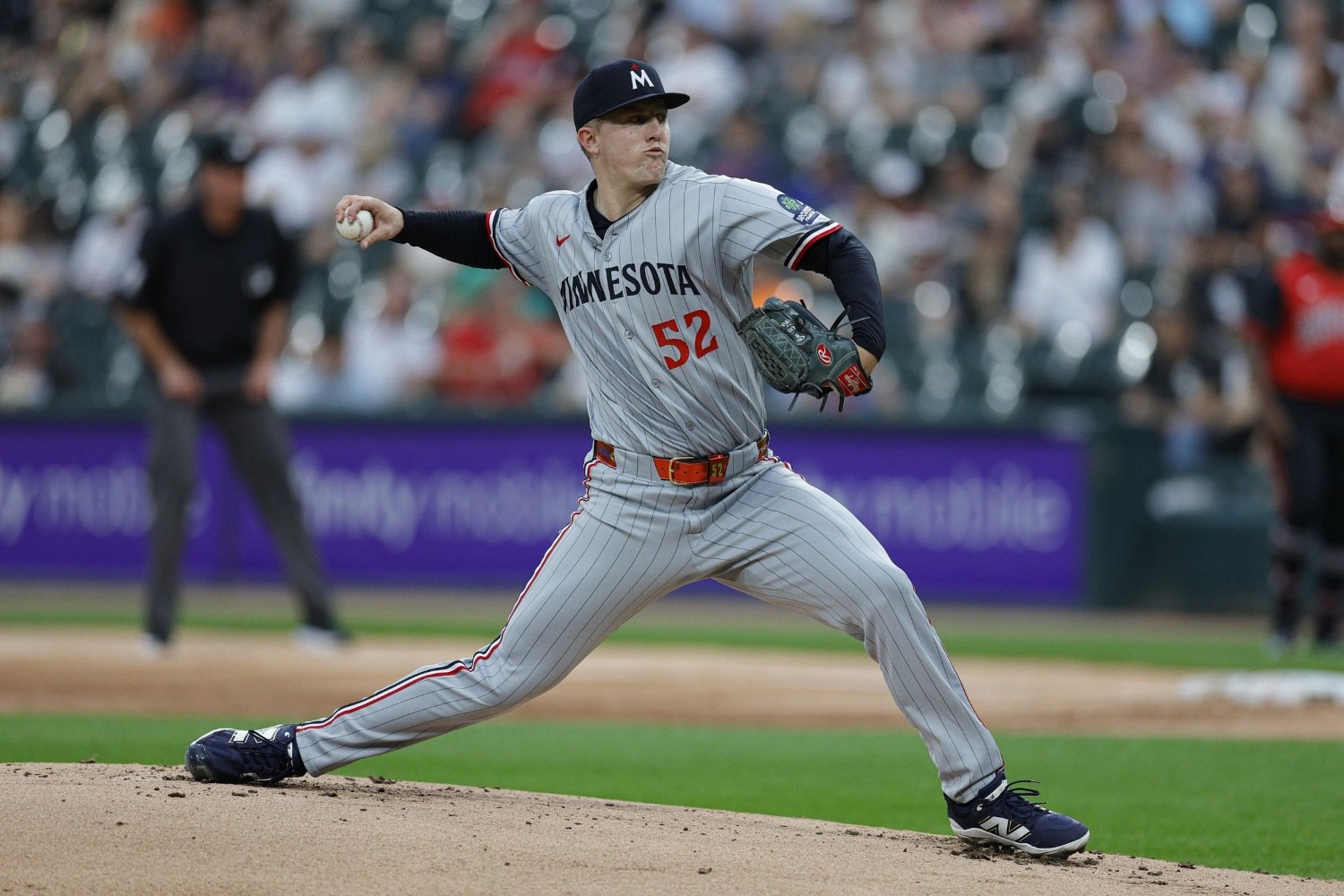
In October, Twins Daily’s Matthew Trueblood published a piece on Minnesota Twins starting pitcher Zebby Matthews’s proclivity to surrendering a high number of singles over the first two seasons of his career, evidenced by the 25-year-old allowing a .361 batting average on balls in play over 117 innings pitched. In his article, Trueblood notes that Matthews’s ailments aren’t simply due to him being unlucky, citing that the hard-throwing righty gives up too many batted balls that have a strong chance of becoming hits. Defensive improvement from Minnesota (particularly from the infielders) could lead to more sustained success for Matthews in 2026. However, the former top prospect could also take steps to mend his shortcomings by refining his arsenal.
Last season, Matthews threw the following pitches (usage rates included):
Four-seam fastball – 41%
Slider – 25%
Cutter – 13%
Change – 11%
Curve – 6%
Sinker – 4%
The righty’s most used pitch was his four-seam fastball, which was also the case in 2024. Those following the Twins should expect him to continue throwing the pitch at a similar rate next season. However, his best pitch is his slider, which he used only 25% of the time in 2025. He also used his change, curve, and sinker a combined 21% of the time, primarily utilizing his change against left-handed hitters in an effort to generate swings and misses below the zone. Matthews would be wise to continue throwing these pitches in 2026 to change the pace of at-bats. However, he would be wise to scrap his cutter entirely, opting to fortify his slider and use it at a rate similar to his fastball (both of which are superior pitches).
MTZxRGdfWGw0TUFRPT1fQVFCUkFGVlFVd1VBWFZWVVZBQUhCZ1JlQUFNRFdsa0FWQVJYVmxkVEF3RlFVZ0JW.mp4
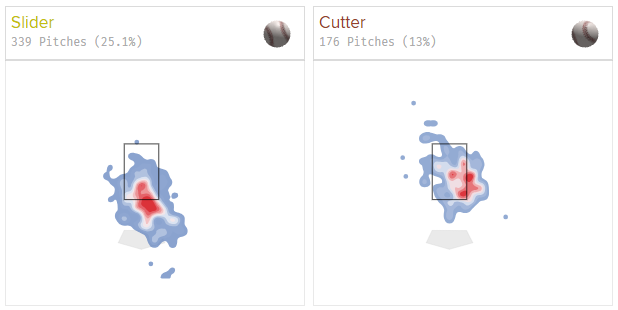
Matthews primarily threw his cutter against left-handed hitters last year, with the intention of getting hitters to jam themselves on the pitch cutting in on them. Unfortunately, left-handed hitters generated a .760 slugging average against his cutter last season. Matthews’s cutter is slightly above-average in terms of Stuff. However, he locates it poorly, throwing it lower in the zone against left-handed hitters rather than attacking them high.
Because he is unable to effectively throw his cutter high in the zone against left-handed hitters, the pitch is unintentionally being used like a slider. However, given that his cutter doesn’t have the same movement profile as his plus slider, the pitch isn’t reaching the back foot of left-handed hitters. That being the case, lefties have been able to take advantage of the pitch due to it catching too much of the plate at a lower velocity than his four-seam fastball. This isn’t a problem unique to Matthews. In fact, it’s almost universal. In October 2024 (a year before the piece about Matthews’s singles), Trueblood wrote about a league-wide trend toward trouble for pitchers going after opposite-handed batters with slider-like cutters, for Baseball Prospectus.
As mentioned earlier, Matthews would be wise to instead throw true sliders to left-handed hitters, a pitch that provides more depth and better location than his cutter. With a quick look at where the two pitches landed against lefties for him last year, it’s easy to see how the slider is more successful than the cutter.
He could also throw his plus four-seamer high in the zone to lefties, creating a more formidable one-two punch, instead of relying on his cutter to play the role of fastball and slider. He should also throw his change more against lefties, increasing his usage rate to around 20%. If Matthews were to ditch his cutter, increase his slider usage, and further utilize his change, he could limit balls put in play against him (particularly against lefties) and potentially earn his first taste of sustained success at the major-league level in 2026.